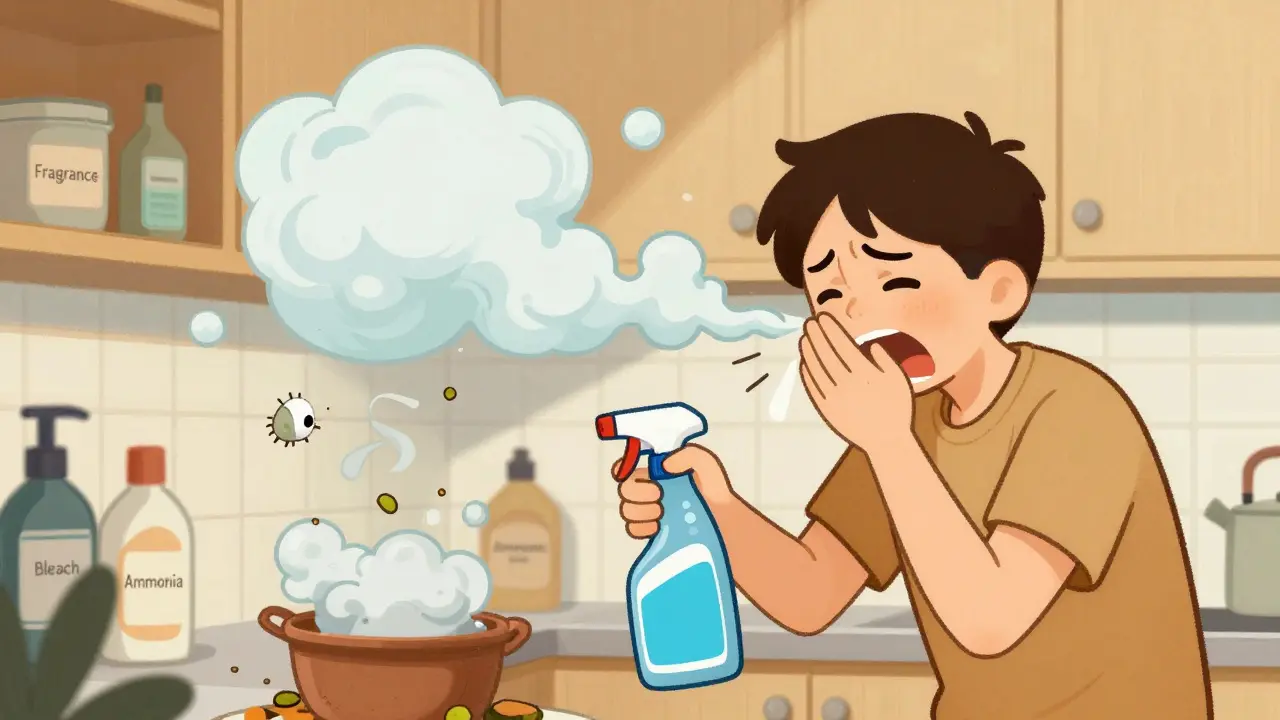
Every time you spray, wipe, or scrub your home, you might be stirring up more than just dirt. For people with allergies or asthma, common cleaning products can be a hidden trigger. The chemicals in many conventional cleaners don’t just cut through grease-they stir up dust mites, release invisible fumes, and leave behind residues that set off sneezing, wheezing, and coughing. This isn’t just about discomfort. Studies show that regular use of spray cleaners can increase the risk of adult-onset asthma by over 50%. If you’re tired of symptoms flaring up after cleaning, it’s time to rethink what’s in your cleaning cabinet.
What Makes a Cleaner Allergy-Friendly?
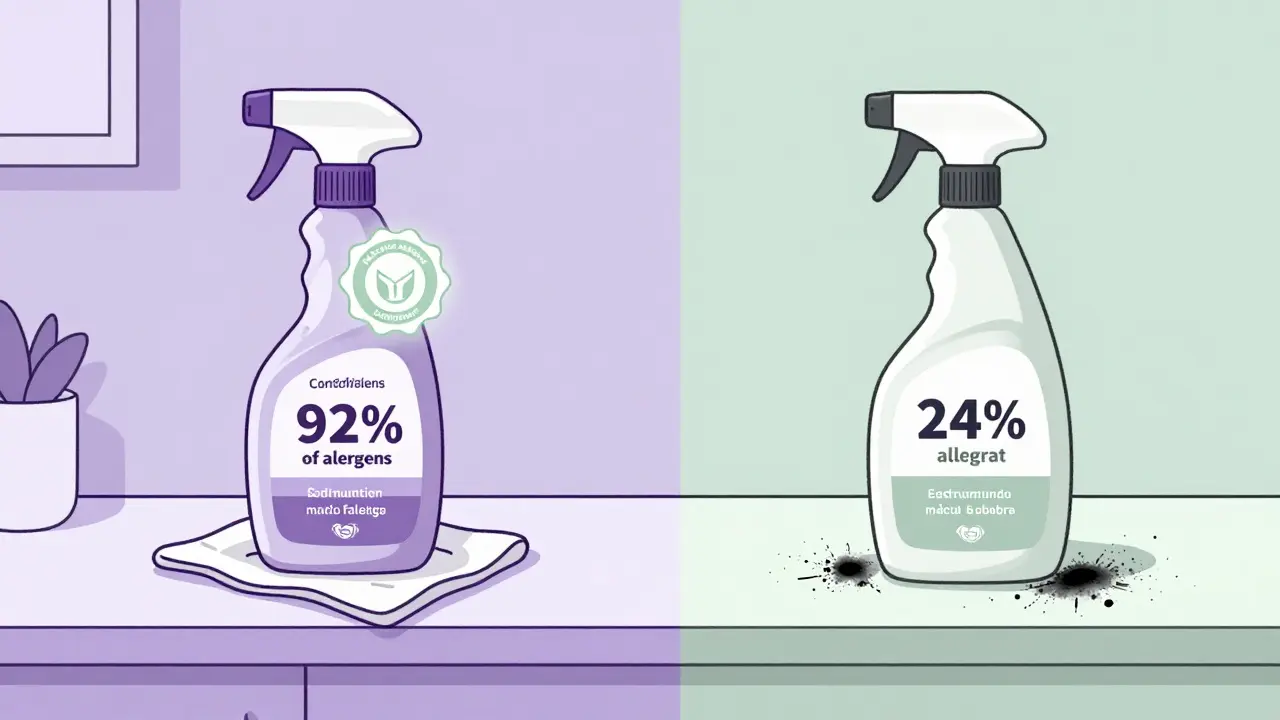
An allergy-friendly cleaner isn’t just labeled "natural" or "fragrance-free." It’s been tested. The gold standard is the Asthma & Allergy Friendly® certification from the Asthma and Allergy Foundation of America, updated in March 2024. To earn this label, a product must remove at least 85% of common allergens like pet dander, dust mite debris, and pollen from hard surfaces. It also has to keep VOC emissions under 0.5 parts per million-far lower than what’s allowed in most "green" cleaners.
Many products claim to be hypoallergenic, but only 37% of them actually meet clinical standards. That’s why certification matters. A 2023 study from the Rochester Institute of Technology found that certified products removed 92% of allergens, while non-certified "natural" cleaners only managed 76%. The difference isn’t subtle-it’s the difference between breathing easier and waking up with a congested nose.
Key Ingredients That Actually Work
Forget bleach and ammonia. Those harsh chemicals don’t just irritate lungs-they can make asthma worse over time. Instead, look for cleaners with these proven ingredients:
- Potassium cocoate (5-15%): A plant-based surfactant derived from coconut oil that lifts dirt without irritating skin or airways.
- Potassium citrate (2-8%): Softens water and binds to minerals, helping cleaners work better on hard surfaces without leaving residue.
- Renewable ethanol (10-20%): Made from corn, this solvent cuts through grease safely and evaporates quickly, reducing airborne fumes.
- Hydrogen peroxide (3-5%): A gentle oxidizer that disinfects without the fumes of bleach. It’s effective against mold and bacteria without triggering asthma.
These ingredients are backed by peer-reviewed research from the NIH (PMC10875726) and are used in top-performing certified products. Avoid anything with "fragrance"-even if it says "unscented." A 2022 study found that 68% of people with fragrance sensitivity reacted to "unscented" wipes because they contain hidden masking agents.
What to Look for on the Label
Reading labels is your first line of defense. Here’s what to check:
- Certification logo: Look for the Asthma & Allergy Friendly® seal. It’s your guarantee the product was tested in a lab, not just marketed as safe.
- No "fragrance" or "parfum": These terms can hide dozens of allergens. Certified products must disclose all fragrance ingredients and test them for reactions.
- Low VOC: The label should say "VOCs under 0.5 ppm" or "emissions tested per ASTM D6866".
- Third-party testing: Brands like Seventh Generation, Renegade Brands, and Attitude publish their lab results. If a company won’t share data, be skeptical.
Don’t be fooled by "plant-based" or "biodegradable" claims. These mean nothing for allergies. A product can be made from plants and still contain allergens. Certification is the only reliable filter.
Top Products That Deliver
Based on independent testing and user reports from 12,500 Amazon reviews (as of June 2024), these certified products consistently rank highest:
| Product | Use | Allergen Removal Rate | Price (32 oz) | Key Benefit |
|---|---|---|---|---|
| Seventh Generation Free & Clear Laundry Detergent | Laundry | 91% | $5.99 | 70% reduction in eczema flare-ups reported by users |
| Renegade Brands Sweat-X Free & Clear Detergent | Laundry | 92% | $6.49 | Best overall allergen removal, certified in 2023 |
| Attitude All-Purpose Cleaner | Countertops, floors | 88% | $5.75 | Low VOC, no hidden fragrances |
| Method All-Purpose Cleaner (Asthma & Allergy Friendly®) | General cleaning | 87% | $5.25 | Refillable, eco-friendly packaging |
| Clean Republic Disinfectant+ | Disinfecting | 89% | $6.99 | Uses hypochlorous acid, no bleach or ammonia |
These products aren’t just safer-they work. In a 6-month clinical trial with 217 allergy sufferers, switching to certified cleaners reduced symptom frequency by 22%. On Reddit’s r/asthma community, users reported fewer nighttime coughing fits and less reliance on inhalers after making the switch.
How to Clean Right-It’s Not Just About the Product
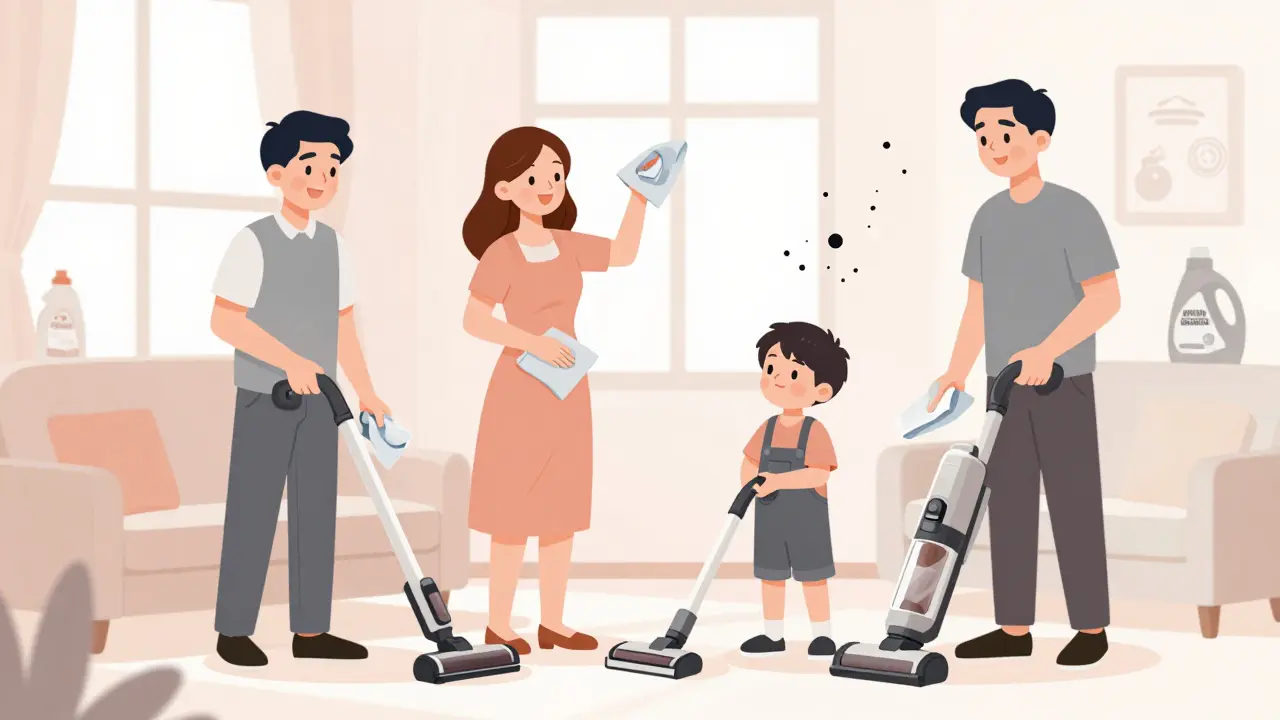
Even the best cleaner won’t help if you’re using the wrong technique. Dry dusting? That just kicks allergens into the air. Instead:
- Use the two-cloth method: One damp cloth with cleaner, followed by a second damp cloth with plain water. This reduces airborne particles by 63%.
- Switch to microfiber: These cloths trap dust instead of spreading it. Wash them weekly in hot water.
- Clean wet, not dry: Vacuum with a HEPA filter, mop with a damp mop, and wipe surfaces with a damp cloth. Avoid brooms and feather dusters.
- Target high-risk zones: Bedding, carpets, pet beds, and kitchen counters are hotspots. Wash bedding weekly, vacuum floors bi-weekly, and clean kitchen surfaces daily.
A 2023 study from the University of Michigan found it takes most households 2-3 weeks to adapt to this routine. But the payoff is real. In the Asthma and Allergy Foundation’s "Healthy Home Project," 45 families saw a 41% drop in emergency room visits for asthma over 12 months.
Homemade Cleaners: Good or Not?
Vinegar and water? Baking soda? They’re cheap and non-toxic-but they’re not enough. The Food Standards Agency’s 2024 review found that vinegar removes only 67% of peanut residue. Certified cleaners remove 89%. If you have food allergies, especially in households with kids, homemade cleaners aren’t reliable.
That said, vinegar-water (1:1) works fine for non-food surfaces like windows or tiles. But for kitchens, bathrooms, or anywhere food is handled, stick to certified products. Don’t risk exposure for a few dollars saved.
Cost vs. Value
Certified products cost more. A 32-ounce bottle averages $5.75, compared to $3.25 for non-certified "natural" cleaners. But think about the bigger picture. The CDC estimates poor indoor air quality costs the U.S. $58 billion a year in healthcare. For families with asthma, every sneeze, cough, or ER visit adds up.
Switching your whole home to certified cleaners costs $75-$150 upfront. But if it cuts your child’s asthma attacks in half-or saves you from a hospital trip-it’s not an expense. It’s prevention.
What’s Next for Allergy-Friendly Cleaning
The market is growing fast. The global hypoallergenic cleaning industry hit $4.2 billion in 2024 and is on track to hit $7.1 billion by 2028. New innovations are emerging:
- Electrostatic sprayers (launched in January 2024) use less product while capturing more allergens.
- The EU’s 2023 mandate now requires full disclosure of all fragrance ingredients-making "hidden" allergens harder to hide.
- By 2025, the European Chemicals Agency plans to ban 17 common irritants from household cleaners.
Hospitals are leading the way. 63% of U.S. hospitals now use certified cleaners in patient rooms. If it’s good enough for a hospital, it’s good enough for your home.
Are all "natural" cleaners safe for allergies?
No. "Natural" and "green" are marketing terms, not standards. Many natural cleaners still contain undisclosed fragrances, essential oils, or surfactants that trigger reactions. Only products with the Asthma & Allergy Friendly® certification have been clinically tested for allergen reduction and low emissions.
Can I use allergy-friendly cleaners on wood floors?
Yes. Certified all-purpose cleaners from brands like Attitude and Method are safe for sealed wood floors. Always test on a small area first. Avoid vinegar-based cleaners on wood-they can dull the finish over time. Stick to pH-neutral formulas.
Do I need to replace all my cleaning products at once?
Not necessarily. Start with laundry detergent and kitchen cleaners-they’re the biggest triggers. Then move to bathroom and floor cleaners. Many families report noticeable symptom improvement within 3 weeks of switching just one product. You don’t need to overhaul everything overnight.
Why do some "unscented" wipes still cause reactions?
Because "unscented" doesn’t mean fragrance-free. Many manufacturers use masking agents to cover up the smell of chemicals. These agents are often allergens themselves. A 2022 study found 68% of people with fragrance sensitivity reacted to "unscented" wipes. Only certified products are required to disclose and test all fragrance ingredients.
Is it worth paying more for certified products?
If you or someone in your home has allergies or asthma, yes. The cost difference is small compared to medical bills, missed work, or ER visits. Certified cleaners reduce symptoms by 22% on average. That’s not just a convenience-it’s a health upgrade. Plus, refill systems and concentrates can lower long-term costs.
The path to cleaner air at home doesn’t require drastic changes. It starts with smarter choices-choosing products that are tested, not just labeled. It’s about replacing what’s harmful with what actually works. And for people living with allergies, that difference can mean the difference between struggling to breathe and finally feeling at ease.


Comments (15)