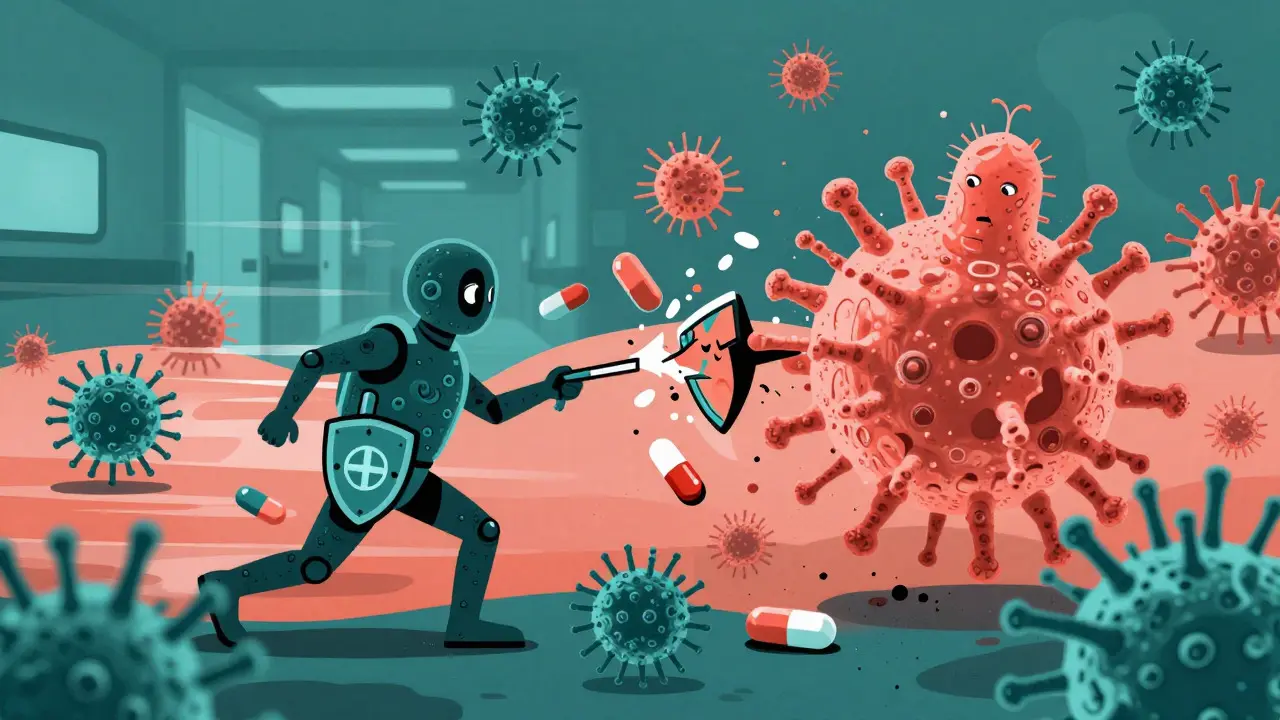
Imagine a world where a simple cut or a routine surgery becomes a life-threatening event because the drugs we rely on no longer work. This isn't science fiction; it is the growing reality of antimicrobial resistance (AMR). While antibiotic overuse is often blamed for this crisis, the relationship is more complex than just taking too many pills. It involves how we use these medications, how bacteria adapt, and the delicate balance of our gut microbiome.
For most people, antibiotics are a trusted remedy for infections. But when used incorrectly, they can backfire in two major ways: they help bacteria evolve into 'superbugs' that are hard to kill, and they disrupt the healthy bacteria in your digestive system, paving the way for dangerous opportunistic infections like Clostridioides difficile (or C. diff). Understanding these risks is the first step toward protecting your health and preserving the effectiveness of these vital drugs for future generations.
The Silent Pandemic: How Resistance Develops
Antimicrobial resistance happens when bacteria change over time so that current medicines stop working. The World Health Organization (WHO) describes this as a 'silent pandemic.' In 2019, bacterial AMR was directly responsible for 1.27 million global deaths and contributed to another 4.95 million. By 2023, one in six laboratory-confirmed bacterial infections worldwide were resistant to standard treatments. This isn't just a distant problem; it's happening in hospitals and communities right now.
The primary driver is not necessarily that you took an antibiotic for a cold (though that doesn't help), but rather incomplete courses, unnecessary prescriptions, and heavy use in agriculture. When bacteria are exposed to antibiotics, the weak ones die, but the strong ones survive. These survivors reproduce, passing on their resistance genes. Over time, the population of bacteria becomes harder to treat. For example, Escherichia coli, a common cause of urinary tract infections, now shows reduced susceptibility to standard drugs like ampicillin and fluoroquinolones in about 1 in 5 cases. This means that what used to be a short course of treatment might now require stronger, more toxic intravenous drugs.
Gut Health and the C. Difficile Connection
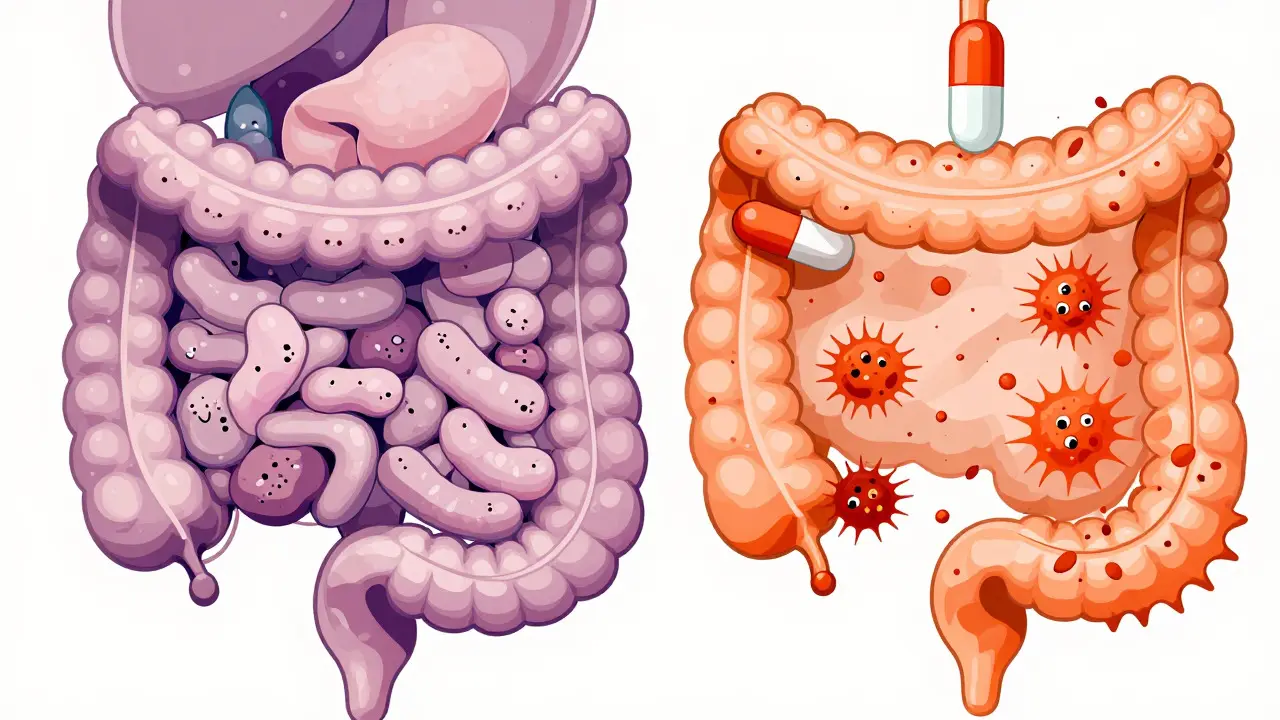
While resistance is a global threat, C. difficile infection is a personal risk that many patients face after hospitalization or antibiotic therapy. Your gut is home to trillions of beneficial bacteria that keep harmful microbes in check. When you take broad-spectrum antibiotics, they don't just kill the bad bacteria causing your infection; they also wipe out the good guys.
This creates an open field for C. difficile, a bacterium that is naturally present in small amounts in many people but usually kept under control by other gut flora. Without its competitors, C. diff can multiply rapidly, producing toxins that cause severe diarrhea, fever, and abdominal pain. In severe cases, it can lead to life-threatening complications like colitis. According to CDC data, C. difficile caused nearly half a million infections in the U.S. alone in 2017, with thousands of associated deaths. The risk is highest for older adults, those with weakened immune systems, and individuals who have recently completed a course of antibiotics.
Who Is Most at Risk?
Not everyone faces the same level of danger from antibiotic misuse. Certain groups are particularly vulnerable to both resistant infections and C. diff outbreaks:
- Hospitalized Patients: Long stays in healthcare facilities increase exposure to resistant organisms and invasive procedures that bypass natural barriers.
- Elderly Individuals: Age-related changes in gut health and immune function make recovery from disruptions slower.
- People with Chronic Conditions: Those with diabetes, kidney disease, or inflammatory bowel disease may have compromised gut integrity.
- Frequent Antibiotic Users: Repeated courses of antibiotics, especially broad-spectrum ones, significantly alter the gut microbiome.
If you fall into any of these categories, discussing alternative treatments or shorter courses with your doctor can be crucial. It’s not about avoiding antibiotics when needed, but about using them wisely.
Practical Steps to Reduce Your Risk
You don’t need to be a doctor to make smarter choices about your medication. Here are actionable steps you can take today:
- Ask Before You Take: If you’re prescribed an antibiotic, ask specifically why it’s necessary. Is it for a bacterial infection, or could it be viral? Viral infections like the common cold don’t respond to antibiotics.
- Finish the Course: Unless told otherwise by your doctor, complete the full prescription. Stopping early can leave behind the strongest bacteria, which then multiply and become resistant.
- Protect Your Gut: Consider taking probiotics (like Lactobacillus or Saccharomyces boulardii) during and after antibiotic therapy to help restore healthy gut bacteria. Discuss timing with your pharmacist to ensure they don’t interfere with the antibiotic.
- Practice Hygiene: C. diff spores are tough and can survive on surfaces for months. Wash your hands thoroughly with soap and water (hand sanitizer is less effective against C. diff spores) after using the bathroom and before eating.
- Avoid Self-Medication: Don’t save leftover antibiotics for the next time you feel sick. Different infections require different drugs, and old prescriptions may be ineffective or inappropriate.
Comparing Risks: Resistance vs. C. Difficile
It helps to understand how these two risks differ and overlap. While both are driven by antibiotic use, their mechanisms and outcomes vary.
| Feature | Antimicrobial Resistance (AMR) | C. Difficile Infection |
|---|---|---|
| Primary Cause | Bacterial evolution due to selective pressure from antibiotics | Disruption of normal gut flora by antibiotics |
| Onset | Gradual, often occurring over years or decades | Acute, typically appearing during or shortly after antibiotic use |
| Main Symptom | Infection fails to respond to standard treatment | Severe watery diarrhea, abdominal cramps, fever |
| Treatment Challenge | Requires stronger, potentially more toxic last-resort drugs | Requires specific anti-C. diff medications (e.g., vancomycin, fidaxomicin) |
| Prevention Focus | Stewardship, completing courses, limiting unnecessary use | Gut protection, hygiene, targeted antibiotic use |
Notice that the prevention strategies overlap significantly. Using antibiotics only when necessary and finishing the course helps prevent both the emergence of resistant superbugs and the disruption of your gut ecosystem. This dual benefit makes stewardship a powerful tool for personal health.

The Future of Antibiotics
Experts warn that without action, AMR could cause 10 million annual deaths globally by 2050, surpassing cancer mortality. The pharmaceutical industry is struggling to develop new antibiotics because they generate less revenue than chronic disease medications. Organizations like CARB-X are investing in new pipelines, but the gap between current needs and available treatments is widening.
For you, this means that every antibiotic you take wisely is a vote for keeping these drugs effective. It’s not just about your immediate recovery; it’s about ensuring that your children and grandchildren will still have access to reliable treatments for common infections. The burden of fighting resistance is shared between healthcare systems, policymakers, and individual patients like you.
Frequently Asked Questions
Can I get C. difficile without taking antibiotics?
Yes, but it is rare. While antibiotic use is the primary risk factor, other factors like proton pump inhibitors (for acid reflux), chemotherapy, and recent hospitalization can also disrupt gut flora and increase the risk of C. difficile infection.
Are probiotics effective in preventing C. difficile?
Evidence suggests that certain strains of probiotics, such as Saccharomyces boulardii and Lactobacillus species, can reduce the risk of C. difficile recurrence. However, they should be taken alongside, not instead of, prescribed medical treatment. Always consult your healthcare provider before starting new supplements.
How long does it take for my gut bacteria to recover after antibiotics?
Gut microbiome diversity can begin to recover within days to weeks, but full restoration of pre-antibiotic composition may take several months. Eating a fiber-rich diet and continuing probiotic supplementation can support this process.
Is hand sanitizer enough to prevent C. difficile spread?
No. C. difficile forms spores that are resistant to alcohol-based hand sanitizers. Washing hands with soap and water is the most effective way to remove these spores from your skin. Use sanitizer only when soap and water are not available, but remember it won’t kill C. diff spores.
Should I avoid all antibiotics to prevent resistance?
No. Avoiding necessary antibiotics can be dangerous, as untreated bacterial infections can lead to sepsis or other serious complications. The goal is not avoidance, but appropriate use: taking the right drug, at the right dose, for the right duration, only when confirmed necessary by a healthcare professional.