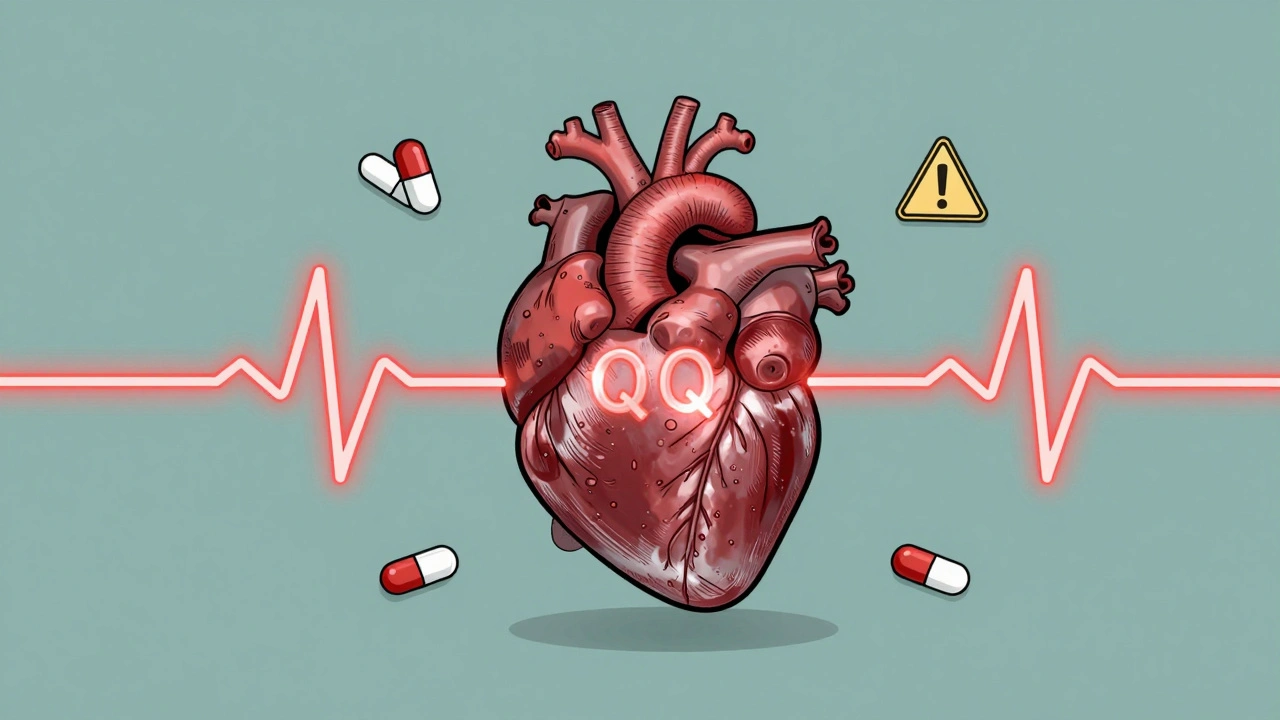
Antipsychotics and Cardiac Medications: Understanding QT Prolongation Risks

Antipsychotics and Cardiac Medications: Understanding QT Prolongation Risks
12/12

QT Prolongation Risk Calculator

Understand Your Risk Factors

This tool estimates your QT prolongation risk based on your medications, health factors, and electrolyte levels. A QTc over 500ms indicates high risk requiring medical attention.

When you're managing serious mental health conditions like schizophrenia, the last thing you want is for your medication to put your heart at risk. But that’s exactly what can happen when antipsychotics and cardiac drugs are used together - especially if you’re not watching for something called QT prolongation.

What QT Prolongation Really Means

Your heart doesn’t just beat randomly. It follows a precise electrical pattern. The QT interval on an ECG measures how long it takes the heart’s lower chambers to recharge between beats. When that interval stretches too long - called QT prolongation - the heart can slip into a dangerous rhythm called torsade de pointes. This isn’t just a blip on a screen. It can lead to sudden cardiac arrest, even in people who seemed otherwise healthy.

The good news? You don’t need to panic. The bad news? Many doctors don’t check for it often enough. The QT interval is usually corrected for heart rate, giving you the QTc. A QTc over 500 milliseconds is a red flag. An increase of more than 60 ms from your baseline? That’s a call to act. And if it hits 550 ms or higher? Most guidelines say stop the drug.

Not All Antipsychotics Are Created Equal

Some antipsychotics are safer than others when it comes to your heart. The risk isn’t the same across the board. Thioridazine, pulled from the U.S. market in 2005, could stretch the QT interval by up to 35 milliseconds. That’s huge. Haloperidol and olanzapine? Only 4 to 6 ms. Lurasidone? Almost nothing - barely above background levels.

Here’s how the risk breaks down, based on data from the FDA, CredibleMeds, and multiple clinical studies:

  • High risk: Thioridazine (no longer available), haloperidol, ziprasidone
  • Moderate risk: Quetiapine, risperidone, iloperidone
  • Low risk: Aripiprazole, brexpiprazole, lurasidone, paliperidone
Ziprasidone is tricky. Some studies say it’s risky. Others, like a 2023 JAMA Network Open trial with 566 ICU patients, found no significant QTc rise compared to placebo - as long as the baseline QTc was under 550 ms. That’s why context matters. In a healthy person, ziprasidone might be fine. In someone with kidney disease, low potassium, and three other heart meds? Not so much.

Cardiac Drugs That Make It Worse

Antipsychotics don’t act alone. They team up with other drugs that also slow heart repolarization. Common offenders include:

  • Antiarrhythmics (like amiodarone, sotalol)
  • Antibiotics (macrolides like azithromycin, fluoroquinolones like moxifloxacin)
  • Antifungals (fluconazole, itraconazole)
  • Some antidepressants (citalopram, escitalopram)
  • Medications for nausea or vomiting (ondansetron)
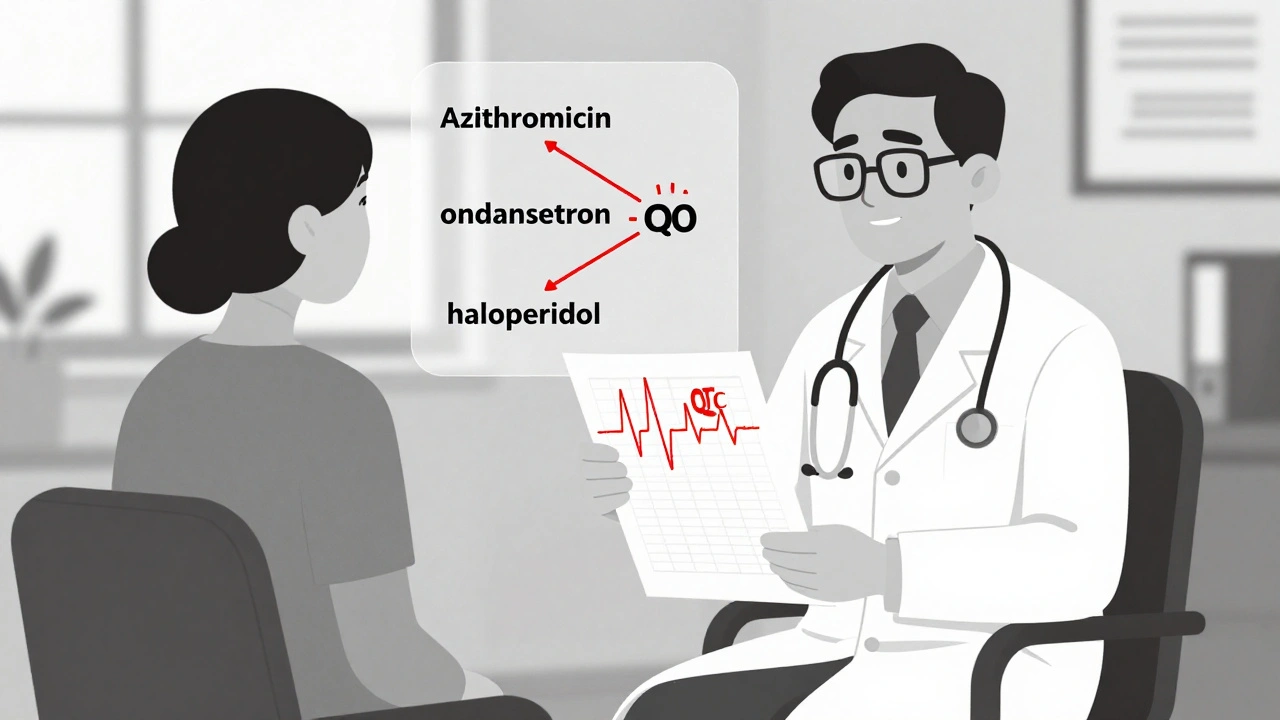
A 2023 study at Toulouse University Hospital found that 68% of patients who developed QTc over 500 ms were taking two or more QT-prolonging drugs. Polypharmacy isn’t just common - it’s dangerous. If you’re on an antipsychotic and your doctor adds a new medication, ask: Does this affect my QT interval?

Doctor and patient reviewing an ECG with highlighted QTc value and drug interaction overlay.

Who’s Most at Risk?

It’s not just about the drug. Your body matters too. These factors raise your risk:

  • Being female (1.7x higher risk)
  • Age over 65 (2.3x higher risk)
  • Low potassium (below 3.5 mmol/L) - seen in 28% of cases
  • Low magnesium (below 1.8 mg/dL)
  • Heart failure, bradycardia, or prior arrhythmia
  • Kidney or liver disease - slows drug clearance
  • Genetic predisposition (like long QT syndrome)
One surprising fact: people with schizophrenia already have a 5% lifetime risk of suicide and a 12% higher risk of accidental death. Skipping antipsychotics because of heart fears can be deadlier than taking them - if they’re chosen and monitored wisely. Studies show a 40% drop in overall mortality when patients take antipsychotics compared to those who don’t. The goal isn’t to avoid them. It’s to use the safest one for your body.

What Doctors Should Do - And Often Don’t

The British Heart Rhythm Society and the Maudsley Guidelines are clear: get an ECG before starting any antipsychotic. Repeat it one week after reaching a steady dose - especially if it’s a high- or moderate-risk drug. Then, check annually.

But here’s the gap: only 32% of psychiatrists order baseline ECGs for moderate-risk drugs. Only 73% do it for high-risk ones. That’s not enough. And it’s not just about ordering the test - interpreting it correctly is harder than you think. One study found 68% of non-cardiologists misread the QT interval without special training.

Electrolytes matter too. Potassium should be kept above 4.0 mmol/L. Magnesium above 1.8 mg/dL. Simple blood tests. Easy fixes. Yet many patients are discharged on antipsychotics with low potassium and no follow-up.
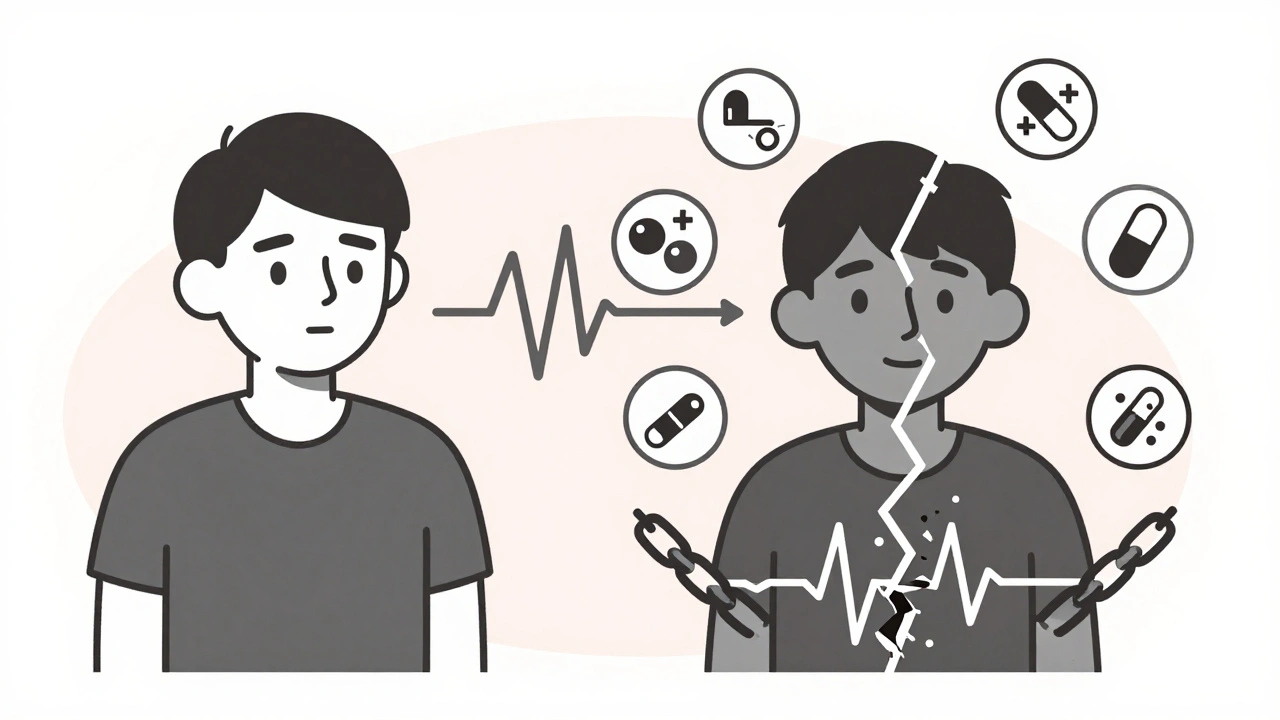
Split figure showing safe vs. risky antipsychotic use with electrolyte icons in duotone style.

What You Can Do

If you’re on an antipsychotic, here’s what you should ask your doctor:

  1. Is this medication high-risk for QT prolongation?
  2. Have I had an ECG since I started this drug?
  3. Are any of my other meds known to prolong QT?
  4. Can we check my potassium and magnesium levels?
  5. Is there a safer alternative?
Don’t assume your doctor knows all the interactions. Bring a list of every pill, supplement, and OTC med you take. Even ginger tea and licorice root can affect potassium.

The Bigger Picture: Risk vs. Reward

There’s a U-shaped curve when it comes to antipsychotic use and mortality. People who take no antipsychotics have the highest death rate. So do those on the highest doses. The lowest risk? People on low to medium doses - carefully monitored.

The FDA has required thorough QT studies for all new antipsychotics since 2005. That’s why lurasidone and brexpiprazole are now preferred in complex cases. Sales of low-risk antipsychotics rose 14.2% in 2022. Haloperidol sales dropped. That’s not coincidence. Hospitals are changing formularies. 63% of U.S. academic centers now have QT risk-based prescribing rules.

This isn’t about fear. It’s about smart choices. You don’t have to pick between mental health and heart health. You can have both - if you’re informed and proactive.

What’s Next?

New guidelines are coming. The British Heart Rhythm Society is updating its recommendations to include newer drugs like lumateperone, with updates expected in mid-2024. A major study enrolling 800 patients across the U.S. is tracking real-world QT effects in medically complex people - results expected by the end of 2024.

Telemedicine ECGs are becoming more common, making monitoring easier outside hospitals. By 2026, experts predict a 22% increase in routine ECG use for antipsychotic patients. That’s progress.

The message is simple: QT prolongation is real. It’s measurable. It’s preventable. And it shouldn’t stop you from getting the treatment you need - if you’re being watched closely.

Comments (4)

Hamza Laassili
  • Hamza Laassili
  • December 12, 2025 AT 16:46

Bro this is wild-I had no idea my ziprasidone could mess with my heart like that. My doc just handed me the script like it was coffee. I’m getting an ECG tomorrow. 🤯

Emily Haworth
  • Emily Haworth
  • December 13, 2025 AT 17:07

They're hiding the truth... the pharmaceutical companies *want* you to have heart problems so they can sell you more drugs. 🕵️‍♀️💊💔

Tom Zerkoff
  • Tom Zerkoff
  • December 13, 2025 AT 17:54

This is an exceptionally well-researched and clinically vital summary. The distinction between QTc thresholds and the differential risk profiles of antipsychotics should be standard curriculum in all psychiatric training programs. Thank you for this.

Yatendra S
  • Yatendra S
  • December 14, 2025 AT 08:44

The heart... it beats not just from muscle, but from the silent prayers of the soul. When we poison it with chemicals, are we not silencing the very rhythm of existence? 🌌

Post-Comment