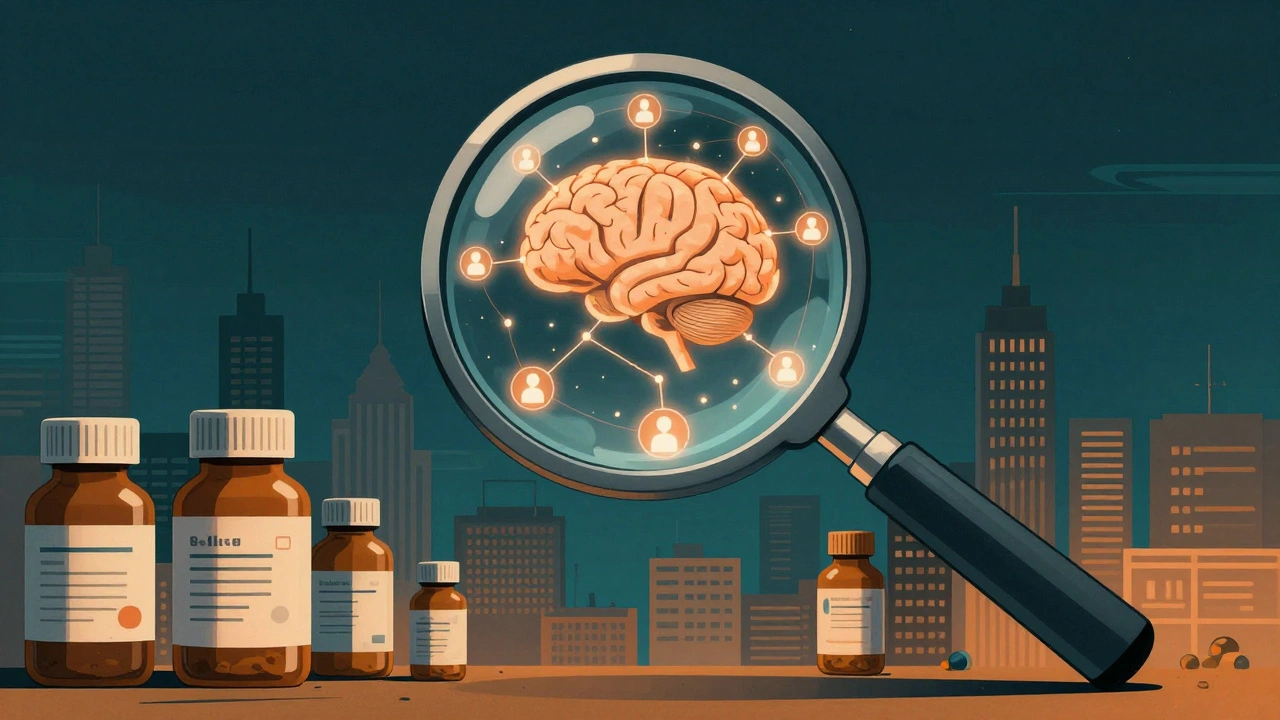
Drug Safety Detection Time Estimator
See how AI transforms adverse event detection time compared to traditional methods
Detection Time Comparison
AI AdvantageTraditional Method: Reviews only 5-10% of reports
AI Method: Reviews 100% of reports
Time to process
--
Time to process
--
Time saved: --
Potential cases detected: --
Every year, thousands of people are harmed by medications that seemed safe during clinical trials. Some reactions don’t show up until a drug is used by hundreds of thousands of patients-like a hidden crack in a bridge that only becomes visible under heavy traffic. For decades, drug safety teams relied on doctors and patients to report side effects manually. That system was slow, incomplete, and often too late. Today, artificial intelligence is changing that. It’s not just helping-it’s rewriting how we catch dangerous drugs before they hurt more people.
Why Traditional Drug Safety Systems Fall Short
For years, drug safety meant collecting paper forms, typing up reports, and waiting weeks or months to spot patterns. Pharmacovigilance teams reviewed maybe 5 to 10% of all adverse event reports because there was just too much data. The rest? Ignored. Or worse-missed. Take the case of a new painkiller approved in 2023. In clinical trials, only 12 patients reported dizziness. But after it hit the market, over 1,200 people reported the same symptom within six weeks. Manual review couldn’t catch it fast enough. By the time regulators acted, 87 patients had been hospitalized. This isn’t rare. It’s the old system’s flaw: it reacts after damage is done. The problem isn’t just volume. It’s noise. Reports come from hospitals, insurance claims, social media, patient forums, and doctor’s notes written in messy handwriting or vague terms. One person says they felt “weird,” another says “fuzzy head,” and another says “brain fog.” Traditional systems couldn’t connect those dots. AI can.How AI Sees What Humans Miss
Artificial intelligence in drug safety doesn’t just read reports-it understands them. Natural Language Processing (NLP) algorithms scan millions of free-text entries and pull out hidden signals. A 2025 study by Lifebit.ai showed these tools extract adverse event details from unstructured notes with 89.7% accuracy. That’s not guesswork. That’s pattern recognition at scale. AI doesn’t wait for someone to file a report. It watches everything: electronic health records, pharmacy dispensing logs, Reddit threads about side effects, even wearable device data tracking heart rate spikes after a new medication. One system analyzed 1.2 million patient records daily. It flagged a strange spike in fainting episodes among elderly patients taking a common blood pressure drug-combined with a newly prescribed antifungal. That interaction hadn’t been tested in trials. The AI spotted it three weeks after launch. The company issued a safety alert before the number of cases reached 200. Machine learning models are trained on decades of past adverse events. They learn what a real signal looks like: unusual timing, clustering in specific demographics, recurrence across multiple reports. Unlike humans, they don’t get tired. They don’t skip pages. They analyze 100% of the data, not just the easy parts.The Systems Powering Real-World Safety
The U.S. Food and Drug Administration’s Sentinel System is the largest real-time drug safety network in the world. It pulls data from over 300 million patient records across hospitals, clinics, and insurers. Since 2023, it’s run more than 250 safety analyses using AI. One analysis found a hidden link between a diabetes drug and a rare form of pancreatitis-within 11 days of data being uploaded. Manual review would have taken months. In Europe, the European Medicines Agency now requires AI tools used in safety monitoring to be transparent. That means companies can’t just say “the algorithm found it.” They have to show how. This push for explainable AI (XAI) is forcing vendors to build systems that don’t just give answers-they give reasoning. Companies like IQVIA and Lifebit aren’t just selling software. They’re building entire safety ecosystems. IQVIA’s platform integrates with 45 of the top 50 pharmaceutical companies. Lifebit’s system processes data from 14 clients daily, using federated learning so patient records never leave their original hospitals. Privacy stays intact. Safety improves.
Where AI Still Struggles
AI isn’t magic. It’s only as good as the data it’s fed. And that data is uneven. If a population rarely visits doctors-like rural communities or undocumented workers-their side effects won’t show up in electronic records. AI then misses their signals entirely. A 2025 Frontiers analysis found that AI systems failed to detect liver toxicity in low-income groups because those patients rarely had lab tests recorded in their files. Another issue? Bias in training data. If past reports mostly came from white, middle-class patients, the AI learns to ignore symptoms that look different in other groups. One system kept dismissing reports of skin rashes in Black patients because “the pattern didn’t match” historical cases. The problem? The historical cases were incomplete. The AI didn’t know what it didn’t know. And then there’s the “black box” problem. A safety officer might get an alert: “Drug X increases risk of stroke by 42%.” But when they ask why, the system can’t explain. No one can. The neural network just… knows. That’s terrifying when lives are on the line. That’s why experts like FDA Commissioner Robert Califf say: “Professionals who use AI will replace those who don’t.” Not AI replacing people. People using AI better.What It Takes to Implement AI in Drug Safety
Getting AI into a drug safety team isn’t like installing a new app. It’s a 12- to 18-month project. First, you need data. Not just one source-EHRs, claims, social media, lab results, even pharmacy refill patterns. Then you need to clean it. Data cleansing takes up nearly half the time. Dirty data? Garbage results. Next, you pick the right models. Most companies use hybrid systems: NLP for text, clustering for patterns, reinforcement learning to improve over time. You test it against historical data. Did it catch the thalidomide signal if it had been around in 2020? Did it flag the Vioxx recall before it happened? If not, you tweak it. Training staff is critical. A 2025 survey of 147 pharmacovigilance managers found 73% of teams needed 40 to 60 hours of training just to understand what the AI was telling them. You can’t just hand someone a dashboard and expect them to trust it. You have to teach them to question it. And compliance? FDA-approved AI tools require over 200 pages of validation documentation. Commercial tools? Often 45 to 60 pages. And even then, user satisfaction is mixed-average ratings hover around 3.2 out of 5.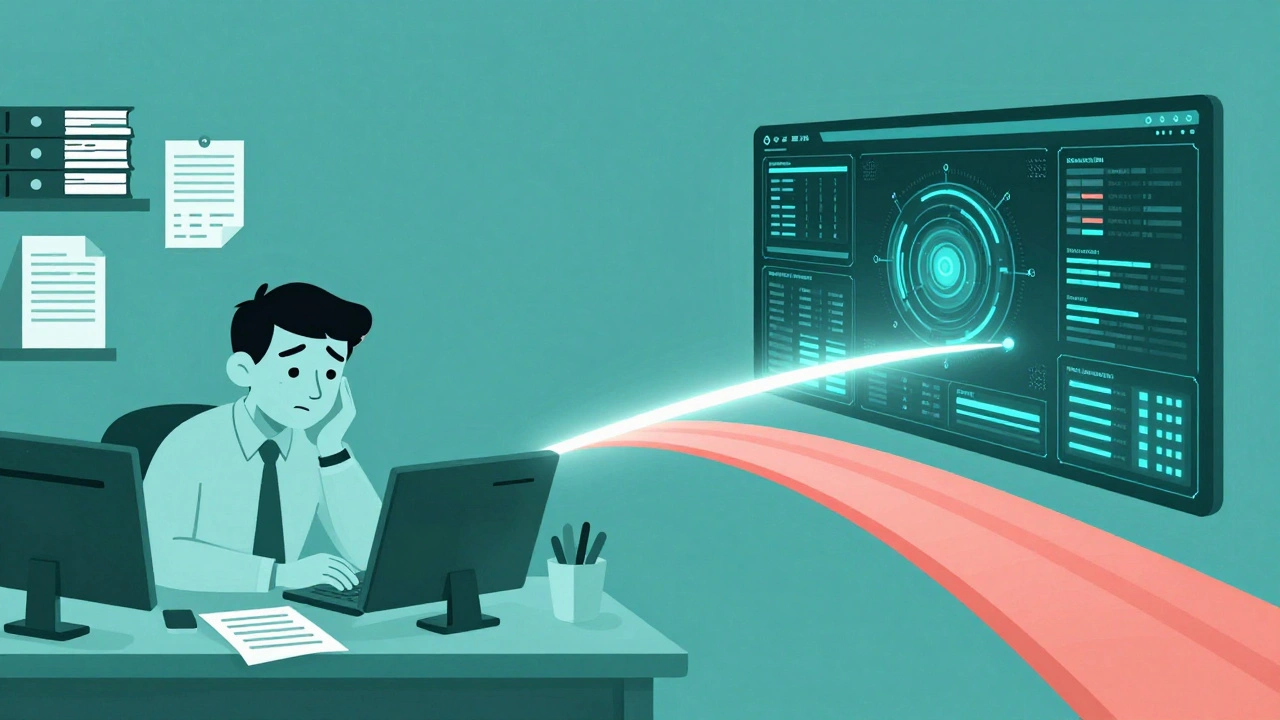
The Future: From Detection to Prevention
The next frontier isn’t just detecting problems-it’s predicting them before they happen. Researchers are now combining AI with genomic data. If a patient has a specific gene variant, does that make them more likely to react badly to Drug Y? Early trials at seven major medical centers are showing promising results. Wearables are adding another layer. A smartwatch tracking heart rhythm changes after a new medication? That’s data no doctor’s note could capture. One pilot program found 11% of patients had irregular heartbeats two days after starting a new antidepressant-before they even reported feeling “off.” By 2027, AI systems are expected to improve causal inference by 60%. That means they’ll get better at answering: Is this drug causing this side effect-or is it just coincidence? Right now, that’s still the hardest part. Humans have to make that call. The goal? A system that doesn’t wait for harm to happen. One that flags risks before the first patient takes the pill. That’s not science fiction. It’s happening now. And the companies that adopt it aren’t just staying compliant-they’re saving lives.What’s Next for Drug Safety
The AI pharmacovigilance market is projected to grow from $487 million in 2024 to $1.84 billion by 2029. That’s not hype. It’s demand. Sixty-eight percent of the top 50 pharmaceutical companies already use AI in some form. By 2026, that number will hit 85%. Regulators are catching up. The FDA’s Emerging Drug Safety Technology Program (EDSTP) launched three pilot programs in April 2025 to test AI across 5 million real-world patient records. The EMA’s 2025 roadmap calls for fully automated case processing by 2030. That doesn’t mean no humans. It means humans doing higher-level work: reviewing AI alerts, investigating edge cases, and making final decisions. The biggest shift? Pharmacovigilance is no longer a paperwork job. It’s a data science role. The best safety officers today aren’t just experts in drug reactions-they know how to ask the right questions of an algorithm. They understand when to trust the machine and when to doubt it. The future of drug safety isn’t about more reports. It’s about fewer injuries. And AI is the only tool fast enough, smart enough, and big enough to make that real.How does AI detect drug side effects faster than humans?
AI analyzes millions of data points daily-from electronic health records, social media, insurance claims, and wearable devices-using natural language processing and machine learning to spot patterns humans would miss. While human teams review only 5-10% of reports due to volume, AI reviews 100%, reducing detection time from weeks to hours.
Can AI replace pharmacovigilance professionals?
No. AI doesn’t replace professionals-it empowers them. While AI can flag potential safety signals, only trained experts can assess causality, understand clinical context, and make final decisions. The FDA and EMA both stress that human oversight remains essential. Professionals who use AI will outperform those who don’t.
What are the biggest challenges of using AI in drug safety?
Key challenges include biased or incomplete data (especially from underrepresented populations), lack of transparency in AI decision-making (the “black box” problem), difficulty integrating with legacy systems, and the need for high-quality training data (at least 50,000 verified adverse event reports). Regulatory validation is also complex, requiring hundreds of pages of documentation.
Which companies are leading in AI for drug safety?
IQVIA and Lifebit are two major players. IQVIA integrates AI across its safety platform used by 45 of the top 50 pharmaceutical companies. Lifebit processes over 1.2 million patient records daily and pioneered federated learning for privacy-safe analysis. Regulatory systems like the FDA’s Sentinel Initiative also lead in real-world implementation, covering 300 million patient lives.
Is AI used to predict drug reactions before a drug is even approved?
Not yet at scale, but it’s coming. Researchers are combining AI with genomic data to predict how individual patients might react based on their genetic profile. Early trials are underway at seven academic medical centers. The goal is to identify high-risk patients before a drug reaches the market, allowing for targeted warnings or dosing adjustments.
How accurate are AI systems in detecting adverse drug reactions?
Current NLP-based AI systems extract adverse event details from free-text reports with 89.7% accuracy, according to Lifebit.ai’s 2025 case studies. Reinforcement learning models have improved signal detection accuracy by 22.7% in recent studies. However, accuracy depends heavily on data quality and training. False positives and missed signals still occur, especially in underrepresented populations.


Comments (9)