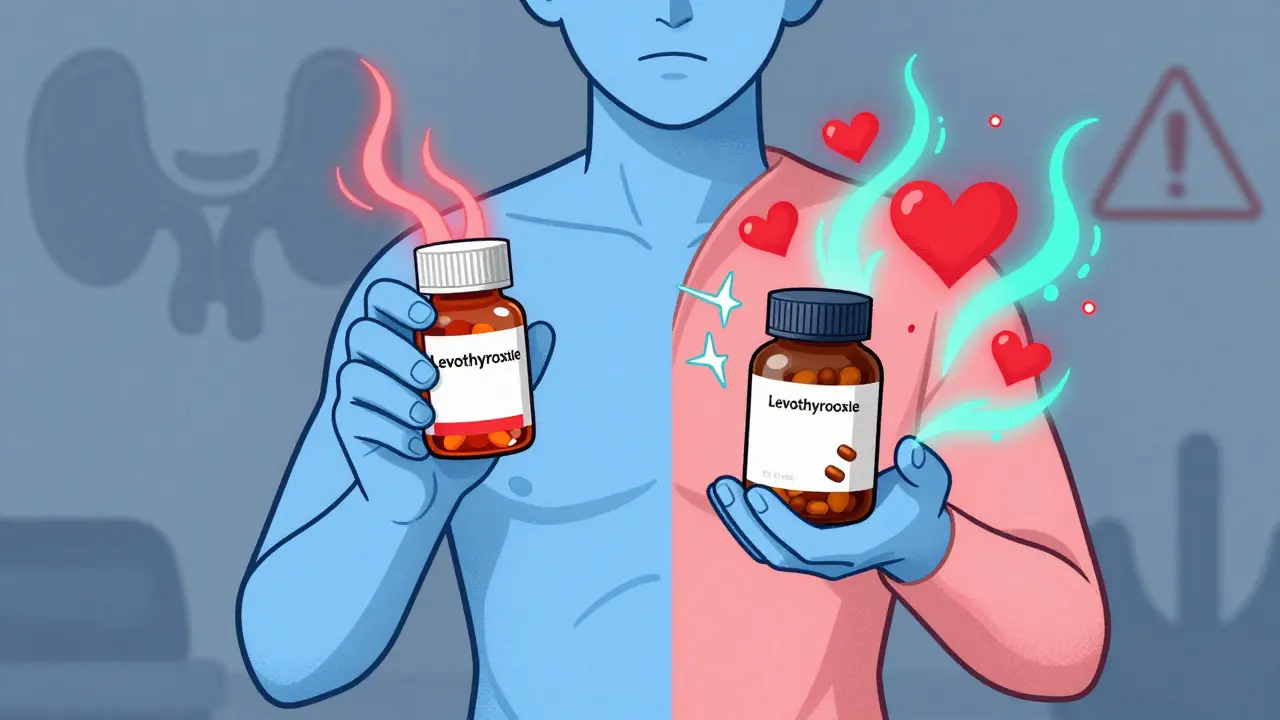
Thyroid Medication and Ashwagandha Interaction Calculator
How This Calculator Works
Based on clinical studies, ashwagandha can increase T3 levels by 41.5%, T4 by 19.6%, and TSH by 17.5% when taken at 600mg daily for 8 weeks. This calculator estimates potential changes when combining ashwagandha with your current thyroid medication.
Enter Your Medication Details
Potential Thyroid Hormone Changes
T3 Increase
0%
Typical study: +41.5%
T4 Increase
0%
Typical study: +19.6%
TSH Increase
0%
Typical study: +17.5%
Potential Symptoms
- Racing heart (tachycardia)
- Heart palpitations
- Insomnia
- Shaking hands
- Anxiety
- Weight loss
Recommendations
If you're on thyroid medication and considering ashwagandha, talk to your doctor immediately. Do not take ashwagandha if you're on thyroid medication without medical supervision.
When you're managing hypothyroidism with levothyroxine, every pill matters. The dose is fine-tuned over weeks or months to bring your TSH and thyroid hormones into a narrow, safe range. Now imagine adding a popular herbal supplement-ashwagandha-that can push those numbers dangerously high, without you even realizing it. This isn't theoretical. People are ending up in the ER with racing hearts, shaking hands, and sleepless nights because they didn’t know ashwagandha could interfere with their thyroid meds.
What Ashwagandha Actually Does to Your Thyroid
Ashwagandha isn’t just another stress herb. It’s a potent endocrine modulator. In a well-designed 2018 study of 50 people with subclinical hypothyroidism, taking 600 mg of standardized ashwagandha daily for eight weeks raised T3 levels by 41.5%, T4 by 19.6%, and even increased TSH by 17.5%. That’s not a gentle nudge. That’s a full-force signal to your thyroid to produce more hormones. The active compounds behind this? Withaferin A and withanolide D. These withanolides don’t just calm your nervous system-they directly stimulate the hypothalamic-pituitary-thyroid (HPT) axis. In lab studies, ashwagandha has been shown to boost thyroid peroxidase (TPO) activity by up to 38%. TPO is the enzyme your thyroid uses to make T3 and T4. More TPO activity means more thyroid hormone. If you’re already taking levothyroxine, that’s like turning up the volume on a speaker that’s already at max.Why This Is a Silent Emergency
The problem isn’t that ashwagandha doesn’t work-it’s that it works too well, and too unpredictably. Levothyroxine doses are measured in micrograms. A 75 mcg pill is precise. Ashwagandha? It’s a wild card. A 2021 ConsumerLab.com test of 15 popular brands found withanolide content ranging from 1.2% to 7.8%. That’s a six-fold difference in potency. One bottle might be mild. Another could be strong enough to trigger symptoms of hyperthyroidism. The American Association of Clinical Endocrinologists (AACE) documented 12 cases of thyrotoxicosis-dangerously high thyroid hormone levels-linked to ashwagandha use in people on thyroid medication. In these cases, T4 levels soared above 25 mcg/dL. Normal range? 4.5 to 12.0. TSH? Dropped below 0.01 mIU/L. Normal is 0.4 to 4.0. These aren’t lab anomalies. These are real patients with palpitations, atrial fibrillation, and bone loss.Real People, Real Consequences
On the Thyroid Help Forum, a user named 'ThyroidWarrior' shared how their TSH crashed from 1.8 to 0.08 after six weeks of taking 500 mg ashwagandha with 100 mcg levothyroxine. They ended up in urgent care with a heart rate of 130 beats per minute. Another patient, surveyed by the American Thyroid Association, had to be hospitalized for an irregular heartbeat after combining the two. It’s not just about acute reactions. Ashwagandha’s effects linger. Its half-life is around 12 days. That means even if you stop taking it, your thyroid hormone levels can stay elevated for two to three weeks. If you get a blood test during that window, your doctor might think your levothyroxine dose is too high-and lower it unnecessarily. Then, when the ashwagandha fully clears, you could end up hypothyroid again, with no idea why.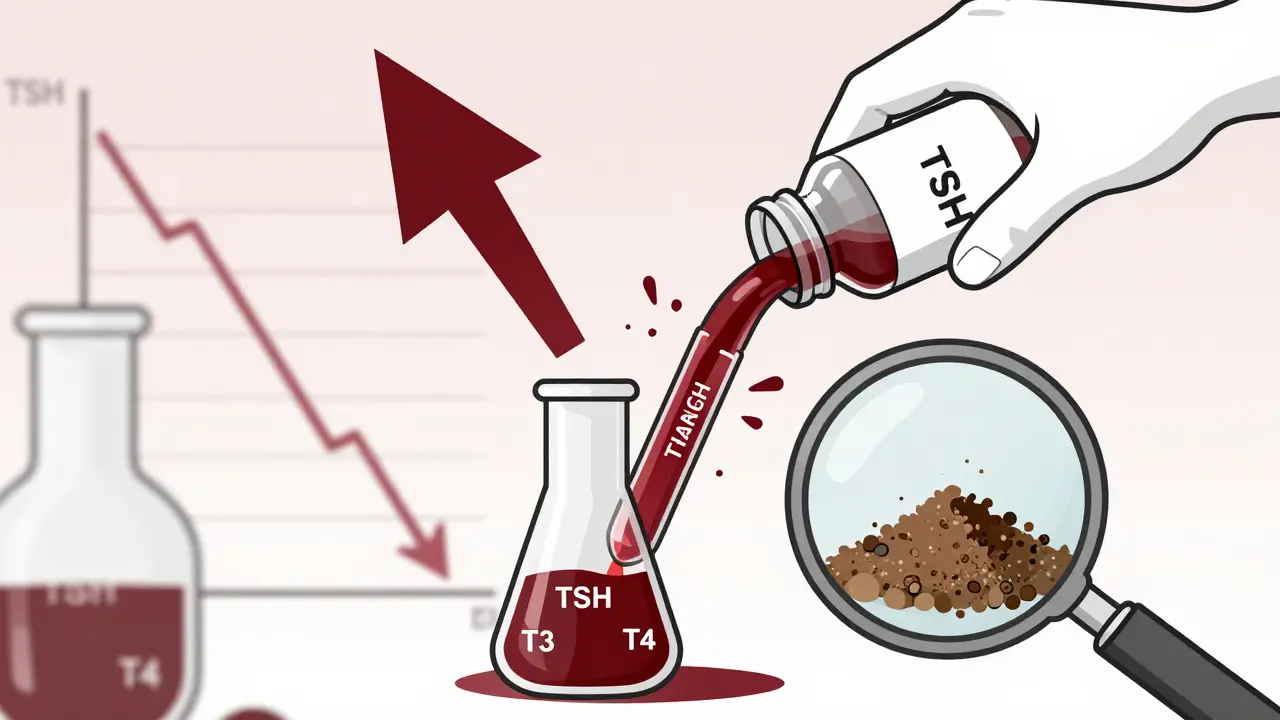
What Doctors Are Saying
Endocrinologists are united on this: avoid ashwagandha if you’re on thyroid medication. Dr. Angela Leung from UCLA’s Endocrine Clinic says it can cause iatrogenic hyperthyroidism-meaning the treatment itself creates the problem. Dr. Mary Hardy from Cedars-Sinai acknowledges ashwagandha might help people with untreated hypothyroidism, but warns: “The therapeutic window for thyroid medication is razor-thin. Adding an unregulated herb is a gamble with your health.” The Endocrine Society’s 2023 guidelines are clear: patients on levothyroxine, liothyronine, or antithyroid drugs should not take ashwagandha unless under strict medical supervision-with thyroid tests every two weeks. Even then, the risk is high. The FDA’s Adverse Event Reporting System recorded 47 cases of thyroid dysfunction tied to ashwagandha between 2019 and 2022. Thirty-two of those involved thyroid medication.What About Natural Alternatives?
If you’re taking ashwagandha for stress or sleep, you’re not alone. In a 2023 Consumer Reports survey, 23.4% of supplement users took it for thyroid health. But there are safer ways to manage stress without risking your thyroid balance. Regular exercise, mindfulness practices, and adequate sleep have proven benefits with zero interaction risk. Magnesium glycinate and L-theanine are well-studied for anxiety and sleep without affecting thyroid hormones. If you’re considering ashwagandha because your thyroid symptoms aren’t fully controlled, talk to your doctor. Your dose might need adjustment. Or you might need a different type of medication. Don’t self-medicate with herbs that could undo months of careful management.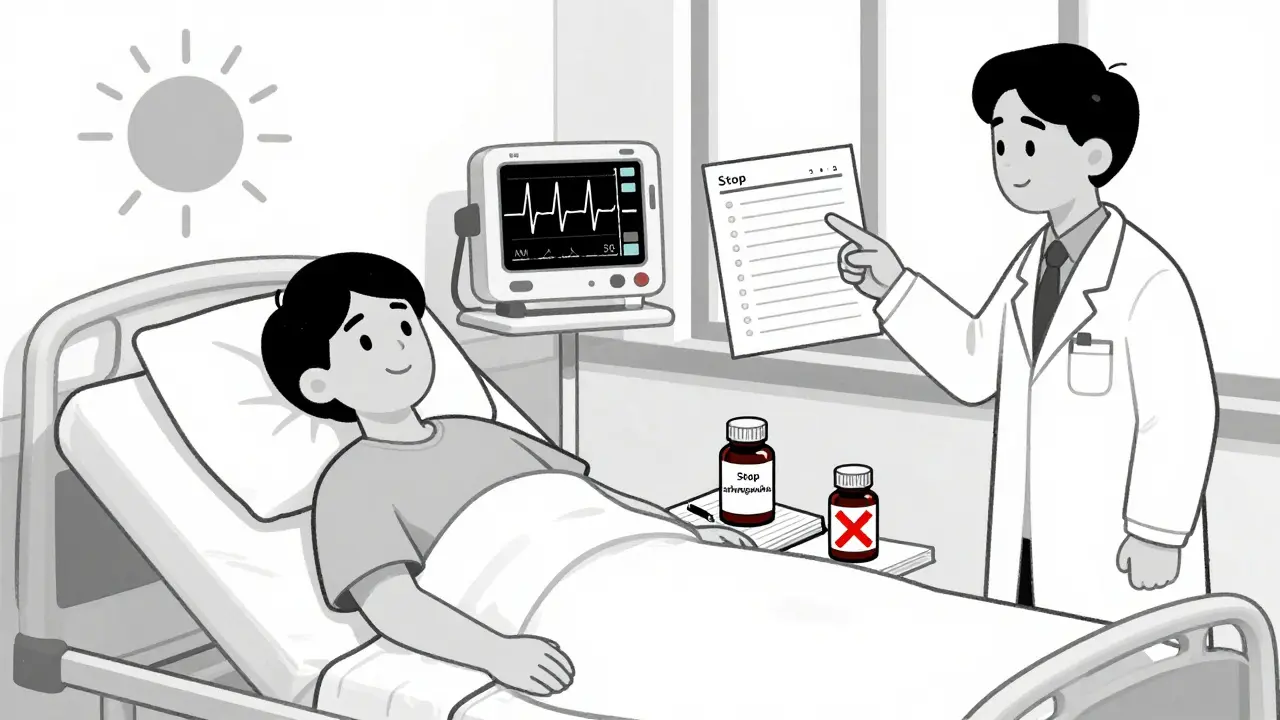
What You Should Do Right Now
If you’re on thyroid medication and taking ashwagandha:- Stop taking it immediately.
- Wait at least 30 days before your next thyroid blood test. This ensures your results reflect your true hormone levels, not the supplement’s lingering effects.
- Bring up the issue with your endocrinologist or primary care provider. Don’t wait for your next scheduled appointment.
- Ask for a full thyroid panel: TSH, free T4, free T3. Don’t rely on TSH alone.
- Do not take it if you’re on thyroid medication.
- Even if you’re not on meds yet but have low thyroid function, don’t use ashwagandha as a substitute for medical care.
- Supplements aren’t safer just because they’re natural. The FDA doesn’t test them for safety or purity before they hit shelves.


Comments (11)