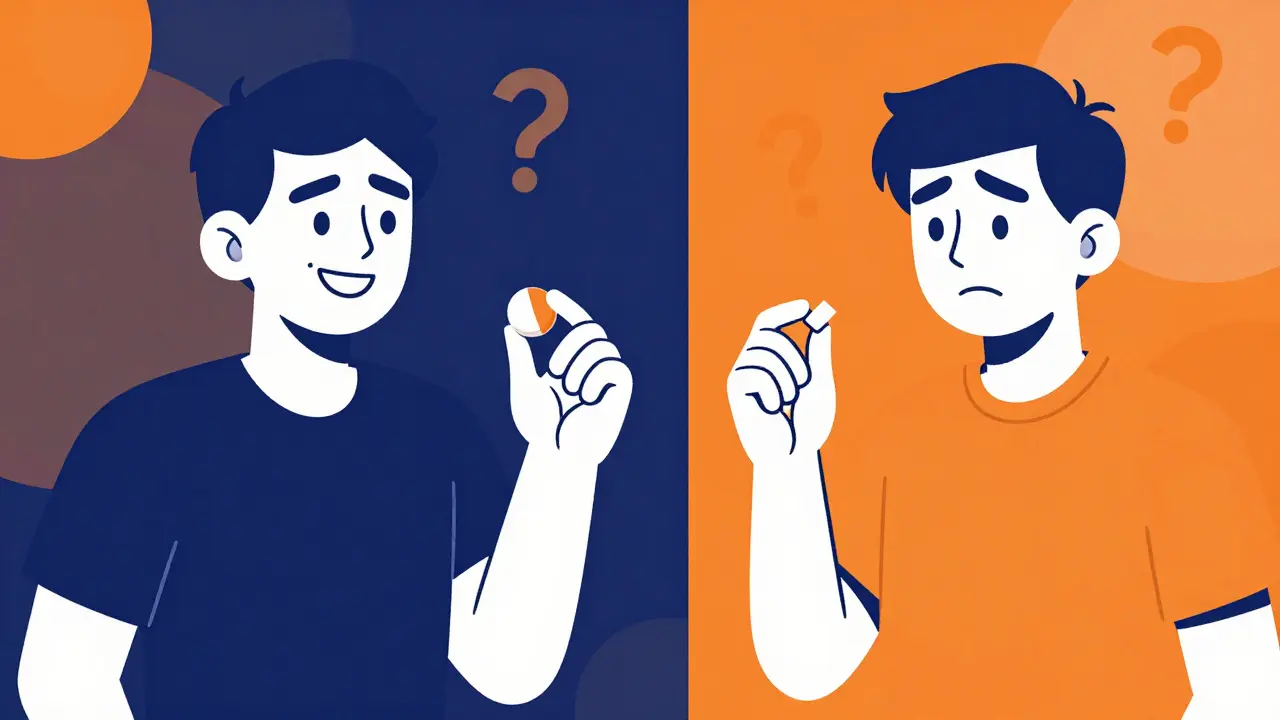
You pick up your prescription, and the pill looks completely different. It’s a different color, maybe a different shape, and it has a strange new code stamped on it. Your doctor switched you from the brand-name drug to the generic version to save money, but now you’re worried. Is it still going to work? This moment of doubt is more common than you might think, and it’s one of the biggest hurdles in modern healthcare.
Switching from a brand-name medication to its generic equivalent is supposed to be seamless. In theory, they are the same. In practice, patient behavior often changes. Understanding why this happens-and how to fix it-is crucial for staying healthy. Whether you are a patient, a caregiver, or a healthcare provider, knowing the best practices for these transitions can make the difference between consistent treatment and costly health setbacks.
The Science Behind the Switch
To understand why people struggle with generics, we first have to look at what a generic actually is. A generic drug is a medication that contains the same active ingredient as a brand-name drug but costs significantly less. In the United States, the Food and Drug Administration (FDA) requires these drugs to meet strict standards before they reach the pharmacy shelf.
The key concept here is bioequivalence, which means the generic drug delivers the same amount of active ingredient into a patient's bloodstream over the same period of time as the brand-name drug. The FDA allows a small margin of error-specifically, the generic must deliver between 80% and 125% of the exposure seen with the brand. While this sounds like a wide range, it is statistically designed to ensure clinical equivalence. Dr. Sarah Ibrahim from the FDA Office of Generic Drugs has noted that this variability is identical to the differences found between different batches of the same brand-name product.
However, while the active ingredients are identical, the inactive ingredients-the fillers, binders, and dyes-are not required to be the same. For most people, this doesn’t matter. But for about 3.7% of patients, these inactive components can trigger allergic reactions or sensitivities. More importantly, the change in appearance triggers a psychological response that can undermine trust in the medication.
The Power of Perception: The Nocebo Effect
If the chemistry is the same, why do some patients feel worse after switching? The answer lies in the mind, not the medicine. This phenomenon is known as the nocebo effect, which refers to negative health outcomes resulting from negative expectations or beliefs about a treatment.
A striking study published in the European Journal of Public Health by Castaño et al. in 2018 highlighted just how powerful this is. Researchers gave participants placebos (sugar pills) labeled either as "brand-name" or "generic." Despite both groups receiving the exact same inert substance, those who believed they were taking the generic version discontinued their medication 23.7% more frequently. They also reported 18.3% higher pain levels. This proves that perception alone can alter physiological experiences and adherence behaviors.
This isn't just about placebo power; it's about confidence. When a patient sees a cheaper, differently colored pill, they may subconsciously believe it is inferior. A 2021 Consumer Reports survey found that 62% of Americans trust brand-name medications more than generics, even when they know the science says otherwise. This lack of trust leads to skipping doses or stopping treatment entirely, which is dangerous for chronic conditions.
When the Switch Gets Complicated
For most medications, the transition is safe and effective. However, there are specific categories where extra caution is needed. These are often called narrow therapeutic index (NTI) drugs, which are medications where small changes in blood concentration can lead to toxicity or loss of efficacy.
Examples include levothyroxine for thyroid issues, warfarin for blood thinning, and certain anti-seizure medications like lamotrigine. A 2017 study in the New England Journal of Medicine documented slightly higher hospitalization rates among patients switched to generic versions of these critical drugs. Dr. Aaron Kesselheim from Harvard Medical School warns that for NTI drugs, even small pharmacokinetic differences within the allowed bioequivalence range can be clinically meaningful for sensitive individuals.
Additionally, elderly patients face unique challenges. A 2020 University of Michigan study found that 28.4% of older adults became confused by changes in pill shape and color. If a patient takes five different medications, and three of them change appearance due to generic substitution, the risk of medication errors skyrockets. One study in the American Journal of Managed Care found that generic substitution increased medication errors by 27% among elderly patients managing multiple prescriptions.
Best Practices for Patients
If you are navigating a switch from brand to generic, you have agency in the process. Here are practical steps to ensure you stay adherent and safe:
- Ask Questions Early: Don’t wait until you take the first pill. Ask your pharmacist if the generic is therapeutically equivalent. If you are on an NTI drug, ask if you can remain on the brand name or stick to a specific manufacturer’s generic.
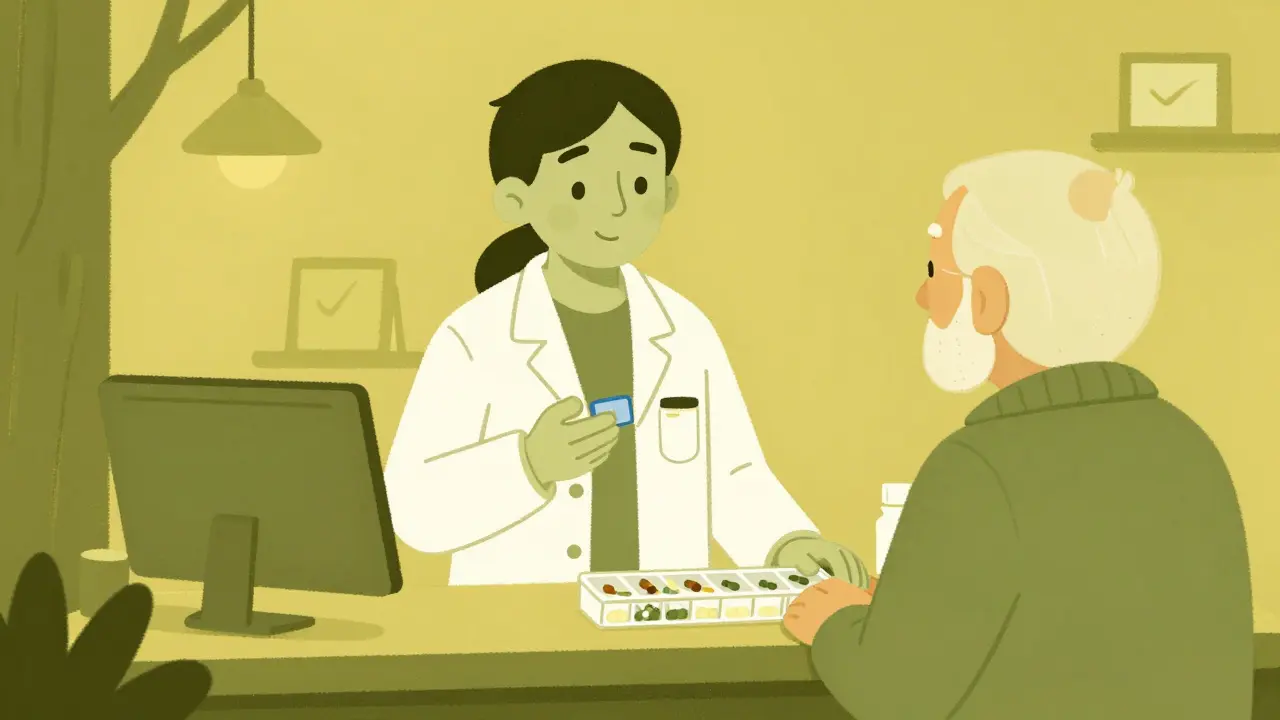
- Use Pill Organizers: Since the visual cue of the pill changes, rely on external tools. Using a weekly pill organizer removes the confusion of "Is this my old pill or my new one?" This simple habit addresses the appearance confusion cited in 63% of positive patient reviews online.
- Track Your Symptoms: Keep a simple log for the first two weeks after the switch. Note any new side effects or changes in how you feel. If you notice issues, contact your doctor immediately. Often, symptoms resolve as the body adjusts, but sometimes a different generic manufacturer works better for you.
- Request Manufacturer Consistency: You can ask your pharmacy to dispense generics from the same manufacturer every time. This ensures the pill looks and behaves consistently, reducing anxiety and confusion.
Best Practices for Healthcare Providers
Pharmacists and doctors play a pivotal role in smoothing this transition. Research shows that communication gaps are the root cause of 37% of adherence issues during switches. Here is how providers can help:
- Proactive Counseling: The American Pharmacists Association recommends a minimum 3.7-minute conversation during transitions. This should cover four key points: explaining bioequivalence, addressing appearance differences, highlighting cost benefits, and inviting patient concerns. Currently, only 28% of real-world transitions include a proper explanation of bioequivalence.
- Assess Health Literacy: Use validated tools to check if a patient understands what "generic" means. A 2021 study found that 47% of low-literacy patients misunderstood generic equivalence. Simple language beats medical jargon every time.
- Follow-Up Calls: Evidence suggests that a follow-up call within 72 hours of a generic substitution can increase adherence by 31%. A quick check-in to ask, "How are you feeling with the new pill?" can catch problems early.
- Leverage Technology: E-prescribing systems can flag brand-to-generic switches automatically. Ensuring these flags trigger pharmacist counseling workflows can improve adherence rates by over 20%, according to Surescripts data.
Comparing Outcomes: Brand vs. Generic
| Attribute | Brand-Name Drug | Generic Drug |
|---|---|---|
| Active Ingredient | Identical to generic | Identical to brand |
| Cost Savings | Higher copays | 80-85% lower price on average |
| Bioequivalence | Reference standard | Must match brand (80-125% range) |
| Inactive Ingredients | Fixed formulation | May vary by manufacturer |
| Patient Trust | High (62% prefer) | Lower due to nocebo effects |
| Adherence Impact | Stable baseline | Risk of drop without counseling |
The Role of Cost and Access
We cannot talk about generics without talking about money. Generic drugs comprise roughly 90% of all prescriptions dispensed in the U.S., largely because they are affordable. The average price reduction is between 80% and 85%. For many patients, especially those on Medicare facing the "donut hole" coverage gap, generics are the only way to afford necessary treatment.
Interestingly, cost savings can actually improve adherence for some groups. A 2018 JAMA Internal Medicine study found that lower copays for generic statins improved adherence by 14.2%. However, this benefit is uneven. Low-income patients showed 14.7% better adherence with generics due to affordability, while high-income patients showed 9.3% worse adherence due to brand preference. This highlights that adherence is not just a medical issue; it’s an economic and psychological one.
Future Trends and Innovations
The landscape is evolving. The FDA launched the Generic Drug Communication Initiative in 2023, requiring manufacturers to include transition-specific education materials starting in 2025. This aims to directly address the information gap that fuels the nocebo effect.
Technology is also stepping in. AI-powered adherence platforms like AiCure use computer vision to verify that patients are taking their medication correctly. A 2023 study showed these tools improved adherence during generic transitions by 37%. Additionally, the Generic Pharmaceutical Association introduced a "Seamless Switch" certification program in 2024, encouraging manufacturers to maintain consistent pill appearances for critical medications to reduce confusion among elderly patients.
As biologic drugs lose patent protection, we will see more "biosimilar" transitions. These are more complex than small-molecule generics, and early data suggests adherence drops could be even sharper without robust patient support programs. Preparing for this shift is essential for the entire healthcare ecosystem.
Are generic drugs exactly the same as brand-name drugs?
They contain the same active ingredient, strength, dosage form, and route of administration. However, they may differ in inactive ingredients like colors, flavors, and preservatives. The FDA requires them to be bioequivalent, meaning they perform similarly in the body, but they are not chemically identical in every aspect.
Why does my generic pill look different from my brand-name pill?
Brand-name companies hold patents on the specific design, color, and shape of their pills. Generic manufacturers cannot copy this intellectual property. Therefore, each generic maker creates its own distinct appearance. This visual difference is a common source of patient confusion and anxiety.
Can I request to stay on the brand-name medication?
Yes, but it usually requires a "Dispense As Written" notation from your doctor. Insurance plans may charge higher copays for brand names, and some plans require prior authorization. For narrow therapeutic index drugs, doctors are more likely to approve staying on the brand to ensure stability.
What is the nocebo effect in relation to generics?
The nocebo effect occurs when negative expectations about a treatment cause actual negative symptoms. If a patient believes a generic is "weaker" or "inferior," they may experience reduced efficacy or increased side effects, even though the chemical composition is effectively the same as the brand.
Which medications require extra caution when switching to generics?
Narrow therapeutic index (NTI) drugs require careful monitoring. These include levothyroxine (thyroid), warfarin (blood thinner), lithium (mood stabilizer), and certain anti-seizure medications like phenytoin and lamotrigine. Small variations in absorption can have significant clinical consequences for these drugs.
How can pharmacists help improve adherence during a switch?
Pharmacists can provide proactive counseling that explains bioequivalence, addresses appearance changes, and invites questions. Follow-up calls within 72 hours of the switch have been shown to increase adherence by 31%. They can also help coordinate refills to minimize confusion.