Every year, millions of Americans face unexpected medical bills that wreck their credit, drain their savings, or even lead to wage garnishment. In 2023, the Consumer Financial Protection Bureau reported that 100 million Americans held $195 billion in medical debt. Many didn’t see these costs coming-not because they were careless, but because the system let them be blindsided. That’s changing. New laws, especially in New York, are forcing healthcare providers to be transparent, fair, and accountable when it comes to patient finances and consent.
Separate Consent for Treatment and Payment
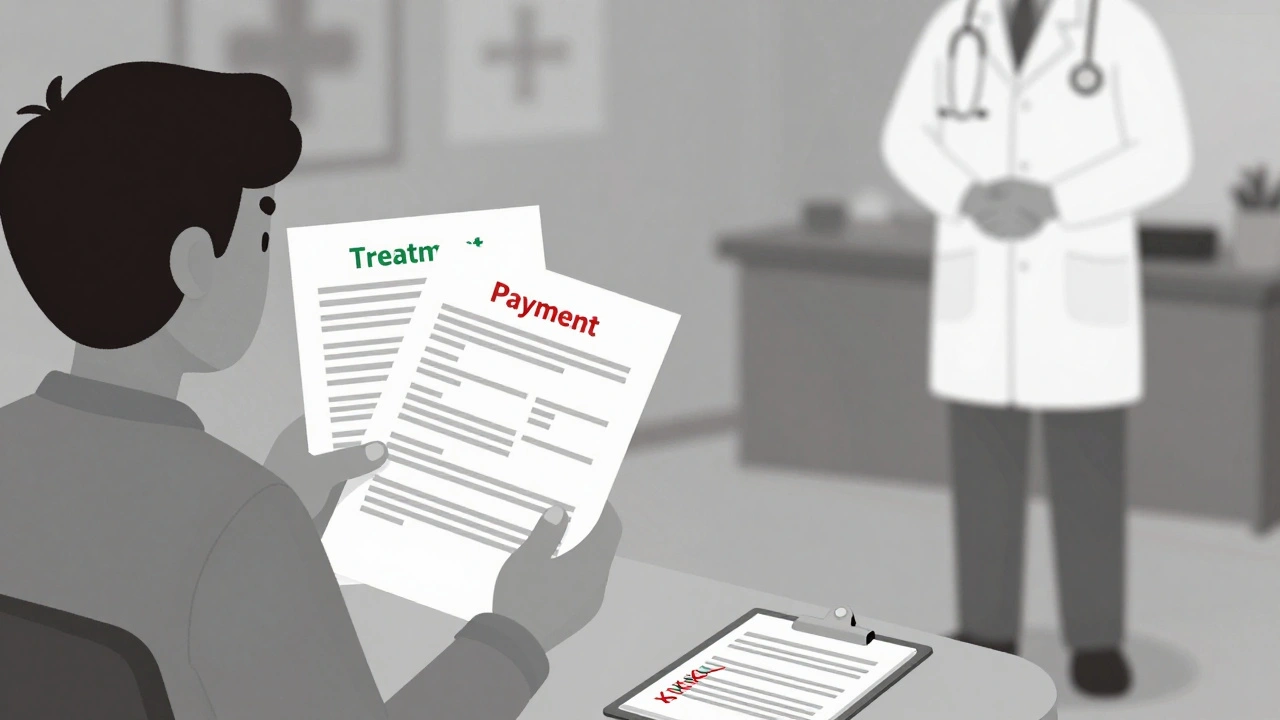
For years, patients signed one form at the doctor’s office that bundled consent for treatment with permission to charge them. That form might have been tucked into a stack of paperwork, signed without reading, and then used to authorize everything from an X-ray to a payment plan for a $5,000 procedure. Starting October 20, 2024, New York State banned that practice under Public Health Law Section 18-c.Now, providers must get two separate signatures: one for medical care and another for payment. This means you can’t be forced to agree to a financing deal just because you agreed to get your blood pressure checked. If a provider skips this step, they can be fined $2,000 per violation. The goal? To make sure patients aren’t tricked into financial agreements they didn’t fully understand.
But here’s the twist: as of August 2025, enforcement of Section 18-c was suspended. That doesn’t mean the law is gone-it’s on hold while legal and administrative issues are sorted out. Still, many providers have already changed their forms and training. Patients should still expect to be asked separately about payment options. Don’t assume you’re signing away your rights just because you’re handed a clipboard.
No More Filling Out Your Credit Applications for You
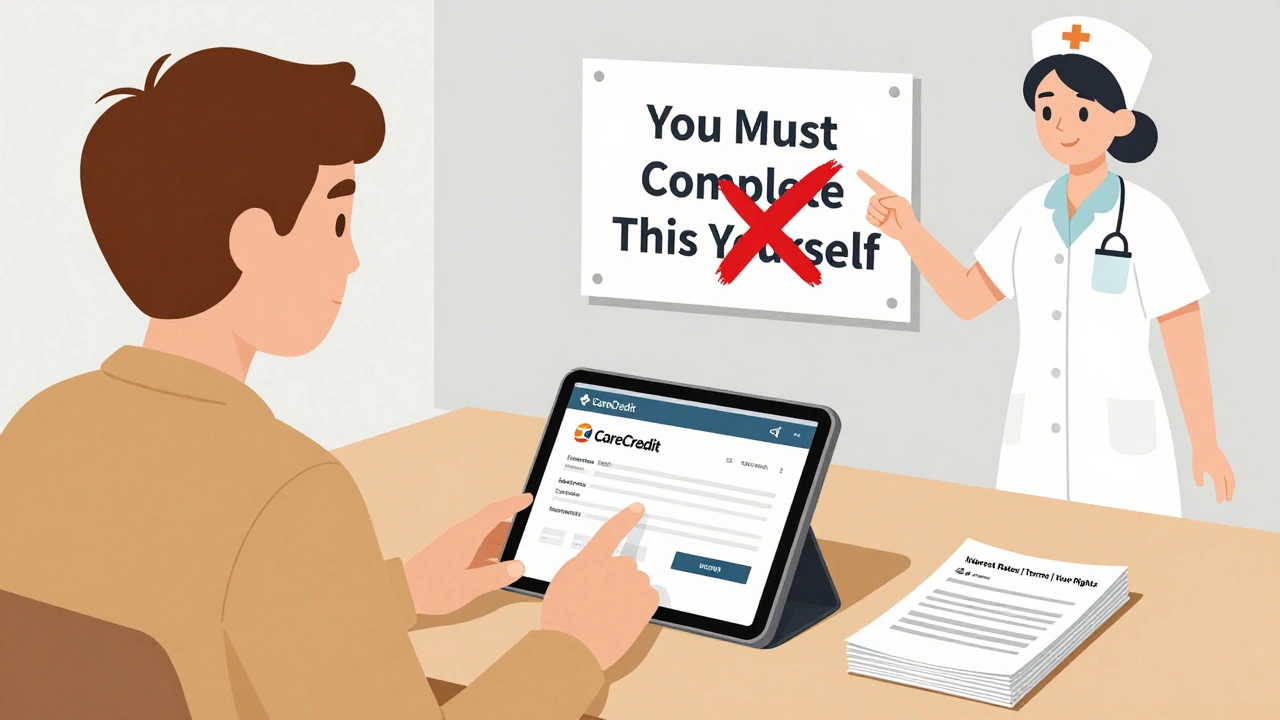
You’ve probably seen it: a nurse or front desk staff member says, “We can help you apply for CareCredit right now,” and then starts typing on the tablet while you’re still sitting down. That’s now illegal under General Business Law Section 349-g in New York.Providers can answer your questions. They can explain what CareCredit is, how interest works, or what the payment terms look like. But they can’t touch the application. Not one field. Not even your name. The form must be completed entirely by you. Violations carry fines of up to $5,000 per incident.
This law targets a common predatory tactic: staff pushing patients into high-interest medical financing without fully explaining the risks. Many patients think they’re getting a “discount” or “payment plan,” but end up paying double the original bill due to hidden fees and compounding interest. Now, you have to be the one making that choice-without pressure.
No Credit Cards Before Emergency Care
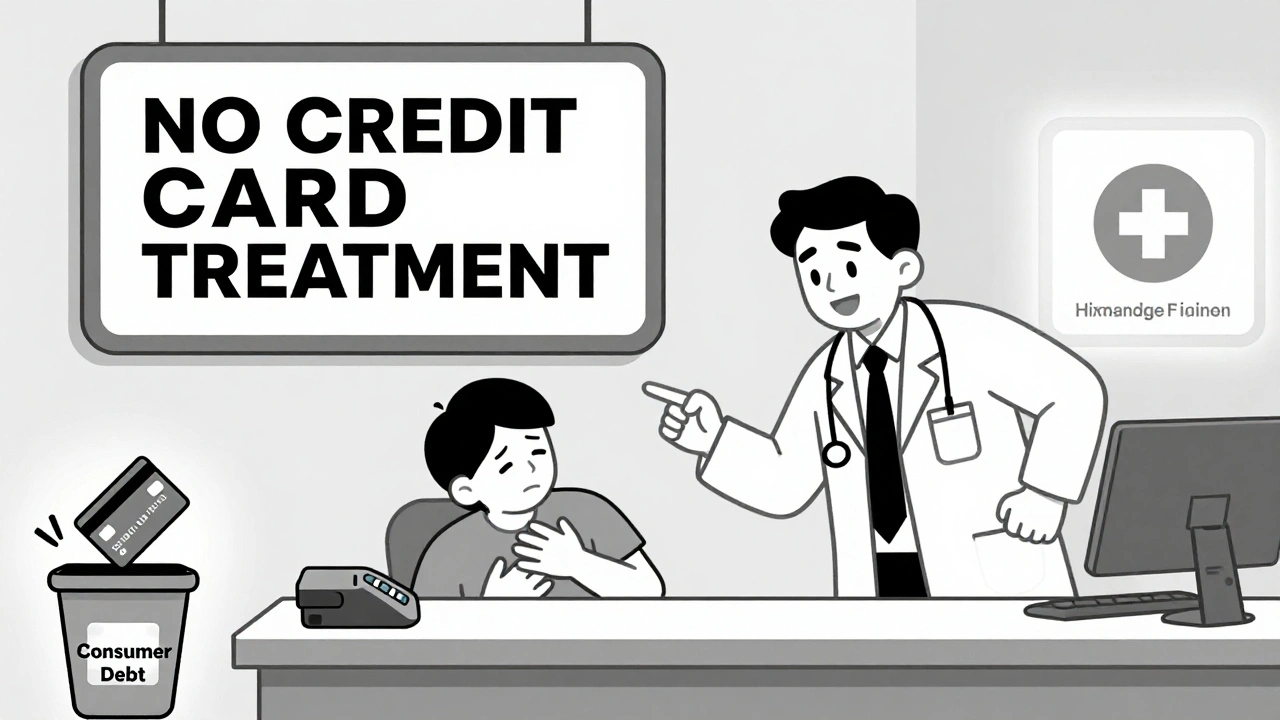
If you show up at the ER with chest pain, the hospital can’t demand your credit card before treating you. That’s exactly what General Business Law Section 519-a prohibits. It also bans providers from keeping your card on file for future medical visits unless you explicitly ask for it.Why does this matter? Because using a regular credit card for medical bills strips you of protections. Medical debt from healthcare-specific financing tools like CareCredit, Advance Care, or similar programs may qualify for federal protections-like being removed from credit reports or being exempt from wage garnishment. But if you use a Visa or Mastercard, you’re treated like any other consumer debtor. No special rules. No mercy.
Providers must now clearly tell you this risk every time you use a traditional credit card to pay for care. That’s not a suggestion. It’s a legal requirement. You need to know: if you pay with a credit card, you lose the safety net that medical debt programs are supposed to offer.
How This Compares to Federal Laws
New York’s laws don’t replace federal protections-they build on them. The No Surprises Act, which took effect in January 2022, stops surprise bills from out-of-network providers. If you go to an in-network hospital but get treated by an out-of-network anesthesiologist, you can’t be charged extra. That’s a big win.But the No Surprises Act doesn’t touch how you pay. It doesn’t stop a provider from pushing you into a high-interest loan. It doesn’t require separate consent. It doesn’t ban keeping credit cards on file. That’s where New York’s laws step in. They’re the first in the nation to directly regulate the financial side of healthcare-not just the clinical side.
And they’re not alone. The Consumer Financial Protection Bureau (CFPB) finalized a rule in 2024 to remove medical debt from credit reports entirely. That’s huge. Before, a $300 unpaid ER bill could tank your credit score for years. Now, those debts won’t show up unless they’re settled and still unpaid after 180 days.
What This Means for You as a Patient
You now have more power than ever to control your medical finances. Here’s what you should do:- Always ask: “Is this consent for treatment or payment?” If you’re signing one form for both, push back.
- If someone offers to help you apply for CareCredit or similar financing, say, “I’ll fill this out myself.”
- If you’re asked for a credit card before emergency care, you have the right to refuse. They must treat you first.
- Ask: “Will this payment be treated as medical debt or consumer debt?” If it’s a regular credit card, you’re not getting the same protections.
- Keep copies of all consent forms and billing statements. If something looks wrong, file a complaint with your state’s Department of Health.
These laws don’t make healthcare cheaper. But they make it fairer. They stop providers from exploiting confusion, fear, or urgency to trap patients in debt. You’re not just a patient-you’re a consumer with rights.
What Providers Are Doing to Comply
Hospitals and clinics in New York have had to overhaul their entire intake process. Staff now need training on the difference between medical financing and credit cards. Forms have been redesigned. Electronic systems have been updated. Some offices even have printed handouts explaining the new rules.But compliance isn’t easy. The state released its official guidance just two days before the laws took effect. Many providers scrambled. Some still aren’t fully compliant. That’s why patient awareness matters. If you’re asked to sign something that looks old, ask. If you’re pressured to use a payment plan, say no. Your refusal might be the push a provider needs to finally fix their system.
What’s Next for Patient Protection Laws
New York is leading the charge, but other states are watching. Legal experts predict California, Illinois, and Massachusetts will follow with similar rules in the next two years. The federal government is also under pressure to expand protections beyond the No Surprises Act.One major gap remains: most states still don’t require providers to explain the difference between medical financing and credit cards. That’s why New York’s disclosure rule is so important. It’s not just about stopping bad behavior-it’s about empowering patients with knowledge.
As medical debt continues to rise, and as credit reporting rules evolve, these laws will become the new baseline. What’s happening in New York isn’t an anomaly. It’s the future of healthcare consumer protection.
Do these New York laws apply to me if I live in another state?
These specific laws only apply to healthcare providers operating in New York State. But if you receive care in New York-even if you’re from another state-you’re protected under these rules. Also, federal protections like the No Surprises Act and the CFPB’s medical debt removal rule apply nationwide. So while you won’t get New York’s extra rules outside the state, you still have basic federal rights everywhere.
What happens if a provider violates these laws?
Providers can face heavy fines: $2,000 per violation for improper consent and up to $5,000 per violation for filling out patient financial applications. The New York State Department of Health can also suspend or revoke a provider’s license for repeated offenses. Patients can file complaints directly with the Department of Health or the Attorney General’s office. In some cases, patients may also be entitled to refunds or compensation.
Can I still use CareCredit or similar financing?
Yes, you can still use medical financing programs like CareCredit. The law doesn’t ban them-it just bans providers from helping you sign up. You must complete the application yourself. This gives you time to read the terms, compare interest rates, and decide without pressure. Just remember: these programs offer more protections than regular credit cards, including exemption from credit reporting and wage garnishment in some cases.
Why does it matter if I pay with a credit card vs. medical financing?
Medical financing programs are designed specifically for healthcare costs and often come with protections that regular credit cards don’t. For example, under CFPB rules, medical debt from these programs can be removed from credit reports. They also can’t lead to wage garnishment or liens on your home. But if you use a Visa or Mastercard, your debt is treated like any other consumer debt-meaning it can hurt your credit, lead to collections, and even result in legal action. Always ask how your payment will be classified.
Is medical debt still reported on credit reports?
As of 2024, the CFPB banned the reporting of most medical debt on credit reports-unless it’s been unpaid for at least 180 days and has been sent to collections. Even then, the debt must be fully paid before it can be reported again. This is a major shift from how medical bills were treated before. If you see a medical debt on your credit report that’s less than 180 days old, dispute it immediately with the credit bureau.


Comments (8)