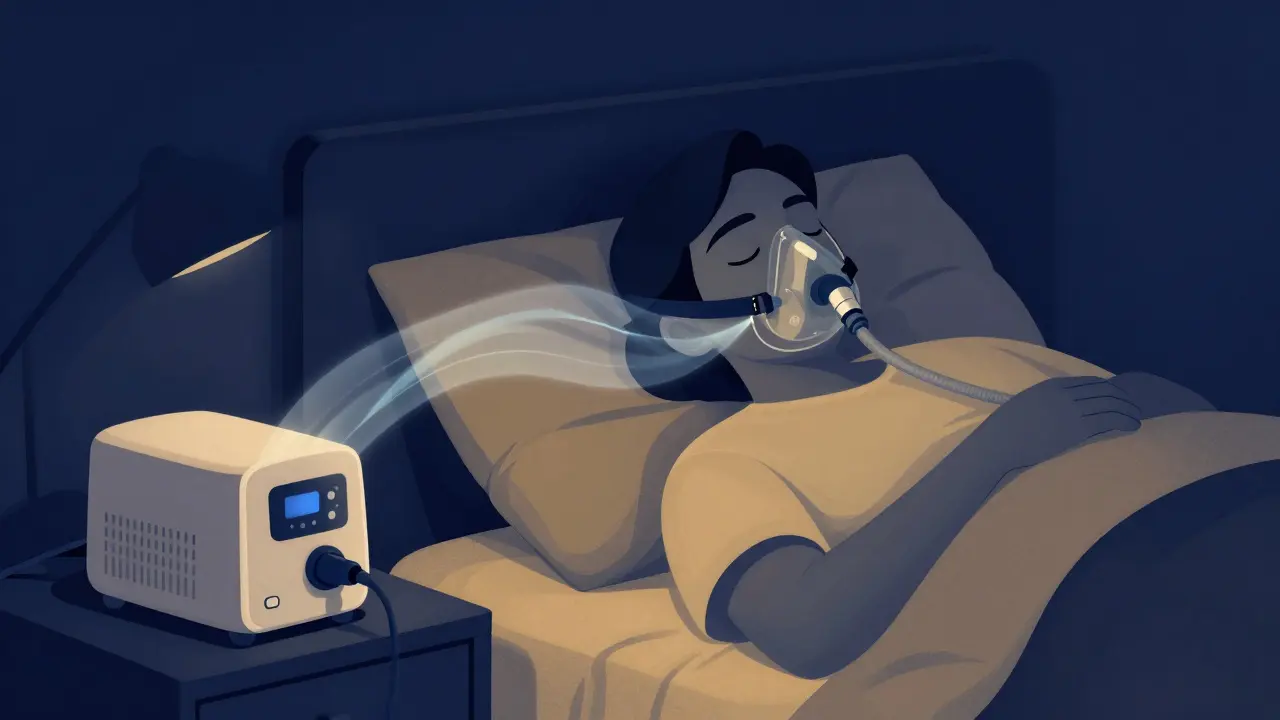
Waking up exhausted despite spending eight hours in bed is a frustrating reality for millions of people. If you have been diagnosed with obstructive sleep apnea, a condition where your airway collapses during sleep, the doctor likely recommended a CPAP machineContinuous Positive Airway Pressure device that delivers pressurized air to keep airways open. It is the gold standard treatment, but let’s be honest: staring at a plastic tube and a mask can feel daunting. Many people give up within the first few months because they pick the wrong machine or struggle with a poor fit. You do not have to accept discomfort as part of the process. With the right equipment setup and a few practical tricks, CPAP therapy can become an invisible part of your night rather than a chore.
Understanding Your Options: Types of PAP Machines
Not all pressure therapy devices are created equal. While everyone calls them "CPAPs," there are distinct technologies designed for different breathing patterns and comfort needs. Choosing the right one depends on your specific diagnosis and how your body reacts to pressure.
The traditional CPAP (Continuous Positive Airway Pressure)Delivers a single, constant pressure level throughout the night provides a steady stream of air. It is simple, reliable, and usually the most affordable option, costing between $500 and $1,000. However, it does not adjust if you toss and turn or change sleeping positions. For many modern users, the APAP (Auto-Adjusting Positive Airway Pressure)Automatically adjusts pressure levels based on real-time breathing patterns is a better fit. These machines monitor your breath and lower the pressure when you are stable, then raise it slightly if you start to choke or snore. This adaptability often leads to higher comfort levels, though they cost more, typically ranging from $1,700 to $3,000.
If you find it hard to breathe out against the constant push of air, you might need a BiPAP (Bilevel Positive Airway Pressure)Provides two different pressure levels: higher for inhalation and lower for exhalation. BiPAP devices offer a high pressure for inhaling and a significantly lower pressure for exhaling. This is crucial for patients who require high pressure settings (above 15 cm H2O) or those with comorbid conditions like COPD. They are more expensive and complex, often requiring additional testing, but they provide superior comfort for difficult cases.
| Machine Type | Best For | Price Range | Key Feature |
|---|---|---|---|
| CPAP | Stable breathing patterns, budget-conscious users | $500 - $1,000 | Single fixed pressure |
| APAP | Restless sleepers, variable breathing | $1,700 - $3,000 | Auto-adjusts pressure |
| BiPAP | High pressure needs, COPD, difficulty exhaling | $600 - $1,600+ | Two pressure levels (IPAP/EPAP) |
| Travel CPAP | Frequent travelers, minimalists | $600 - $800 | Compact, lightweight design |
For those who travel frequently, Travel CPAPsCompact, lightweight versions of standard machines designed for portability like the ResMed AirMini are game-changers. Weighing less than a pound, they fit in your palm. Keep in mind that these smaller units often lack built-in humidifiers, so you may need to buy separate accessories if you suffer from dryness.
The Mask Dilemma: Finding the Right Fit
Here is the hard truth: even the best machine will fail if the mask leaks. Poor mask fit is the number one reason people quit therapy, not the pressure itself. Experts warn that 20-30% of patients abandon CPAP due to mask issues alone. The goal is to get your leak rate below 24 liters per minute, which is considered acceptable by manufacturers like ResMed.
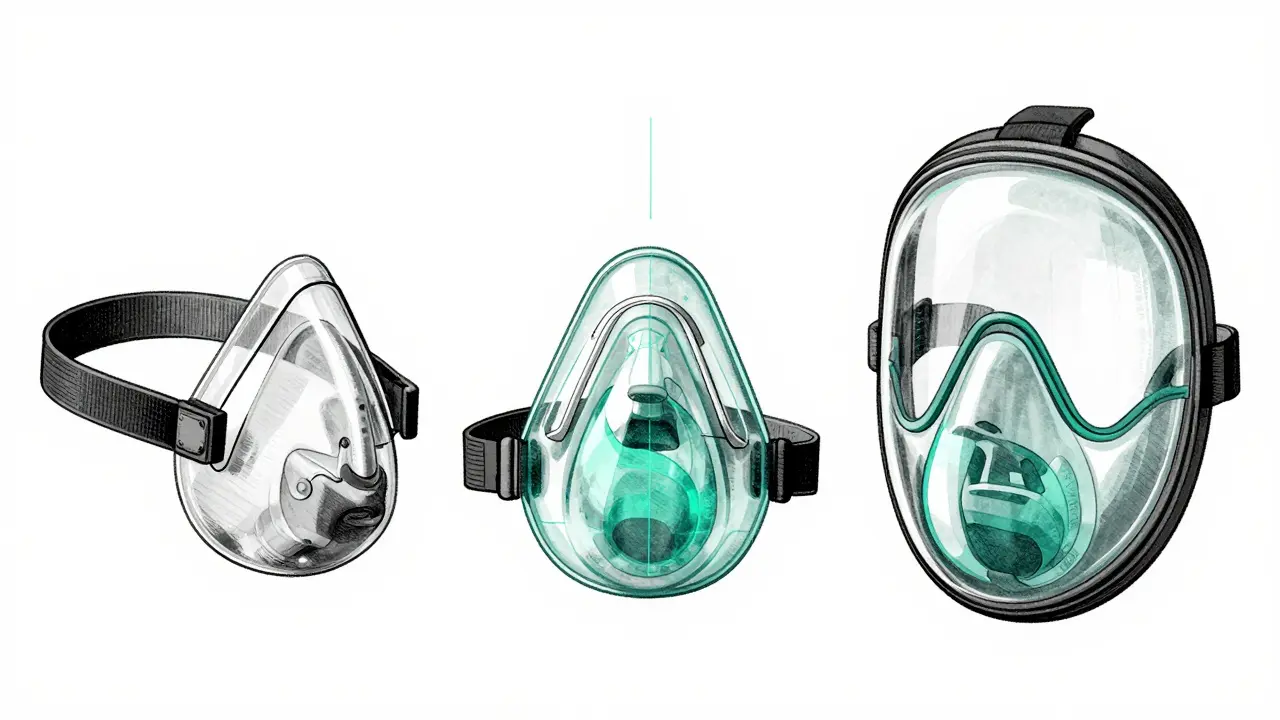
You have three main choices for masks, and each serves a different lifestyle:
- Nasal Pillows: These sit just inside your nostrils. They are tiny, leave your face free, and are excellent for side sleepers. If you wear glasses or hate feeling strapped in, start here. Users report that switching to nasal pillows can cut leak rates dramatically overnight.
- Nasal Masks: These cover only your nose. They are a good middle ground, offering stability without covering the mouth. About 45% of users prefer this style because it balances comfort with security.
- Full-Face Masks: These cover both your nose and mouth. They are essential if you are a mouth breather or have chronic nasal congestion. However, they are bulkier and more prone to skin irritation around the cheeks and chin.
Fitting is not a one-and-done task. Your face swells depending on hydration, allergies, and even time of day. Most people need three or more fittings before they find the sweet spot. Measure your nasal bridge width and cheekbone structure carefully. A mask that is too tight will cause red marks and sores; one that is too loose will whistle loudly enough to wake your partner.
Strategies to Build Adherence and Stick With It
Adherence means using your machine for at least four hours a night, on at least 70% of nights. Insurance companies often track this data remotely. If you fall short, you risk losing coverage. But beyond the paperwork, consistent use reduces cardiovascular risks by 20-30% and transforms your daytime energy levels. Here is how to make it stick.
First, use the ramp feature. This setting starts the machine at a very low, gentle pressure and gradually increases it to your prescribed level over 10 to 45 minutes. It helps you fall asleep without fighting against strong air. Seventy-five percent of successful users rely on this feature nightly.
Second, manage the moisture. Dry, irritated sinuses are a major complaint. Modern machines come with heated humidifiers. Adjust the humidity level until your throat feels comfortable upon waking. If condensation builds up in the tube (rainout), consider using a heated tube accessory, which keeps the air warm all the way to the mask. Data shows that users with heated tubing have a 78% adherence rate compared to 52% for those without.
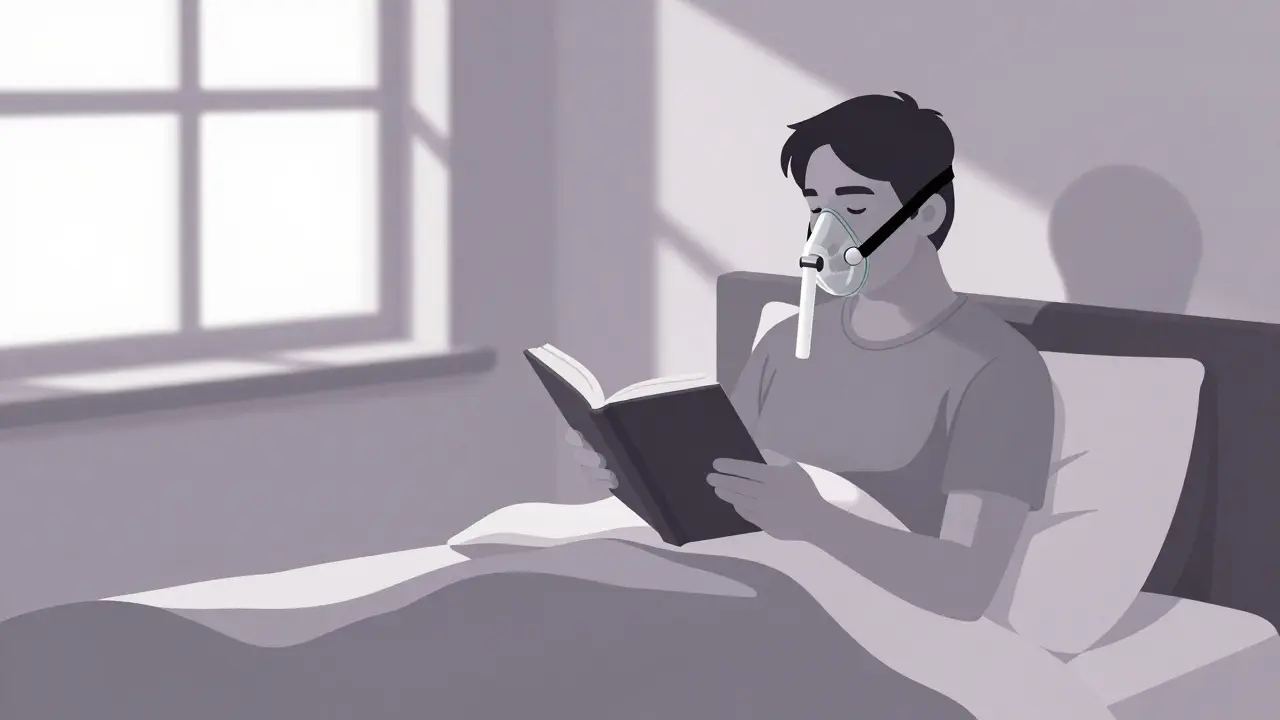
Third, desensitize yourself during the day. Do not wait until bedtime to try the mask. Wear it while watching TV or reading for five to ten minutes, three times a day. Get used to the sensation of air and the weight of the straps. This psychological conditioning makes nighttime usage feel normal rather than intrusive.
Finally, leverage technology. Apps like myAir provide personalized coaching and reward consistency. Seeing a streak of good nights can be surprisingly motivating. Additionally, consider a CPAP-specific pillow with cutouts for your mask. Regular pillows compress the mask and break the seal, leading to leaks and noise. A specialized pillow can reduce leaks by up to 40%.
Troubleshooting Common Issues
Even with the best setup, hiccups happen. If you experience claustrophobia, switch to nasal pillows immediately-they remove the visual barrier of a large mask. If the noise bothers you, check for leaks first; a hissing sound is almost always a seal issue, not a motor problem. Modern machines operate at whisper-quiet levels, around 25-30 decibels.
Dry eyes? You are likely leaking air upward into your face. Tighten the strap slightly or try a mask with a better downward angle. Skin irritation? Use a mask liner or silicone interface pad to create a soft barrier between the mask cushion and your skin. Clean your mask daily with mild soap and water to prevent oil buildup, which degrades the silicone and causes leaks.
How long does it take to get used to a CPAP machine?
Most users report an acclimation period of 2 to 4 weeks. During this time, you may experience initial discomfort, dryness, or difficulty falling asleep. Consistency is key-using the machine every night, even if imperfectly, helps your brain associate the device with sleep rather than stress.
What is the difference between CPAP and APAP?
CPAP delivers a single, fixed pressure level throughout the night. APAP automatically adjusts the pressure up or down based on your breathing patterns in real-time. APAP is often more comfortable for restless sleepers because it uses the minimum pressure necessary to keep the airway open.
Why is my CPAP mask leaking?
Leaks are usually caused by improper fit, worn-out cushions, or moving during sleep. Ensure the mask size matches your facial measurements. Check the cushion for cracks or loss of elasticity. If you move a lot, consider a mask with flexible headgear or switch to nasal pillows which are less affected by movement.
Does insurance cover CPAP machines?
In most cases, yes. Medicare and private insurers typically cover 80% of the cost after your deductible, provided you have a valid prescription and meet adherence requirements (usually 4 hours/night for 30 days). Prior authorization is often required.
Can I use a CPAP machine if I breathe through my mouth?
Yes, but you need a full-face mask that covers both your nose and mouth. Nasal-only masks will not work effectively for mouth breathers because the air will escape through your open mouth, resulting in no therapeutic pressure reaching your airway.