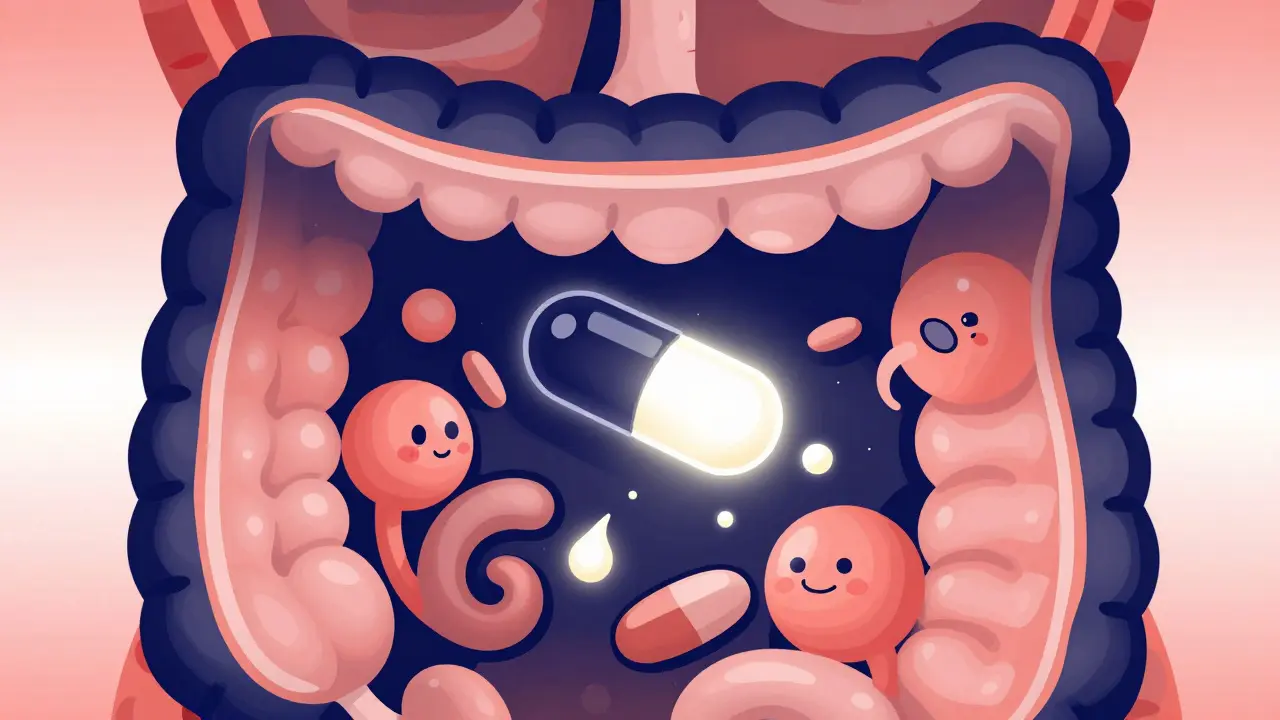
Fat Content Calculator for Medication Absorption
Your body needs dietary fat to properly absorb certain medications. Many lipid-based drugs require a minimum fat content to achieve optimal bioavailability. This calculator helps determine if your meal meets the requirements for specific medications.
Have you ever taken a pill on an empty stomach only to feel sick, or wondered why your doctor insists you eat a fatty meal before taking a specific prescription? You aren't alone. For many patients, the difference between a medication working effectively and causing side effects often comes down to one simple factor: fat. This isn't just about digestion; it's about how your body unlocks the medicine inside the capsule. Scientists have spent decades studying this phenomenon, leading to a specialized class of treatments designed to work hand-in-hand with your diet.
Understanding this relationship is crucial because nearly 70% of new chemical entities in development struggle with water solubility. When a drug can't dissolve easily in the watery environment of your gut, your body can't absorb it. This is where lipid-based medications come into play. These formulations are engineered to utilize the natural physiological processes triggered by dietary fat to boost absorption, turning a potential barrier into a delivery vehicle.
Why Food Changes How Meds Work
The interaction between food and drugs is formally known as the food effecta pharmacokinetic phenomenon where food intake alters the absorption rate or extent of a drug. In the past, this was often seen as a nuisance that complicated dosing schedules. However, researchers like Christopher Porter at Monash University realized this could be leveraged. When you eat fat, your body releases bile salts and enzymes to break it down. These components create tiny structures called colloidal phases that can trap drug molecules, keeping them soluble long enough for your intestines to absorb them.
This is particularly vital for drugs classified under the Biopharmaceutics Classification System (BCS)a framework that categorizes drugs based on solubility and permeability. Specifically, BCS Class II drugs have low solubility but high permeability. Without help, they often fail to dissolve. Lipid-based systems solve this by mimicking the digestion of dietary fat, ensuring the drug stays dissolved in the intestinal fluid. Studies show these systems can enhance bioavailability by 20% to 300% compared to traditional solid tablets.
The Science Behind Lipid-Based Drug Delivery
At the core of this technology is the Self-Emulsifying Drug Delivery System (SEDDS)a formulation technology that forms fine oil-in-water emulsions upon agitation in gastrointestinal fluids. Think of it like shaking oil and vinegar to make a dressing, but inside your stomach. These formulations typically contain 30-60% oil phase, 20-50% surfactants, and 10-30% cosolvents. When they hit the digestive tract, they spontaneously form tiny droplets ranging from 100-300 nanometers. These droplets are small enough to bypass the usual solubility limits of the gut.
The performance metrics are impressive. In vivo studies documented in Frontiers in Drug Delivery (2023) indicate that lipid-based formulations can increase the maximum plasma concentration (Cmax) by 1.5 to 3.5 times for BCS Class II compounds. They also boost the area under the curve (AUC), which measures total drug exposure, by 2 to 4 times. This means you get more of the active ingredient into your bloodstream without necessarily increasing the pill size.
Real Drugs That Use This Tech
You might already be taking a lipid-based medication without knowing it. Several blockbuster drugs rely on this technology to function correctly. For instance, the antifungal drug itraconazole exists in different forms. The capsule version often requires food to work, but the oral solution (Sporanox®) is lipid-based. It achieves 2.8 times higher bioavailability than the capsule under fasting conditions and eliminates the 40% variability in absorption typically caused by food intake.
Another prime example is cyclosporine, used for transplant patients. The older formulation, Sandimmune®, had erratic absorption. The newer Neoral® formulation uses a lipid-based system to provide 20-30% higher bioavailability. Patients report that switching to Neoral eliminated the need for strict food timing restrictions. Similarly, fenofibrate (Tricor®), a cholesterol medication, demonstrates 31% higher absorption than non-lipid formulations. A 2022 post-marketing study showed 87% of patients reported fewer gastrointestinal side effects with the lipid-based version.
| Feature | Traditional Solid Dosage | Lipid-Based Formulation |
|---|---|---|
| Bioavailability Increase | Standard | 20% - 300% Higher |
| Food Effect Variability | High (40% variance) | Low (Consistent absorption) |
| GI Side Effects | Common | Reduced (87% patient report) |
| Manufacturing Cost | Baseline | 25-35% Higher |
| Best For | Water-soluble drugs | Poorly water-soluble drugs (BCS Class II) |
MCTs vs LCTs: Does the Fat Type Matter?
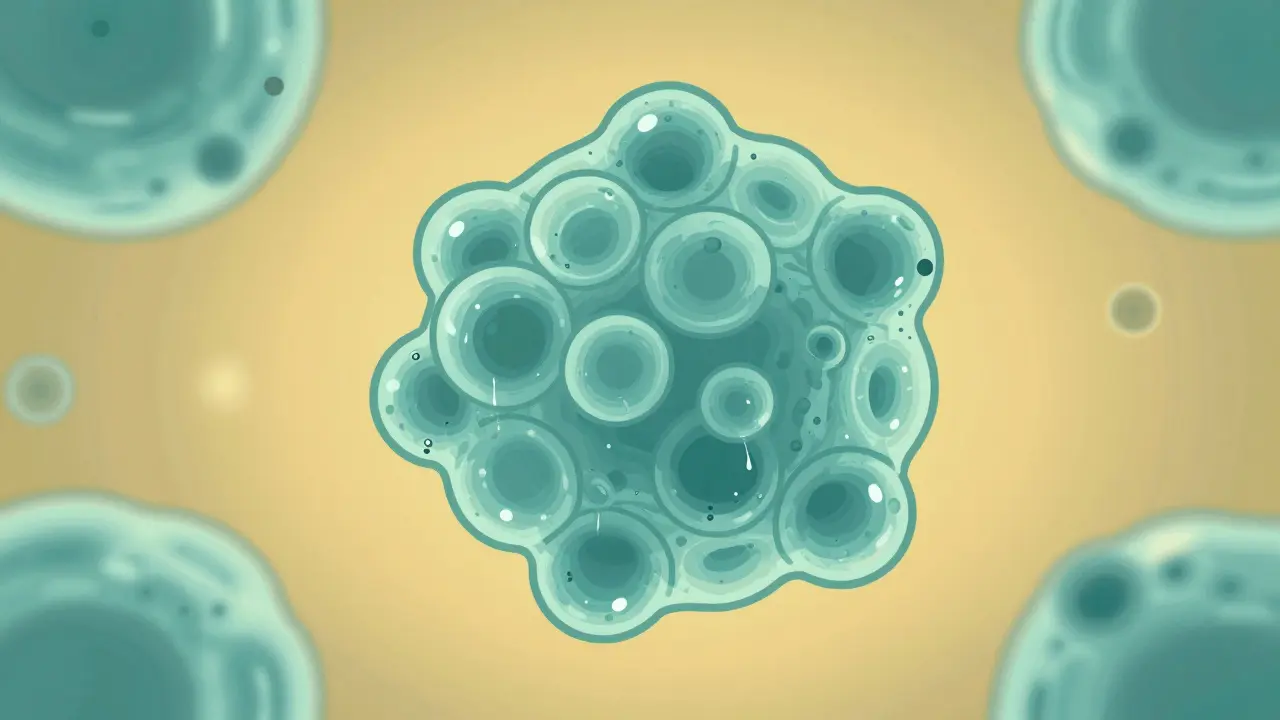
Not all fats are created equal when it comes to drug delivery. Formulations primarily utilize triglycerides with varying fatty acid chain lengths. Medium-chain triglycerides (MCTs), which contain C6-C12 fatty acids, generally outperform long-chain triglycerides (LCTs). According to the American Pharmaceutical Review (2021), MCTs achieve complete hydrolysis within 15-30 minutes in the duodenum. In contrast, LCTs take 60-90 minutes. This speed matters because it creates colloidal phases that maintain drug solubility 3-5 times longer than aqueous environments.
The choice of lipid affects how quickly the drug releases. Faster digestion with MCTs means the drug becomes available for absorption sooner. However, LCTs can be beneficial for drugs that require lymphatic transport to bypass liver metabolism. The optimal lipid composition identified by the American Association of Pharmaceutical Scientists (AAPS) in 2021 suggests 40-50% medium-chain glycerides, 30-40% surfactant, and 10-20% cosolvent for maximum bioavailability enhancement.
The Trade-Offs: Cost and Stability
While the science is sound, there are practical hurdles. Lipid-based systems are more complex to manufacture. They often require specialized packaging, typically soft gelatin capsules, to maintain stability. Industry benchmarks from Catalent (2021) indicate that production expenses increase by approximately 25-35% compared to standard tablets. This cost is passed to the consumer. For example, Sporanox oral solution costs approximately $1,200 for a 30-day supply versus $300 for generic itraconazole capsules.
Stability is another concern. Certain drug molecules can degrade during the lipolysis process. Formulation scientists must screen candidate lipids, requiring approximately 80-100 experimental data points per compound. This complexity extends development timelines to 18-24 months versus 12-15 months for conventional formulations. Despite these challenges, the market is growing. The global lipid-based drug delivery market was valued at $5.8 billion in 2022 and is projected to reach $9.2 billion by 2028.
What's Next for Fat-Soluble Meds
The future of this technology points toward personalization. MIT researchers published a proof-of-concept 'smart lipid capsule' in Science Advances (October 2023) that adjusts drug release based on real-time pH and enzyme concentration monitoring. Additionally, next-generation lipid formulations with enzyme-triggered release mechanisms are emerging. Matinas BioPharma's LNC technology platform demonstrated 92% bioavailability for the antifungal amphotericin B in Phase III trials (completed March 2023), compared to 30% for conventional formulations.
Regulatory bodies are also adapting. The FDA issued specific guidance on food effect studies in 2018, and the EMA released a reflection paper on lipid-based formulations in 2020. Both require comprehensive characterization of digestion products and their impact on drug release. As of late 2023, approximately 35% of new oral drug approvals for BCS Class II compounds now incorporate lipid-based delivery approaches, up from 15% in 2015.
Frequently Asked Questions
Do I need to eat fatty food with all my medications?
No, only specific lipid-based or poorly water-soluble medications require fat for optimal absorption. Always check the label or ask your pharmacist, as taking some drugs with fat can actually reduce their effectiveness.
What counts as a high-fat meal for medication purposes?
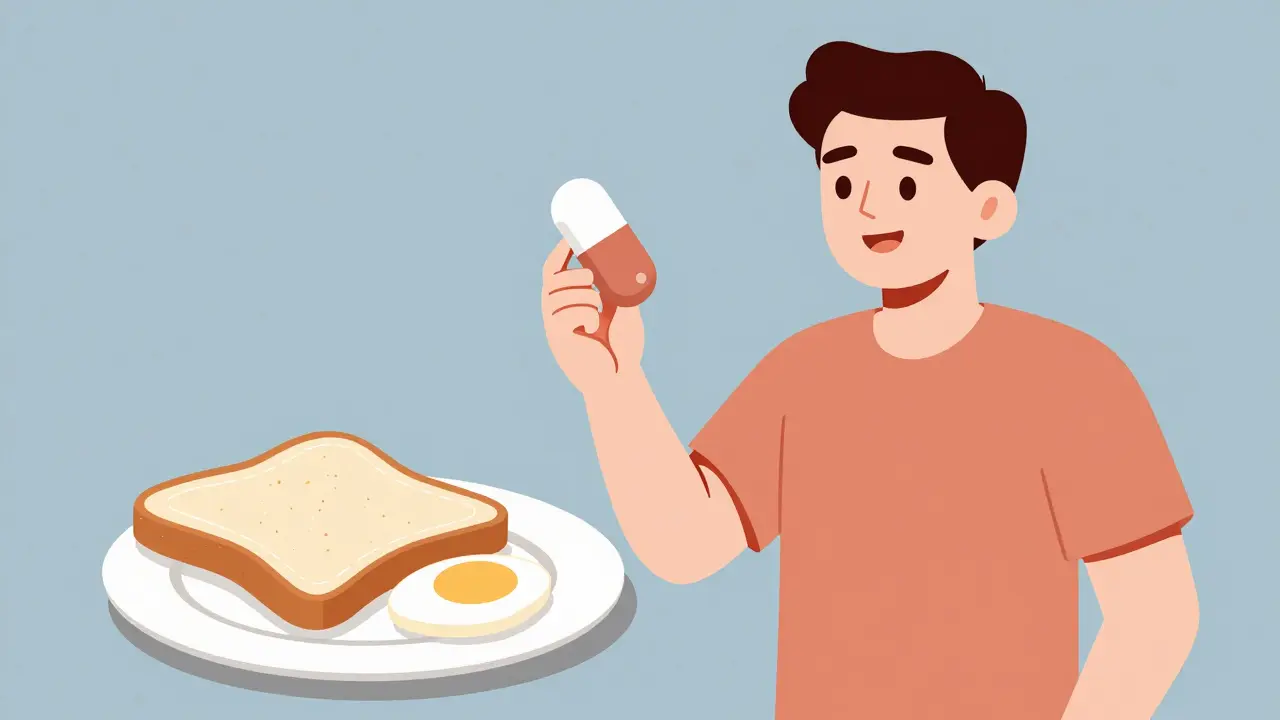
A standard high-fat meal typically contains about 30-50% of total calories from fat, roughly equivalent to a meal with eggs, bacon, toast, and coffee with cream. However, requirements vary by specific drug formulation.
Why are lipid-based medications more expensive?
They require more complex manufacturing processes, specialized packaging like soft gelatin capsules, and higher quality lipid ingredients, increasing production costs by 25-35% compared to standard tablets.
Can I switch from a generic to a lipid-based version?
Switching should only be done under medical supervision. While lipid-based versions often have fewer side effects, the dosage and absorption rates may differ, requiring monitoring of blood levels.
Do lipid-based drugs have fewer side effects?
Clinical evidence suggests yes. A 2022 study on fenofibrate showed 87% of patients reported fewer gastrointestinal side effects with the lipid-based formulation compared to the non-lipid version.


Comments (15)