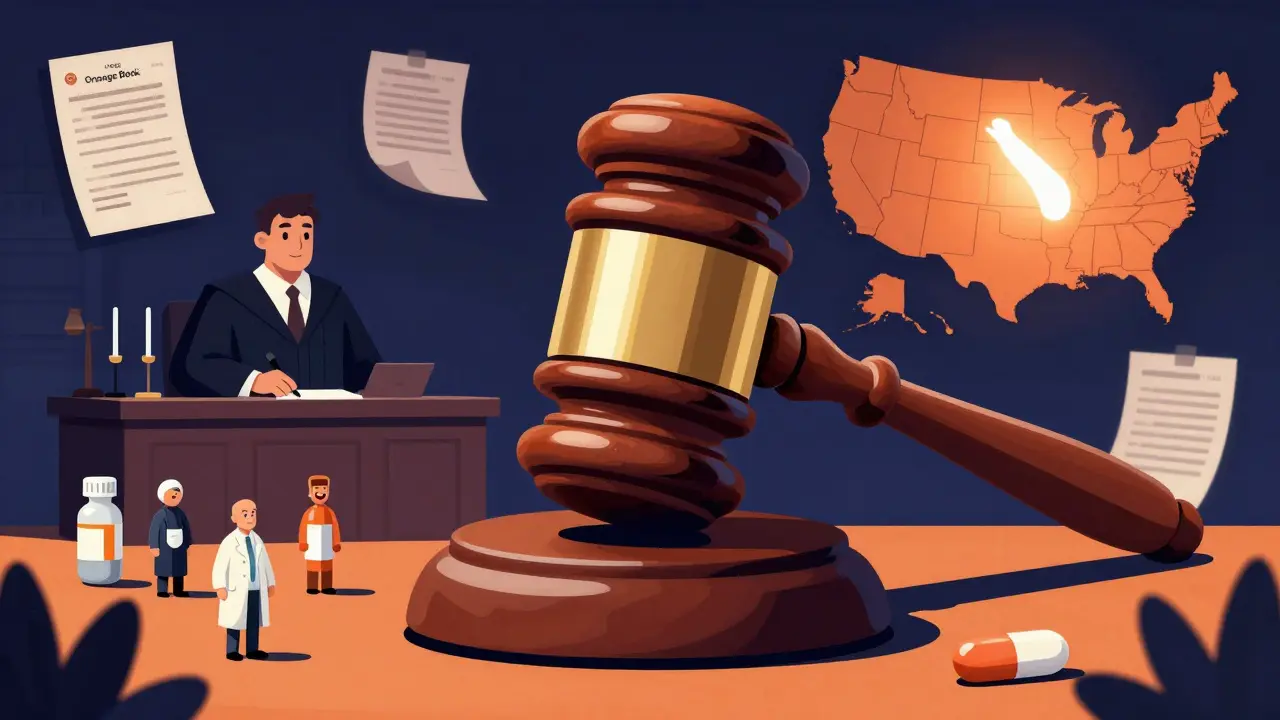
The Federal Circuit Court doesn’t just hear patent cases-it controls the entire lifecycle of pharmaceutical innovation in the U.S. If you’re developing a generic drug, challenging a patent, or trying to protect a new dosing regimen, this court’s rulings decide whether your product reaches the market-or gets stuck in legal limbo for years.
Why the Federal Circuit Holds All the Cards
Unlike other federal appeals courts that split their time between criminal cases, employment disputes, and immigration appeals, the Federal Circuit handles only patent cases. That’s not a coincidence. Congress created it in 1982 to fix a mess: before then, different circuit courts interpreted patent law differently. A patent might be valid in Texas but invalid in California. For drug companies, that meant unpredictable, expensive litigation across the country. The fix? Centralize every patent appeal-no matter where it started-in one court. That includes every pharmaceutical patent case. From blockbuster biologics to obscure dosing schedules, if it’s about a patent, it goes to the Federal Circuit. And because it sees every case, it’s built deep expertise. No other court in the U.S. has the same level of familiarity with the Hatch-Waxman Act, Orange Book listings, or ANDA filings.How ANDA Filings Trigger Nationwide Jurisdiction
Here’s where things get real for generic drug makers. When a company files an Abbreviated New Drug Application (ANDA) with the FDA, it’s not just asking for approval-it’s triggering a legal bomb. In 2016, the court ruled in Mylan v. Astellas that filing an ANDA creates personal jurisdiction anywhere in the U.S. Why? Because the FDA application shows intent to sell the drug nationwide. That means a generic company based in Ohio can be sued in Delaware, even if it has no office, warehouse, or employee there. The result? Delaware became the #1 filing location for pharmaceutical patent lawsuits. Between 2017 and 2023, 68% of all ANDA cases were filed there. Why Delaware? Because it’s plaintiff-friendly, has a specialized docket, and now, under Federal Circuit rules, it’s fair game for any patent holder who can link their patent to an ANDA filing. This isn’t just a procedural quirk. It’s a strategic weapon. Brand companies can now pick their forum. Generic companies? They’re forced to defend themselves in courts far from home, adding hundreds of thousands to legal bills.The Orange Book: The Hidden Rulebook for Generic Drug Approval
The Orange Book-officially titled Approved Drug Products with Therapeutic Equivalence Evaluations-is the secret engine of generic drug entry. It lists every patent tied to a brand-name drug. If a patent isn’t listed, a generic company can launch without fear of suit. But here’s the catch: not every patent can be listed. In December 2024, the Federal Circuit ruled in Teva v. Amneal that only patents that claim the drug itself can stay on the list. If a patent only covers a method of use, a packaging design, or a manufacturing process that doesn’t directly relate to the active ingredient, it’s out. This decision forced companies to clean up their Orange Book listings. Before, some brand companies listed dozens of weak patents to delay generics. Now, they have to be precise. Legal teams spend 17 extra business days mapping each patent to the drug’s FDA-approved use. It’s more work upfront-but it cuts down on frivolous lawsuits.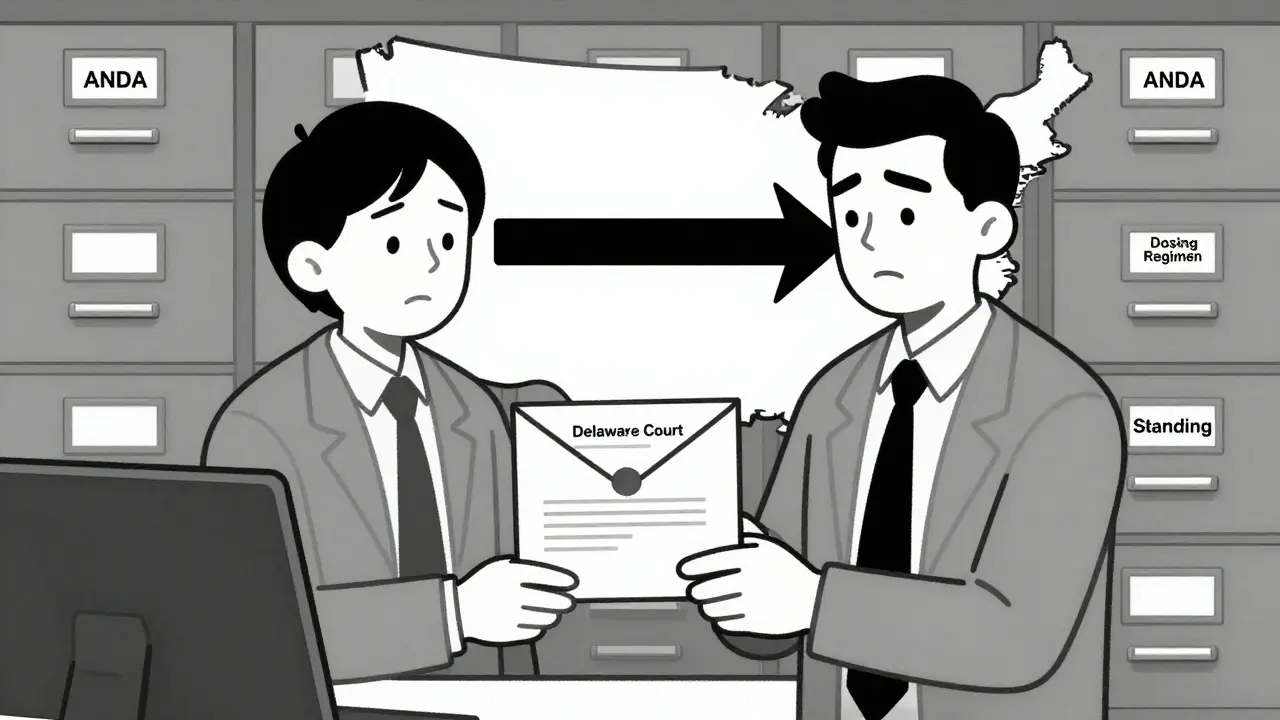
Why Dosing Regimens Are Harder to Patent
One of the biggest battlegrounds in pharma patents is dosing: “Take 10 mg once daily” versus “Take 5 mg twice daily.” For years, companies tried to extend monopolies by patenting new schedules for old drugs. In April 2025, the Federal Circuit crushed that strategy in ImmunoGen v. Genmab. The court said: if the drug itself is already known, changing the dose or schedule isn’t enough to make it patentable. The key question? Would a skilled scientist, looking at prior art, expect the same results with the new regimen? Judge Lourie put it bluntly: “Because both sides admitted that the use of IMGN853 to treat cancer was known in the prior art, the only question to resolve was whether the dosing limitation itself was obvious.” That’s a massive shift. Before this ruling, many U.S. patent examiners granted these types of patents. Now, they’re being rejected. In fact, Clarivate found that after this decision, pharmaceutical companies cut secondary dosing patent filings by 37%. Instead, they’re investing more in entirely new molecules. Compare that to Europe. The European Patent Office still grants patents for novel dosing regimens if they show unexpected benefits. The U.S. doesn’t. That’s why many global drug developers now file key dosing patents in Europe first.Standing: The Invisible Gatekeeper
You can’t challenge a patent unless you have “standing”-meaning you’re actually harmed by it. In May 2025, the Federal Circuit made it harder for generic companies to get standing in Incyte v. Sun Pharma. The court said: simply planning to develop a drug isn’t enough. You need concrete evidence. That means Phase I clinical trial data, supply agreements, manufacturing timelines, or internal documents showing you’re actively preparing to launch. This has created a chilling effect. Generic companies now delay patent challenges until they’re deep into development-sometimes spending millions before they can even file a lawsuit. Judge Hughes, in his concurrence, warned this could “stifle generic competition.” He’s not alone. Senators Tillis and Coons introduced the Patent Quality Act of 2025 to fix this exact problem.How the Court Compares to Other Systems
The Federal Circuit’s approach is unique-and controversial. - vs. District Courts: The Federal Circuit reverses non-infringement rulings in pharmaceutical cases at a 38.7% rate-nearly double the average across all patent cases. It’s more aggressive in striking down patents. - vs. Europe: The EPO is more forgiving with dosing patents. The U.S. isn’t. If you want to protect a new dosing schedule, file in Europe. - vs. Other U.S. Circuits: Other courts handle everything. The Federal Circuit handles only patents-and it’s become an echo chamber. Critics say its insular culture leads to rulings that favor patent holders over public access. But there’s a flip side: predictability. Because every case goes to one court, companies can plan with more certainty. Legal strategies are no longer guesswork.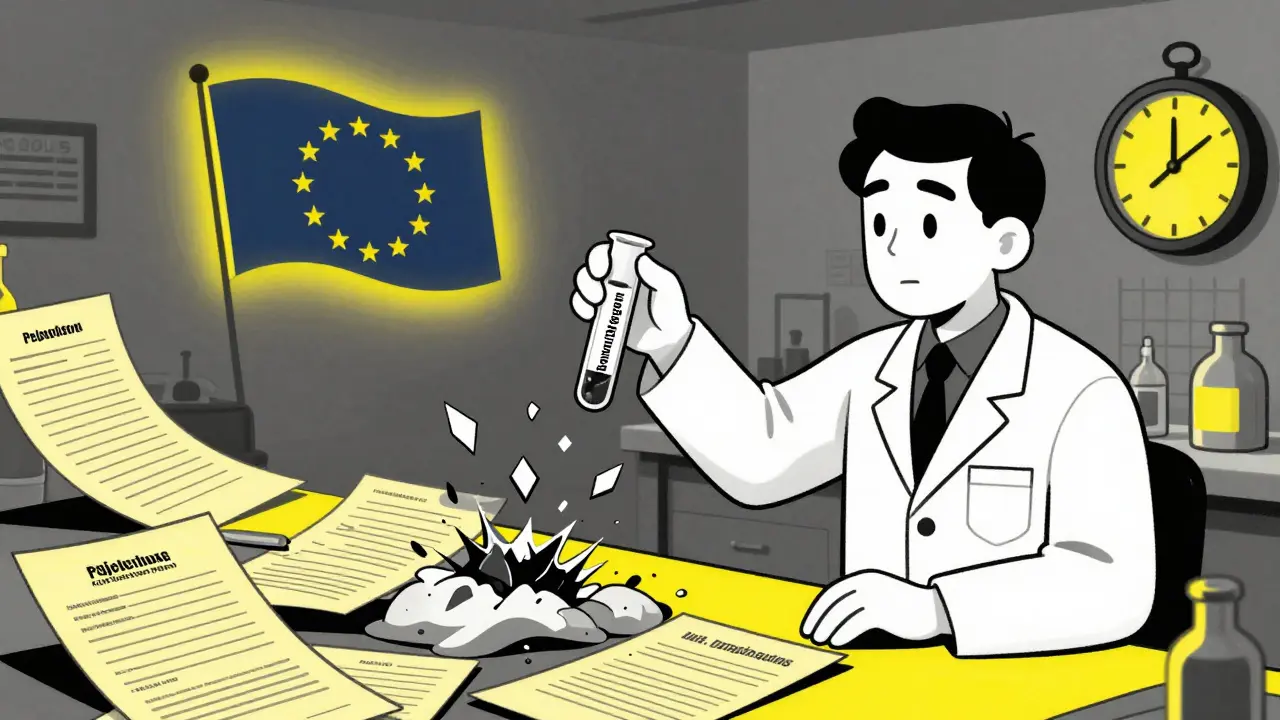
What This Means for Drug Prices and Access
The Federal Circuit’s rulings don’t just affect lawyers-they affect your medicine bill. Between 2016 and 2023, litigation costs for ANDA cases jumped from $5.2 million to $8.7 million per case. That’s money spent on legal fees, not research. And with 22% more lawsuits filed against generic companies since 2016, delays in market entry have pushed back price drops. Biosimilars-generic versions of biologic drugs-are feeling the same pressure. Since 2020, biosimilar patent litigation has tripled. The court extended the same ANDA jurisdiction rules to them, meaning even complex biologics are now subject to nationwide lawsuits. Yet there’s hope. The court’s tightening of Orange Book rules and dosing patent standards is pushing companies to innovate, not just extend. Clarivate’s data shows a 22% increase in investment in new chemical entities since 2025. That’s innovation-not just legal maneuvering.What Companies Are Doing Now
Brand companies are:- Only listing patents that directly claim the drug in the Orange Book
- Shifting R&D from dosing tweaks to novel compounds
- Building stronger evidence of inventorship to avoid invalidation
- Delaying patent challenges until Phase I trials are underway
- Choosing litigation venues carefully, knowing jurisdiction is nationwide
- Investing in patent landscaping to avoid infringement traps
What’s Next?
The Federal Circuit isn’t slowing down. In 2025, it ruled that even expired patents can still be challenged at the Patent Trial and Appeal Board-for validity, not damages. That’s a new layer of complexity. And with Congress considering the Patent Quality Act, changes may be coming. If standing requirements loosen, we could see a wave of pre-launch patent challenges. If they stay strict, innovation will continue to be delayed. For now, one thing is clear: if you’re in pharmaceuticals, you don’t just need a science degree. You need to understand the Federal Circuit’s latest ruling-and how it changes your next move.Why does the Federal Circuit have exclusive jurisdiction over pharmaceutical patent cases?
The Federal Circuit was created by Congress in 1982 to centralize all patent appeals and eliminate inconsistent rulings across regional courts. Because pharmaceutical patents involve complex science and legal frameworks like the Hatch-Waxman Act, having one specialized court ensures consistent interpretation. All patent cases, including those involving drugs, ANDAs, and biosimilars, must go to the Federal Circuit on appeal-no exceptions.
Can a generic drug company be sued in Delaware even if it has no business there?
Yes. Filing an Abbreviated New Drug Application (ANDA) with the FDA is treated as an intent to market the drug nationwide. The Federal Circuit ruled in 2016 that this creates personal jurisdiction in any U.S. district court, including Delaware. This allows patent holders to file suit in plaintiff-friendly venues, even if the generic company has no physical presence there.
What is the Orange Book, and why does it matter for generic drugs?
The Orange Book is the FDA’s official list of patents tied to brand-name drugs. Generic companies can only launch after those patents expire or are invalidated. But the Federal Circuit ruled in 2024 that only patents that claim the actual drug can be listed. Patents covering methods of use, packaging, or manufacturing must be removed. This prevents companies from using weak patents to delay generic entry.
Are new dosing regimens still patentable in the U.S.?
It’s extremely difficult. The Federal Circuit’s 2025 ImmunoGen decision made it clear: if the drug is already known, changing the dose or schedule isn’t enough for a patent unless you prove the new regimen produces unexpected results. Most dosing patents are now rejected. Companies are shifting focus to entirely new compounds instead of tweaking old ones.
What does ‘standing’ mean in a pharmaceutical patent challenge?
Standing means you have a real, concrete interest in challenging a patent. The Federal Circuit now requires more than just intent-you need evidence like Phase I clinical trial data, manufacturing plans, or signed supply agreements. Without it, you can’t even file a lawsuit, even if the patent is clearly invalid.
How has the Federal Circuit affected biosimilar development?
Biosimilar patent litigation has increased by 300% since 2020. The Federal Circuit applied the same jurisdiction rules from ANDA cases to biosimilars, meaning companies can be sued nationwide just for filing an FDA application. This has raised legal costs and delayed market entry, even though biosimilars are meant to be cheaper alternatives to expensive biologic drugs.


Comments (11)