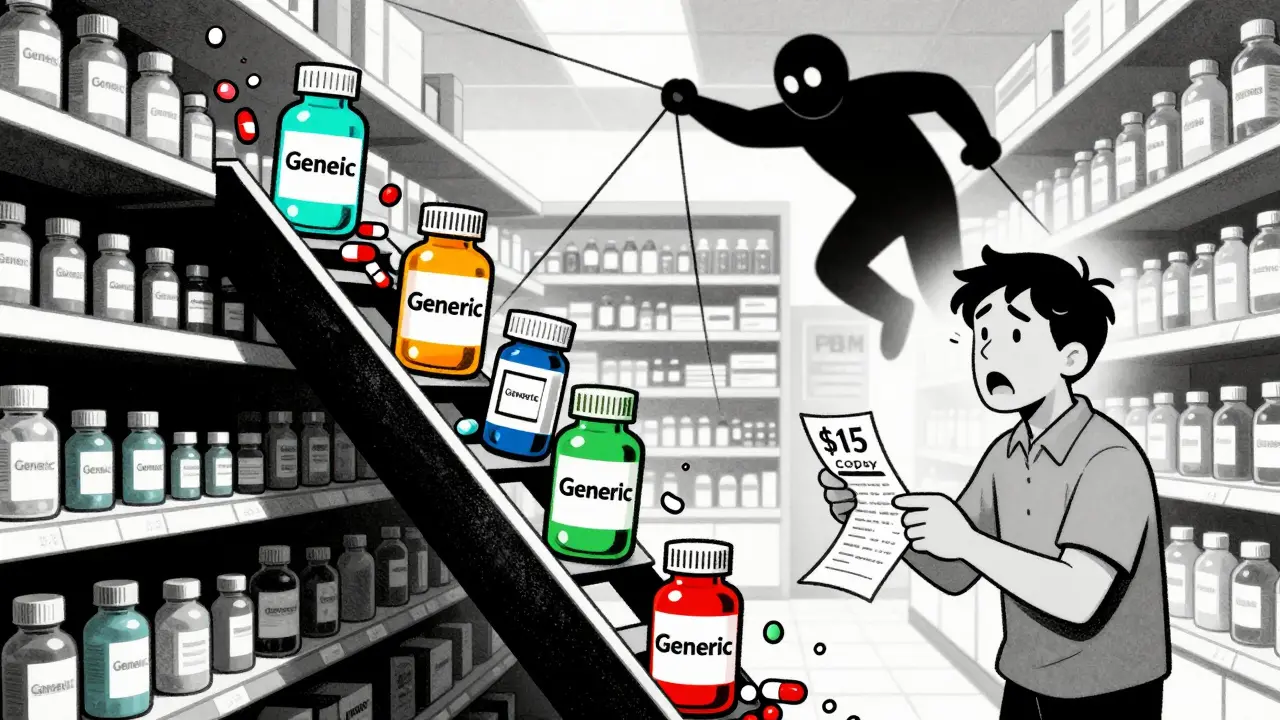
When you hear "generic drug," you probably think: cheaper. And you’re right-but not always in the way you expect. The real story isn’t just about pills with different labels. It’s about a hidden battle between manufacturers, middlemen, and pharmacies that determines whether you save $5 or $300 on the same medicine. This isn’t theory. It’s happening right now, in your local pharmacy, and it’s changing how much you pay for life-saving drugs.
How Generic Drug Price Wars Start
The game began in 1984 with the Hatch-Waxman Act. Before that, brand-name drug companies had a monopoly. Once their patent expired, they could keep prices high because no one else could make the same drug. The law changed that. It let generic manufacturers skip expensive clinical trials and prove their version works just as well. Suddenly, multiple companies could enter the market. And when more companies compete, prices fall. Fast.It’s not magic. It’s math. When only one generic company makes a drug, it might cost 70% less than the brand. But add four more competitors? The price drops 85%. With six or more? You’re looking at over 95% off the original brand price. The FDA confirmed this in 2019: the more manufacturers, the steeper the drop. A drug that cost $100 as a brand can drop to $5 or less when a dozen companies are selling it.
Why You Might Still Pay Too Much
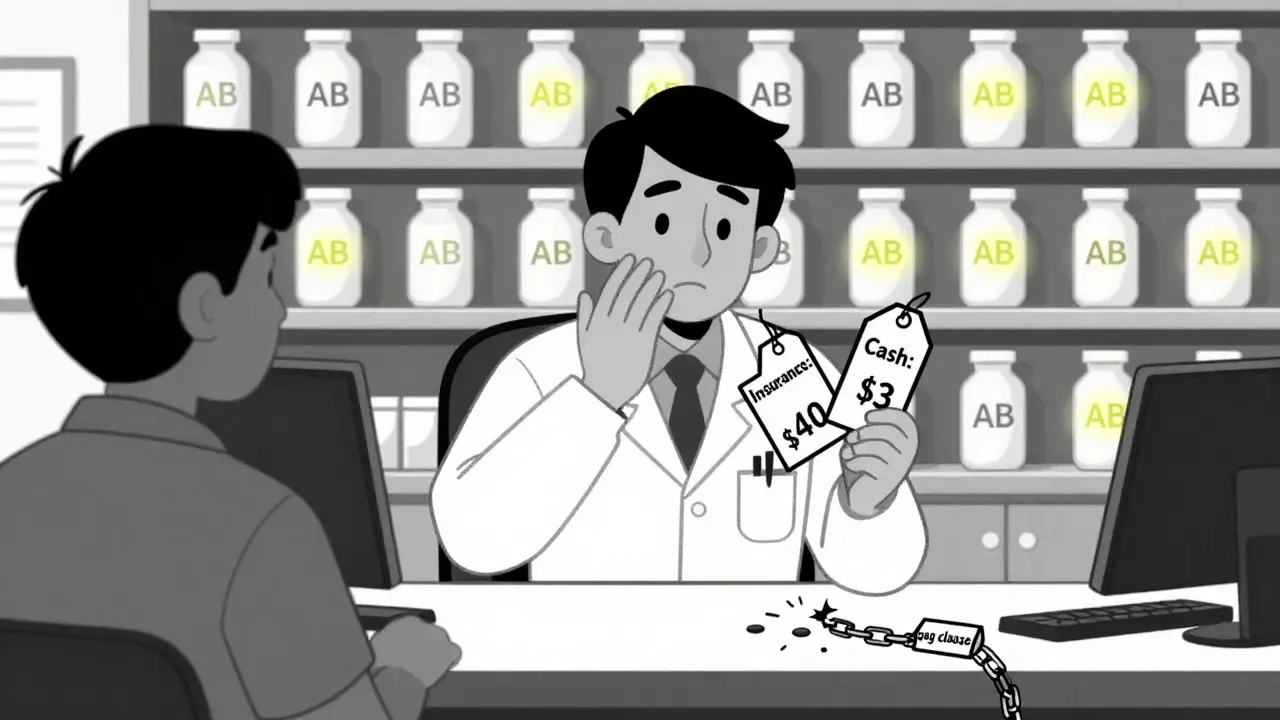
Here’s where it gets messy. Even though the price of the drug itself might be $3, you could still pay $40 at the pharmacy. Why? Because the system isn’t transparent. Pharmacy Benefit Managers (PBMs)-the middlemen between insurers, pharmacies, and drugmakers-control most of the pricing. They negotiate rebates, set copays, and decide which drugs go on your insurance plan’s formulary.Here’s a real example: You have a generic blood pressure pill. The wholesale price is $2. Your insurance says your copay is $15. But if you pay cash, the pharmacy charges $12. That’s because PBMs use a trick called "spread pricing." They tell your insurer they paid $10 for the drug, but they actually paid $2. The $8 difference? That’s their profit. You’re still paying $15, even though the drug cost $2. You didn’t benefit from the price war-you just paid more.
And it gets worse. Some pharmacies won’t even tell you the cash price. Until 2018, "gag clauses" legally prevented pharmacists from saying, "Hey, this costs less if you pay out of pocket." Even after the law changed, many consumers still don’t know. A 2023 Consumer Reports survey found 42% of people didn’t realize they could pay less by skipping insurance.
Who Really Wins?
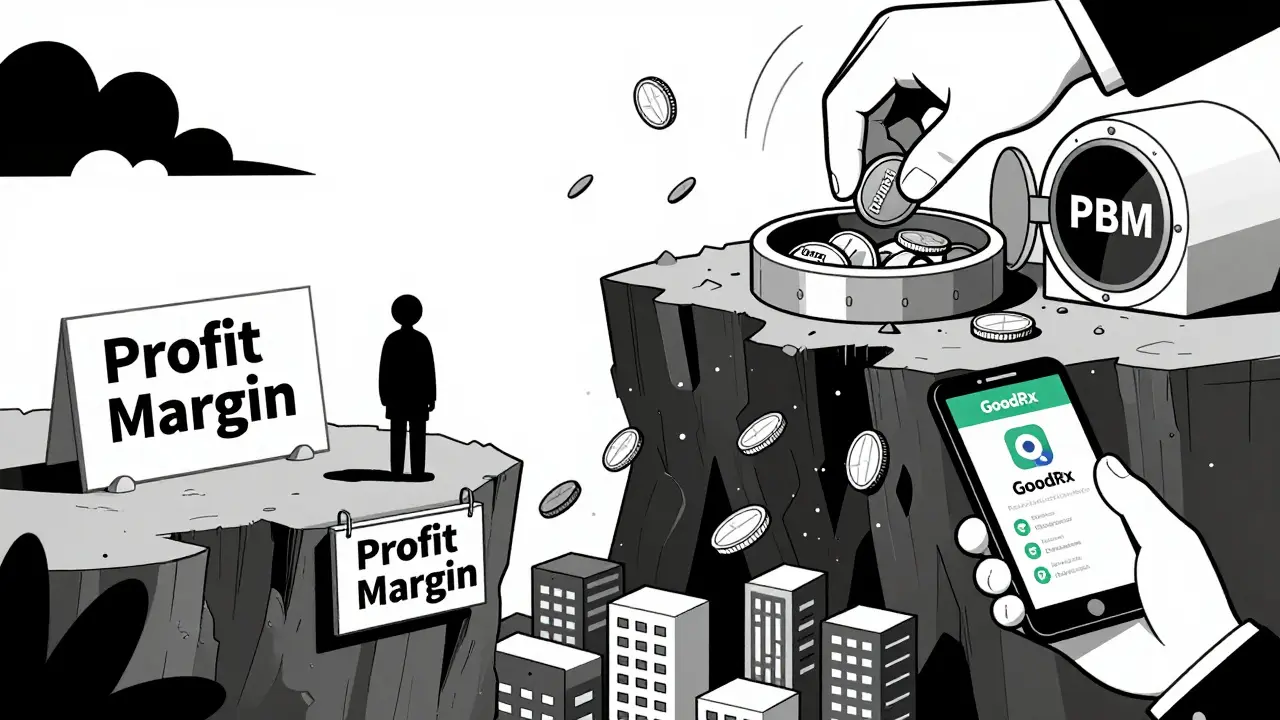
The big winners aren’t always patients. Pharmacies make more profit on generics than on brand-name drugs. A 2021 Commonwealth Fund report found pharmacies earn an average 42.7% margin on generics, compared to just 3.5% on brands. That’s why they push generics-but not always the cheapest ones. They’re incentivized to sell drugs with higher rebates from PBMs, not the ones that save you money.Meanwhile, the manufacturers? They’re caught in a trap. When prices drop too low, some companies stop making the drug. Why? Because they can’t cover costs. The 2024 AEA Web analysis found that 30% of generic shortages happen in markets with four or more competitors. The price war was so fierce that no one could stay profitable. Suddenly, your $3 pill becomes unavailable. And when supply drops, prices spike again.
What You Can Do Right Now
You don’t need to wait for Congress to fix this. You can take control today. Here’s how:- Ask for the cash price. Always. Even if you have insurance. In 28% of cases, the cash price is lower than your copay. You’d be surprised how often this works.
- Compare prices. The same generic drug can cost $4 at Walmart, $22 at CVS, and $18 at Walgreens. Use apps like GoodRx or SingleCare. They show real-time prices at nearby pharmacies.
- Check the AB code. On the label, look for "AB" next to the drug name. That means it’s FDA-approved as bioequivalent to the brand. If it’s not AB, it might not work the same way.
- Focus on chronic meds. A $5 difference on a monthly pill adds up to $60 a year. On insulin, statins, or blood pressure drugs? That’s hundreds.
- Don’t assume "generic" means "cheapest." Some generics with only one or two makers cost almost as much as the brand. Check before you pay.
The Bigger Picture
The U.S. spends $71 billion a year on generic drugs. They make up 90% of prescriptions but only 23% of total drug spending. That’s the promise: more drugs, less cost. But the system is broken. Five companies-Teva, Viatris, Sandoz, Amneal, and Aurobindo-control over 60% of the market. That’s not competition. That’s an oligopoly.And it’s not just about price. It’s about access. In Europe, governments negotiate prices directly. Patients get consistent, deep discounts. In the U.S., you’re left to navigate a maze of PBMs, formularies, and gag clauses. The result? You might pay $0 for metformin at Walmart, but $300 for a generic EpiPen because the market is too thin to sustain competition.
What’s Changing?
There’s hope. The FDA approved over 1,000 generic drugs in 2023-up from 748 in 2022. More competition is coming. The FTC is pushing to ban spread pricing. The Inflation Reduction Act lets Medicare negotiate some drug prices. And Congress is debating the Pharmacy Benefit Manager Transparency Act, which would force PBMs to pass savings directly to patients.But until those changes fully take effect, the power is in your hands. You don’t need to understand the whole system. Just know this: the lowest price isn’t always on your insurance card. The real savings are hidden in the cash price. And if you ask for it, you might just get it.


Comments (15)