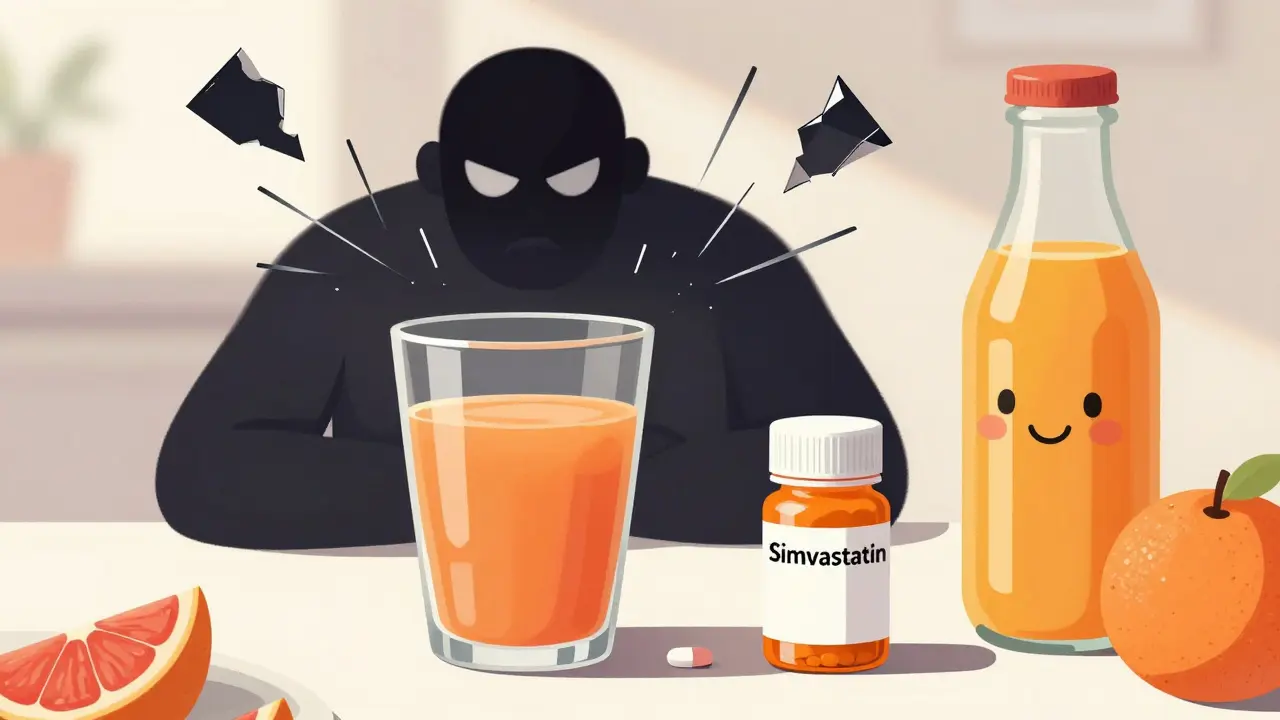
One glass of grapefruit juice in the morning might seem like a healthy habit-until it starts messing with your meds. For people taking certain medications, this common breakfast drink can turn into a hidden danger. It doesn’t matter if it’s fresh-squeezed, frozen concentrate, or the fruit itself. A single 200mL serving-about a cup-is enough to trigger a serious reaction in some drugs. And the worst part? Many people have no idea their pills and juice are a dangerous mix.
How Grapefruit Juice Changes How Your Body Handles Medicine
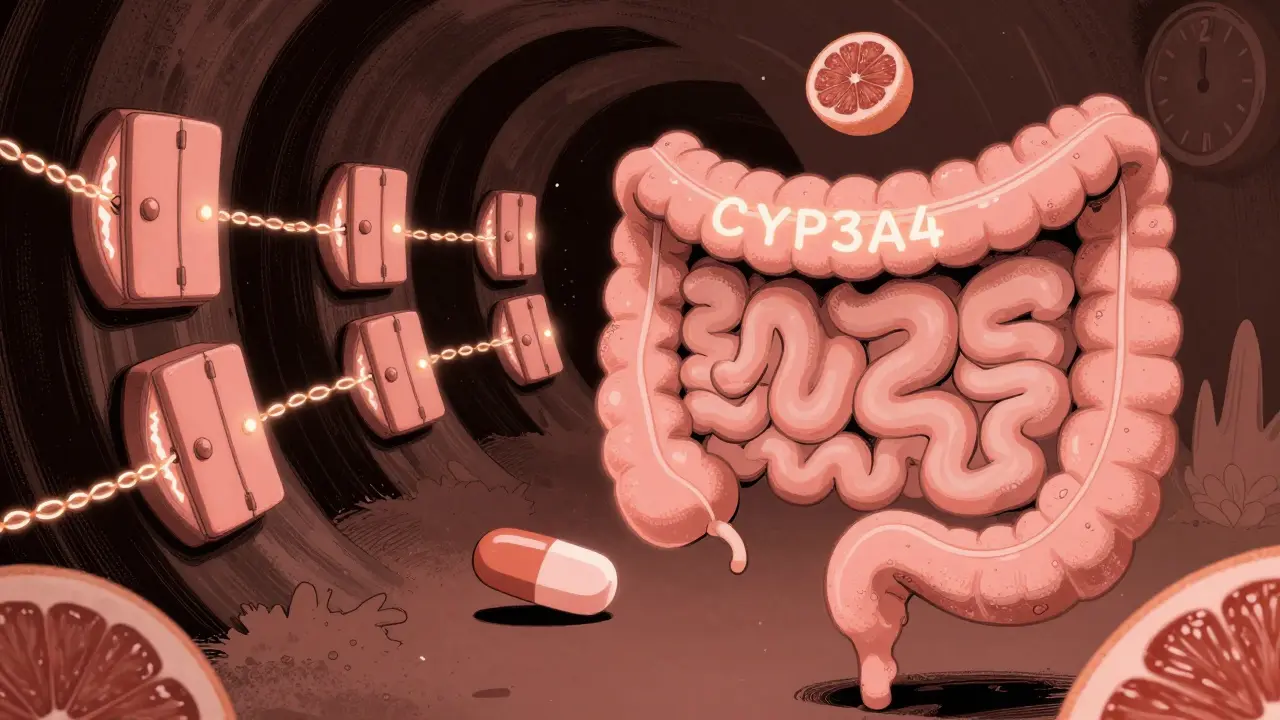
It all comes down to two enzymes in your gut: CYP3A4 and OATP. These are your body’s natural gatekeepers. They help break down and absorb drugs before they enter your bloodstream. Grapefruit juice doesn’t just slow them down-it shuts them off, permanently, for hours.
The culprits? Furanocoumarins, especially bergamottin and 6’,7’-dihydroxybergamottin. These compounds are found in the peel and pulp of grapefruit. When you drink the juice, they bind to CYP3A4 enzymes in your intestinal lining. This isn’t a temporary pause. It’s a permanent wreck. The enzyme gets damaged and can’t work again until your body makes a brand new one-which takes about 72 hours.
That means if you take a pill at 8 a.m. and had grapefruit juice at 7 a.m., your body still can’t process the drug properly. Even if you wait 12 hours, you’re not safe. The damage lingers. And because this happens in the gut-not the liver-the effect is immediate and powerful.
Which Medications Are Most at Risk?
Not all drugs are affected the same way. About 85 medications are known to interact with grapefruit juice. Of those, 43 carry serious risks like kidney failure, heart rhythm problems, or muscle damage. Here’s the breakdown:
- Statins: Simvastatin and lovastatin? Big problem. A single glass of juice can boost their levels by 330%. That raises the risk of rhabdomyolysis-a condition where muscle tissue breaks down and can wreck your kidneys. Atorvastatin has a moderate risk. But pravastatin, rosuvastatin, and fluvastatin? No interaction. They use different enzymes.
- Calcium Channel Blockers: Felodipine? AUC increases by 300% to 800%. Nifedipine? Around 110%. Amlodipine? No effect. Why? It’s not metabolized by CYP3A4.
- Benzodiazepines: Oral midazolam jumps 515%. Triazolam? Up 52%. That means drowsiness, dizziness, or even breathing trouble.
- Immunosuppressants: Cyclosporine and tacrolimus? Grapefruit juice can push levels dangerously high, increasing the risk of kidney damage.
- Antiarrhythmics: Amiodarone? AUC increases 80%. That can lead to dangerous heart rhythms.
Some drugs do the opposite. Theophylline and itraconazole actually drop in concentration with grapefruit juice. Scientists aren’t sure why-maybe OATP inhibition blocks absorption. But the takeaway? Don’t assume grapefruit juice always raises drug levels. It can lower them too.
Why Some People Are Hit Harder Than Others
Not everyone reacts the same way. One person might drink grapefruit juice with their statin and feel fine. Another ends up in the ER. Why?
It’s genetics. Studies show people with naturally higher levels of CYP3A4 in their gut are more likely to have a strong reaction. The enzyme is like a door. The more doors you have, the more drug gets through when they’re blocked. Research found a correlation of r=0.78 between baseline CYP3A4 levels and the size of the interaction. That’s a strong link.
Age matters too. Older adults often take five or more medications. The American Geriatrics Society added grapefruit interactions to their 2023 Beers Criteria because 42% of adults over 65 are on at least one affected drug. Their bodies also process drugs slower. A small change in concentration can tip them into toxicity.
And then there’s the genetic twist. A 2023 study found people with the CYP3A4*22 gene variant have even higher drug levels after grapefruit juice. This isn’t just luck-it’s biology. And right now, most doctors don’t test for it.
What About Other Citrus Fruits?
Not all citrus is the same. Oranges? Tangerines? You’re fine. They don’t contain furanocoumarins. But Seville oranges? Those are used in marmalade-and they’re just as dangerous as grapefruit. Pomelos? Also high in furanocoumarins. Avoid them.
Even orange juice labeled as "100% natural" can be risky if it’s made from Seville oranges. Check the label. If it says "bitter orange" or "Seville orange," skip it. Regular sweet oranges? No problem.
And don’t think you’re safe with other citrusy drinks. Some energy drinks and supplements use grapefruit extract. Read the fine print.
How Long Does the Effect Last?
It’s not a 2-hour window. It’s 3 days.
Because CYP3A4 enzymes are destroyed, not just blocked, your gut has to grow new ones. That takes 72 hours. So even if you had grapefruit juice yesterday, your system is still compromised today. That’s why experts say: if you’re on a high-risk drug, avoid grapefruit completely-not just on the day you take your pill.
For OATP-interacting drugs like fexofenadine (Allegra), the timing is different. A 4-hour gap is enough. But for the big ones-statins, calcium blockers, immunosuppressants-you need total avoidance.
What’s Being Done About It?
It’s not just patients who are unaware. Studies show only 37% of pharmacists consistently warn patients about grapefruit interactions. And only 28% of patients can correctly name which of their meds are affected-even after being told.
Regulators are catching up. The FDA now requires warning labels on 21 high-risk medications, including simvastatin, felodipine, and cyclosporine. In 2021, 19% of prescription labels included grapefruit warnings-up from 12% in 2015.
Pharmacies are using software that flags these interactions. Electronic health records now have 128 specific grapefruit alerts. Drug companies are even reformulating meds. The extended-release version of felodipine causes less interaction than the original. And researchers are testing CRISPR-edited grapefruit that lack furanocoumarins-still in trials, but promising.
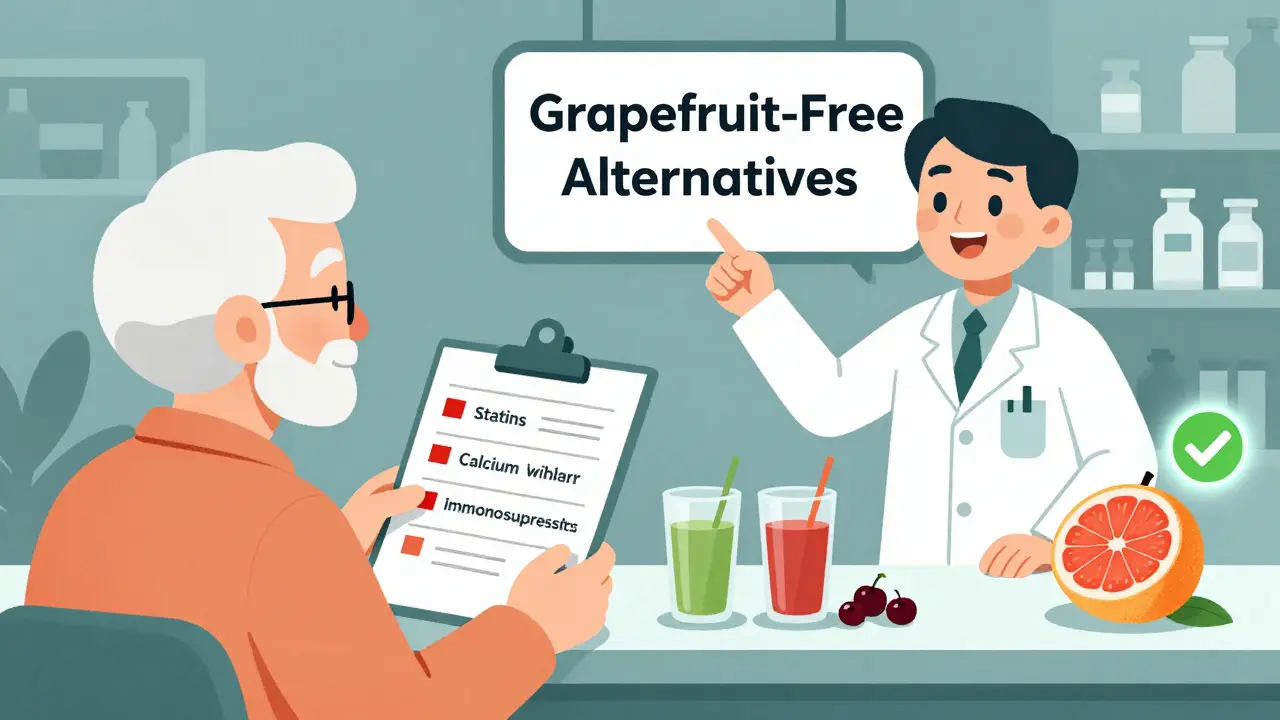
The American Pharmacists Association started a "Grapefruit-Free Alternatives" program in 2020. They’ve helped over 14,000 patients switch to safer versions of their meds.
What Should You Do?
If you take any medication, ask your pharmacist: "Is grapefruit juice safe with this?" Don’t assume. Don’t guess. And don’t rely on the internet.
Here’s a simple checklist:
- Check your medication bottle or leaflet for "grapefruit" or "citrus" warnings.
- Ask your pharmacist to review all your meds-especially if you’re on five or more.
- Replace grapefruit juice with orange, apple, or cranberry juice.
- If you love grapefruit, talk to your doctor about switching to a non-interacting drug (like pravastatin instead of simvastatin).
- Don’t stop your medication. Just avoid the juice.
It’s not about giving up a healthy habit. It’s about protecting your life. One glass of juice shouldn’t be a gamble with your health.
Can I just drink grapefruit juice a few hours after taking my medicine?
No. For drugs affected by CYP3A4 inhibition (like simvastatin or felodipine), the damage to your gut enzymes lasts up to 72 hours. Even if you wait 6 or 12 hours, your body still can’t process the drug properly. Avoid grapefruit entirely if you’re on one of these medications.
Is it safe to eat grapefruit instead of drinking the juice?
No. The same compounds-furanocoumarins-are in the fruit pulp and peel. Eating half a grapefruit has the same effect as drinking a cup of juice. Fresh, frozen, or concentrate-it doesn’t matter. All forms carry the same risk.
Why don’t all statins interact with grapefruit juice?
Statins are broken down by different enzymes. Simvastatin and lovastatin rely on CYP3A4, so grapefruit juice blocks their breakdown. Pravastatin, rosuvastatin, and fluvastatin use other pathways-like CYP2C9 or are eliminated unchanged. That’s why they’re safe with grapefruit.
Can grapefruit juice interact with over-the-counter meds?
Yes. Some OTC drugs like certain antihistamines (fexofenadine) and sleep aids (midazolam) are affected. Even supplements like melatonin and St. John’s wort can be impacted. Always check with your pharmacist before mixing any new supplement or OTC drug with grapefruit.
What if I’ve been drinking grapefruit juice with my meds for years without problems?
That doesn’t mean it’s safe. Interactions can build up over time, or your body’s enzyme levels might have changed. You might have been lucky so far-but your next dose could trigger a serious reaction. The risk doesn’t go away just because you haven’t had symptoms yet.


Comments (12)