
When someone beats hepatitis C with modern drugs, it’s easy to think the story ends there. But for many people-especially those still using injection drugs or living with ongoing risk factors-the virus can come back. And when it does, it’s not a failure. It’s a signal. A signal that we need better support, not judgment.
How HCV Comes Back After Being Cured
| Treatment Type | Duration | Cure Rate (SVR12) | Reinfection Risk |
|---|---|---|---|
| Standard DAA (G/P or SOF/VEL) | 8-12 weeks | 95-99% | High if risk behaviors continue |
| Short-course (G/P) | 4 weeks | 84% | Lower than standard, but still significant |
| Retreatment (G/P ± ribavirin) | 16 weeks | 94-97% | Same as first treatment |
| Retreatment (SOF/VEL/VOX) | 12 weeks | 95% | Same as first treatment |
Direct-acting antivirals (DAAs) changed everything. Before 2014, HCV treatment meant months of injections, fatigue, depression, and a 50% chance of success. Now, a simple 8- to 12-week pill regimen cures more than 95% of people. That’s not a small win-it’s a medical revolution.
But cure doesn’t equal immunity. Unlike measles or hepatitis B, getting rid of HCV doesn’t make you immune. The virus doesn’t trigger lasting protection. So if you’re still injecting drugs, sharing needles, or having unprotected sex with someone who has HCV, you can get infected again. Studies show that among people who inject drugs, reinfection rates can hit 10% per year. That’s not rare. It’s expected.
The first six months after treatment are the most dangerous. That’s when most reinfections happen. Why? Because behavior doesn’t change overnight. The same social, economic, and psychological pressures that led to the first infection are still there. And if you’re not getting support, the virus will find its way back.
Retreatment Works-Just Like the First Time
Here’s the truth no one talks about: if you get HCV again, you can be cured again. And it works just as well.
Research from JAMA Network Open in 2024 showed that retreatment with DAAs has the same success rate as the first treatment-95% or higher. That’s not a second-best option. It’s the standard of care. The CDC, WHO, and major liver societies all agree: treat every person with HCV, no matter how many times they’ve been treated before.
There are two main scenarios for retreatment:
- Reinfection: You got cured, then got infected again from a new exposure. This is the most common. You don’t need resistance testing. Just give them 8 weeks of glecaprevir/pibrentasvir (Mavyret) or sofosbuvir/velpatasvir (Epclusa). Done.
- Relapse: The virus came back after treatment ended, meaning the first course didn’t fully clear it. This is rare with modern DAAs, but it happens. In these cases, you’ll need 12 weeks of sofosbuvir/velpatasvir/voxilaprevir (Vosevi) or 16 weeks of glecaprevir/pibrentasvir with ribavirin.
The key point? Don’t wait. Don’t delay. Don’t assume someone "deserves" treatment only once. The goal isn’t to punish people for being at risk-it’s to stop the virus from spreading.
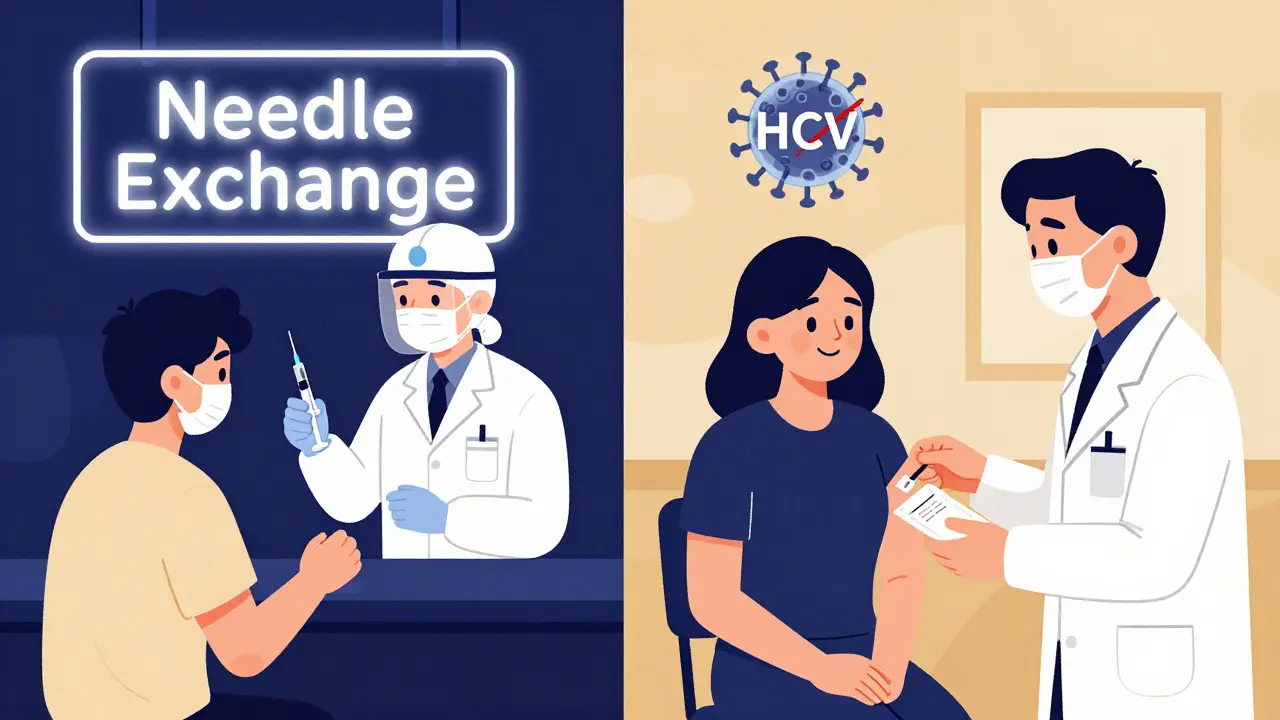
The Real Barrier Isn’t the Virus-It’s the System
Let’s be clear: the drugs work. The science is solid. The problem isn’t medical. It’s human.
A Harm Reduction Coalition survey in 2024 found that 68% of people who inject drugs were denied HCV treatment because they were still using drugs. Clinicians told them to come back when they were "clean." But "clean" isn’t a requirement for treatment-it’s a myth. The CDC’s 2024 guidelines say this clearly: "Treat everyone. No exceptions."
Why does this happen? Stigma. Fear. Misunderstanding. Some providers think treating someone who uses drugs is "enabling." But that’s backwards. Giving someone the tools to live longer, healthier, and without liver damage isn’t enabling-it’s medicine.
One man in Cape Town, who we’ll call Thabo, got cured of HCV in 2023. He was sober for three months. Then he relapsed. He went back to his clinic for a follow-up test. The nurse told him, "You didn’t take it seriously." He left without getting tested. Six months later, he was diagnosed with reinfection. He didn’t go back for a year.
That’s not an outlier. It’s routine.
Harm Reduction Isn’t Optional-It’s Essential
Here’s what actually stops HCV from coming back:
- Needle and syringe programs: When a program gives out at least 200 clean needles per person per year, HCV transmission drops by over 50%. That’s not a guess. That’s from a 2024 meta-analysis in the International Journal of Drug Policy.
- Opioid agonist therapy (OAT): Methadone or buprenorphine cuts HCV risk by half. People on OAT are less likely to share needles, less likely to engage in risky sex, and more likely to stay in care.
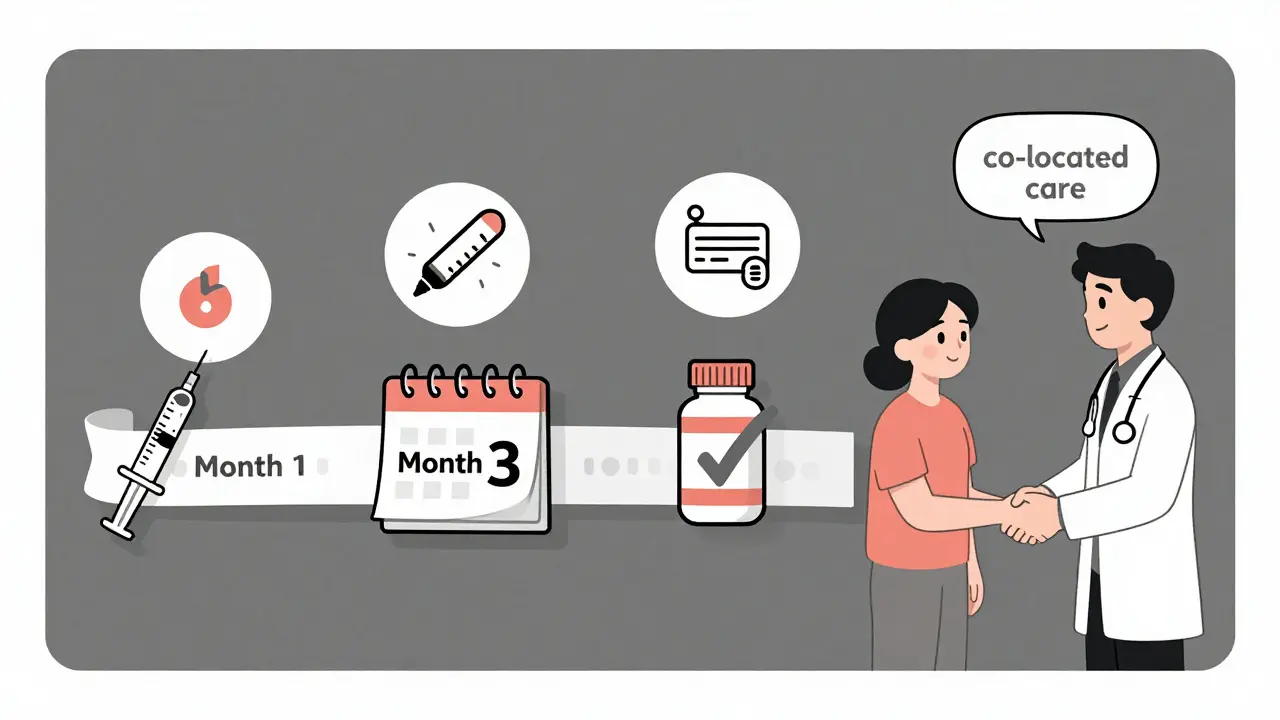
- Co-located care: When HCV treatment happens in the same place as addiction services, adherence jumps. In Boston, 82% of people in a methadone clinic stayed on their HCV treatment because they didn’t have to jump between two systems.
- Testing every 3 months: After cure, test for HCV RNA every 3 months for the first year. That’s how you catch reinfection early. Early means easier treatment.
These aren’t "nice-to-haves." They’re the backbone of elimination. Without them, even the best drugs won’t stop HCV from spreading.
New Hope: Shorter Treatment for Early Infection
In June 2025, the FDA approved Mavyret (glecaprevir/pibrentasvir) specifically for acute HCV infection-meaning the virus was caught within 6 months of exposure. This is huge.
The PURGE-C trial showed that 4 weeks of this same drug cured 84% of people with early infection. That’s not 95%, but it’s still high. And for someone who’s hard to reach-someone who doesn’t have stable housing, a phone, or transportation-4 weeks is doable. 12 weeks? Not so much.
Now, the NIH is testing 2-week treatment in the PURGE-2 trial (started April 2025). If it works, we could be looking at a future where HCV is treated in a single clinic visit.
This isn’t just about convenience. It’s about access. It’s about meeting people where they are.
What’s Next? The Road to Elimination
Right now, 58 million people worldwide have HCV. Each year, 1.5 million more get infected. The tools to end this exist. We have the drugs. We have the science. We have the data.
What we’re missing is political will. Funding. And the courage to stop treating people like problems to be fixed, and start treating them like people to be supported.
By 2030, the WHO wants to cut HCV transmission by 90%. That’s possible-but only if:
- Every person who injects drugs can get clean needles without shame.
- Every clinic offers same-day HCV treatment.
- Every person who gets cured gets tested again in 3 months.
- Every provider understands: reinfection isn’t failure. It’s feedback.
There’s no magic bullet. But there is a clear path. It starts with treating people with dignity. And it ends with a world where no one has to die from a virus we already know how to cure.
Can you get HCV again after being cured?
Yes. Being cured of HCV doesn’t give you immunity. If you’re still at risk-like injecting drugs or having unprotected sex with someone who has HCV-you can get infected again. Reinfection is common in high-risk groups, but it’s treatable.
Is retreatment as effective as the first treatment?
Yes. Studies show retreatment with DAAs works just as well as the first treatment-cure rates are still above 95%. Whether you’re being treated for the second, third, or fourth time, the drugs still work. No one should be denied treatment because they’ve been treated before.
Why do some clinics refuse to treat people who use drugs?
Stigma and misinformation. Some providers wrongly believe that treating people who use drugs encourages drug use. But research shows the opposite: when people get care without judgment, they’re more likely to stay in treatment, reduce risky behavior, and even enter recovery. The CDC and WHO explicitly say: treat everyone, no exceptions.
What harm reduction strategies actually reduce HCV transmission?
Three proven strategies: (1) Needle and syringe programs that supply at least 200 clean needles per person per year (cuts transmission by 54%), (2) Opioid agonist therapy like methadone (cuts transmission by 50%), and (3) Co-locating HCV care with addiction services (improves treatment adherence by 82%).
How often should you get tested for HCV after being cured?
Test every 3 months for the first 6 to 12 months after cure-especially if you’re still at risk. Reinfection peaks in the first 6 months. Early detection means easier, faster retreatment.
Is there a shorter treatment option for early HCV infection?
Yes. In 2025, the FDA approved Mavyret (glecaprevir/pibrentasvir) for 8 weeks in acute HCV. The PURGE-C trial showed 84% cure with just 4 weeks. A new trial (PURGE-2) is testing 2 weeks of treatment, which could make HCV care as simple as a single visit.
People don’t need to be perfect to deserve care. They need to be seen. Heard. Treated. And if we do that, HCV won’t just be manageable-it’ll be gone.


Comments (9)