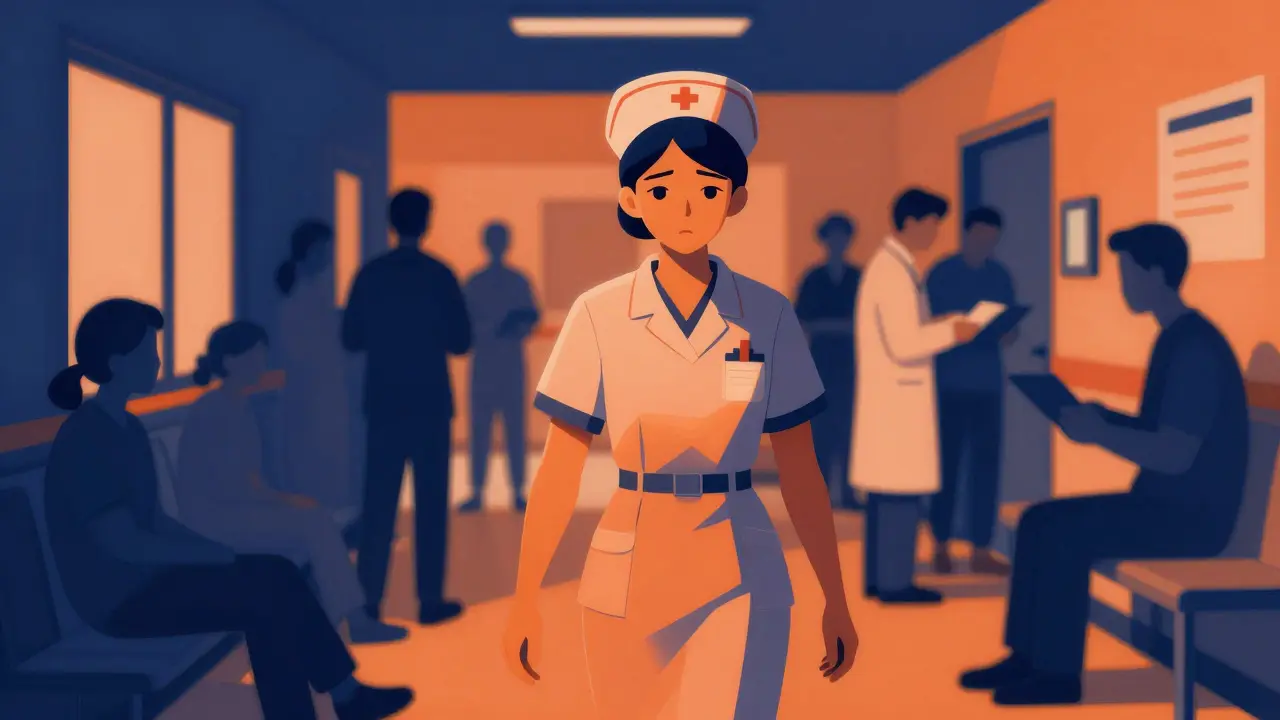
Walk into any major hospital emergency room today, and you might notice the silence before the storm. It’s not quiet because things are calm; it’s quiet because the staff is too overwhelmed to chat. You see nurses moving with urgent purpose, doctors huddled over charts, and patients waiting longer than they ever have before. This isn’t just a bad day-it’s the new normal for many facilities across the United States.
We are living through a severe healthcare system shortage thatrepresents a critical gap between the decreasing supply of healthcare professionals and the increasing demand for medical services. While headlines often focus on drug shortages or equipment backlogs, the most damaging deficit is human capital. Hospitals and clinics are struggling to keep their doors open, let alone provide high-quality care, because there simply aren’t enough hands to do the work. If you’re a patient, a caregiver, or even a healthcare worker yourself, this crisis affects your daily life more than you might realize.
The Scale of the Workforce Crisis
To understand why hospitals are buckling, we need to look at the numbers. The problem isn’t sudden; it’s been building since the early 2000s but exploded during the pandemic years of 2020-2023. According to the U.S. Bureau of Labor Statistics, we face more than 193,100 openings for registered nurses annually through 2032. That sounds like opportunity, but the reality is stark. The Health Resources and Services Administration (HRSA) estimates an RN shortfall exceeding 500,000 by 2030 across 37 states.
It’s not just nurses. The Association of American Medical Colleges projects a physician shortage of 86,000 by 2036. But the bottleneck starts earlier-in nursing schools. Nearly half of all nurses are over age 50, meaning a massive wave of retirements is coming within the next decade. At the same time, nursing faculty vacancies stand at 8.8% nationally. Without enough teachers, schools can’t accept more students, even if those students want to learn. In 2023 alone, over 2,300 qualified applicants were rejected from nursing programs solely due to a lack of faculty.
Direct Impacts on Patient Safety and Care Quality
When you cut corners on staffing, the first thing to suffer is patient safety. This isn’t theoretical; it’s measurable. Research published in JAMA shows that facilities with nurse-to-patient ratios exceeding 1:4 experience 7% higher mortality rates. That means for every extra patient a nurse has to watch, the risk of death goes up significantly.
In emergency departments, understaffing leads to chaos. The American College of Emergency Physicians reports that understaffed ERs face 22% longer patient wait times. Imagine arriving with chest pain, only to sit in a hallway for hours because there’s no one to triage you. These delays don’t just cause frustration; they lead to worse health outcomes. Dr. Atul Gawande, former Assistant Administrator for Global Health at USAID, called this crisis “the most significant threat to healthcare quality since the advent of antibiotics.” He noted that each 10% increase in nurse turnover correlates with a 6.5% rise in hospital-acquired infections. When staff burn out and leave, the remaining team is stretched thin, leading to mistakes that shouldn’t happen.
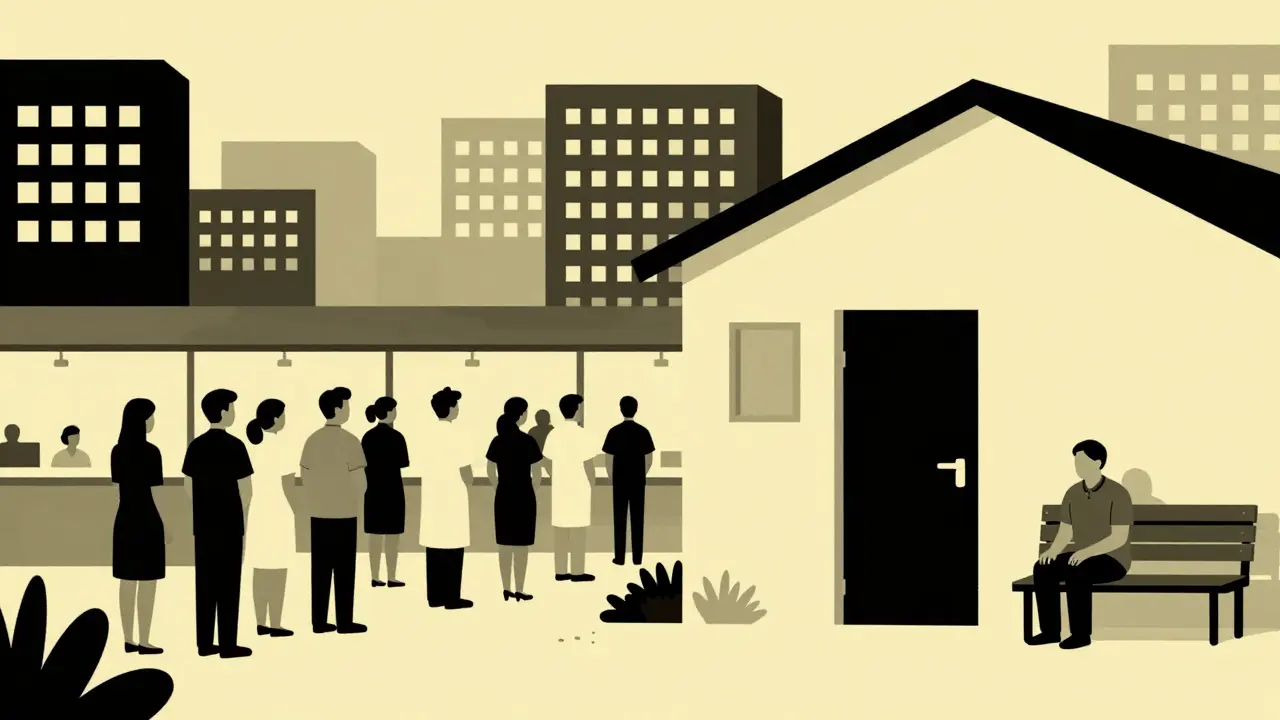
Hospitals vs. Clinics: Who Feels the Pain Most?
The shortage doesn’t hit everyone equally. Academic medical centers-large teaching hospitals in cities-are better equipped to handle the strain. They maintain about 82% staffing levels compared to just 67% in rural community hospitals. Why? Because big hospitals can pay more and offer better benefits. Rural areas, which already struggle to attract talent, are losing ground fast. Rural hospitals experience vacancy rates 37% higher than urban facilities.
Clinics are also feeling the squeeze. Urban outpatient clinics operate at 79% staffing, while rural clinics drop to a dismal 58%. This creates a two-tier system where wealthier patients in cities get timely appointments, while those in rural areas face months-long waits for basic primary care. Behavioral health services are hit hardest of all. The Department of Health and Human Services projects workforce deficits across all mental health specialties by 2036. If you’ve tried to find a therapist or psychiatrist recently, you know this firsthand.
| Setting | Current Staffing Level | Key Challenge |
|---|---|---|
| Academic Medical Centers | 82% | High burnout despite better pay |
| Rural Community Hospitals | 67% | Geographic isolation limits recruitment |
| Urban Outpatient Clinics | 79% | Competition from larger health systems |
| Rural Clinics | 58% | Severe access barriers for patients |
The Financial Toll on Healthcare Providers
You might think hospitals are making huge profits, but the shortage is actually costing them billions. When a facility can’t staff its beds, it has to close them. David Feinberg, CEO of Mercy Health, reported closing 12 inpatient beds weekly due to staffing issues, costing $4.2 million monthly in lost revenue. That money could have gone toward hiring more staff, creating a vicious cycle.
To fill gaps, hospitals rely heavily on travel nurses. In 2023, travel nurses filled 12% of hospital positions. But this solution is expensive. Travel nurses earned $185/hour in New York ICU assignments in April 2025, while permanent staff earned $65/hour. This wage disparity fuels resentment among full-time employees, who feel undervalued. The result? More permanent staff quit, forcing hospitals to hire even more expensive temporary workers. The National Council of State Boards of Nursing notes that this model increases labor costs by 34%, squeezing hospital budgets further.

What Is Being Done to Fix It?
So, what’s the plan? There is no single fix, but several strategies are being tested. The Biden administration allocated $500 million in April 2025 for nursing education expansion and loan forgiveness. However, the American Association of Colleges of Nursing (AACN) says this covers only 18% of the needed funding. We need closer to $1.2 billion annually to meet projected demand.
Technology offers some hope. AI-assisted documentation tools can reduce administrative burden, though the learning curve averages 8.7 weeks per clinician. Telehealth nurse triage reduced ER visits by 19% in pilot programs, but required a $2.3 million initial investment. Some hospitals are redesigning care teams entirely. The Mayo Clinic’s “Care Team Redesign” took 18 months and $4.7 million to implement, but it reduced nurse turnover by 31%. These successes show that change is possible, but it requires time, money, and leadership commitment.
State-level actions vary wildly. California mandates minimum nurse-to-patient ratios (1:5 in medical-surgical units), which improves safety but strains budgets. Meanwhile, Massachusetts uses loan forgiveness programs effectively, keeping its shortage 8% below the national average. Other states are doing little, leaving their hospitals to fend for themselves.
Looking Ahead: Will It Get Better?
The outlook is cautious. McKinsey predicts the global healthcare worker shortage will peak at 15 million by 2027 before gradually improving. In the U.S., HRSA models suggest nursing shortages could persist through 2035 without significant intervention. Demographics won’t help us either. By 2050, there will be 82 million Americans aged 65+, supported by fewer working-age adults. The ratio of workers to seniors will drop from 4:1 to 2.9:1 within five years.
However, innovation gives us reason to hope. Technology-enabled care models could offset 30-40% of staffing gaps through AI diagnostics and remote monitoring, according to Dr. Robert Wachter of UCSF. The key is investing now. The University of Pennsylvania’s Center for Health Care Innovation suggests that with $22 billion in targeted investment, we could mitigate much of the projected shortage by 2030. Until then, patients, families, and providers must adapt to a system that is stretched thinner than ever.
Why are there so many nurse shortages right now?
The shortage stems from three main factors: an aging workforce (nearly 50% of nurses are over 50), high burnout rates driven by pandemic stress and unsafe patient ratios, and a lack of nursing faculty to train new students. Schools are rejecting thousands of qualified applicants yearly because they don't have enough teachers.
How does understaffing affect my safety as a patient?
Understaffing directly increases risks. Studies show that when nurse-to-patient ratios exceed 1:4, mortality rates rise by 7%. Additionally, understaffed emergency rooms have 22% longer wait times, and high nurse turnover correlates with a 6.5% increase in hospital-acquired infections.
Are rural hospitals more affected than city hospitals?
Yes, significantly. Rural hospitals face vacancy rates 37% higher than urban facilities. While academic medical centers maintain 82% staffing levels, rural community hospitals operate at only 67%. This creates major access disparities for patients living outside major cities.
Is technology going to solve the staffing crisis?
Technology can help but won't solve it alone. AI tools and telehealth can offset 30-40% of staffing gaps by reducing administrative tasks and enabling remote monitoring. However, these solutions require significant upfront investment and training time, averaging 8.7 weeks for new tools.
What can I do if I'm having trouble finding a doctor or nurse?
Consider using telehealth services, which often have shorter wait times. Look for large health systems or academic centers that may have better staffing. For behavioral health, check state-specific directories and consider group therapy options, which are often more available than individual sessions.


Comments (13)