Drug-Induced Arrhythmia Risk Calculator
Personal Risk Assessment
This tool estimates your risk of medication-induced arrhythmias based on key factors discussed in the article. Your results will not replace professional medical advice.
Risk Assessment Result
Important Safety Information
This tool is for educational purposes only and does not replace medical advice. If you experience any of these warning signs while on medication, contact your healthcare provider immediately:
- Palpitations or irregular heartbeat
- Dizziness or fainting
- Chest discomfort
- Unexplained fatigue
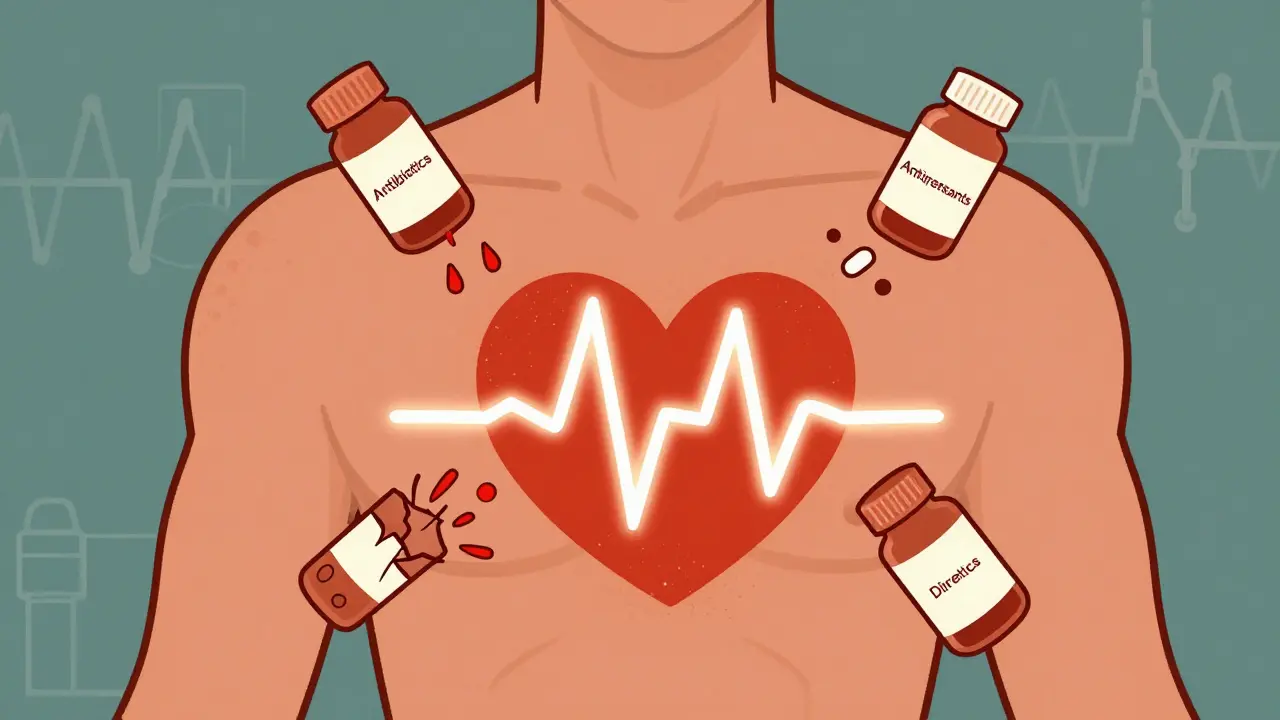
When you take a pill to treat one problem, you don’t expect it to cause another-especially not something as serious as an irregular heartbeat. But medication-induced arrhythmias are more common than most people realize. In fact, over 400 widely used drugs can trigger abnormal heart rhythms, from antibiotics to antidepressants, and even medicines meant to fix heart problems. These aren’t rare side effects. They’re responsible for tens of thousands of hospital visits every year, and many could be avoided with better awareness.
What Exactly Is a Drug-Induced Arrhythmia?
An arrhythmia is when your heart beats too fast, too slow, or in an irregular pattern. When it’s caused by medication, it’s called a drug-induced arrhythmia. This happens because certain drugs interfere with the tiny electrical signals that control your heartbeat. The most common way this occurs is through QT interval prolongation-a measurement on an ECG that shows how long it takes your heart to recharge between beats. When that interval gets too long, it can set off a dangerous rhythm called torsades de pointes, which can lead to sudden cardiac arrest.Some medications do this by blocking ion channels in heart cells. Others mess with your electrolytes-potassium, magnesium, sodium-critical for normal heart function. Even something as simple as a low potassium level, often caused by diuretics, can turn a normally safe drug into a risk.
Which Medications Are Most Likely to Cause Problems?
You might be surprised by the list. It’s not just the old-school drugs. Many common prescriptions carry this risk:- Antibiotics: Macrolides like azithromycin and fluoroquinolones like levofloxacin can prolong QT. Risk is highest in the first week of use.
- Antidepressants and antipsychotics: SSRIs, tricyclics, and drugs like haloperidol are linked to rhythm disturbances, especially in older adults.
- Antiarrhythmics themselves: Ironically, drugs like flecainide and propafenone can trigger arrhythmias in 5-10% of people who take them.
- Digoxin: Used for heart failure and atrial fibrillation, but toxic levels (above 2 ng/mL) cause dangerous rhythms, especially in people with kidney problems.
- Cholesterol drugs: Some statins and newer agents like PCSK9 inhibitors have been tied to increased atrial fibrillation risk.
- Antiemetics: Ondansetron and metoclopramide, often used for nausea, are on the FDA’s watch list for QT prolongation.
And here’s something many don’t know: even beta-blockers like metoprolol, which are used to slow the heart, can cause problems if they slow it too much. Symptoms like extreme fatigue, dizziness, or fainting might not be "just aging"-they could be your heart struggling under the dose.
Who’s at Highest Risk?
Not everyone who takes these drugs will have issues. But certain factors stack the odds against you:- Age 65+: Over 60% of severe cases involve older adults. Their kidneys don’t clear drugs as well, and they often take multiple meds.
- Electrolyte imbalances: Low potassium (affects 20% of hospitalized patients) or low magnesium (10-15%) dramatically increases risk.
- Multiple QT-prolonging drugs: Taking two or more drugs that affect the QT interval multiplies risk by 300-500%. A common combo? An antibiotic + an antidepressant + a diuretic.
- Excessive alcohol: More than three drinks a day triples your risk. Even weekend binges matter.
- Genetic factors: About 15% of people of African ancestry carry the S1103Y variant, and 12% of East Asians carry R1193Q. These variants make heart cells far more sensitive to drug effects. Genetic testing isn’t routine yet-but it’s coming.
Warning Signs You Can’t Ignore
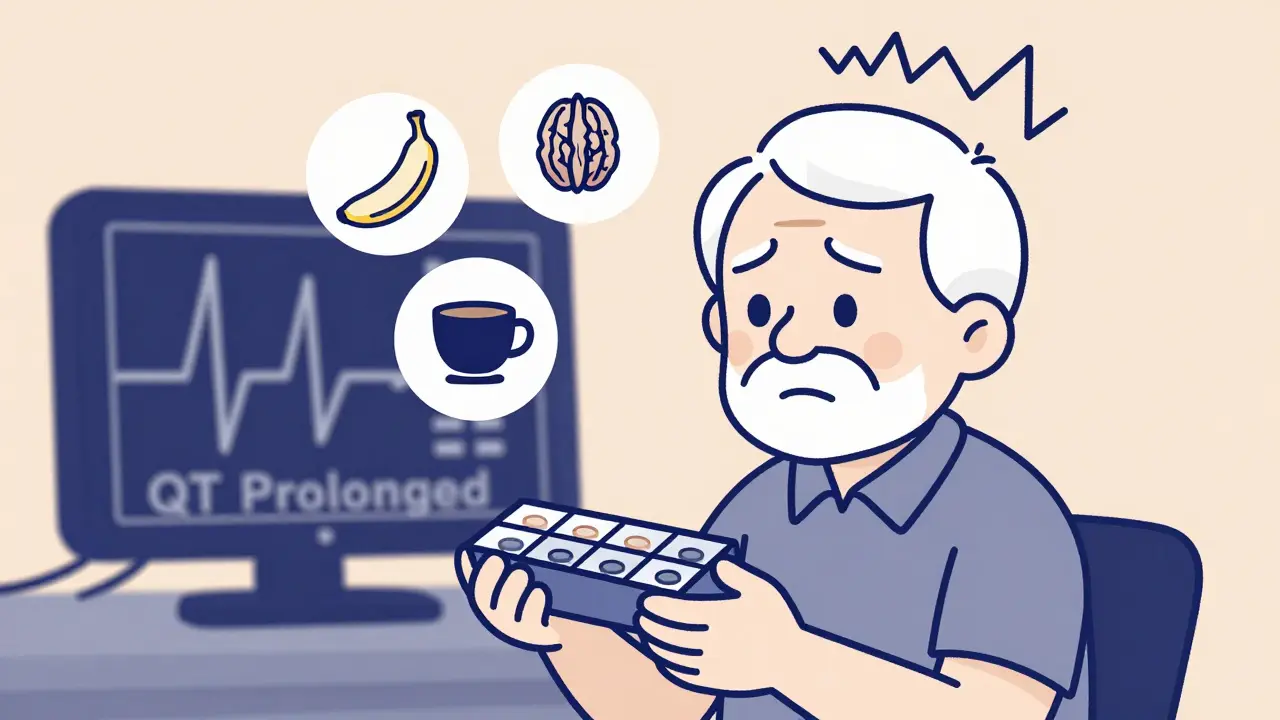
The body gives clues before disaster strikes. If you notice any of these while on medication, don’t brush them off:- Palpitations: A fluttering, pounding, or skipping feeling in your chest. Reported by 70-80% of people who develop drug-induced arrhythmias.
- Dizziness or lightheadedness: Especially if it happens when standing up or during light activity.
- Fatigue that won’t go away: Not just "I’m tired"-but "I can’t get out of bed" fatigue that’s new and unexplained.
- Chest discomfort: Not always sharp pain. Sometimes just pressure, fullness, or a weird ache.
- Fainting or near-fainting: This is a red flag. If you’ve passed out, even briefly, get checked immediately.
And yes-caffeine can make things worse. While caffeine alone rarely causes serious arrhythmias, it can tip the balance in someone already at risk. About 25-30% of patients report palpitations after coffee or energy drinks.
How Doctors Manage These Cases
The good news? Most cases can be fixed without surgery. Here’s what typically works:- Stopping or switching the drug: In 75-85% of cases, simply changing or discontinuing the offending medication resolves the issue.
- Correcting electrolytes: If potassium or magnesium is low, IV or oral supplements often restore rhythm within hours.
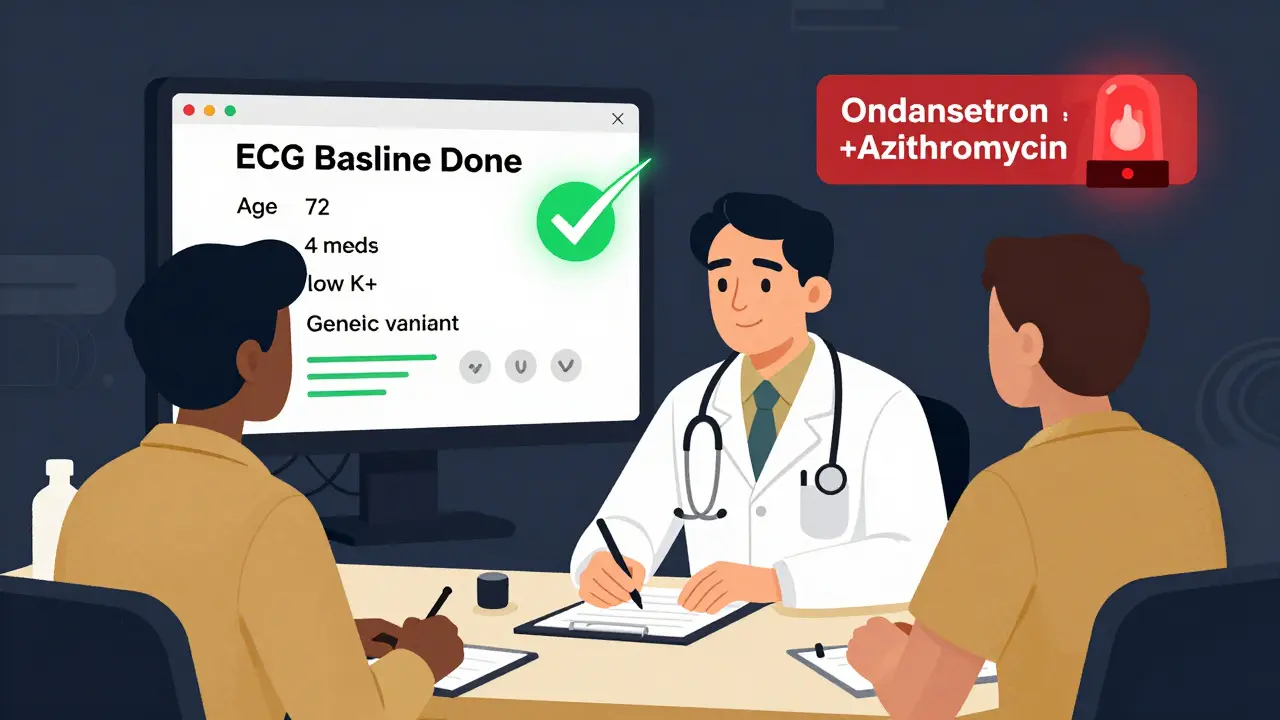
- ECG monitoring: Before starting high-risk drugs, doctors should check your baseline ECG. Repeat it within 72 hours. If the QT interval increases by more than 60 milliseconds from baseline, the drug should be stopped.
- Dose adjustment: For beta-blockers causing bradycardia, reducing the dose helps in 60-70% of cases. If symptoms persist, a pacemaker might be needed-but that’s rare.
- Catheter ablation: Needed in only 5-10% of persistent cases, usually when the arrhythmia keeps coming back despite stopping the drug.
There’s also a growing push for personalized medicine. The American College of Cardiology is rolling out a clinical tool in 2024 that calculates your personal risk based on age, current meds, kidney function, and genetic markers. This could become standard before prescribing drugs like azithromycin or ondansetron.
What You Can Do to Protect Yourself
You can’t control every variable-but you can control these:- Know your meds: Ask your pharmacist or doctor: "Could this drug affect my heart rhythm?" If they hesitate, dig deeper.
- Get baseline ECGs: Especially if you’re over 60 or on multiple prescriptions.
- Monitor your diet: Eat potassium-rich foods (bananas, spinach, sweet potatoes) and magnesium-rich foods (nuts, legumes, whole grains). Avoid excessive salt and processed foods.
- Limit alcohol and caffeine: Even one extra drink or an extra cup of coffee can tip the scale.
- Track symptoms: Keep a simple log: "Date, time, symptom, what I took." This helps your doctor connect the dots.
- Don’t self-medicate: Over-the-counter cold pills, herbal supplements like St. John’s Wort, or even some weight-loss products can carry hidden risks.
Remember: if you feel something off in your chest, don’t wait. Call your doctor. Don’t assume it’s anxiety or stress. Arrhythmias don’t always come with warning bells-but they often come with quiet signs.
Why This Matters Now More Than Ever
Drug-induced arrhythmias cost the U.S. healthcare system over $1.2 billion a year. That’s not just money-it’s lost time, lost health, and sometimes, lost life. And with aging populations and more people on multiple medications, this problem is growing.The FDA has added black box warnings to 25 drugs since 2010, with eight added in 2022 alone. That means regulators are paying attention. But awareness among patients and even some doctors still lags behind.
The future lies in smarter prescribing. Genetic screening, better monitoring tools, and clearer guidelines will reduce these events by 30-40% over the next five years. But until then, your best defense is knowledge-and speaking up.
Can over-the-counter medications cause heart arrhythmias?
Yes. Many OTC drugs carry risks. Cold medicines with pseudoephedrine or phenylephrine can speed up the heart. Some antihistamines like diphenhydramine (Benadryl) prolong the QT interval. Even herbal supplements like St. John’s Wort or licorice root can interfere with heart rhythms. Always check with your pharmacist before taking anything new, especially if you’re already on prescription meds.
Is it safe to keep taking my medication if I feel palpitations?
No. Palpitations are your body’s alarm system. Don’t ignore them. Contact your doctor right away. They may want to check your ECG, electrolyte levels, or adjust your dose. Stopping a medication without medical advice can be risky too-so don’t quit cold turkey. Work with your provider to find a safer option.
Can stress or anxiety mimic drug-induced arrhythmias?
Yes, anxiety can cause palpitations, rapid heartbeat, or chest tightness that feels like an arrhythmia. But if you’re on a medication known to cause rhythm problems, don’t assume it’s just stress. The two can coexist. Your doctor can use an ECG or Holter monitor to tell the difference. If your symptoms started after beginning a new drug, the link is likely real.
Do I need genetic testing if I’m on a high-risk drug?
Not yet standard, but it’s becoming more common in high-risk cases. If you’re over 65, have kidney disease, take multiple QT-prolonging drugs, or have a family history of sudden cardiac death, ask about genetic screening. Tests for variants like S1103Y and R1193Q are available through specialized labs. While not routine, they can be life-saving for people at highest risk.
How long does it take for an arrhythmia to go away after stopping the drug?
It varies. For mild cases, rhythm normalizes within 24-72 hours after stopping the drug, especially if electrolytes are corrected. In more severe cases-like torsades de pointes-it may take days to weeks. Some people need temporary pacing or magnesium infusions. If the arrhythmia persists beyond a week after stopping the drug, further investigation is needed, as another underlying issue may be present.


Comments (13)