Heat Exposure Risk Calculator
Medication Assessment
Heat Conditions
Your Heat Risk Assessment
Risk Level:
What this means:
Recommended Actions:
When the temperature rises, most people think about drinking more water, staying in the shade, or wearing light clothes. But for millions of people taking diuretics or anticholinergics, heat isn’t just uncomfortable-it’s dangerous. These common medications, prescribed for high blood pressure, heart failure, overactive bladder, and depression, can quietly shut down your body’s ability to cool itself. And many people don’t even realize it.
How Diuretics Put You at Risk in the Heat
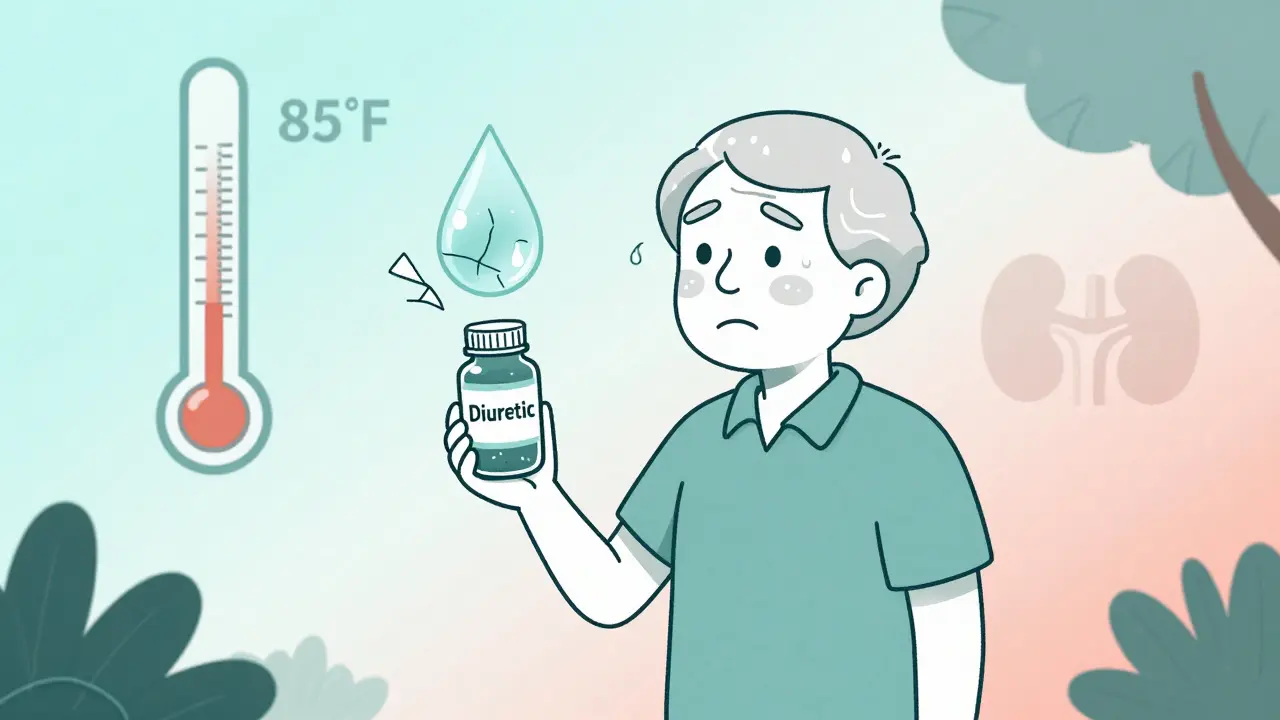
Diuretics-often called "water pills"-are among the most prescribed drugs in the U.S. About 32 million Americans take them daily. Common ones include furosemide (Lasix), hydrochlorothiazide (Microzide), and chlorthalidone (Hygroton). They work by helping your kidneys flush out extra fluid and salt, which lowers blood pressure and reduces swelling. Sounds good, right? But here’s the problem: when it’s hot, your body needs every drop of fluid to sweat and cool down. Diuretics make you lose more fluid than normal. In extreme heat, you can lose 1 to 2 liters of sweat per hour. If you’re already peeing out extra water because of your medication, you’re running on empty. That leads to dehydration, low blood pressure, dizziness, and even fainting. Worse, diuretics like hydrochlorothiazide also drain potassium. Low potassium can cause muscle cramps, irregular heartbeat, and in severe cases, cardiac arrest-especially when your heart is already working harder in the heat. A 2022 study of over 1.2 million Medicare patients found that those on loop diuretics had a 37% higher chance of being hospitalized for heat-related illness, even when temperatures were just 80°F (26.7°C)-well below what most people consider a "heatwave."Why Anticholinergics Are Even More Dangerous
Anticholinergics are a different kind of threat. These drugs block a chemical in your body called acetylcholine. That’s helpful for treating overactive bladder (oxybutynin, tolterodine), Parkinson’s symptoms, or depression (amitriptyline). But it also stops your sweat glands from working. Sweating is your body’s main way to cool off. If you can’t sweat, your core temperature rises fast. Studies show that strong anticholinergics (those with an Anticholinergic Burden Score of 3) can reduce sweating by 30% to 50%. That means your body can’t regulate heat at all. You might feel fine-until you suddenly collapse. This is especially risky for older adults. About 40% of people over 65 take at least one anticholinergic. Many take multiple medications, and some also have dementia or memory problems. Heat illness can cause confusion, disorientation, or slurred speech-symptoms that look exactly like the side effects of the anticholinergic itself. So the person doesn’t realize they’re in danger. That’s why the CDC warns: if you’re on these drugs, you need someone checking on you daily during heat events.The Real Danger: When Medications Combine
The biggest risk isn’t just one medication-it’s the mix. Many older adults take diuretics for blood pressure, anticholinergics for bladder control, and maybe a beta-blocker for heart rhythm. Each one chips away at your body’s ability to handle heat. Diuretics dehydrate you. Anticholinergics stop you from sweating. Beta-blockers slow your heart rate, making it harder to pump blood to your skin to release heat. Together, they create a perfect storm. During the 2021 Pacific Northwest heat dome, 91% of the 800+ heat-related deaths involved people taking at least one medication that interfered with thermoregulation. Diuretics and anticholinergics made up 63% of those cases. And it’s not just extreme heat. The risk builds slowly. Even a warm day in early June can be dangerous if you’re on these meds. Most heat-related hospitalizations happen before official heat alerts are issued.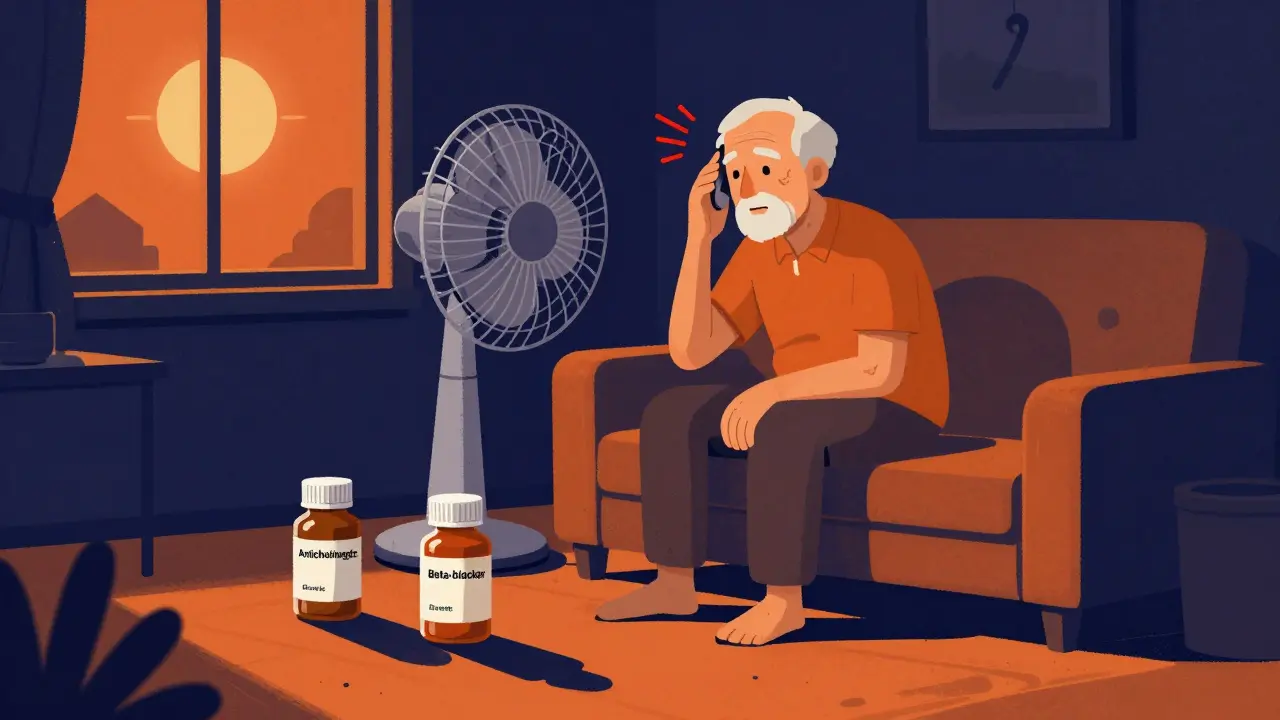
What to Do: Practical Steps for Safety
You don’t have to stop your meds. But you do need to adjust how you live during hot weather.- Drink water, even if you’re told to limit fluids. If you have heart failure and your doctor told you to drink less, talk to them before the heat hits. Many patients need to temporarily increase fluid intake during heatwaves. Don’t guess-ask.
- Wear the right clothes. Lightweight, loose, light-colored fabrics help. Dark colors absorb heat. Tight clothes trap it. Cotton is better than polyester.
- Use sunscreen. Many anticholinergics make your skin more sensitive to the sun. Sunburn adds stress to your body and makes heat illness worse.
- Stay indoors during peak heat. 10 a.m. to 4 p.m. is the worst time. Use fans, air conditioning, or public cooling centers. Libraries, malls, and community centers are safe places to be.
- Know the warning signs. Headache, dizziness, nausea, confusion, rapid heartbeat, dry skin (yes, dry skin-that means you’re not sweating), and muscle cramps are red flags. If you feel off, stop what you’re doing, get cool, and call someone.
When to Call a Doctor
Never stop your medication on your own. But do call your doctor if:- You’ve been feeling unusually tired or dizzy in the heat.
- You’re urinating less than normal, or your urine is very dark.
- You’re confused or having trouble remembering things-especially if it’s worse than usual.
- You’ve had a heat-related incident before.
Get a Heat Safety Plan
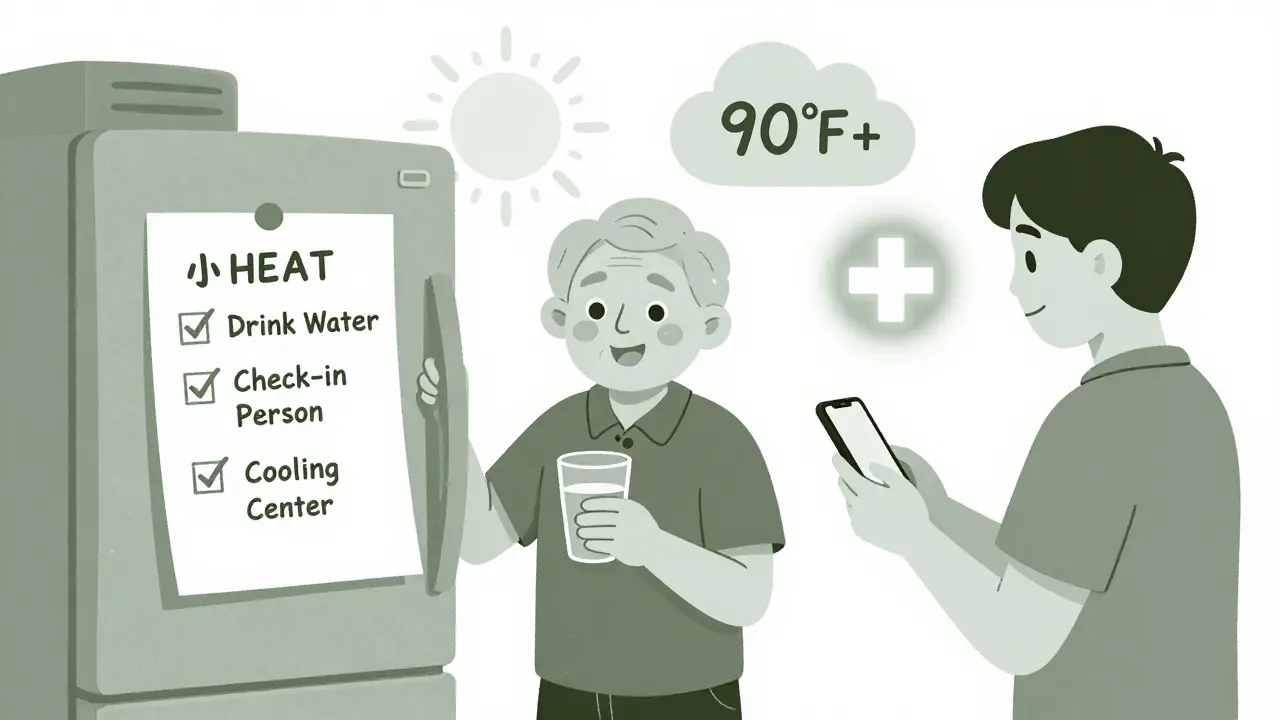
The CDC recommends every person on these medications have a written plan. That means:- A list of all your meds and why you take them.
- A list of symptoms that mean you need help.
- A contact person-family, friend, neighbor-who checks on you twice a day during heat events.
- A backup plan if your AC fails: where to go, how to get there.
What’s Being Done to Fix This?
Researchers are finally paying attention. The National Institute on Aging just funded $4.2 million in new studies on how medications affect heat tolerance in older adults. Penn State is running a $2.8 million NIH study tracking how common drugs like diuretics and anticholinergics change body temperature in people over 60. Results are expected in 2025. The CDC’s Heat and Health Tracking System now covers 25 states and is starting to link heat deaths with medication records. That means in the next few years, we’ll know exactly which drug combinations are the most dangerous-and doctors will be able to warn patients before it’s too late.You’re Not Alone. But You Have to Act.
Heat is getting worse. The number of days over 90°F in the U.S. has jumped 47% since 1970. Medications like diuretics and anticholinergics aren’t going away. They save lives. But they also make you vulnerable. The good news? You can protect yourself. You don’t need to be an expert. Just be aware. Talk to your doctor. Make a plan. Tell someone. Drink water. Stay cool. Your body can’t cool itself if your meds won’t let it. But you can still make choices that keep you safe.Can I stop taking my diuretic if it’s too hot?
No. Never stop or change your dose without talking to your doctor. Stopping diuretics suddenly can cause fluid buildup, high blood pressure, or heart problems. Instead, ask your doctor if you should temporarily increase your fluid intake or adjust your dose during heat events. Many patients need small changes-not stopping the medication.
Do all anticholinergics stop sweating?
No. Only those with a high Anticholinergic Burden Score (ACB = 3) significantly reduce sweating. Common ones include oxybutynin, tolterodine, and amitriptyline. Weaker anticholinergics (ACB ≤ 2), like some allergy meds, have little to no effect on heat tolerance. Check your medication’s ACB score with your pharmacist or doctor.
I’m over 65 and take multiple medications. Am I at higher risk?
Yes. Older adults are more likely to take diuretics, anticholinergics, and other drugs that affect fluid balance or sweating. Aging also reduces your body’s natural ability to regulate temperature. Combine that with multiple medications, and your risk multiplies. A 2023 CDC report found that over 60% of heat-related deaths in older adults involved people taking three or more medications that interfere with thermoregulation.
Is it safe to use a fan if I’m on these medications?
Fans help if the air is cooler than your skin. But if the temperature is above 90°F and you’re not sweating, a fan won’t cool you down-it just moves hot air around. In that case, you need air conditioning or a cool place. Don’t rely on fans alone if you’re on anticholinergics or severely dehydrated.
What should I do if I feel dizzy or confused in the heat?
Stop what you’re doing immediately. Move to a cool place, sit or lie down, and drink water if you can. Call someone-don’t wait. If you’re confused, having trouble speaking, or your skin is hot and dry, call 911. Heat stroke is a medical emergency. Don’t wait to see if it gets better.
Can I still go outside if I’m on these medications?
Yes, but be smart. Avoid being outside between 10 a.m. and 4 p.m. when it’s hottest. If you must go out, wear a hat, use sunscreen, carry water, and take frequent breaks in the shade. Short trips are okay. Long exposure isn’t. Always have a plan to get indoors quickly.
How do I know if my medication has a high anticholinergic burden?
Ask your pharmacist. They can check your list of medications and tell you which ones have an Anticholinergic Burden Score of 3. Common high-score drugs include oxybutynin, tolterodine, diphenhydramine (Benadryl), and amitriptyline. Some over-the-counter sleep aids and allergy pills also fall into this category. Don’t assume they’re safe just because they’re not prescription.


Comments (14)