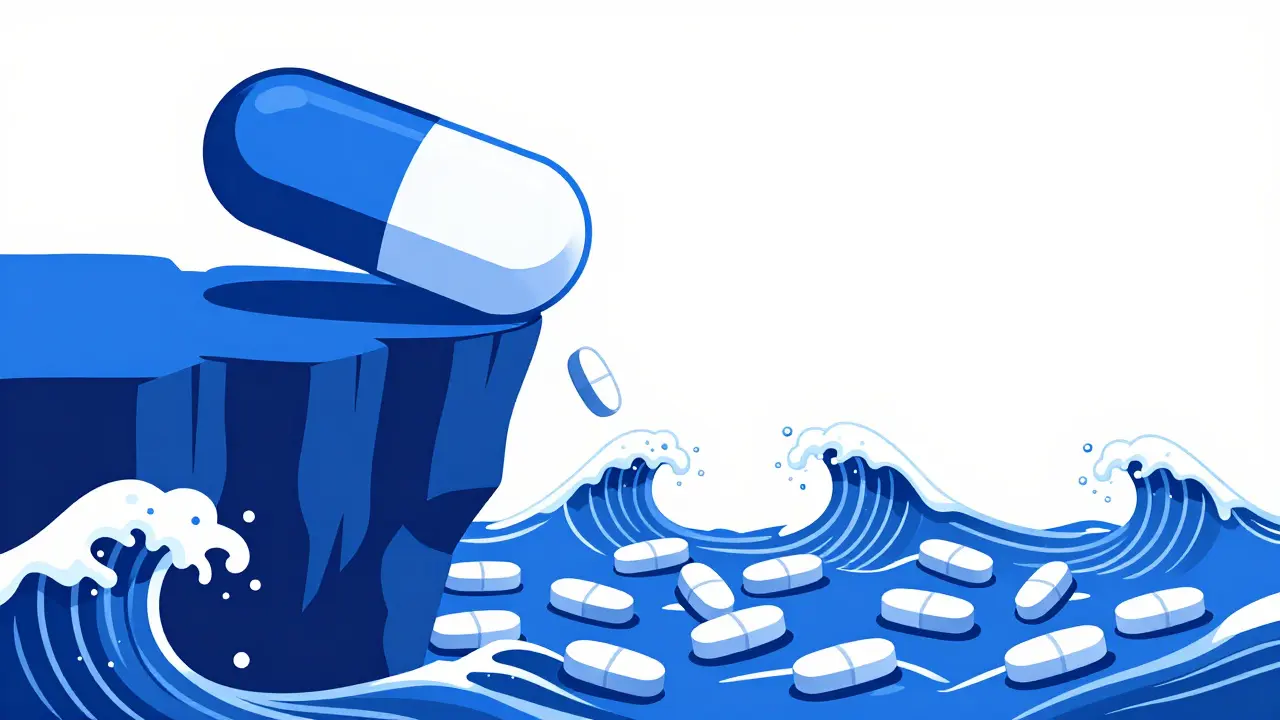
Imagine waking up to find that 80% of your company's revenue has vanished overnight. For a brand-name pharmaceutical company, this isn't a nightmare-it's a scheduled event known as the patent cliff. When a drug's legal protection expires, the market is flooded with generic drugs that offer the same medical benefits at a fraction of the cost. This creates a violent economic shift where a high-margin monopoly transforms into a low-margin commodity fight.
The core economic divide: Monopoly vs. Commodity
To understand the impact, we first have to look at how these two business models differ. Brand Manufacturers is a type of pharmaceutical company that invests heavily in research and development (R&D) to create new medications, protected by government-granted patents. Their goal is to maximize profit during the patent window to recoup billions in development costs. Because they hold a monopoly, they have the power to set high prices.
On the flip side, Generic Drugs are pharmaceutical products that are therapeutically equivalent to brand-name drugs in active ingredients, safety, and quality, but are produced after the original patent expires. Generics don't need to fund the original clinical trials, so they operate on a volume-based model. They aren't selling a "brand"; they are selling a chemical formula. This turns the medication into a commodity, where the only real way to win is to be the cheapest provider.
The financial shock of the patent cliff
The moment a patent expires, brand manufacturers face a revenue erosion that is almost immediate. According to FDA data, generics typically cost 80-85% less than the original brand version. In the real world, this means a drug that generated $5 billion annually might see its sales plummet by 80-90% within the first year of generic entry.
We saw this play out with Humira in 2023. When one of the world's best-selling drugs lost its protection, the financial impact was massive. For the company, this isn't just about losing a product; it's about managing investor expectations and stock price volatility. When a major drug goes generic, the market often reacts sharply, as seen in trends tracked by the Bloomberg Pharma Index.
| Feature | Brand Manufacturer | Generic Manufacturer |
|---|---|---|
| Pricing Power | High (Monopoly) | Low (Competitive) |
| Primary Goal | R&D Recovery / Profit | Market Share / Low Cost |
| Cost Structure | High Innovation Costs | High Manufacturing Efficiency |
| Market Share | Declines rapidly post-patent | Grows rapidly post-patent |
Strategies for surviving the generic wave
Brand companies don't just sit back and watch their revenue disappear. They use a variety of "lifecycle management" tactics to stretch out their profitability. One common move is Product Hopping, which is the practice of switching patients to a slightly modified version of a drug (like a different dosage or extended-release version) just before the patent expires to maintain control.
Another aggressive tactic is the "pay-for-delay" settlement. In these deals, the brand manufacturer pays a generic company to stay out of the market for a few more years. While this saves the brand company billions, it's a huge hit to the public. The Blue Cross Blue Shield Association estimates these deals drive up drug costs by nearly $12 billion annually, with patients footing a significant portion of that bill.
Some companies take a more structural approach. Take Novartis, for example. In October 2022, they spun off their generics division, Sandoz, into a separate publicly traded company. By doing this, they separated the high-risk, high-reward innovation business from the stable, low-margin generics business.
The role of intermediaries and market distortions
While the theory is that generics lower prices for everyone, the reality is muddied by Pharmacy Benefit Managers (PBMs), which are third-party administrators that manage prescription drug benefits for health plans and employers. PBMs often use opaque pricing and rebates that can actually prevent the full cost savings of generics from reaching the patient.
The Schaeffer Center at USC found that patients sometimes pay 13-20% more than necessary for generics because of how PBMs game the system. Pharmacists have also sounded the alarm on forums like r/pharmacy, noting that changing reimbursement rates from PBMs can actually make it lose money for the pharmacy to dispense certain generics.
Supply chain risks and the "Race to the Bottom"
There is a hidden danger in the generic model: the pressure to cut costs. When three or four generic competitors enter a market, prices drop by about 20% within three years. As more enter, it becomes a race to the bottom. This puts immense pressure on manufacturing plants to lower costs, which can lead to quality lapses or supply disruptions.
The FDA's Center for Drug Evaluation and Research has warned that this economic pressure can lead to drug shortages. If the profit margin on a generic drug becomes too thin, manufacturers may simply stop producing it, leaving patients with no options-neither the brand nor the generic version.
The future landscape of health economics
Looking ahead, the tension between innovation and affordability isn't going away. By 2028, analysts at Evaluate Pharma predict that $400 billion in brand drug revenue is at risk due to patent expirations. This is forcing a shift in how companies approach R&D. Instead of relying on one "blockbuster" drug, they are diversifying into complex generics, such as inhalers and injectables, which have higher barriers to entry and slower generic uptake.
Legislative efforts are also shifting. There is growing momentum to ban pay-for-delay deals, which could potentially save the healthcare system $45 billion over the next decade. Meanwhile, the Hatch-Waxman Act remains the foundational law, trying to balance the need for new cures with the need for cheap medicine. It's a delicate equilibrium: if you remove the profit incentive, companies stop innovating; if you allow monopolies forever, the healthcare system goes bankrupt.
Why do generics cost so much less than brand drugs?
Generics don't have to pay for the initial research, development, and clinical trials that the brand manufacturer funded. They only need to prove the drug is bioequivalent. Because multiple companies often compete to sell the same generic, the price drops further due to market competition.
What is a "patent cliff"?
A patent cliff occurs when a pharmaceutical company's patent protection for a blockbuster drug expires. This allows generic versions to enter the market, typically leading to a sudden and massive drop in the brand company's revenue, often by 80% or more.
Do generic drugs work as well as brand names?
Yes. The FDA requires generics to be therapeutically equivalent, meaning they must have the same active ingredients, strength, quality, and performance characteristics as the brand-name drug.
How do companies delay generic entry?
Companies use tactics like "pay-for-delay" settlements (paying generic firms to stay out of the market) and "product hopping" (creating a slightly different version of the drug and switching patients to it before the patent expires).
What impact do PBMs have on generic pricing?
Pharmacy Benefit Managers (PBMs) act as middlemen. While generics are cheaper to produce, PBMs can use opaque pricing and rebate structures that may prevent those savings from reaching patients, sometimes increasing out-of-pocket costs.