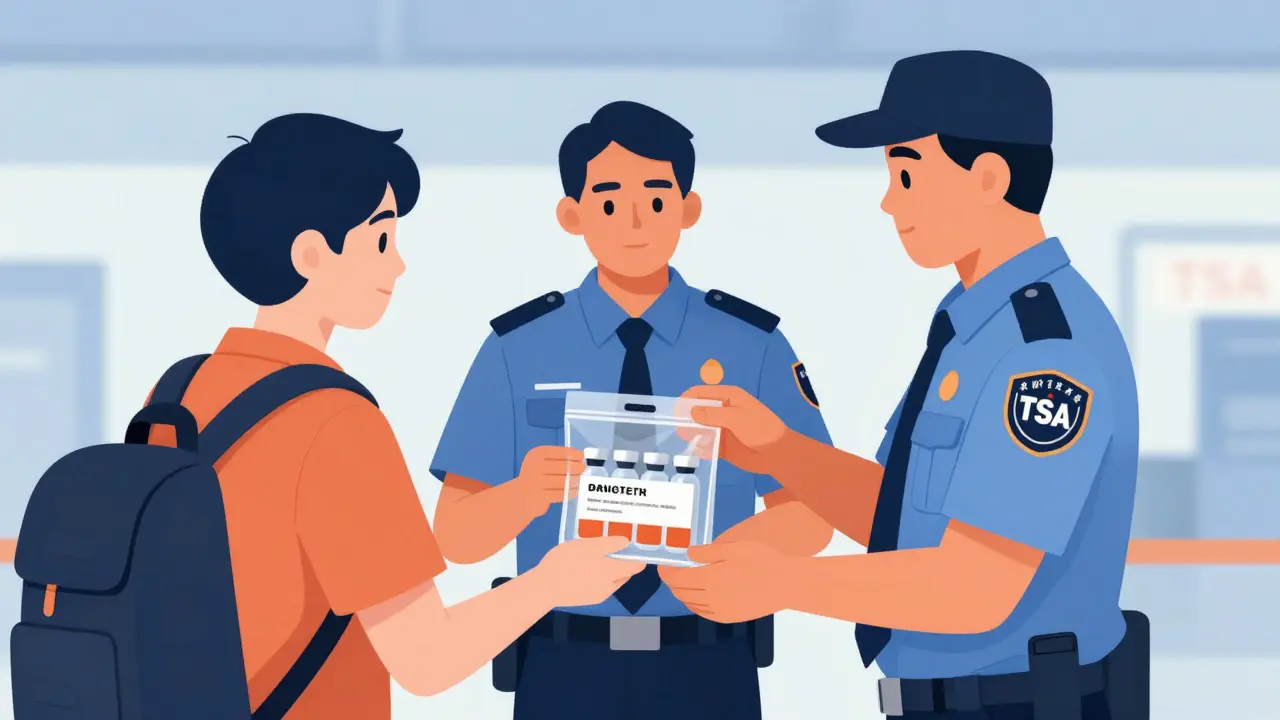
Over 2.9 million liquid medication declarations pass through TSA checkpoints every month. If you rely on insulin, EpiPens, or prescription creams, you might worry about airport security. But here's the truth: TSA has clear rules for medical liquids. Get them right, and you'll breeze through security. Mess up, and you'll face delays. Let's break it all down.
What TSA Allows for Liquid Medications
Unlike regular toiletries, TSAThe Transportation Security Administration, a U.S. government agency responsible for security in transportation systems, including airports. exempts prescription medications from the standard 3.4-ounce liquid limit. This includes insulin, EpiPens, prescription creams for eczema or psoriasis, and other medically necessary liquids. There's no volume cap-your 100ml vials or 500ml bottles are all allowed. The only catch? You must declare them before screening. TSA's January 2025 update confirms this exemption applies to all prescription drugs, regardless of quantity. Non-prescription items like vitamins or over-the-counter cough syrup still follow the 3-1-1 rule.
What You Need to Bring
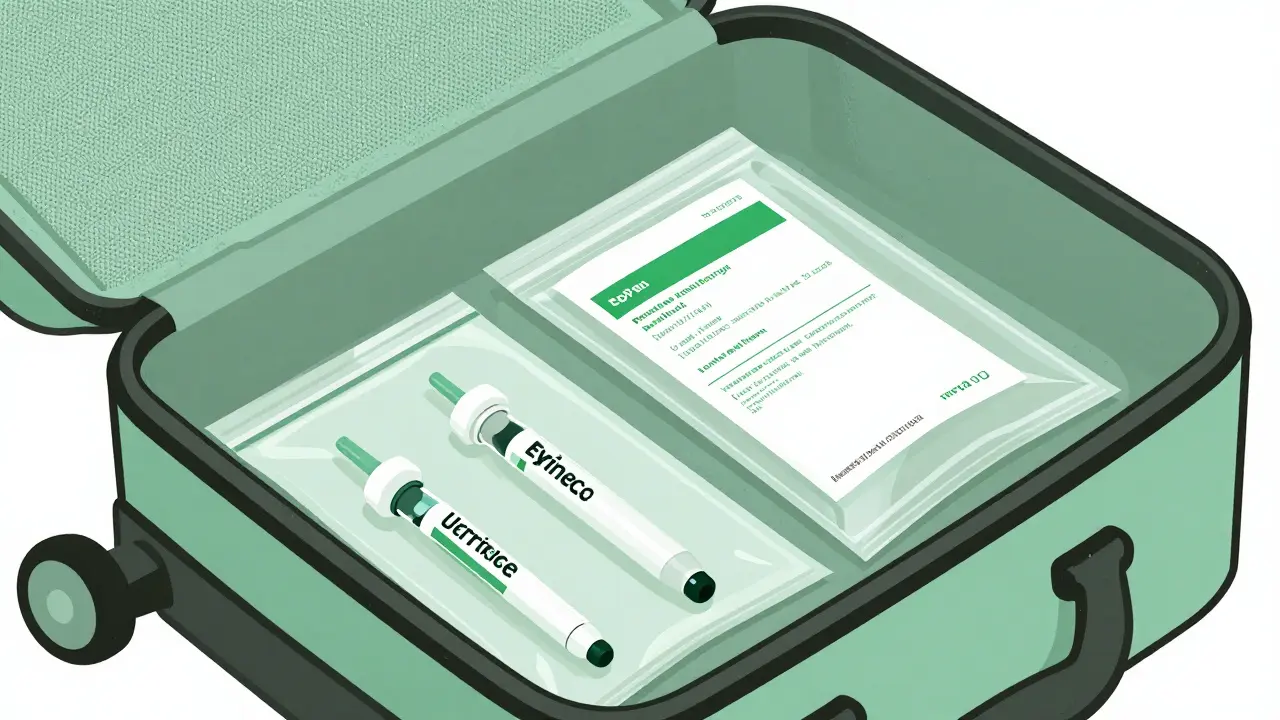
Original containers are non-negotiable. TSA officers need to see the prescription label with your name, drug name, dosage, and pharmacy details. A 2025 internal TSA report found 98% of officers prefer this setup. Skip the pill organizers for liquids-transferring medication to unlabeled bottles caused 63% of delays in 2024. Bring a printed or digital medication listA document listing all medications, dosages, prescribing doctors, and prescription numbers for travel purposes. too. It should include drug names, dosages, prescribing physician contact info, and prescription numbers. For insulin users, the Juvenile Diabetes Research Foundation recommends keeping a copy of your diabetes diagnosis letter handy. No doctor's note is required, but it helps if you're carrying controlled substances like opioids.
How to Pack for Smooth Screening
Store all medications in a single clear plastic bag, separate from your 3-1-1 liquids bag. TSA's February 2025 data shows this cuts screening time from 4.7 minutes to 1.8 minutes. Place it in an outer jacket pocket or carry-on compartment you can access instantly. For refrigerated meds like insulin, use an insulated cooler with frozen ice packs. TSA's March 2024 update allows partially melted ice packs, but completely liquid ice packs must be screened separately. Keep coolers under 8x6x2 inches-oversized coolers trigger additional checks. Never pack medications inside your regular toiletries bag. TSA officers see this as a red flag and will manually inspect everything.
What Happens During Security Screening
As soon as you approach the checkpoint, tell the officer: "I have liquid medications." Hand over your medication bag before placing it on the conveyor belt. TSA officers will visually inspect the containers. You can request a visual inspection instead of X-ray screening for your meds-just ask before they go through the machine. For insulin pumps or continuous glucose monitors, you can wear them through security without removal. If you're carrying EpiPens, TSA officers might swab the device for explosive residue. Don't panic: this is routine. The whole process usually takes under 2 minutes when done right. TSA's Q1 2025 survey showed 87.4% approval for medication screening when travelers followed proper steps.
Common Mistakes That Cause Delays
Transferring liquid meds to unlabeled containers is the #1 mistake. Reddit user u/DiabeticTraveler reported a 22-minute delay at Atlanta Hartsfield in March 2025 because their glucagon kit had no labels. Another big error? Hiding medications in your regular 3-1-1 bag. TSA officers know this trick and will pull your entire bag for inspection. Forgetting to declare meds is also common-some travelers assume TSA "knows" they're carrying insulin. Not true. One Reddit thread (r/Travel #45821) found 37% of travelers with liquid meds experienced longer screening times due to poor declaration. Finally, avoid carrying excessive amounts. While TSA allows unlimited quantities, carrying 20 insulin vials without a prescription might raise questions. Stick to reasonable travel amounts.
Real Traveler Experiences
Chicago O'Hare traveler u/TravelMedNurse documented a smooth 2-minute screening in April 2025: "I declared my insulin vials, showed the prescription labels, and walked right through." Contrast that with a March 2025 incident at Dallas/Fort Worth where a traveler's unmarked liquid medication caused a 15-minute delay. TSA's internal data shows travelers with labeled containers and separate bags save an average of 2.9 minutes per screening. Healthline Travel's April 2025 survey of 1,247 travelers found 89% of those with original containers had zero issues, versus 43% who used unlabeled containers. The difference? Preparation. One insulin-dependent traveler spent 2.7 hours organizing meds and documentation before a trip-worth it for stress-free security.
What's Changing in 2026
TSA's Medical Traveler Pre-Check program launches in September 2025 for pilot testing at 12 major airports. Registered travelers will skip the standard screening line and get expedited processing. The agency also plans AI-assisted medication identification systems at 50 airports by Q3 2026. Dallas/Fort Worth trials reduced screening errors by 41%. These changes aim to cut average screening time from 3.2 minutes to 1.1 minutes. For now, stick to the basics: original containers, clear declaration, and separate packing. The Congressional Budget Office confirms TSA funding for these initiatives through 2030, so these rules aren't going away.
Can I carry liquid medications in my checked luggage?
Yes, but it's risky. TSA allows liquid medications in checked bags, but delays or lost luggage could leave you without critical meds. Always keep essential liquid medications in your carry-on. For non-essential liquids, like extra sunscreen or shampoo, checked luggage is fine. For insulin or EpiPens, never check them-keep them with you at all times.
Do I need a doctor's note for liquid medications?
No, TSA doesn't require a doctor's note for prescription medications. However, having one helps if you're carrying controlled substances like opioids or high-dose insulin. The note should include your diagnosis, medication details, and prescribing doctor's contact info. For most travelers, showing the original prescription label is enough. A 2025 TSA survey found only 8% of officers requested doctor's notes during medication screening.
What about EpiPens and insulin pumps?
EpiPens and insulin pumps are fully exempt from liquid rules. You can wear insulin pumps through security without removing them. TSA officers might swab the device for explosive residue, but this takes seconds. For EpiPens, keep them in their original packaging with prescription labels. If you're carrying multiple EpiPens, explain why during screening-some officers ask for context. The American Academy of Allergy recommends always having at least two EpiPens on hand for travel.
Can I bring ice packs for refrigerated meds?
Yes, but they must be frozen solid when you arrive at security. TSA's March 2024 update allows partially melted ice packs, but completely liquid ice packs will be confiscated. For insulin, use an insulated cooler with frozen ice packs. Keep the cooler under 8x6x2 inches. Never use gel packs that are already melted-TSA considers them liquids. If you need to keep meds cold during the flight, ask the flight crew for ice-they can refill your cooler mid-flight.
What if my medication isn't on the TSA list?
TSA's exemption covers all prescription medications, even if they're not explicitly listed. If you're unsure, declare it anyway. TSA officers have a 24/7 medical hotline to verify unusual items. For example, a traveler carrying liquid chemotherapy drugs in 2025 was cleared after showing their oncology prescription. The key is transparency: tell officers immediately, show the prescription label, and be ready to explain why it's medically necessary. Never try to hide it-this causes bigger delays.


Comments (9)