
Keeping unused or expired medications in your medicine cabinet isn’t just clutter-it’s a risk. Every year, thousands of children accidentally swallow pills they find at home. Teens and adults misuse leftover painkillers or anxiety meds. And chemicals from those same pills can end up in your water supply, even if you flush them down the toilet. The good news? You don’t need special tools or a trip to the pharmacy to dispose of them safely. If you can’t get to a take-back location, household trash is your next best option-if you do it right.
Why You Can’t Just Toss Pills in the Trash
Throwing pills straight into the garbage seems harmless, but it’s not. A 2021 study found that 19% of improperly disposed medications ended up in landfills without any barrier between them and the environment. That means rainwater can wash those drugs into soil and groundwater. Worse, someone could dig through your trash, find a bottle of oxycodone or Xanax, and misuse it. Prescription labels often have your name, address, and prescription number. That’s personal data-and it’s easy to steal.The FDA and EPA agree: if you don’t use a take-back program, you must make your meds unappealing and unrecognizable before tossing them. It’s not about being overly cautious-it’s about preventing harm.
The 5-Step Safe Disposal Process
Follow these steps exactly. Skipping even one increases risk.- Check if your medication is on the FDA’s Flush List. As of November 2023, only 15 drugs are approved for flushing because they’re so dangerous if misused-mostly strong opioids like fentanyl patches or benzodiazepines like alprazolam. If your pill is on this list (you can find it on the FDA’s website), flush it immediately. If not, move to step two.
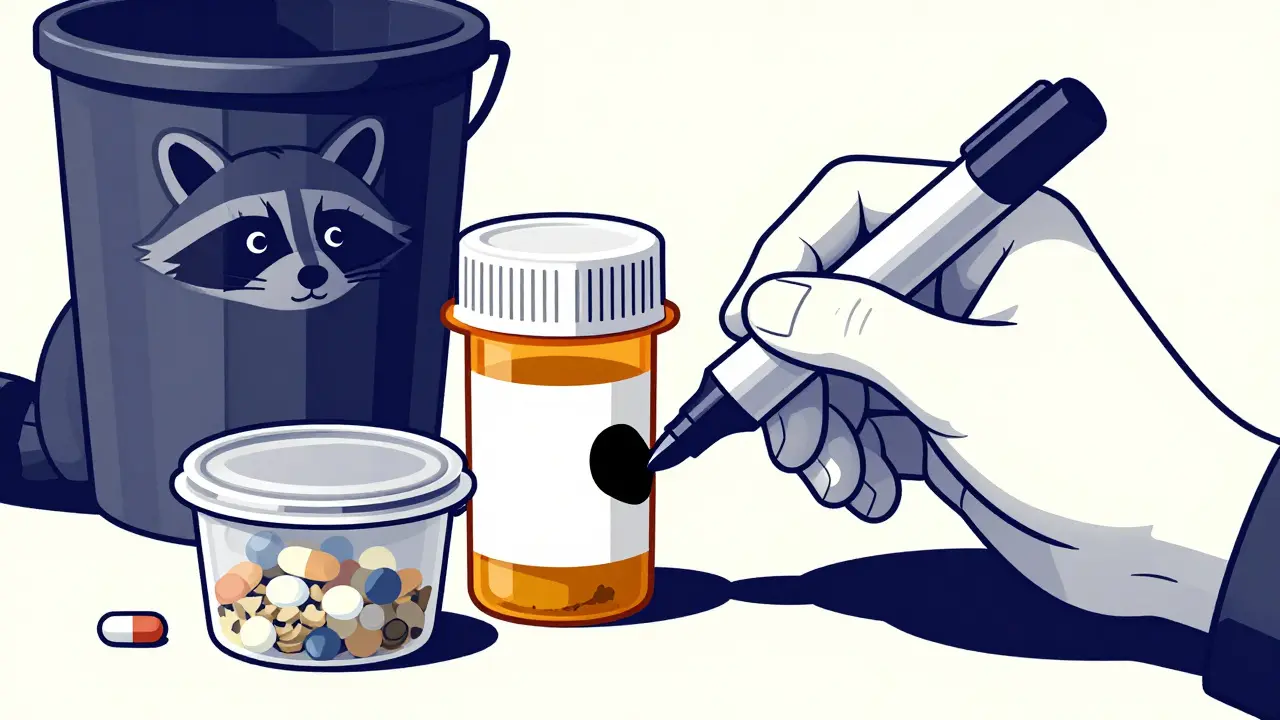
- Remove pills from their original bottles. This isn’t optional. Prescription containers are easy targets for thieves. Take out all tablets, capsules, liquids, and patches. Don’t crush them. Crushing can release dangerous dust, especially with opioids or steroids.
- Mix with something unappetizing. Use used coffee grounds, kitty litter, or even dirt from your garden. The goal is to make the mixture look and smell awful. Use at least a 1:1 ratio-so if you have a handful of pills, add at least a handful of coffee grounds. Stir it together. This step alone cuts the chance of accidental ingestion by over 90%.
- Seal it in a container. Pour the mixture into a resealable plastic bag, an empty jar with a tight lid, or even an old margarine tub. Make sure it can’t leak. A zip-top bag inside a cardboard box works too. This keeps pets and kids from getting into it, and stops it from spilling in the trash.
- Scratch out all personal info. Use a permanent marker to black out your name, address, and prescription number. Or cover it with duct tape. Don’t just peel off the label-that’s not enough. HIPAA requires this. If you leave your info visible, you’re putting your privacy at risk.
That’s it. Put the sealed container in your regular household trash. Do not put it in recycling. Most prescription bottles are #5 plastic, which 87% of U.S. recycling centers can’t process anyway.
What About Liquid Medicines?
Liquids are trickier. Don’t pour them down the sink. Don’t freeze them and toss them in the trash. Instead:- Use absorbent material like cat litter, paper towels, or coffee grounds.
- Pour the liquid slowly over the material until it’s soaked up.
- Place the soaked material into a sealed bag or container.
- Discard the empty bottle after scrubbing off the label.
For patches like fentanyl or nicotine, fold them in half with the sticky sides together, then place them in the sealed container. Never just throw them in the trash flat-they can still deliver a dose if someone touches them.
What You Should Never Do
There are common mistakes that put people at risk:- Don’t crush pills. You risk inhaling dangerous powder, especially with opioids or chemotherapy drugs.
- Don’t flush unless it’s on the FDA’s list. Flushing non-approved meds contaminates waterways. The EPA found pharmaceuticals in 80% of U.S. water sources.
- Don’t leave bottles unmarked. Your name and prescription number are private. Scratching them off isn’t optional-it’s a legal safety step.
- Don’t mix different drugs together. Some chemicals react. Keep them separate until you’re ready to dispose of them.
- Don’t wait. The longer you keep unused meds, the higher the chance someone will use them improperly. Remove them from your home within 24 hours of deciding to dispose of them.
Take-Back Programs Are Still Best
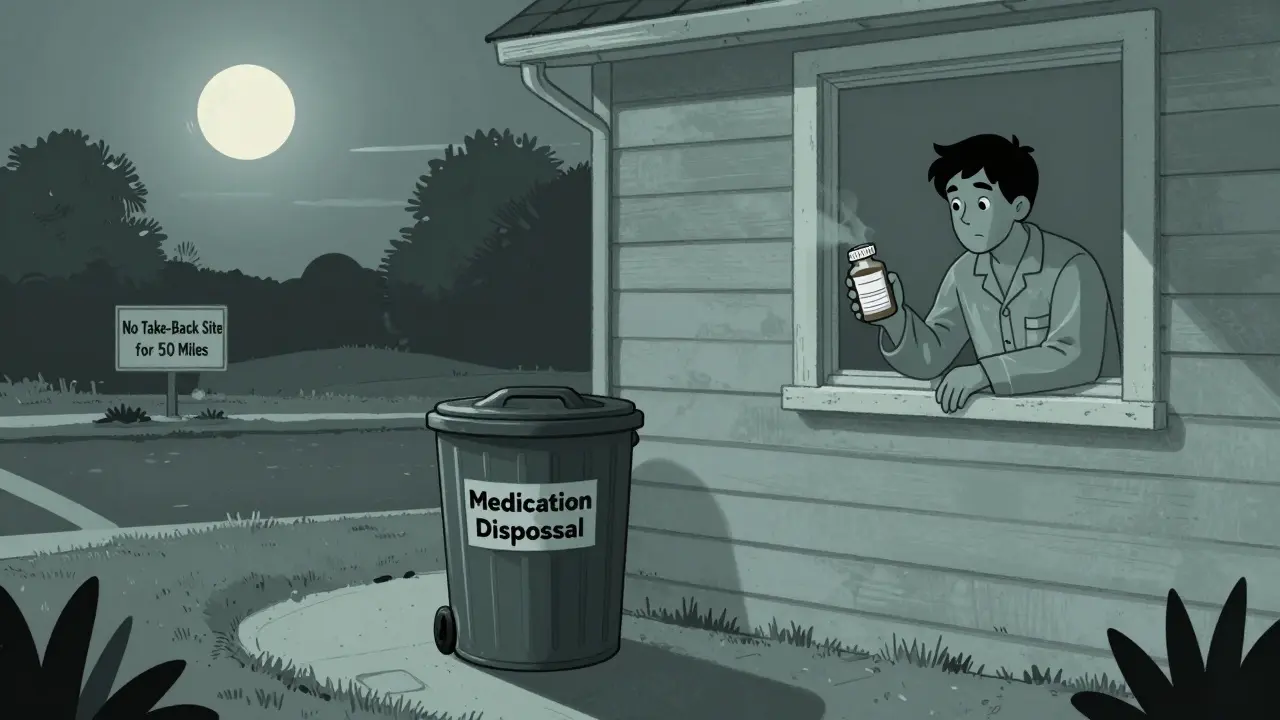
If you can get to a take-back location, do it. The DEA has over 14,600 collection sites across the U.S., including pharmacies like Walgreens and CVS. These programs destroy 99.8% of diverted drugs. In California, new laws require pharmacies with four or more locations to offer free disposal kiosks. But if you live in a rural area, those sites might be 50 miles away. That’s why household trash disposal is a necessary backup.A 2022 study showed that 42% of rural counties lack consistent access to take-back programs. For those people, following the 5-step method is the safest option available.
What’s Changing in 2026?
New developments are making disposal easier. In January 2023, the FDA started a pilot program in 12 communities to offer curbside medication pickup-like recycling day. Early results showed 94% user satisfaction. The EPA is also working on new national guidelines expected by mid-2024. Meanwhile, mail-back envelopes are becoming more common. Medicare now covers them for 65 million seniors. Some manufacturers are testing water-soluble packaging that dissolves safely when flushed-no mixing needed. But until those become standard, the 5-step method is your best tool.Final Reminder
You don’t need to be an expert to do this right. You just need to be careful. A single pill can be deadly to a child. A single bottle with your name on it can be used to steal your identity. Proper disposal isn’t about being perfect-it’s about being smart. Take five minutes. Follow the steps. Protect your family. Protect your community.Can I flush any medication down the toilet?
Only if it’s on the FDA’s Flush List, which includes 15 specific high-risk drugs-mostly powerful opioids and sedatives. Flushing anything else contaminates water systems. Check the FDA’s website for the current list before flushing.
What if I don’t have coffee grounds or cat litter?
Use dirt, sand, or even used paper towels. The goal is to make the medication unrecognizable and unappealing. Any absorbent, messy substance works. You don’t need to buy special products-household items are just as effective.
Should I remove pills from blister packs?
Yes. Remove pills from blister packs and place them directly into the mixing container. The plastic packaging doesn’t protect the pills-it just makes them easier to find. Always mix the pills themselves with the unappealing substance.
Can I recycle the empty pill bottles?
Almost never. Most prescription bottles are made of #5 plastic, which 87% of U.S. recycling programs can’t handle. Even if your local facility accepts it, the label may still have your personal info. Scratch it out, then throw the bottle in the trash. It’s safer than trying to recycle it.
Is it safe to mix different types of pills together?
It’s not dangerous to mix them for disposal, but keep them separate until you’re ready. Mixing different drugs can make it harder to track what you’ve disposed of, especially if you’re handling multiple prescriptions. Once you’re ready, combine them into one mixture for disposal.
What if I live in California?
California bans flushing or trashing medications. All pharmacies with four or more locations must now offer free disposal kiosks. If you can’t get to one, contact your local health department-they may have special collection events. Until then, follow the 5-step trash method, but be aware that state law differs from federal guidance.
How often should I clean out my medicine cabinet?
At least once a year. Many people forget they have old meds until someone gets sick or a child starts exploring. Spring or fall is a good time to check. Look for expired dates, broken seals, or pills that smell odd. If you’re unsure, dispose of it.


Comments (9)