Antibiotic Side Effect Checker
This tool helps you determine if your symptoms are normal side effects of antibiotics or if they require immediate medical attention. Always finish your full antibiotic course to prevent resistance, but know when to seek help.
Stopping your antibiotic early because of side effects might feel like the easy way out-but it’s one of the most dangerous choices you can make for your health and the health of others. About 31% of people who quit their antibiotics early do so because of nausea, diarrhea, or stomach pain. And while those symptoms are uncomfortable, they’re often manageable. The real risk? Antibiotic resistance. When you don’t finish the full course, surviving bacteria multiply and evolve, making future infections harder-or impossible-to treat. The World Health Organization calls this one of the top 10 global health threats. You don’t need to suffer through side effects to beat your infection. Here’s how to handle them without quitting.
Know Which Side Effects Are Normal-and When to Worry
Not every uncomfortable feeling means something’s wrong. Mild nausea, bloating, or loose stools are common. In fact, 25% of people on antibiotics get diarrhea. That’s not a sign the medicine isn’t working-it’s a sign your gut bacteria are being disrupted. Most of the time, it’s harmless and will pass within a few days after you stop the antibiotic. But some symptoms are red flags. Call your doctor right away if you have:- Bloody or mucus-filled diarrhea
- Severe abdominal cramps or swelling
- Fever over 38°C (100.4°F)
- Uncontrollable vomiting
- Rash, hives, swelling of the face or throat, or trouble breathing
Take Antibiotics the Right Way-Timing Matters
How and when you take your antibiotic can make a huge difference in how your body reacts. Many people assume all antibiotics work the same way. They don’t. For example:- Amoxicillin, doxycycline, and azithromycin: Take with food to reduce nausea. A small snack like crackers, toast, or Greek yogurt helps cushion your stomach without blocking absorption.
- Tetracycline and doxycycline: Must be taken on an empty stomach-wait at least one hour before or two hours after eating. Take with a full glass of water while sitting upright. Lying down right after can irritate your esophagus and cause pain.
- Vancomycin: Given intravenously, it should be infused slowly over two hours. Rapid infusion can cause “Red Man Syndrome,” a flushing reaction that feels like a bad sunburn.
Beat Nausea Without Stopping
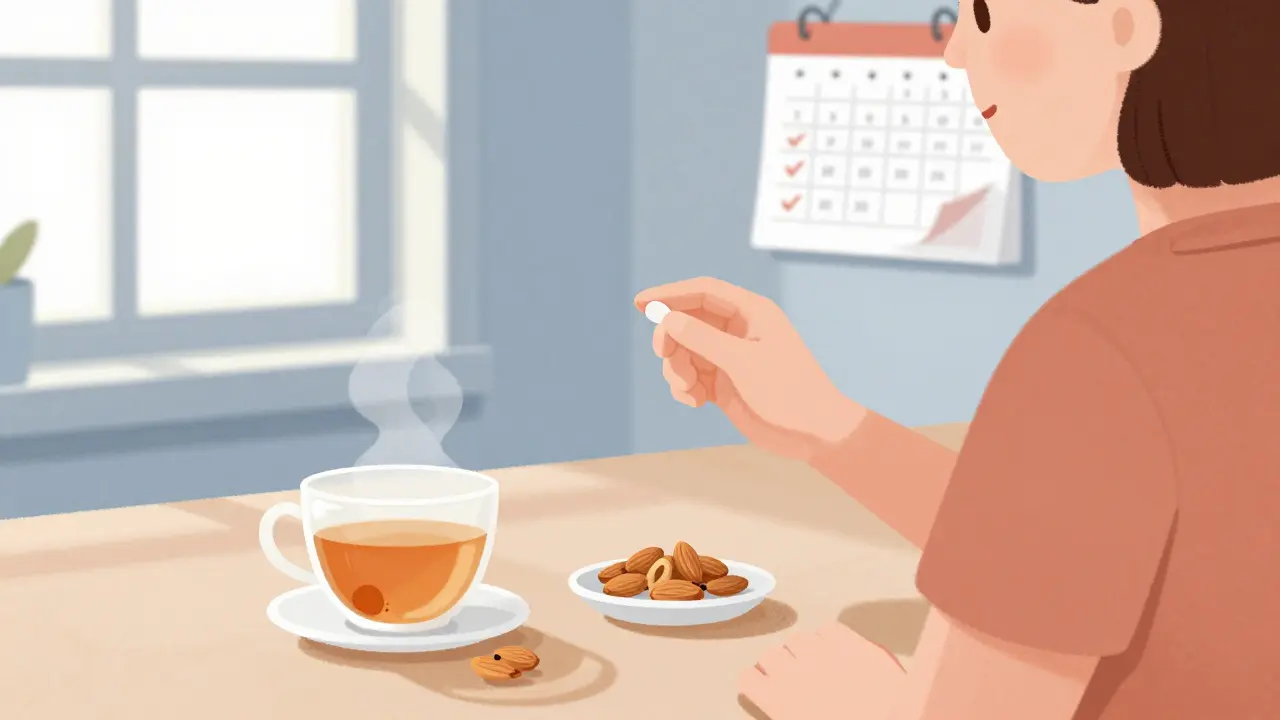
Nausea is the #1 reason people quit antibiotics. But you don’t have to live with it. Studies show patients who get simple advice on managing nausea are 35% less likely to stop their treatment. Try these proven tricks:- Take your pill with a small protein snack-like a boiled egg, a spoonful of peanut butter, or a few almonds. Avoid fatty or spicy foods.
- Sip ginger tea or chew on crystallized ginger. Ginger is one of the few natural remedies proven to reduce nausea in clinical trials.
- Stay upright for at least 30 minutes after taking your dose. Lying down slows digestion and worsens nausea.
- Try peppermint oil capsules (not tea) if nausea persists. Peppermint has been shown in multiple studies to calm stomach spasms.
Handle Diarrhea Without Ditching Your Prescription
Diarrhea from antibiotics isn’t a sign you’re allergic-it’s a sign your gut microbiome is out of balance. The good news? You can fix it without stopping the medicine. The CDC and Infectious Diseases Society of America both recommend probiotics for prevention. Look for strains with proven results:- Lactobacillus rhamnosus GG: Reduces antibiotic-associated diarrhea by 50% in clinical trials.
- Saccharomyces boulardii: A yeast probiotic that works even when antibiotics are still active in your system.
- Lactobacillus reuteri NCIMB 30242: Recently FDA-approved specifically for this use.
Protect Your Skin from Sun Sensitivity
If you’re on doxycycline, tetracycline, or ciprofloxacin, your skin becomes more sensitive to UV rays. You don’t need to stay indoors, but you do need to be smart. Use sunscreen with SPF 30+ that protects against both UVA and UVB. Reapply every two hours if you’re outside. Wear a wide-brimmed hat and UV-blocking sunglasses. Even a short walk to the mailbox can cause a bad sunburn if you’re not protected. Some people get a rash or blisters without realizing it’s linked to their antibiotic. If your skin turns red, itches, or peels after sun exposure, talk to your doctor. Switching to a different antibiotic might be needed.
Why You Should Never Stop Early-Even If You Feel Better
It’s tempting. You wake up feeling fine on day three. You think, “I don’t need this anymore.” But here’s the truth: antibiotics kill the weakest bacteria first. The strongest ones survive. If you stop early, those survivors become the next generation-and they’re harder to kill. The American Academy of Family Physicians says incomplete antibiotic courses are responsible for 12% of antibiotic resistance cases in the U.S. That’s not a small number. That’s one in eight resistant infections caused by patients who stopped early. Think of it like this: finishing your course isn’t about you-it’s about everyone around you. A resistant infection you carry could spread to your kids, your coworkers, your elderly parents. Antibiotic resistance doesn’t care if you “felt better.” It only cares if you gave it a chance to adapt.Ask for Help-Pharmacists Are Your Secret Weapon
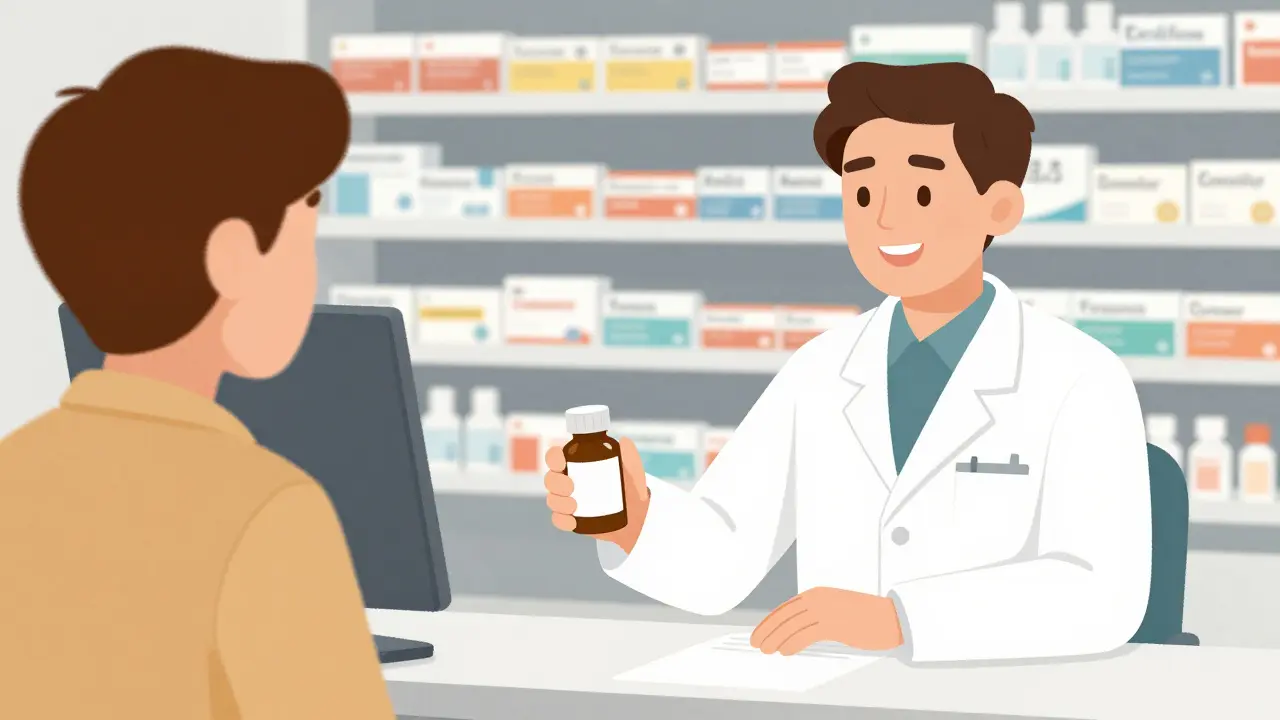
Most people think pharmacists just hand out pills. But they’re trained to prevent side effects. A 2022 study found that when pharmacists spent 10 minutes explaining how to take antibiotics and what to expect, early discontinuation dropped by 28%. When you pick up your prescription, ask:- “What side effects should I expect?”
- “Should I take this with food or on an empty stomach?”
- “Is there a probiotic you recommend?”
- “What should I do if I feel worse instead of better?”
What’s Next? The Future of Antibiotic Care
New tools are coming fast. In 2023, the CDC launched a digital “Antibiotic Side Effect Navigator” that gives personalized advice based on your specific antibiotic, age, and health conditions. By 2026, AI tools will match you to the antibiotic most likely to work with the fewest side effects-based on your gut bacteria profile. For now, the best tool you have is knowledge. You don’t have to choose between feeling sick and getting better. You can do both-by managing side effects the right way.Antibiotics save lives. But only if you take them all the way through. Don’t let discomfort stop you. Use these strategies, ask for help, and finish your course. Your body-and the world-will thank you.
Can I take probiotics at the same time as my antibiotic?
No. Take probiotics at least two hours after your antibiotic dose. If you take them together, the antibiotic will kill the beneficial bacteria before they can help your gut. Space them out to give the probiotics time to survive and colonize.
Is it okay to drink alcohol while on antibiotics?
It depends. With most antibiotics like amoxicillin or azithromycin, a small amount of alcohol is fine. But with metronidazole, tinidazole, or linezolid, alcohol can cause severe reactions like vomiting, rapid heartbeat, and dangerous drops in blood pressure. Always check your prescription label or ask your pharmacist.
What if I miss a dose?
If you miss a dose by less than two hours, take it as soon as you remember. If it’s been more than two hours, skip the missed dose and take the next one at your regular time. Never double up. Missing one dose won’t ruin your treatment, but taking too much can cause side effects or toxicity.
Do antibiotics kill good bacteria forever?
No. Your gut microbiome usually recovers within weeks after finishing your course. Probiotics and a diet rich in fiber (vegetables, whole grains, legumes) help speed up the process. In rare cases, especially after long or repeated courses, recovery can take months-but it almost always happens.
Can I use over-the-counter anti-diarrhea medicine like Imodium?
Only if your diarrhea is mild and you have no fever or blood in stool. Imodium can trap toxins in your gut if you have a serious infection like C. diff. If you’re unsure, wait until you’ve spoken to your doctor. Better to let your body flush things out naturally unless symptoms are severe.
Are natural remedies like garlic or honey effective against antibiotic side effects?
Garlic and honey have some antibacterial properties, but they won’t replace antibiotics or prevent side effects like diarrhea or nausea. Don’t use them as substitutes. However, honey can soothe a sore throat if you’re on antibiotics for a respiratory infection. Stick to proven strategies: probiotics, proper timing, and hydration.


Comments (10)