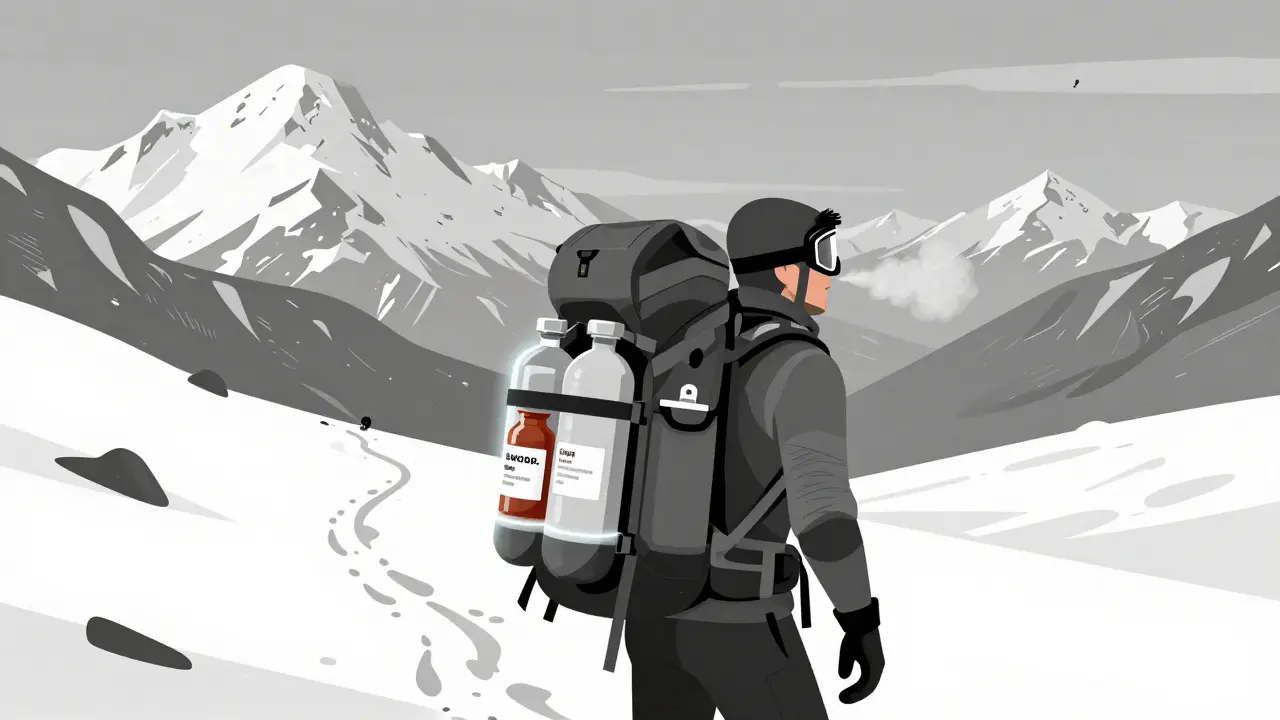
When you’re heading into the mountains for a pilgrimage or trek, your body doesn’t just face steep trails and thin air-it faces real, life-threatening risks if you’re not prepared. Thousands of people make these journeys every year, from the snow-capped peaks of Mount Kailash to the trails of Everest Base Camp. But too many of them end up in emergency situations because they didn’t plan for what their body will need when oxygen is scarce and help is hours away. The truth? Most of these emergencies are preventable. With the right medications, storage, and preparation, you can walk safely through some of the most extreme environments on Earth.
Know the Risks Before You Go
Altitude sickness isn’t just a headache or nausea. At elevations above 8,000 feet (2,438 meters), your body struggles to get enough oxygen. Around 25% to 85% of people who climb this high will experience symptoms, depending on how fast they ascend. Acute Mountain Sickness (AMS) is common, but it can turn into High Altitude Pulmonary Edema (HAPE) or High Altitude Cerebral Edema (HACE)-both life-threatening conditions. HAPE fills your lungs with fluid; HACE swells your brain. Neither waits for permission to happen. And once they do, descent is the only cure. Medications can buy you time, but they’re not magic.Research from the NIH PMC shows that 43% of trekkers at Everest Base Camp (17,500 feet) develop symptoms. And in remote areas like the Himalayas, medical help might be 24 to 72 hours away. Local health camps surveyed in 2013 had almost no access to life-saving drugs like acetazolamide or dexamethasone. That means you can’t rely on others-you have to carry your own.
Essential Medications to Carry
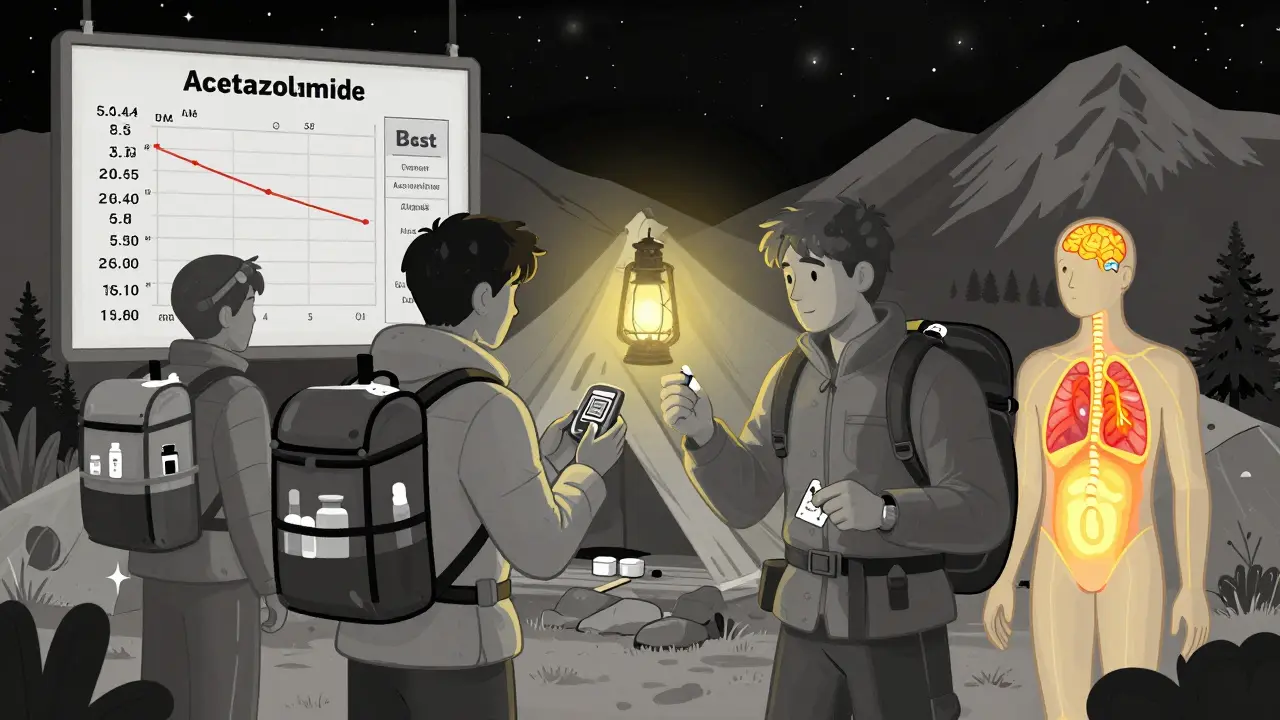
Here’s what you absolutely need to pack, based on guidelines from the CDC Yellow Book, Wilderness Medical Society, and years of field experience:- Acetazolamide (Diamox): This is the gold standard for preventing AMS. Take 125 mg twice daily, starting one day before you ascend and continuing for 2-3 days after reaching your highest point. It helps your body adjust by increasing breathing rate. Side effects? More frequent urination and tingling fingers-that’s normal. But if you have a sulfa allergy (3-6% of people), skip this one.
- Dexamethasone: A steroid used to treat HACE. Keep 4 mg tablets on hand. The first dose is 8 mg, then 4 mg every 6 hours if symptoms appear. This isn’t for prevention-it’s for emergencies. Use it only if you or someone in your group is confused, staggering, or vomiting uncontrollably.
- Nifedipine (extended-release): Used for HAPE. Take 20 mg every 12 hours. It opens up blood vessels in the lungs, reducing pressure. Carry it if you’ve had HAPE before or are climbing above 15,000 feet.
- Supplemental oxygen: Portable oxygen canisters (like those from OxyLife or Oxymed) can be lifesaving. You don’t need to use them daily, but having even one 2-liter canister for emergencies can mean the difference between survival and evacuation.
Don’t forget basics: ibuprofen for pain and inflammation (400 mg tablets), azithromycin for traveler’s diarrhea (500 mg daily for 3 days), diphenhydramine for allergic reactions, antibiotic ointment, and hydrocortisone cream for rashes or insect bites. These aren’t optional-they’re routine.
Storage Matters More Than You Think
Medications don’t just disappear-they degrade. Insulin, for example, loses 25% of its potency in just 24 hours if it gets colder than 32°F (0°C). Glucometers give wrong readings below freezing, with error rates jumping to 18% at 14°F (-10°C). A Reddit user lost control of their diabetes at 14,000 feet because their insulin froze, leading to a $4,200 evacuation.Here’s how to fix it:
- Use insulated, waterproof containers that keep meds between 59-77°F (15-25°C). Many trekkers use small thermos-style cases or wrap vials in fleece and keep them inside their sleeping bags at night.
- Never leave pills in your backpack during the day if temperatures swing wildly. Keep them close to your body.
- For insulin, carry two separate vials-one in your jacket, one in your pack. That way, if one fails, you still have a backup.
Also, always pack meds in their original pharmacy-labeled containers. Airport security and border officials ask for them. A doctor’s letter explaining why you need controlled substances (like dexamethasone or opioids for chronic pain) can save you hours of hassle. In fact, 17% of trekking groups in 2021 had to fill out international forms just to bring their prescriptions.
Pre-Trip Medical Checkup Is Non-Negotiable
The CDC says the pre-travel consultation is the single best chance to avoid disaster. Yet only 32% of trekkers do it. That’s shocking.Here’s what your doctor should check:
- Heart and lung function-especially if you’ve had asthma, COPD, or past blood clots
- Diabetes management-your insulin needs change at altitude
- Medication interactions-some blood pressure drugs or antidepressants can worsen altitude sickness
- Whether you’re a good candidate for acetazolamide
Studies from the Himalayan Rescue Association show 83% of serious altitude complications could have been prevented with a simple pre-trip screening. If you have a chronic condition, get clearance in writing. Don’t assume you’re fine just because you’ve hiked before. Altitude doesn’t care about your fitness level.
How Fast Should You Climb?
The best way to prevent altitude sickness? Go slow. The gold standard is no more than 1,000 feet (305 meters) of elevation gain per day above 10,000 feet. That means if you fly into Lhasa (12,000 feet), you shouldn’t climb higher for at least two full days. But pilgrims often can’t do that-they arrive by plane or bus with little time to adjust.If you’re on a tight schedule, medication becomes your safety net. Acetazolamide can help, but it’s not a substitute for rest. Drink 4-5 liters of water daily. Avoid alcohol and sleeping pills. And never sleep while ascending. Even if you feel fine, your body is working harder than you realize.
What to Do If Someone Gets Sick
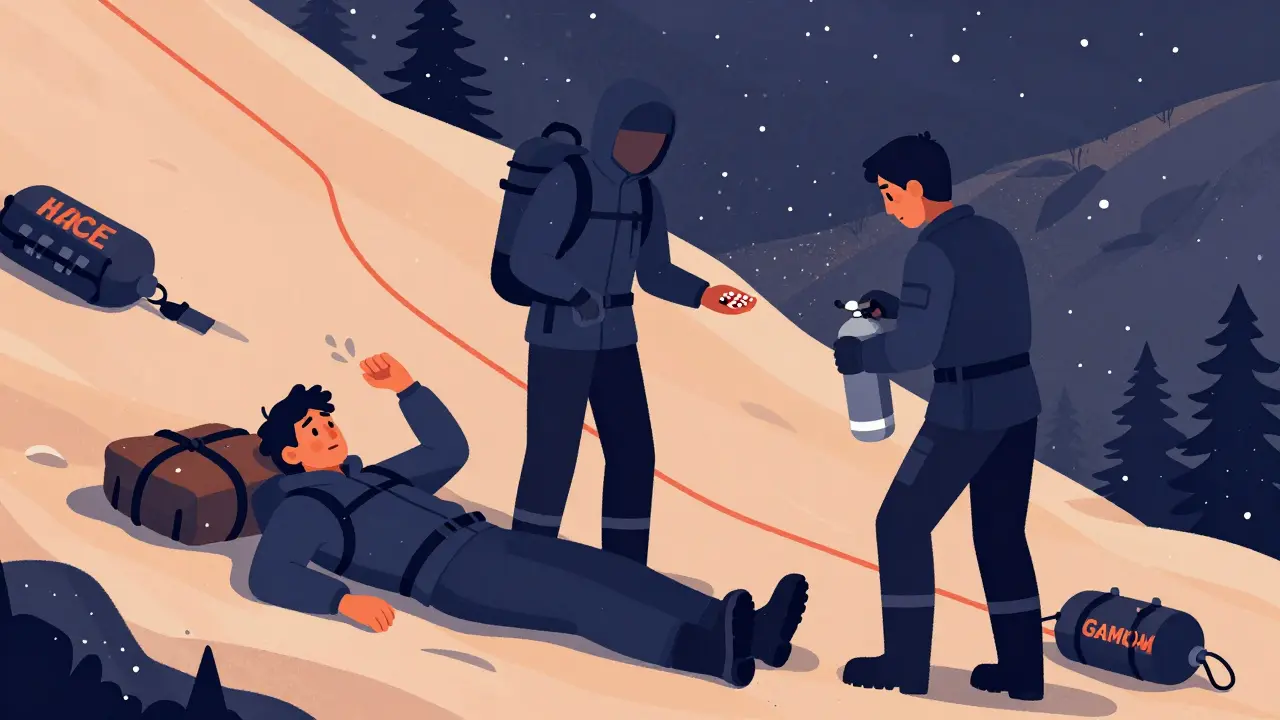
If you or someone in your group starts showing signs-headache, nausea, dizziness, confusion, coughing up frothy fluid, or losing coordination-don’t wait. The rule is simple: descend immediately. Even 1,000 feet down can save a life.While descending:
- Give dexamethasone (8 mg, then 4 mg every 6 hours) for HACE
- Give nifedipine (20 mg every 12 hours) for HAPE
- Use supplemental oxygen if available
- Keep the person warm and calm
Hyperbaric bags (like the Gamow Bag) are rare but invaluable. They simulate lower altitude by increasing pressure. Fewer than 5% of health camps carry them, but if you’re leading a group, consider renting one. It’s worth the cost.
Plan for the Unexpected
In 2022, a survey of 1,250 trekkers found that 34% ran into medication problems. Half of those were because they ran out. Nearly a third were because meds degraded in cold or moisture.Here’s how to avoid it:
- Carry 50% more than you think you’ll need
- Split your meds between two people-don’t keep it all in one pack
- Label everything clearly: name, dosage, expiration date
- Keep a printed list of what you’re carrying, with doctor’s contact info
And if you’re traveling with a group? Everyone should carry their own meds. Don’t rely on someone else to have your insulin or asthma inhaler. You’re responsible for your own health.
What’s Changing in 2026?
The travel medicine world is waking up. Nepal’s 2021 Altitude Sickness Prevention Campaign distributed 15,000 free medication kits along key routes, cutting hospitalizations by 22%. By 2027, 95% of trekking companies will require pre-trip medical consultations-up from 68% today. The Wilderness Medical Society is rolling out standardized kits for different altitude zones, with testing starting this year.That doesn’t mean you can wait. If you’re planning a trip this year, you still need to act now. No one else will do it for you.
Can I buy altitude sickness meds at local pharmacies on the trail?
Don’t count on it. In 2013, 89% of health camps along pilgrimage routes had no acetazolamide, dexamethasone, or nifedipine. Even if a pharmacy exists, their stock may be expired, counterfeit, or stolen. Always bring your own supply from home.
Is acetazolamide safe for everyone?
No. People with a sulfa allergy should avoid it. If you’ve had a rash, swelling, or breathing trouble from sulfa antibiotics like Bactrim, ask your doctor for alternatives. Dexamethasone can help prevent symptoms, but it’s not ideal for long-term use. Gradual ascent and hydration are your safest tools.
Do I need a doctor’s note for my medications?
Yes-if you’re carrying controlled substances like dexamethasone, opioids, or stimulants. Some countries require permits. Even if not legally required, a letter from your doctor explaining why you need the meds can prevent delays at checkpoints or airports. Include dosage, diagnosis, and your contact info.
How much water should I drink at high altitude?
Drink 4 to 5 liters per day. Dehydration worsens altitude sickness. Urine should be clear or light yellow. If it’s dark, you’re not drinking enough. Avoid alcohol and caffeine-they drain fluids faster.
What if I have diabetes or need insulin?
Insulin degrades fast in cold. Store it in an insulated case, close to your body. Carry two separate vials-one in your jacket, one in your pack. Test your blood sugar more often. Glucometers can give false readings below freezing. Talk to your doctor before you go about adjusting doses.
Can I use my regular painkillers for altitude headaches?
Yes, ibuprofen (400 mg) is effective and safe. Avoid aspirin if you’re taking acetazolamide-it can increase bleeding risk. Never use sleeping pills to cope with altitude. They suppress breathing, which makes things worse.
Are altitude sickness prevention pills enough?
No. Pills help, but they’re not a substitute for slow ascent, hydration, and rest. Many people think Diamox lets them climb fast-and that’s when things go wrong. Use medication as a backup, not a license to push harder.


Comments (11)