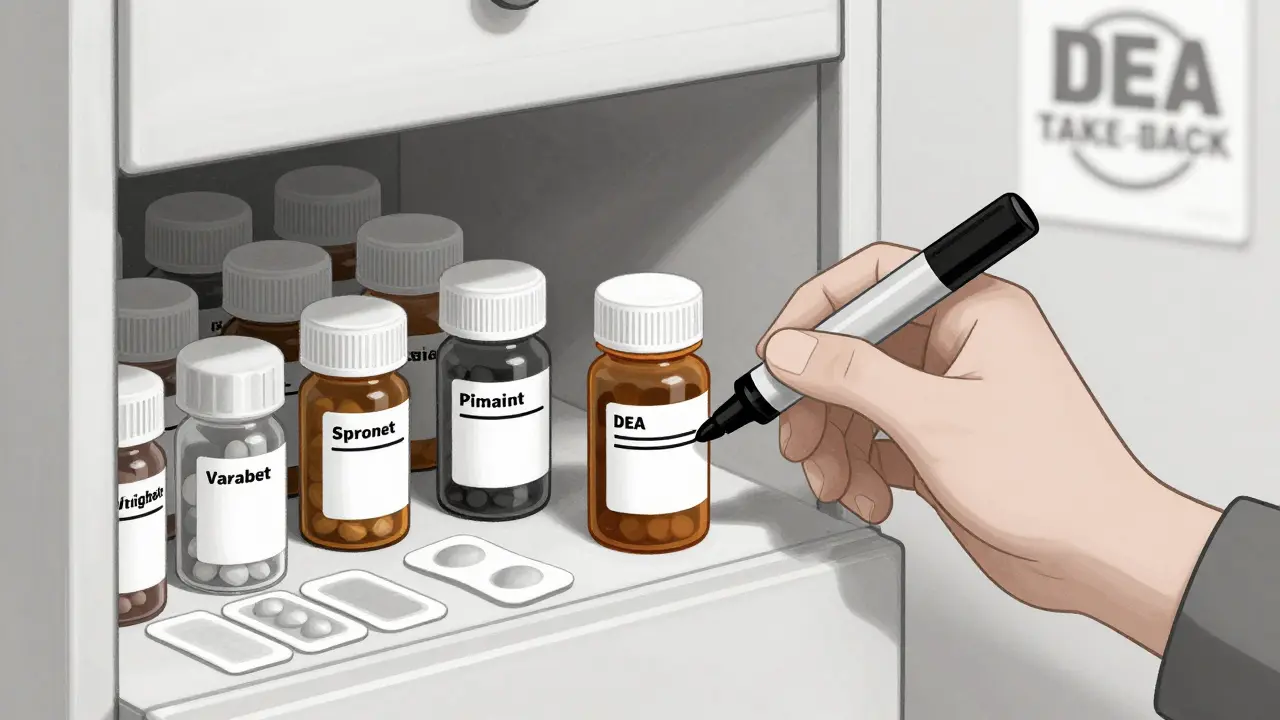
Every year, millions of unused pills sit in medicine cabinets across the U.S.-old antibiotics, leftover painkillers, expired vitamins. Many people keep them "just in case," but that’s risky. These drugs can end up in the wrong hands, pollute water supplies, or accidentally poison children and pets. The safest way to get rid of them? Take them to a medication take-back event or permanent collection site. But here’s the problem: if you don’t prepare them right, they’ll be turned away.
Why Proper Preparation Matters
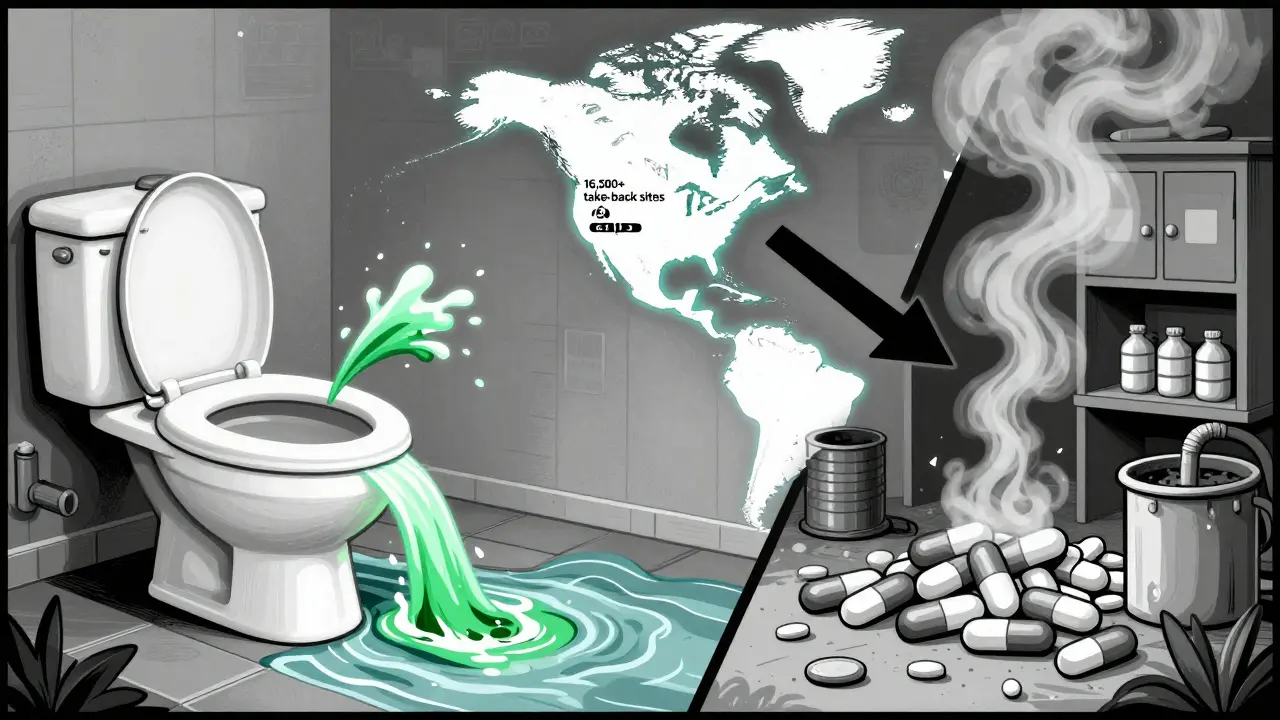
It’s not just about being neat. The DEA and FDA have clear rules for a reason. In 2022, over 18 million Americans misused prescription drugs, and nearly 70% of those got them from family or friends-often from unsecured medicine cabinets. At the same time, studies show that 80% of U.S. streams contain traces of pharmaceuticals, mostly from flushing or tossing pills in the trash. Proper preparation stops both problems: it keeps drugs out of circulation and prevents them from leaching into the environment.What You Can and Can’t Bring
Most take-back sites accept a wide range of medications, but not everything. Here’s what’s allowed:- Prescription pills and liquids (including controlled substances like OxyContin, Adderall, or Vicodin)
- Over-the-counter meds (ibuprofen, allergy pills, cough syrup)
- Patches (fentanyl, nicotine, estrogen)
- Vitamins and supplements
- Pet medications
- Aerosols (like asthma inhalers)
- Hydrogen peroxide
- Iodine-based products (like Betadine)
- Thermometers (especially mercury ones)
- Illicit drugs (cocaine, marijuana, etc.)
- Needles or sharps (unless at a site that specifically accepts them)
Step-by-Step: How to Prepare Your Medications
Follow these steps exactly. It takes less than five minutes-and it’s the only way to make sure your meds get accepted.- Keep them in original containers-This is the golden rule. Nearly 92% of collection sites require pills and liquids to be in the pharmacy-labeled bottle. The label has the name, dosage, and prescribing doctor-this helps staff verify the medication and keeps everything organized.
- Remove or cover personal info-Use a permanent marker to black out your name, address, and prescription number. Don’t just peel off the label. Ink smudges or water can erase it. A thick, dark line across your info is best. This protects your privacy under HIPAA rules.
- Don’t mix medications-Keep each prescription in its own container. Mixing pills from different bottles makes it harder for staff to identify them, and many sites will reject mixed containers.
- Handle liquids carefully-If you have liquid medicine (like antibiotics or cough syrup), keep it in the original bottle with the cap tightly sealed. Some sites require the bottle to be placed inside a second zip-top bag to prevent leaks.
- Prepare patches properly-Fold transdermal patches (like fentanyl or nicotine) so the sticky side sticks to itself. This prevents accidental exposure to others. Place them in a sealed bag or back in their original foil pack.
- Don’t flush or trash them-Even if the label says "flush," that advice is outdated. The FDA stopped recommending flushing in 2023. Trash disposal is also risky-animals or kids can get into it, and chemicals can leach into groundwater.
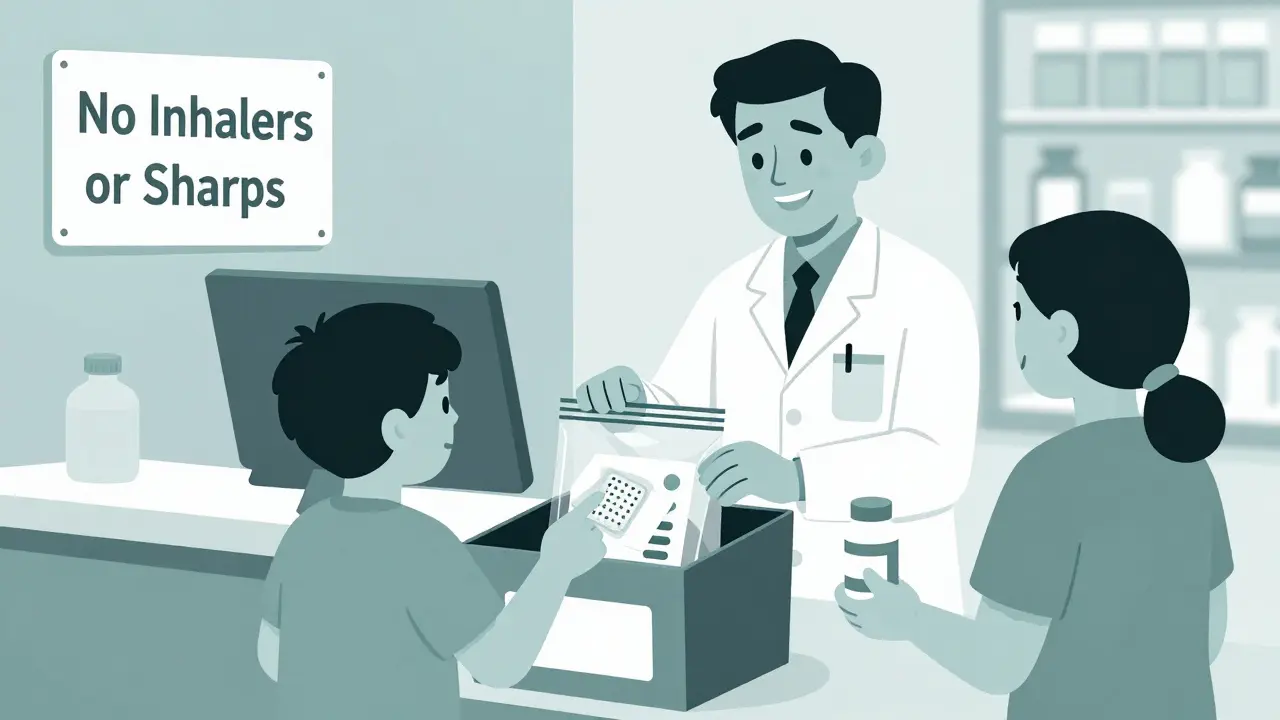
What If You Don’t Have the Original Bottle?
Life happens. Maybe you transferred pills to a pill organizer, or the bottle got thrown out. Here’s what to do:- Use a small, clear plastic container-a baby food jar, empty vitamin bottle, or even a clean zip-top bag.
- Write the medication name and dosage clearly on the outside with a marker.
- Still cover any personal info if it’s on the container.
Special Cases: Insulin Pens, Transdermal Patches, and More
Some medications need extra care:- Insulin pens-Most hospital-based sites accept them, but only 32% of retail pharmacies do. Remove the needle first and dispose of it separately at a sharps collection site. Leave the pen in its original box.
- Transdermal patches-Always fold adhesive-side-in. Don’t just toss them in a bag. Staff will reject them if they’re not folded properly.
- Controlled substances-Yes, you can bring opioids, stimulants, and benzodiazepines. These are the most important to get out of the house. Take-back sites are legally allowed to collect them.
Where to Find a Take-Back Site
The DEA’s online Take-Back Locator is the most reliable tool. It shows:- Permanent collection sites (often at pharmacies or police stations)
- Upcoming events (usually in April and October, but some happen monthly)
- Hours and contact info
Common Mistakes That Get Your Meds Rejected
Based on 2023 data from Stericycle, here’s what trips people up most:- 41%: Incomplete personal info removal-Just scribbling over part of your name isn’t enough. Cover the whole label.
- 29%: Improper liquid containers-Loose bottles, open caps, or non-original containers get turned away.
- 18%: Mixing medications-Pills from different prescriptions in one bag = rejection.
- 12%: Bringing prohibited items-Inhalers and thermometers are the top offenders.
Why This Matters More Than You Think
This isn’t just about cleaning out your cabinet. Proper disposal prevents addiction, protects the environment, and saves lives. In 2024, Stericycle incinerated nearly 30,000 tons of pharmaceutical waste-most of it from take-back events. That’s the equivalent of removing 6.4 million pounds of drugs from waterways each year if participation doubled. And here’s the kicker: only 15% of unused medications are currently disposed of safely. That means 85% are still sitting in homes, posing risks. Every time you properly prepare and drop off your meds, you’re helping break that cycle.What’s Changing in 2025
The DEA launched "Every Day is Take Back Day" in January 2024 to standardize rules across all 16,500+ sites. By 2025, 38 states are testing simplified rules: no more need for original containers, just a sealed bag with the drug name written on it. This change could boost participation by 22%, according to University of Michigan researchers. The FDA is also investing $8.7 million in public education to make preparation easier. The goal? Get that 15% up to 50%-and keep people safe in the process.Can I drop off expired vitamins at a take-back event?
Yes. Vitamins and supplements are accepted at nearly all take-back sites. Just remove your name from the bottle, and bring them in their original container if possible. If the bottle is gone, put them in a sealed zip-top bag and write "vitamins" on the outside.
What if I have a lot of medication? Can I bring it all at once?
Yes. Most sites welcome large quantities, especially during take-back events. If you have multiple bags or boxes, label them clearly. Some pharmacies even offer free disposal bags if you’re dropping off a lot. Call ahead if you’re bringing more than five containers-some sites have limits on volume during busy hours.
Are there any fees for using a take-back event?
No. All DEA-authorized take-back events and permanent collection sites are free. If someone asks you to pay, it’s not a legitimate site. Report it to the DEA or your local pharmacy board.
Can I bring my pet’s medications to a human take-back site?
Yes. Pet medications are accepted at 100% of DEA-authorized collection sites. Keep them in their original containers and cover your name. If the bottle is labeled for your pet only, that’s fine-staff know how to handle them.
What should I do if I can’t find a take-back site near me?
If no site is available, mix your pills with an unappealing substance like used coffee grounds or kitty litter. Put them in a sealed container and throw them in the trash. Never flush. This is a last resort-only use it if you have no other option. Try checking with your local pharmacy, hospital, or waste management office-they may have a drop-off box you didn’t know about.


Comments (11)