Ever opened a medicine bottle and wondered, Should this be in the fridge or on the counter? You’re not alone. Most people guess-maybe they’ve seen someone else store pills in the bathroom, or they toss their insulin into the glove compartment because it’s convenient. But those small choices can make a big difference. A pill stored wrong might not work at all. Worse, it could turn harmful.
Where to Find Storage Instructions on the Label
Storage instructions aren’t hidden. They’re right there, but you need to know where to look. For over-the-counter medicines like painkillers or allergy pills, check the Drug Facts label. Scroll past the active ingredients, uses, and warnings. Right after the directions for use, you’ll find a section labeled Other information. That’s where it is.
For prescription meds, the label might say Storage Instructions, How Supplied, or Handling. These are often printed on the pharmacy label or in the printed leaflet that comes with the bottle. The U.S. Food and Drug Administration (FDA) requires this info to be clear and consistent across all medications sold in the country. If you can’t find it, don’t guess-call your pharmacist. They’re trained to read these labels and can explain what they mean.
What the Words Actually Mean
Storage instructions use specific terms that aren’t always obvious. Here’s what they really mean:
- Store at controlled room temperature = Between 68°F and 77°F (20°C to 25°C). That’s your bedroom or kitchen cabinet-not the bathroom, not the windowsill, not the car.
- Refrigerate = Keep between 36°F and 46°F (2°C to 8°C). This doesn’t mean the fridge door. The door swings open and closed, causing temperature shifts. Put it on a middle shelf, away from the freezer.
- Protect from light = Keep in the original bottle. Don’t transfer pills to a pill organizer unless the label says it’s okay. Sunlight and even bright indoor lights can break down some drugs.
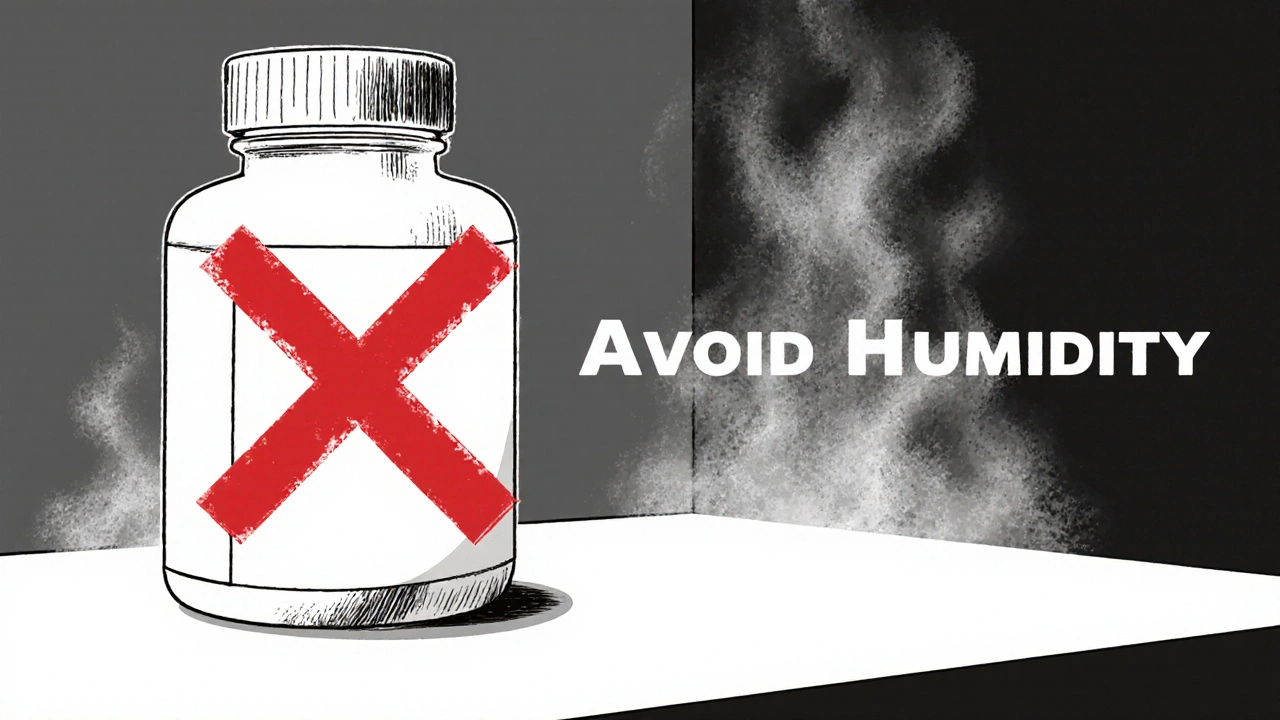
- Avoid humidity = Don’t store in the bathroom. Showers create steam. That moisture can make tablets crumble or capsules stick together. Even if the bottle says keep tightly closed, humidity still sneaks in.
- Do not freeze = Some liquids, like insulin or certain antibiotics, can break apart if frozen. Even if the bottle says refrigerate, freezing is still off-limits.
Temperature matters more than you think. A study by Express Scripts found that internal car temperatures can hit 140°F (60°C) in just 30 minutes on a 90°F day. That’s hotter than an oven. If you leave your asthma inhaler in the car for a quick errand, you might be holding a useless piece of plastic.
Why It Matters: What Happens When You Get It Wrong
Storing medicine wrong doesn’t just mean it won’t work. It can make you sick.
Take acetaminophen (Tylenol). If it’s exposed to heat and moisture over time, it can break down into a compound that’s toxic to the liver. That’s not a myth-it’s documented by the FDA. Liquid antibiotics, like amoxicillin, lose potency fast if not refrigerated. A child might get a full course of medicine, but if it’s degraded, the infection doesn’t clear-and could come back stronger.
Insulin is another big one. Once opened, it lasts about 28 days if kept cool. If it’s left in the sun or a hot car, the proteins denature. It looks the same. You can’t tell by looking. But your blood sugar won’t drop like it should. That’s dangerous.
Nitroglycerin, used for chest pain, is extremely sensitive. If it’s exposed to heat or air, it loses effectiveness in weeks. Someone having a heart attack might not get the relief they need because the pill was stored on a dresser near a window.
The FDA says storage errors contributed to 1.2% of all reported medication errors between 2020 and 2022. But experts believe that number is way too low. Most people don’t report it. They just think the medicine didn’t work.

Real-Life Mistakes People Make
Here’s what actually happens in homes:
- 68% of people admit to storing meds in less-than-ideal places (Express Scripts, 2023).
- 42% keep them in the bathroom.
- 27% leave them in cars, even for short trips.
- Many put pills in the glove compartment because it’s “out of sight.”
- Some transfer all their meds into a big plastic container, mixing pills that need refrigeration with those that don’t.
One Reddit user shared how they kept their child’s liquid amoxicillin on the kitchen counter because the fridge was full. After a week, the medicine turned cloudy. The pharmacist said it was no longer safe to use. The child got sicker.
Another person stored their diabetes insulin in the fridge door for months. Their blood sugar readings were all over the place. When they moved it to the middle shelf, everything stabilized.
These aren’t rare cases. They’re common. And they’re avoidable.
How to Set Up a Safe Storage System at Home
You don’t need a fancy cabinet. You just need a smart spot.
- Choose a cool, dry, dark place. A bedroom drawer, a high shelf in the closet, or a cabinet away from the sink or stove works.
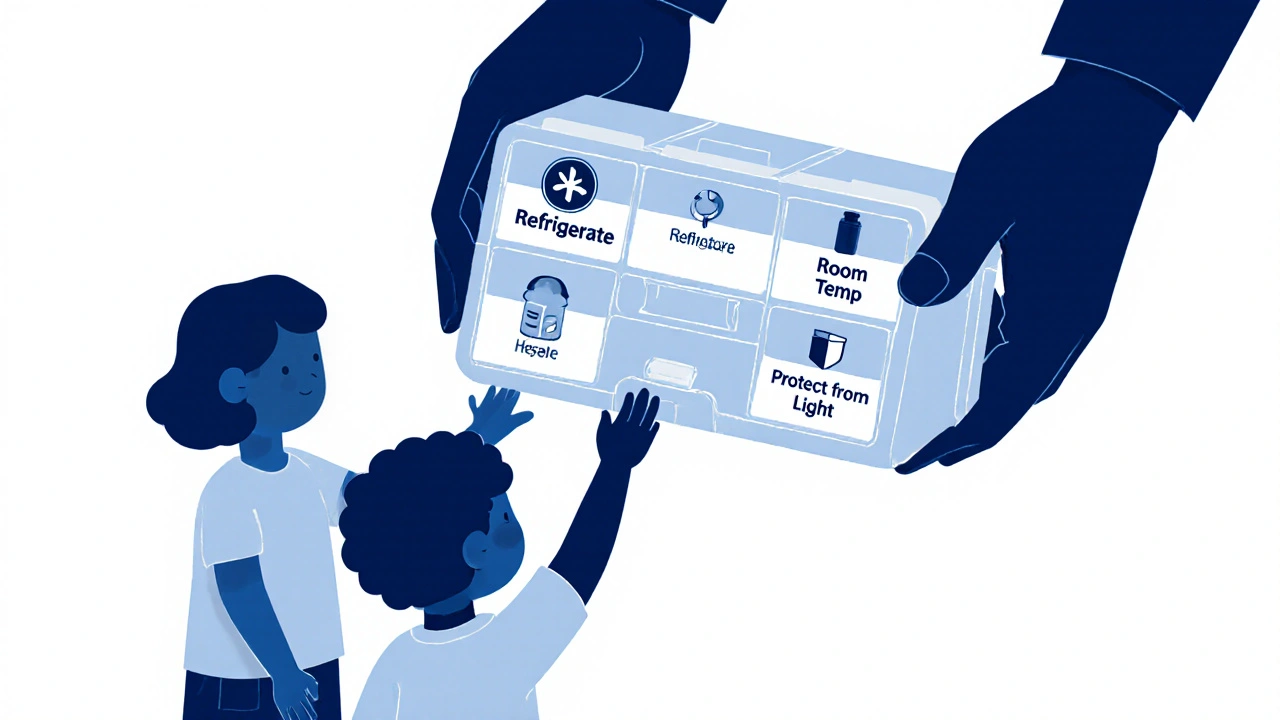
- Use a locked box if you have kids or pets. The CDC says accidental ingestion is one of the top causes of pediatric poisonings. A simple plastic box with a latch keeps meds out of reach.
- Don’t mix meds. Keep refrigerated drugs separate from room-temperature ones. Use small containers with labels: Refrigerate, Room Temp, Protect from Light.
- Check expiration dates every 6 months. If a pill is expired, discolored, smells weird, or looks different-throw it out. Don’t take chances.
- Use a thermometer. If you’re unsure about your cabinet’s temperature, buy a cheap digital thermometer from a hardware store. Put it next to your meds for a day. If it’s above 77°F, find a new spot.
For people with multiple medications, a compartmentalized storage box with temperature indicators (available at most pharmacies) can be a game-changer. Some even have alarms that go off if the box gets too warm.
Special Cases: Kids, Travel, and Seniors
Some situations need extra care.
For children: Children’s liquid medicines often have different storage rules than adult versions. A bottle of children’s amoxicillin might need refrigeration after opening, while the adult version doesn’t. Always check the label. The American Academy of Pediatrics says parents should verify storage for every new prescription.
For travel: If you’re flying or driving across states, pack temperature-sensitive meds in a small cooler with a cold pack. Don’t check your bag-keep it in your carry-on. The FAA and FDA both warn that baggage holds can get too hot or too cold. For long trips, ask your pharmacist for a travel-sized version or a backup supply.
For seniors: Many older adults live in homes without air conditioning. If your home regularly hits 85°F or higher, talk to your pharmacist. They might be able to switch you to a tablet form instead of a liquid, or recommend a different brand that’s more stable at room temperature. Medicare’s 2023 safety guide says this is a common and fixable problem.
What’s Coming Next
Medication labels are getting smarter. Starting in late 2024, CVS and Walgreens are testing QR codes on prescriptions. Scan it with your phone, and you’ll see real-time storage advice based on your local weather. If it’s 100°F outside, the app might say: Keep this insulin in a cooler until you get home.
In five years, the FDA predicts most high-risk drugs-like insulin, biologics, and chemotherapy-will come with built-in temperature sensors. The bottle will change color if it’s been exposed to heat. No more guessing.
Until then, the best tool you have is your eyes and your pharmacist. Read the label. Ask questions. Don’t assume.
What to Do If You’re Not Sure
Confused by the label? See something that doesn’t make sense? Or maybe you’re not sure if your medicine is still good?
Call your pharmacist. Not your doctor. Not Google. Your pharmacist. They’re the experts in medication storage. They know what happens when insulin sits in a hot car. They’ve seen what degraded antibiotics look like. They’ve helped hundreds of people fix their storage habits.
And if you’re ever in doubt-when in doubt, throw it out. It’s better to replace a pill than risk your health.
Proper storage isn’t just about following rules. It’s about making sure your medicine does what it’s supposed to do-when you need it most.
Can I store my medicine in the bathroom cabinet?
No. Bathrooms are humid because of showers and sinks. Moisture can cause pills to break down, capsules to stick together, or liquids to spoil. Store medicines in a cool, dry place like a bedroom drawer or kitchen cabinet away from the sink.
What does "store at room temperature" really mean?
It means between 68°F and 77°F (20°C to 25°C). That’s typical indoor temperature. Avoid places that get too hot-like near a window, oven, or radiator-and don’t leave medicine in a car, even for a few minutes.
Do all liquid medicines need to be refrigerated?
No. Only some do. Always check the label. Liquid antibiotics, insulin, and certain pediatric syrups often require refrigeration after opening. Others, like cough syrup, are fine at room temperature. Never assume-read the instructions.
Can I transfer my pills to a pill organizer?
Only if the label says it’s okay. Some medicines, like nitroglycerin or certain antibiotics, degrade when exposed to air or light. If you use a pill organizer, keep it in a cool, dark place and don’t fill it more than a week ahead. Always keep the original bottle as a backup.
What should I do with expired or unused medicine?
Don’t flush it or throw it in the trash unless the label says it’s safe. The best option is to take it to a pharmacy drop-off program or a community drug take-back event. If neither is available, mix pills with coffee grounds or cat litter, seal them in a container, and throw them in the trash. Keep them out of reach of children and pets.


Comments (15)