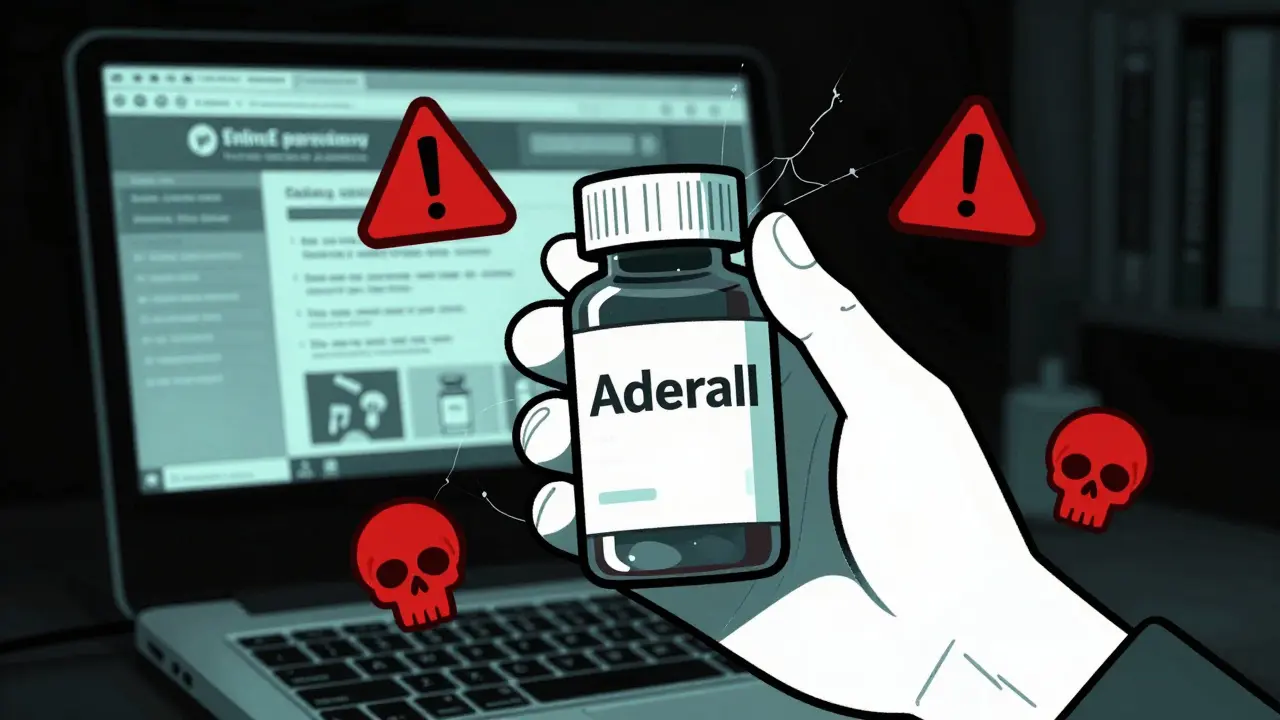
Spotting a fake pill can save your life-or someone else’s. Counterfeit drugs don’t just look wrong; they can contain no active ingredient, too much of one, or even toxic chemicals like rat poison or floor cleaner. In 2022, over 4.3 million fake medical products were seized globally, mostly sold through shady websites. If you think you’ve been sold a counterfeit drug, you’re not alone-and you’re not powerless. Reporting it is the first step to stopping dangerous medicines from reaching others.
Why reporting counterfeit drugs matters
Counterfeit drugs aren’t just illegal-they’re deadly. The World Health Organization estimates that in some countries, up to 30% of medicines on the market are fake. In the U.S., while the rate is lower-around 1%-the number of reported cases has jumped 22% since 2020, mostly because more people are buying pills online. These aren’t just mislabeled generics. Fake opioids, weight loss drugs, and erectile dysfunction pills are flooding the market, often laced with fentanyl or other dangerous substances. One wrong pill can kill.When you report a suspected counterfeit drug, you’re not just filing a complaint. You’re helping law enforcement trace the supply chain, shut down illegal operations, and protect others. The FDA’s Office of Criminal Investigations closed over 180 criminal cases in 2022 alone because of public reports. Your report could be the clue that stops a whole batch of poisoned pills from reaching pharmacies or mailboxes.
What counts as a counterfeit drug?
Not every odd-looking pill is fake, but these signs are red flags:- Spelling errors on the label (e.g., "Aderall" instead of "Adderall")
- Missing or smudged lot numbers or expiration dates
- Pills that are the wrong color, shape, or texture
- Packaging that looks cheap, blurry, or different from what you’ve seen before
- Buying from an online pharmacy that doesn’t ask for a prescription
According to FDA data, 87% of counterfeit drugs have packaging inconsistencies, and 78% have spelling mistakes. If something feels off, trust your gut. Even if you’re not sure, report it. Investigators can verify authenticity using lab tests and database checks.
How to report counterfeit drugs in the U.S.
In the U.S., you have two main paths: reporting adverse effects or reporting criminal activity. Both matter.Use FDA MedWatch for health-related reports
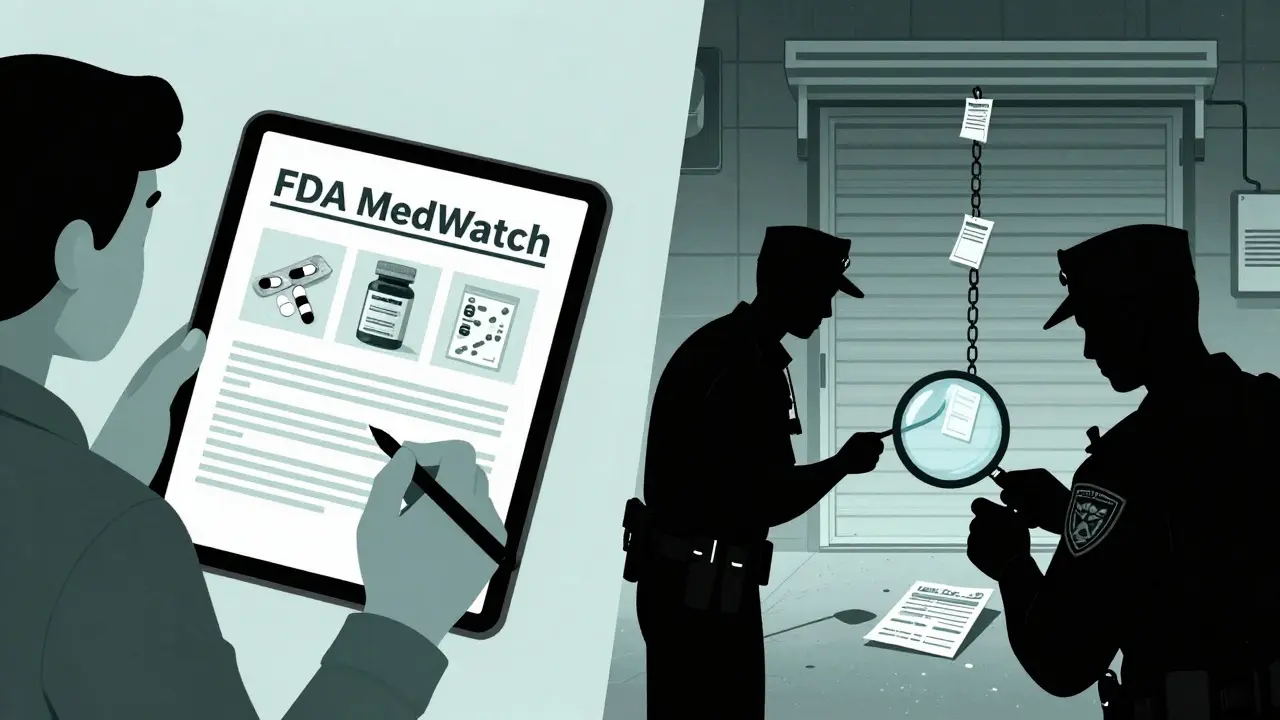
If you took a pill and felt sick, dizzy, or had an allergic reaction-or if you suspect the medicine didn’t work at all-start with MedWatch. This is the FDA’s official system for reporting adverse events and product problems. You can file online at www.fda.gov/medwatch or call 1-800-FDA-1088. The form asks for:- Drug name, strength, and National Drug Code (NDC)
- Lot number and expiration date
- Where you bought it (online store, pharmacy, etc.)
- How you felt after taking it
- Photos of the packaging and pills
Electronic submissions get acknowledged within 72 hours. Paper forms take up to two weeks. Including photos cuts processing time by nearly 90%. Don’t throw away the packaging. Keep the pills, bottle, and receipt. They’re evidence.
Report criminal activity through the FDA’s Office of Criminal Investigations (OCI)
If you believe someone is selling fake drugs on purpose-like a website, street vendor, or shady online seller-you need to go further. Use the OCI portal at www.fda.gov/oci. This is for cases where you suspect fraud, trafficking, or organized crime. You’ll need more detail:- Website URL or seller name
- Location where you bought it
- How you paid (credit card, cryptocurrency, cash)
- Any communication with the seller
- Photos of packaging, shipping labels, and pills
High-priority OCI cases trigger field investigations within 48 hours. In 2022, they handled over 1,800 counterfeit drug cases. Your report could lead to a raid or website shutdown.
What if you bought it from a pharmacy?
If you got a fake drug from a licensed U.S. pharmacy, report it to the FDA-but also call the pharmacy. Ask to speak with the pharmacist or manager. Most pharmacies have internal reporting systems. If they’re legitimate, they’ll want to know. They may even help you file a report with the FDA or contact the manufacturer.Pharmaceutical companies like Pfizer and Roche have dedicated anti-counterfeiting teams. Pfizer responds to reports within four business hours. Roche requires its affiliates to acknowledge reports within 24 hours. You can find contact info on their official websites. While they can’t arrest anyone, they can trace the batch, pull affected products, and alert regulators.
International reporting options
If you bought counterfeit drugs outside the U.S., or if the seller is overseas, you still have options.The Pharmaceutical Security Institute (PSI) handles global reports. Their 24/7 email ([email protected]) supports 27 languages. They’ve tracked nearly 10,000 incidents since 1991. Their AI system now verifies counterfeits in under five hours. But here’s the catch: they often require verification from a healthcare professional. If you’re a patient, you can still report-but be prepared to provide detailed photos and documentation.
The World Health Organization (WHO) runs a global surveillance system. You can submit reports through their website. They’ve received over 1,500 reports from 141 countries. Their system is best for identifying trends-not for urgent cases. Responses take about two weeks. Use this if you’re reporting a pattern, not a single incident.
What NOT to do
Don’t try to return fake drugs to the seller. Don’t post about it on social media to warn others-this can tip off criminals. Don’t destroy the packaging or pills. Don’t assume someone else has already reported it. And don’t wait until you feel sick. If the packaging looks wrong, report it before you take the pill.What happens after you report?
You won’t always get a call back. That doesn’t mean nothing happened. The FDA and OCI work quietly. Your report gets logged, matched with others, and used to build a case. If your pill matches a batch already under investigation, you might get a follow-up. If not, your data still helps track the spread of fake drugs.According to FDA data, reports with full product details-including photos and lot numbers-are 63% more likely to lead to an investigation. The more you give, the better the chance they can trace it back to the source.
Some people report and wait weeks for a response. Reddit users have shared stories of 47-day waits. That’s frustrating, but it’s normal. Law enforcement doesn’t move fast on every tip. But when enough reports pile up, they act.
How to protect yourself going forward
The best way to avoid counterfeit drugs is to buy only from licensed U.S. pharmacies. Look for the VIPPS seal (Verified Internet Pharmacy Practice Sites) on websites. Never buy from social media, eBay, Amazon third-party sellers, or websites that don’t require a prescription.Use the FDA’s online pharmacy safety tool to check if a site is legit. In 2022, 96% of online pharmacies reviewed by the National Association of Boards of Pharmacy were illegal.
Keep your prescriptions in their original bottles. If you get a refill that looks different, ask the pharmacist why. Compare the pill to images on the FDA’s website or Drugs.com. If it doesn’t match, don’t take it.
What’s changing in 2025?
New systems are coming. By late 2024, the FDA plans to roll out blockchain tracking for prescription drugs. That means every pill will have a digital trail. In 2025, the WHO is launching a mobile app that lets you scan a pill’s QR code and instantly check its authenticity.Until then, your report is still the most powerful tool we have. Every time you speak up, you make the system stronger.
What should I do if I think I took a counterfeit drug and feel sick?
Call 911 or go to the nearest emergency room immediately. Then report the incident to the FDA through MedWatch. Keep the pill, bottle, and receipt. Do not take any more pills from that batch. Inform your doctor so they can monitor for long-term effects.
Can I report a fake drug if I didn’t take it?
Yes. You don’t need to have taken the drug to report it. If you bought it, received it as a gift, or found it, and it looks suspicious, report it. Packaging, lot numbers, and photos are enough for investigators to start a case.
Will I get in trouble for reporting a fake drug I bought illegally?
No. Reporting counterfeit drugs is protected under federal law. Authorities focus on sellers and distributors, not consumers. Your report helps protect others, and your identity is kept confidential unless you choose to share it.
How long does it take for a report to lead to action?
It varies. Acknowledgment comes within 72 hours for online MedWatch reports. Investigations can take weeks or months. But if your report matches another one or links to a known criminal network, action can happen in under 48 hours. Don’t give up if you don’t hear back quickly-your data still contributes to the bigger picture.
Can I report counterfeit drugs outside the U.S.?
Yes. Use the Pharmaceutical Security Institute ([email protected]) or the WHO’s global reporting system. If you’re in the EU, contact your national medicines agency. Always include photos, product details, and where you bought it. Global networks share data, so your report can help stop fake drugs even if they originated abroad.
Next steps: What to do today
If you suspect a counterfeit drug:- Do not take any more pills from the batch.
- Take clear photos of the packaging and pills-front, back, side, and label details.
- Keep the bottle, receipt, and any packaging materials.
- Visit www.fda.gov/medwatch and fill out the form-or call 1-800-FDA-1088.
- If you believe it’s part of a criminal operation, go to www.fda.gov/oci and file a detailed report.
- Follow up after 10 business days if you haven’t heard back.
One report might not stop a global network. But 100 reports? That’s how investigations start. Don’t wait. Your action matters.


Comments (14)