Managing multiple medications is one of the biggest daily challenges for seniors. It’s not just about remembering to take pills-it’s about taking the right pill, at the right time, every single day. For many older adults, that’s a tall order. Forgetfulness, poor eyesight, shaky hands, arthritis, and complex schedules make traditional pill bottles a recipe for mistakes. That’s where pill packs and blister packaging come in. These aren’t fancy gadgets or luxury add-ons-they’re practical, life-changing tools designed to keep seniors safe, independent, and in control of their health.
What Exactly Are Blister Packs and Pill Packs?
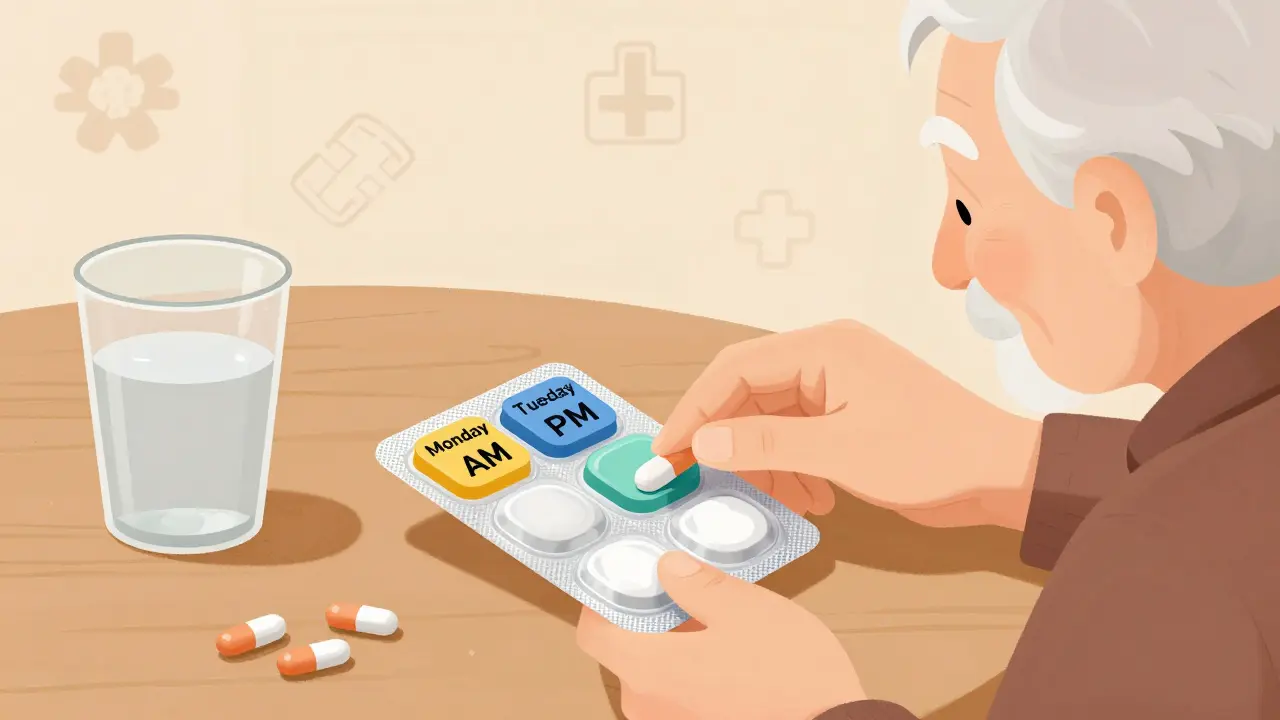
Blister packs and pill packs are pre-sorted medication systems made by pharmacies. Each dose is sealed in its own compartment, clearly labeled with the day and time-morning, noon, evening, bedtime. Think of it like a calendar for your pills.
Blister packs use a rigid plastic backing with foil seals. Each compartment holds one dose, and you press through the foil to get the pill out. These are usually made for a full week, with all doses in one unit. They’re great for home use because they give you instant visual feedback: if a compartment is empty, you know you’ve taken that dose. No guessing. No counting.
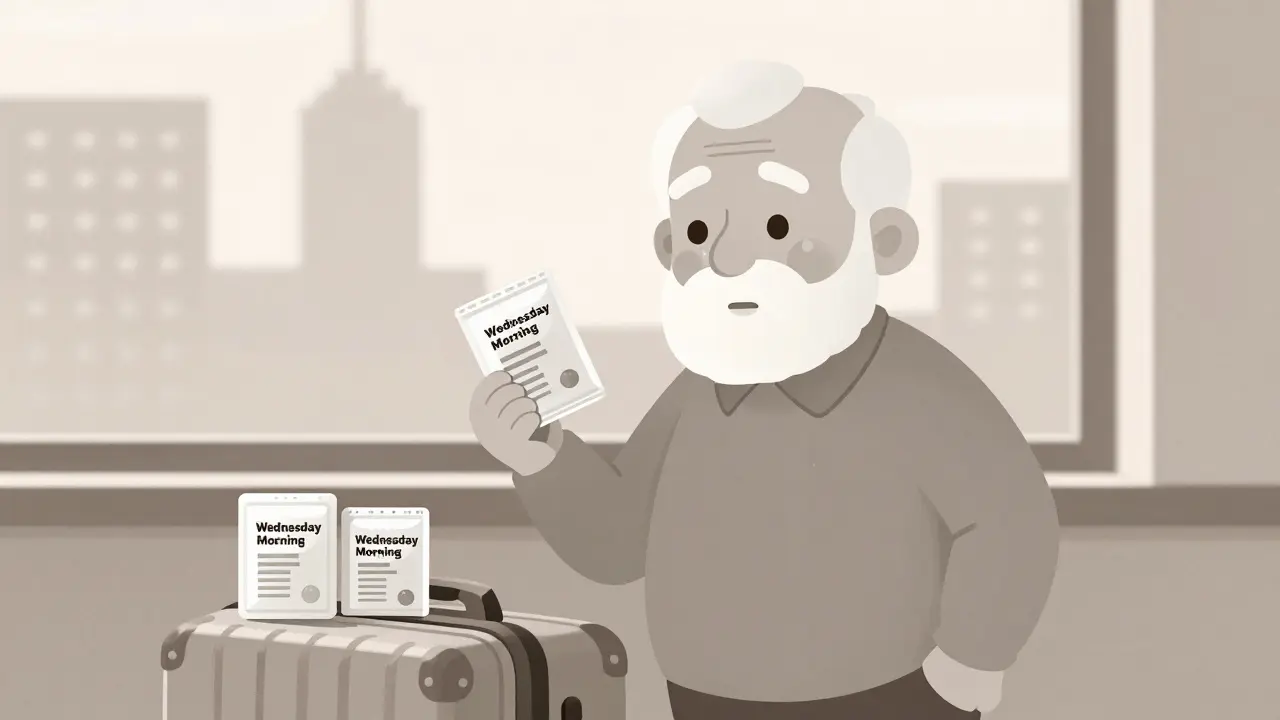
Pill packs, sometimes called bubble packs or multi-dose pouches, work differently. Instead of one solid unit, they’re made of connected pouches you can tear apart. Each pouch holds one day’s worth of pills. This makes them ideal for travel. You can grab just today’s pouch and leave the rest at home.
Both systems are assembled by pharmacists who check every medication for interactions, correct dosages, and allergies. That’s a huge safety net. One study found pharmacist-reviewed packaging reduces dangerous drug interactions by 37% for seniors on five or more medications.
Why Do Seniors Need This?
Half of all seniors miss doses or take them wrong. That’s not laziness-it’s a system failure. Bottles with tiny labels? Hard to read. Caps that twist tight? Impossible for arthritic hands. Pill organizers that get mixed up? Easy to mess up. The result? Hospital visits, ER trips, and worse.
In the U.S. alone, medication errors cause 125,000 preventable deaths every year. Most of those happen at home. Blister packs fix this by making it impossible to skip a dose without noticing. You can’t just glance at a bottle and think, “I think I took that.” With a blister pack, you see the empty space. You feel the foil give way. It’s physical proof.
Seniors with memory issues, vision problems, or arthritis benefit the most. The CDC says nearly 4 in 10 seniors over 65 take five or more daily medications. That’s a lot to juggle. Blister packs turn chaos into clarity.
How to Use a Blister Pack
Using a blister pack is simple. You don’t need instructions from a doctor-just a quick demo from your pharmacist.
- Look at the label on each compartment: Monday AM, Tuesday PM, Wednesday bedtime, etc.
- Find the day and time you’re supposed to take your meds.
- Press your thumb firmly on the foil backing of that compartment.
- The pill should pop through into your hand. If it doesn’t, press harder or try a different spot.
- Take the pill with water.
- Look at the compartment afterward. If it’s empty, you’re good. If it’s still full, you haven’t taken it yet.
Most seniors get the hang of it in two or three days. No apps. No alarms. Just sight and touch.
How to Use a Pill Pack
Pill packs work the same way, but they’re more flexible.
- Each pouch is labeled with the day and time.
- Teach the senior to tear off the pouch for today’s dose.
- Open the pouch and pour the pills into the hand.
- Take them as directed.
- Discard the empty pouch after use.
Because they’re separate, you can carry just one pouch when you go out. No need to lug around a whole week’s worth. That’s why many seniors prefer pill packs for trips, visits to family, or even short stays at a friend’s house.
Blister Packs vs. Pill Packs: Which Is Better?
There’s no single “best” option-it depends on lifestyle.
| Feature | Blister Pack | Pill Pack |
|---|---|---|
| Structure | One solid unit (weekly) | Separate daily pouches |
| Best for | Home use, fixed routines | Travel, frequent outings |
| Visual tracking | Excellent-empty compartments show missed doses | Good-pouches are used up |
| Travel-friendly | No-must carry full week | Yes-take one pouch at a time |
| Medication changes | Hard-whole pack may need replacing | Easy-swap out one pouch |
| Hand strength needed | Higher-must press through foil | Lower-pouches tear easily |
| Spill risk | 68% lower than bottles | Similar low risk |
If a senior stays mostly at home and takes the same meds every day, a blister pack is ideal. If they travel often, visit grandchildren, or have unpredictable schedules, pill packs win.
Who Should Avoid These Systems?
Most seniors benefit-but not everyone.
Blister packs are a problem if meds change often. Say a doctor adds a new pill on Wednesday. The whole pack might need to be redone. That takes time-usually 3 to 5 business days. If someone’s meds change weekly, this isn’t practical.
Some seniors with very weak hands or severe arthritis struggle to press through the foil. It’s not impossible, but it can be frustrating. In those cases, pill packs with easy-tear pouches are better.
Also, if a senior lives alone and has no one to check in on them, a basic pack won’t help if they forget to look at it. That’s where smart packs come in-more on that later.
Smart Blister Packs: The Next Step
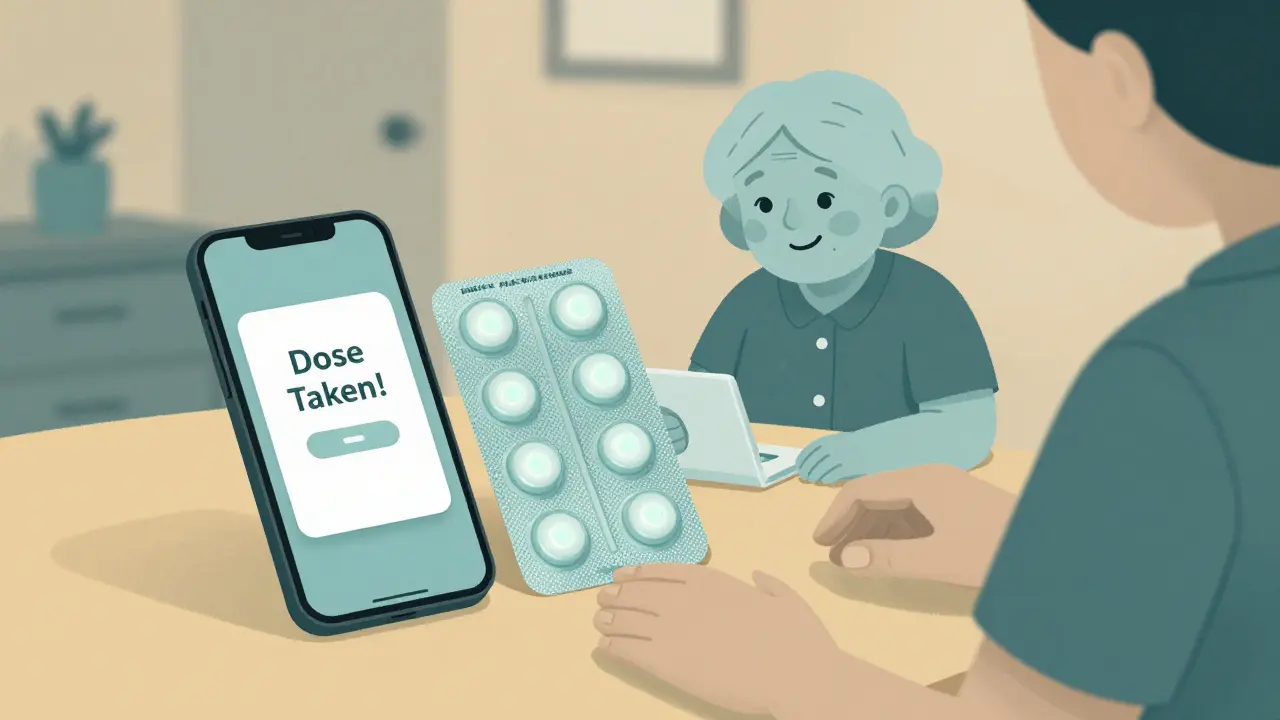
Technology is catching up. Newer blister packs now have sensors that track when a dose is taken. They send alerts to family members or caregivers if a pill isn’t taken on time.
A 2022 study followed older adults using these smart packs for eight weeks. Participants averaged 78 years old. Most said the system was easy to use and gave them peace of mind. Families reported less anxiety-no more constant calls asking, “Did you take your pills?”
One caregiver on Reddit said, “My mom used to call me three times a day just to confirm she took her meds. Now she doesn’t call. She just checks the pack.”
These smart packs aren’t mainstream yet, but adoption is growing. Experts predict nearly half of senior medication packaging will include digital monitoring by 2028.
Cost and How to Get Started
Cost varies by region and pharmacy. In Canada, some pharmacies charge around $4.99 per week. In the U.S., many include it in the standard dispensing fee-no extra charge. Medicare Part D plans are increasingly covering this as part of medication therapy management.
You don’t buy these online. You get them from a pharmacy that offers the service. Not all do. In rural areas, only about 62% of pharmacies offer blister or pill packaging, compared to 89% in cities.
To start:
- Ask your pharmacist if they offer blister or pill packaging.
- Bring a list of all medications-including vitamins, supplements, and over-the-counter drugs.
- Let them know if the senior has trouble reading labels, opening bottles, or remembering times.
- Decide between blister pack (weekly) or pill pack (daily pouches).
- Ask about refill timing-they need 3 to 5 days to prepare the next pack.
Real Benefits Beyond Adherence
This isn’t just about taking pills on time. It’s about dignity.
Seniors who use these systems report feeling more in control. They don’t need to rely on family to remind them. They don’t feel like a burden. One study found caregivers experienced a 42% drop in medication-related stress.
There’s also a safety edge. Blister packs are tamper-evident. If someone opens a compartment without taking the pill, you’ll see it. Traditional bottles? Anyone can open and close them. No one knows if pills were taken-or stolen.
Hospitals and care homes report 27% fewer medication-related admissions after switching to blister packaging. That’s fewer ER visits, fewer falls, fewer complications.
What If It Doesn’t Work?
It’s rare, but sometimes a system doesn’t click.
If the senior still misses doses:
- Check if the labels are big enough. Ask the pharmacy for larger print.
- Try a pill pack instead if the foil is too hard to press.
- Consider adding a simple alarm clock or phone reminder for the first few weeks.
- Ask if the pharmacy can split doses into morning/evening only-fewer compartments can mean less confusion.
And if the pack runs out mid-week? Don’t guess. Call the pharmacy. Don’t skip a dose. Don’t double up. They’ll help you get back on track.
Final Thoughts
Pill packs and blister packaging aren’t magic. But they’re the closest thing we have to a simple, reliable solution for a complex problem. They turn confusion into clarity. They turn dependence into independence. They turn fear into confidence.
For seniors managing five or more medications-especially those with memory loss, vision issues, or arthritis-this isn’t a luxury. It’s a lifeline. And with the number of seniors expected to hit 23% of the U.S. population by 2060, systems like these won’t just help individuals-they’ll reshape how we care for aging populations.
Start the conversation with your pharmacist today. Ask about blister packs. Ask about pill packs. Ask what’s available. The answer might just change someone’s life.
Can I use blister packs if I have arthritis in my hands?
Yes, but it depends. Pressing through the foil in a blister pack can be hard if you have weak hands. Some seniors with arthritis find it easier to tear open pill pack pouches instead. If the foil is too tough, ask your pharmacist for pill packs with easy-tear pouches. They’re designed to be opened with minimal pressure.
How far in advance do I need to order a new blister pack?
Most pharmacies need 3 to 5 business days to prepare a new blister pack. This gives them time to review your medications, sort the pills, label everything correctly, and check for interactions. Plan ahead-don’t wait until you’re out of pills. Call when you have about 3 days left.
Can I travel with a blister pack?
You can, but it’s not ideal. Blister packs are designed as full-week units, so you’d need to carry the whole thing-even if you’re only going away for two days. For travel, pill packs are better. You can tear off just the pouches you need and leave the rest at home.
What if my medication changes mid-week?
If a doctor adds, removes, or changes a dose, the entire blister pack may need to be remade. That’s because the pills are sealed in place. You can’t open a compartment and swap a pill. Call your pharmacy right away-they’ll guide you on what to do. In the meantime, keep the old pack and take the new medication as directed, but don’t mix them.
Is this covered by insurance?
Many Medicare Part D plans now cover blister or pill packaging as part of medication therapy management. Some private insurers do too. It’s often included in the standard dispensing fee, so there’s no extra charge. Always ask your pharmacy-don’t assume it’s not covered.
Are these systems safe for seniors with dementia?
Yes, but they work best with support. Blister and pill packs help by making doses visible and easy to follow. But if a senior has advanced dementia, they may need someone to help them open the pack or remind them when to take it. Pair the system with a daily check-in from a caregiver or smart technology for the best results.
Can I use these with liquid medications?
No. Blister packs and pill packs are designed for solid pills and capsules only. Liquid medications, inhalers, patches, or injections need separate systems. Ask your pharmacist about other tools-like pre-filled syringes or medication calendars-for non-solid meds.


Comments (8)