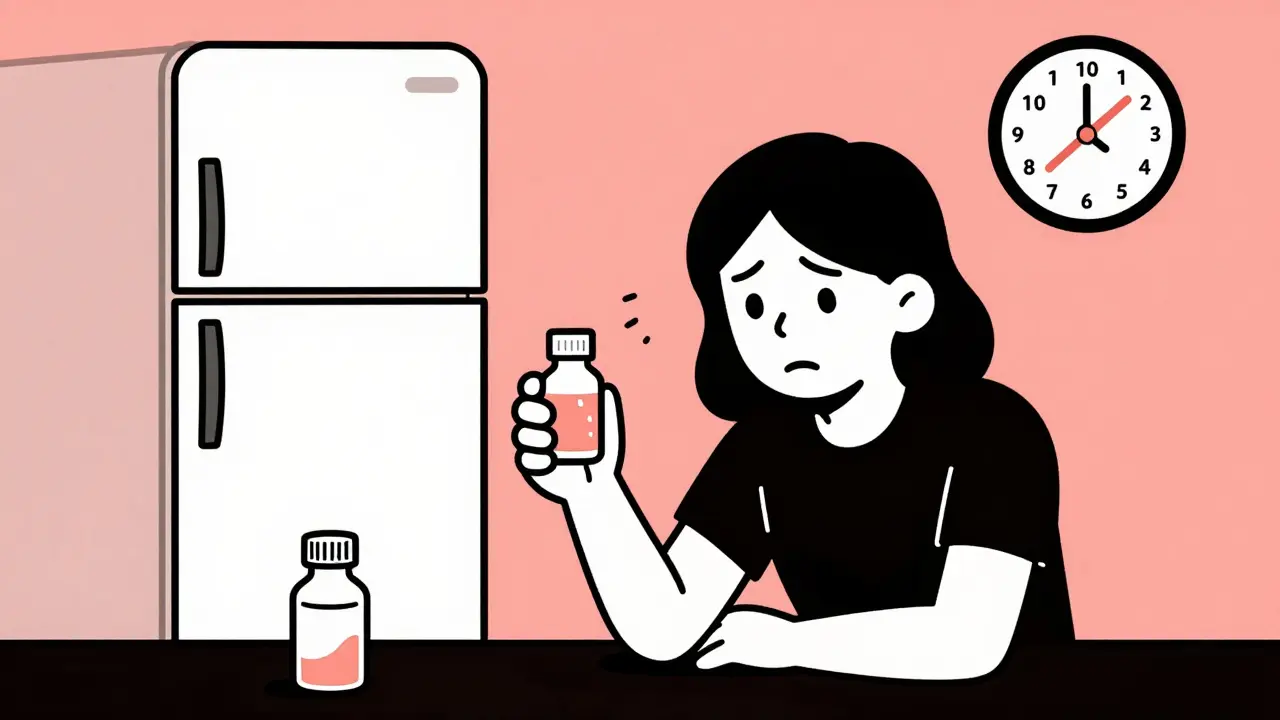
When your child gets an ear infection, the doctor hands you a small bottle of liquid antibiotic. It looks harmless enough-sweet, pink, and easy to swallow. But the pharmacist says: throw it out after 10 days. You stare at the bottle. There’s still half left. The medicine didn’t taste bad. The fever’s gone. Why can’t you just finish it?
The answer isn’t about safety in the way you think. It’s not that the liquid turns toxic. It’s that it turns weak. And that’s dangerous.
Why Liquid Antibiotics Don’t Last
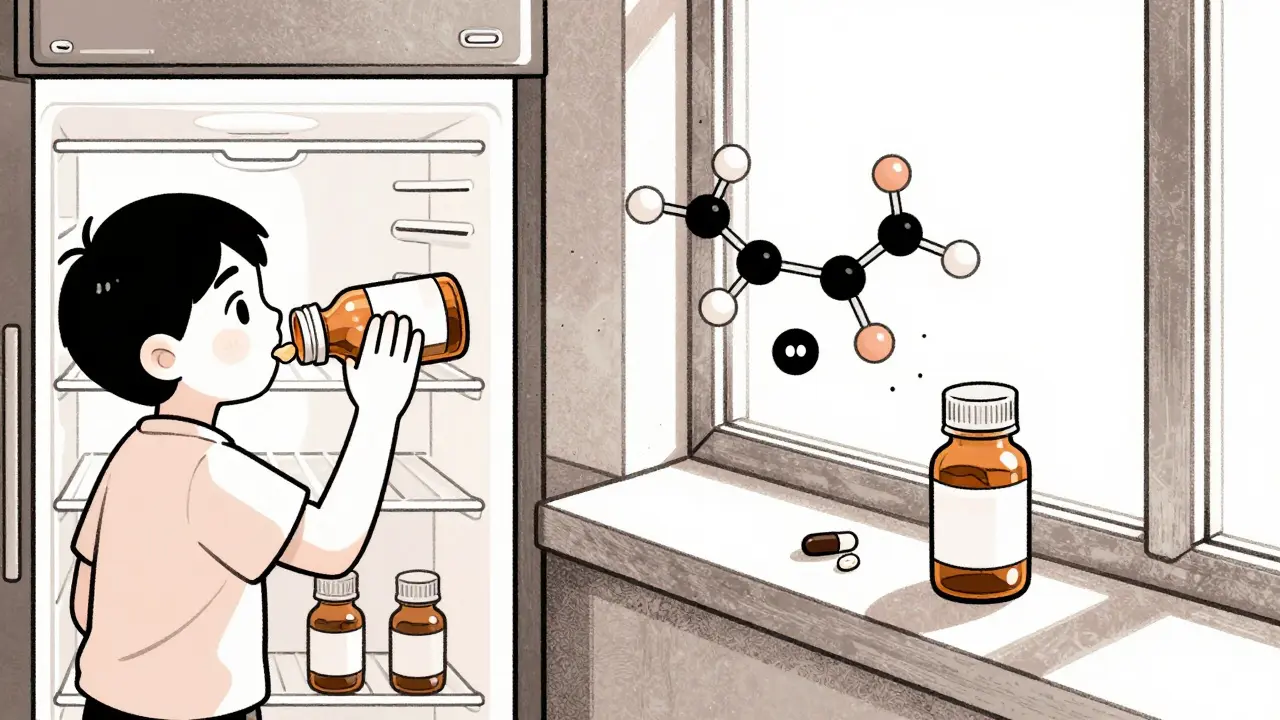
Most antibiotics you take as pills-amoxicillin, azithromycin, doxycycline-are stable for years. But when you mix powder with water to make a liquid suspension, everything changes. The moment water touches the powder, chemical breakdown begins.
This is especially true for beta-lactam antibiotics like amoxicillin and ampicillin. Their molecular structure is designed to attack bacteria, but water makes them unstable. The bond that kills bacteria also breaks down in liquid form. Over time, the active ingredient loses strength. By the time you’re on day 12, you might only be getting 70% of the dose you paid for.
Pharmaceutical companies don’t guess these expiration dates. They test them. Under controlled lab conditions, they measure how fast the drug degrades. The FDA requires that any reconstituted antibiotic must keep at least 90% of its labeled potency until the expiration date printed on the bottle. Once it drops below that, it’s no longer reliable.
Storage Makes All the Difference
Temperature is the biggest factor. Refrigeration (2°C to 8°C) slows degradation. Room temperature (25°C or higher) speeds it up-dramatically.
Studies show that amoxicillin suspension stored at room temperature lasts only 5 to 7 days before potency falls below 90%. But if you keep it cold, it can last up to 14 days. That’s why your pharmacist always says: keep it in the fridge.
But even refrigeration isn’t foolproof. If the bottle sits on the counter for a few hours while you’re out, or if your fridge runs warm, the clock ticks faster. One study found that just 10°C of extra heat can double the rate of degradation. That’s why some parents think their medicine is still good-because they didn’t realize how sensitive it is to temperature swings.
Amoxicillin vs. Amoxicillin-Clavulanate: The Big Difference
Not all liquid antibiotics are the same. Amoxicillin alone lasts longer than amoxicillin-clavulanate (Augmentin). Why? Because clavulanate, the added ingredient that fights resistant bacteria, is even less stable.
Amoxicillin suspension: up to 14 days refrigerated. Amoxicillin-clavulanate: only 10 days, no matter what. That’s not a mistake. That’s chemistry.
And here’s something most people don’t know: transferring the liquid from the original bottle into an oral syringe cuts the shelf life even further. One study found clavulanate-potassium dropped from 11 days to under 5 days when moved into a plastic syringe. The material of the container matters. Plastic can absorb parts of the drug or react with it.
That’s why pharmacists tell you: don’t pour it into another container. Keep it in the bottle it came in. Keep it capped. Keep it cold.
What Happens If You Use It After It Expires?
It won’t poison you. But it might not work.
Using a weakened antibiotic doesn’t just mean your child won’t feel better faster. It means the bacteria might survive-and learn to fight back. That’s how antibiotic resistance starts. A half-dose doesn’t kill all the germs. It kills the weak ones, leaving behind the strong ones. Those survivors multiply. Next time, the same antibiotic won’t work at all.
One 2023 survey found that 22% of parents admitted to using leftover liquid antibiotics past their discard date. Many did it because they didn’t want to waste medicine. Others forgot the date. Some thought, “It still looks fine.”
But looks don’t matter. A clear, sweet-smelling suspension can be completely inactive. Degradation doesn’t always change color or texture. You can’t tell by eye. Only lab tests can confirm potency.
Real-World Problems: When the Prescription Doesn’t Match the Shelf Life
Here’s the catch: doctors often prescribe a 10-day, 12-day, or even 14-day course. But the liquid antibiotic expires at day 10. What do you do?
Parents on online forums describe the same frustrating scenario: “We had to throw out half the bottle on day 10, but the doctor said to give it for 14 days.”
Pharmacists face the same problem. One pharmacist on a professional forum said, “I’ve had to explain this to 10 families this week. They’re angry. They feel like they’re being forced to waste money.”
It’s not about greed. It’s about science. Manufacturers set expiration dates based on what they can prove in testing-not what’s convenient for patients. The 14-day limit for amoxicillin isn’t arbitrary. It’s the longest time they’ve proven the drug stays above 90% potency under real-world storage conditions.
Some pharmacies now use digital reminders. CVS’s “Script Sync” app sends alerts when the discard date is near. One internal audit showed this cut improper use by 18%. But not every pharmacy offers it. And not every parent uses apps.
What You Should Do
Here’s what actually works:
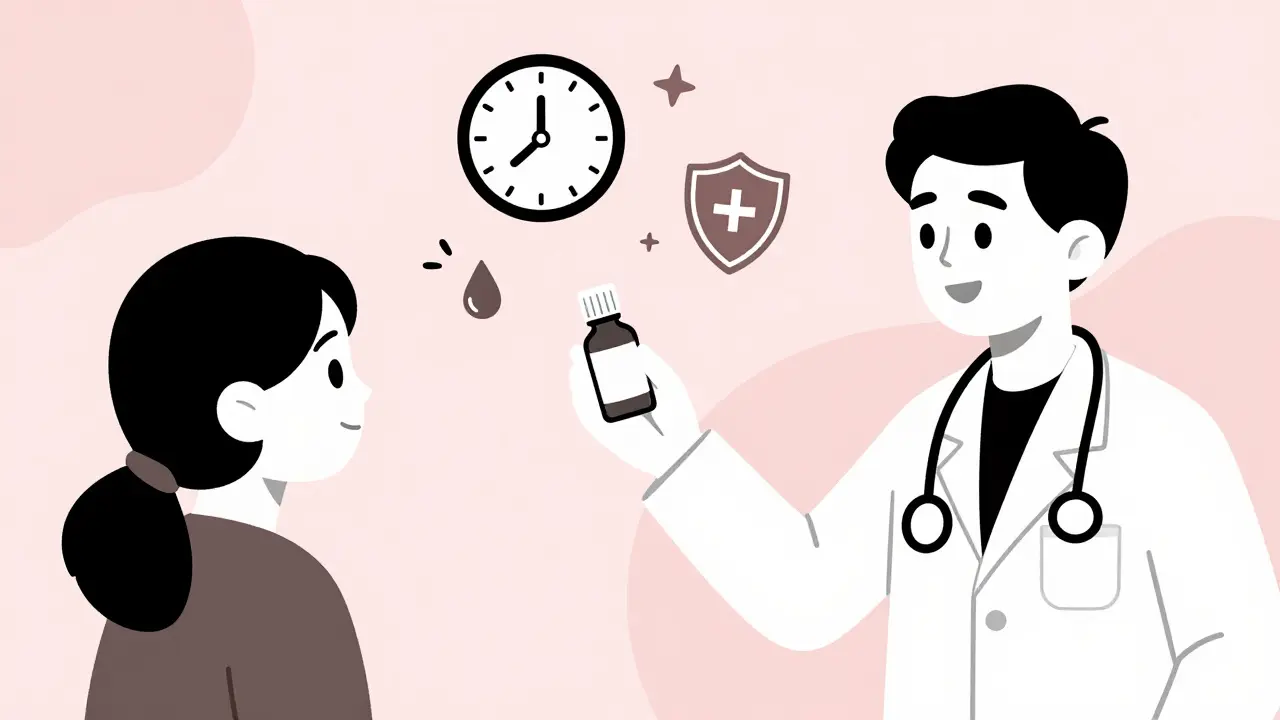
- Ask the pharmacist when you pick up the medicine: “What’s the exact discard date?” Don’t assume. Write it down.
- Keep it refrigerated at all times. Don’t leave it on the counter, even for an hour.
- Don’t transfer it to syringes or cups unless you’re giving it right away. Use the original bottle.
- Check the label. Amoxicillin? 14 days. Amoxicillin-clavulanate? 10 days. Penicillin? Maybe 14. Always confirm.
- Don’t save it for next time. Even if it looks fine. Even if your child had a similar infection last year.
If you’re worried about waste, ask if a different form is available. Some pharmacies now offer taste-masked chewable tablets or capsules that don’t need mixing. They last for years. No refrigeration. No expiration worries. They’re not always covered by insurance, but they’re worth asking about.
The Future: Will This Ever Change?
Researchers are working on it. A 2021 study showed a new microencapsulation technique could extend amoxicillin-clavulanate stability to 21 days. Pfizer is testing a dual-chamber bottle called “AmoxiClick” that keeps powder and liquid separate until you shake it. If approved, it could give you 30 days of usable medicine.
But here’s the truth: the core problem won’t go away. Beta-lactam antibiotics are chemically fragile in water. That’s just how they work. Until we find a way to make them stable without losing their power, the 10- to 14-day rule will stay.
For now, the best thing you can do is treat the expiration date like a hard deadline-not a suggestion. Your child’s health depends on it. And so does the future of antibiotics for everyone.


Comments (11)