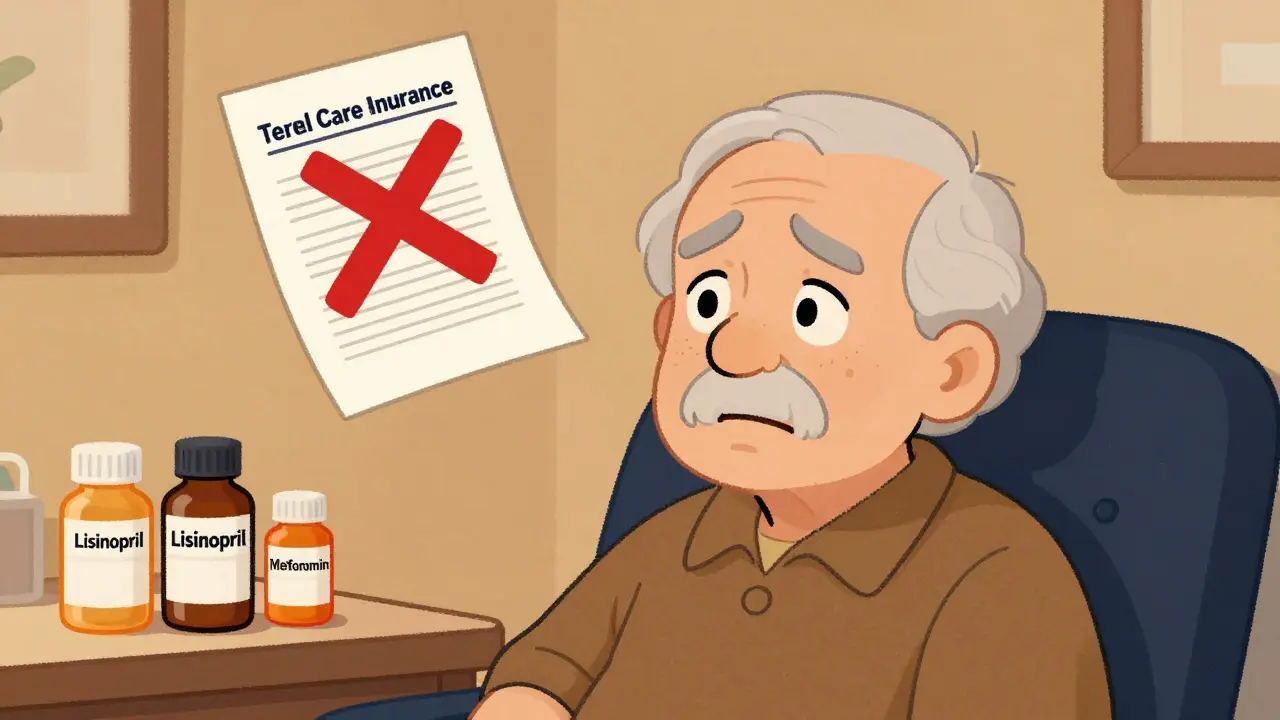
Many people assume that if they have long-term care insurance, it will pay for everything that comes with nursing home life-room, meals, help with bathing, and even their daily pills. But that’s not true. Long-term care insurance doesn’t cover prescription drugs, not even generic ones. Not ever. This is one of the biggest misunderstandings people have when planning for aging care, and it can lead to serious financial surprises.
Think about it: someone in a nursing home might be taking five or six medications a day. Most of those are generics-cheaper versions of brand-name drugs like lisinopril for blood pressure or metformin for diabetes. These aren’t luxury items. They’re essential. But if your long-term care policy says it covers "custodial care," that means help with dressing, eating, or moving around. It doesn’t mean paying for the drugs that keep you alive.
So who pays for those pills? The answer is almost always Medicare Part D. Since 2006, when Part D launched, it’s become the main source of drug coverage for nursing home residents. In fact, a 2020 study found that 82.4% of long-stay Medicare beneficiaries in nursing homes get their prescriptions paid through Part D. That’s more than eight out of every ten people. The rest? Some use Medicaid, a few get coverage through the Veterans Administration, and nearly 9% pay out of pocket-or go without.
Here’s how it actually works. When someone moves into a nursing home, the facility doesn’t just hand out meds like candy. They have to figure out which drug plan the person is enrolled in. Is it UnitedHealthcare? Humana? CVS Health? Each plan has its own list of covered drugs-called a formulary. If the resident’s medication isn’t on that list, the pharmacy can’t fill it unless the family files an exception request. That process can take days, sometimes weeks. And if the resident doesn’t have any drug coverage at all? They’re stuck paying for every pill themselves.
Generic drugs are supposed to be the solution to high drug costs. They’re just as safe and effective as brand names, but cost 80-85% less. In nursing homes, about 90% of prescriptions are generics. Yet even with that, many residents still struggle. Why? Because some Part D plans limit which generics they cover-or they charge higher copays for certain ones. And while Part D plans are required to cover all drugs on the official Medicare formulary, they don’t have to cover every single generic version. A plan might cover the 10 mg tablet of a drug but not the 20 mg. Or they might only cover one brand of generic, not others. That creates confusion and delays.
Nursing homes are caught in the middle. Staff spend an average of 10 to 15 hours per week just managing drug coverage issues. That’s not time spent helping residents eat, bathe, or get out of bed. It’s time spent calling pharmacies, checking formularies, filling out paperwork for exceptions, and arguing with insurance reps. One facility in Georgia reported spending $28,500 a year just on staff hours to handle drug coverage. And that’s not even counting the cost of delays-when a resident misses a dose because their drug isn’t covered, their health can spiral. Blood pressure spikes. Blood sugar crashes. Hospital transfers follow.
The system isn’t broken because it’s poorly designed. It’s broken because it’s overly complicated. There are about 27 Medicare Part D plan sponsors in the U.S., and the top five control nearly 80% of the market. Each one has different rules. One plan might cover a generic version of gabapentin with a $5 copay. Another might require prior authorization. A third might not cover it at all unless the resident has tried three other drugs first. For a nursing home with 150 residents, that could mean juggling 50 different drug plans. No wonder so many facilities use electronic systems now-just to keep track.
And it’s not just about the drugs themselves. It’s about access. In rural areas, 22% of nursing homes say they can’t find a pharmacy that works with all the major Part D plans. That means residents might have to wait longer for meds, or get them shipped from far away. In cities, it’s easier. But in small towns? A delay of three days might mean a resident ends up in the ER.
There’s good news, though. Starting in 2025, the Inflation Reduction Act will cap out-of-pocket drug costs at $2,000 a year for Medicare Part D beneficiaries. That’s huge for people who’ve been paying hundreds a month just for their pills. It also means more people will be able to afford their meds without choosing between food and medicine. And CMS now requires that Part D plans process non-formulary requests for nursing home residents within 72 hours. That’s a step forward.
But here’s the hard truth: long-term care insurance was never meant to cover drugs. It was designed to pay for the help you need when you can’t do daily tasks anymore. If you want drug coverage, you need separate insurance-Medicare Part D, Medicaid, or a private plan. And if you’re helping a loved one move into a nursing home, you need to ask these questions right away:
- Does the resident have Medicare Part D? If not, why not?
- Which drug plan are they enrolled in? Get the name and member ID.
- What’s on their formulary? Ask the pharmacy for a list.
- Are their current meds covered? If not, what’s the process to get an exception?
- Does the nursing home work with a long-term care pharmacy that handles their plan?
Don’t wait until the first prescription is denied. That’s when the panic starts. Plan ahead. Know the rules. And remember: long-term care insurance is not health insurance. It’s care insurance. Drugs? That’s a different system entirely.
And if you’re paying for drugs out of pocket? You’re not alone. But you’re also not powerless. Talk to the facility’s social worker. Ask about patient assistance programs. Check if the drug manufacturer offers discounts. Some generic drugs have coupons-even for seniors. And if you’re on Medicaid, make sure your drug coverage is active. Many people lose it during transitions and don’t realize until they’re stuck with a $150 pill bill.
The bottom line? You can’t rely on long-term care insurance to cover your pills. But you don’t have to go without them either. With the right knowledge and a little planning, you can make sure the medications your loved one needs are covered-without breaking the bank.


Comments (9)