Metformin Formulation Fit Finder
Not sure if Extended-Release (XR) or Immediate-Release (IR) Metformin is right for you? This tool uses clinical data to help you decide based on your budget, stomach sensitivity, and daily routine.
1Gut Sensitivity
How are your current digestive symptoms?
2Budget Priority
How important is the lowest possible price?
3Daily Routine
Which sounds more manageable for you?
Did you know?
Patients on Extended-Release stay on their medication an average of 2.1 months longer than those on Immediate-Release due to reduced side effects.
If you are living with type 2 diabetes, you probably know that finding a medication routine that doesn't ruin your day is half the battle. You get prescribed a life-changing drug, but if it leaves you running to the bathroom every hour, you stop taking it. This is the classic struggle with Metformina widely used first-line medication for managing blood sugar levels in type 2 diabetes. The question many patients face is simple yet frustrating: is there a version that works just as well but plays nicer with my gut? Specifically, does switching from the standard immediate-release tablet to the Metformin Extended-Release formula actually help?
We aren't just talking about slight differences here. For millions of people, the difference between sticking to a treatment plan and quitting cold turkey comes down to gastrointestinal comfort. In this deep dive, we break down exactly how these two versions differ in your body, what the hard data says about side effects, and whether the price hike for the extended-release version is worth your wallet.
Understanding the Delivery Difference
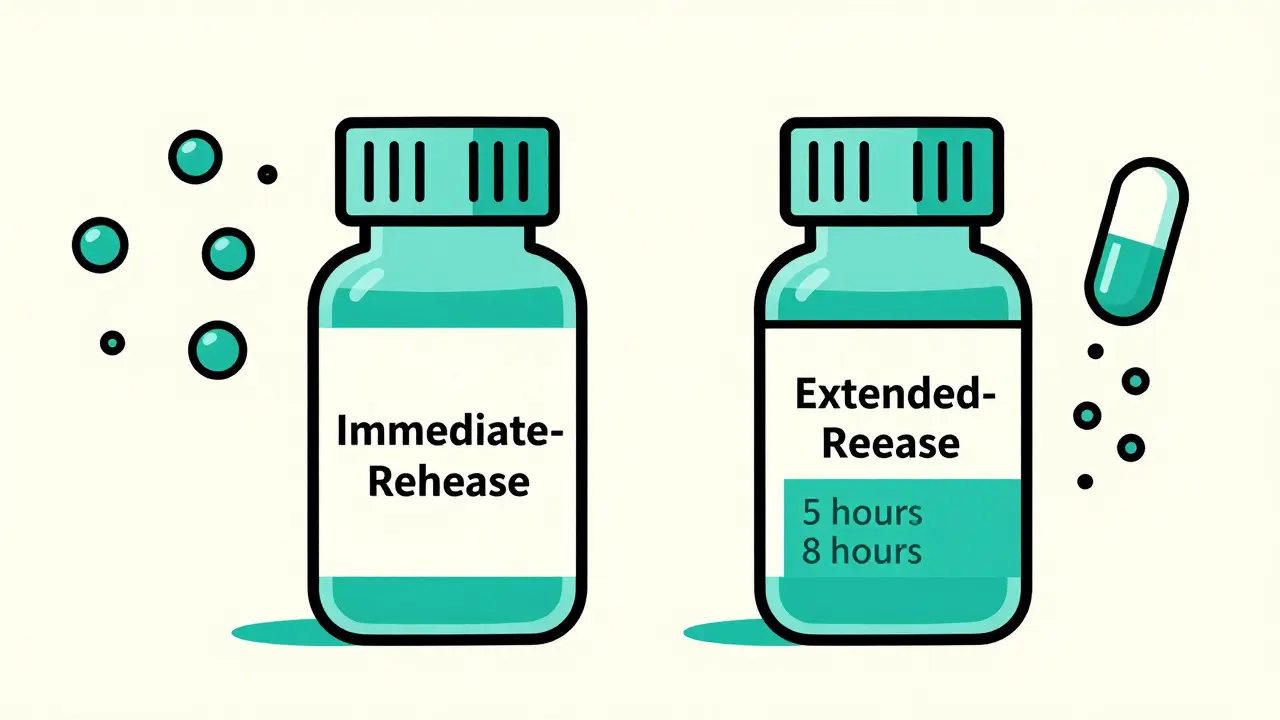
To understand why one might cause stomach trouble and the other doesn't, you have to look at how they dissolve. Standard Metformin Immediate-Releasethe traditional form of metformin that releases the full dose quickly after ingestion is straightforward. When you swallow a 500 mg or 850 mg tablet, it dissolves rapidly. Within about three hours, your system hits peak concentration. Think of it like dumping a bucket of water all at once versus pouring it through a narrow tube. That sudden rush of medication sitting in your small intestine is often what triggers the diarrhea, bloating, or nausea.
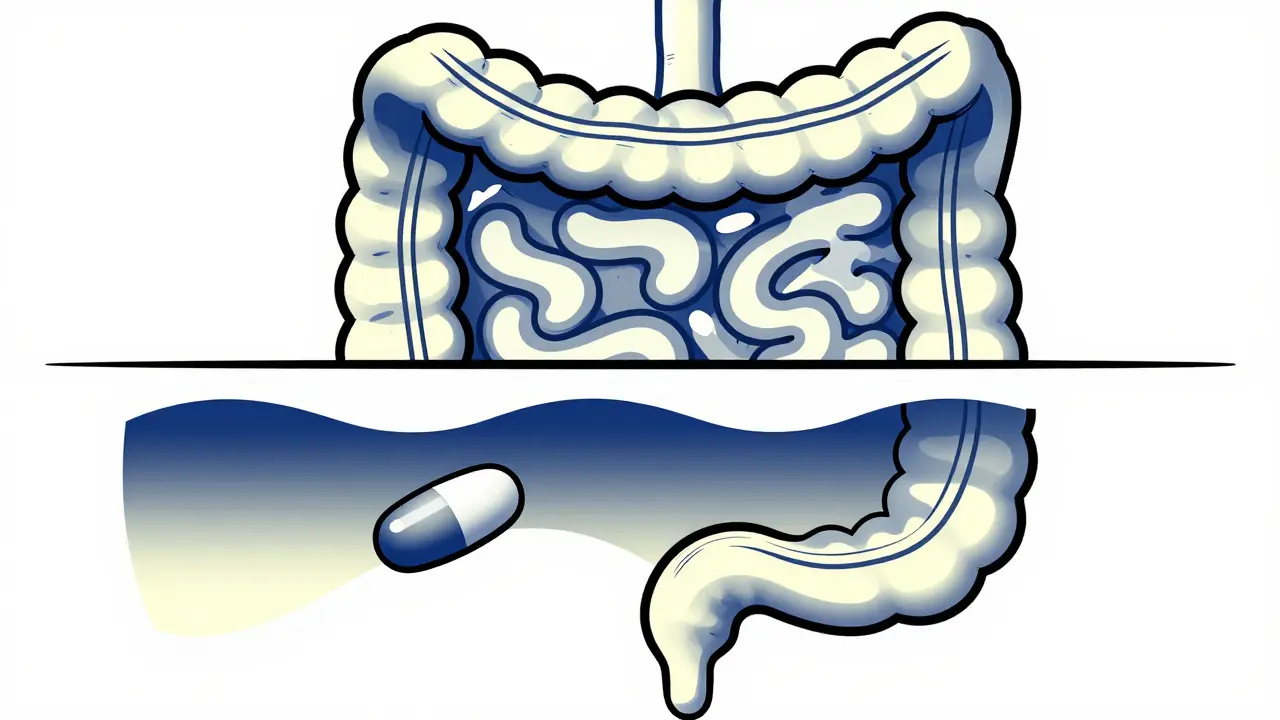
The extended-release version changes the physics of that process. Brands like Glucophage XRa brand name for extended-release metformin utilizing proprietary delivery systemsBristol-Myers Squibb Product utilize a technology called a GelShield Diffusion System. Instead of dumping the whole 1000 mg dose at once, the pill acts like a slow-release reservoir. The medication trickles into your upper gastrointestinal tract over eight hours. Because the concentration stays flatter and lower, your gut lining doesn't get shocked by a high spike of the drug. Clinical pharmacology studies show that while the total amount absorbed is similar, the peak plasma concentration is achieved much later-around seven to eight hours compared to three hours for the standard version.
What the Studies Say About Stomach Comfort
Patient anecdotes are great, but we need hard data to back up whether the upgrade is real. Researchers have been comparing these two formulations for decades. One of the earliest and most significant analyses came from Dr. Lawrence Blonde's retrospective chart review in 2004. He looked at patients who were forced to switch formulations due to intolerance. The results were clear: those who moved to the extended-release option saw a 32.7% drop in reported gastrointestinal side effects. More importantly, actual incidence of diarrhea dropped significantly, falling from nearly 30% of patients down to under 20%.
However, science rarely gives a perfect black-and-white answer. In 2017, a comparative study by Aggarwal et al. showed a slightly different picture. While overall tolerability was better, they noted that nausea occurred slightly more frequently in the XR group compared to IR in some cases. Why the discrepancy? It often depends on the individual's metabolism and how sensitive their digestive enzymes are to the drug matrix. A large 2021 meta-analysis by Tan et al., which pooled data from over 2,300 patients across seven trials, concluded that the extended-release version does provide a statistically significant reduction in overall GI adverse events. The absolute risk reduction was about 15%, which means for every 100 people switching, roughly 15 fewer people will suffer enough symptoms to worry.
We also have to look at how adherence is affected. If you aren't taking the meds because your stomach hurts, the blood sugar control doesn't matter. Real-world data from the Optum Clinformatics Dataset analyzed nearly 19,000 patients. Those on the extended-release schedule stayed on the medication 2.1 months longer on average than those on the immediate version. For many doctors, keeping a patient medicated is more valuable than the theoretical perfection of the immediate-release dosing schedule.
Real-Life Patient Experiences
Data points are essential, but your daily reality is defined by how you feel. Online communities like Reddit and TuDiabetes offer a raw look at patient sentiment. A 2023 analysis of hundreds of comments highlighted a consistent theme: "Life-changing" versus "Same old." About two-thirds of users who switched to XR reported a noticeable improvement. Many specifically mentioned stopping the frequent bathroom trips that plagued them with the immediate-release tablets.
But it isn't a magic cure for everyone. A significant chunk of patients-about a quarter according to these community forums-reported no significant difference. Some even found the nausea returned. One common reason for this failure mode is improper titration. People expect relief instantly, but if you jump straight to the maximum dose of 2000 mg XR without building tolerance, your gut still gets overwhelmed. Conversely, those who started low and went slow often celebrated the switch. Another issue is cost; many patients in the forums mention reverting to the generic immediate-release version because they simply couldn't afford the copay difference.
The Financial Reality of Formulations
Let's talk numbers. If you have private insurance, the copay might be identical for both versions, making the decision purely medical. But for cash payers or those with higher deductible plans, the math matters. Wholesale acquisition costs for generic immediate-release metformin can be as low as $8 to $15 for a month's supply. The extended-release generics have become cheaper recently, but they often carry a 25% to 35% premium. This gap has narrowed since 2020 as patent protections expired on major branded XR products, but it remains a barrier.
In the United States, despite the cost, adoption of XR has skyrocketed. IQVIA National Prescription Audit data showed that nearly 60% of all metformin prescriptions written in 2023 were for the extended-release type. Doctors seem willing to accept the higher drug cost to reduce the downstream costs of treating uncontrolled diabetes caused by non-adherence. If missing doses due to side effects leads to higher HbA1c and subsequent complications, the cheap pill becomes expensive in the long run.
How to Switch Safely and Reduce Side Effects
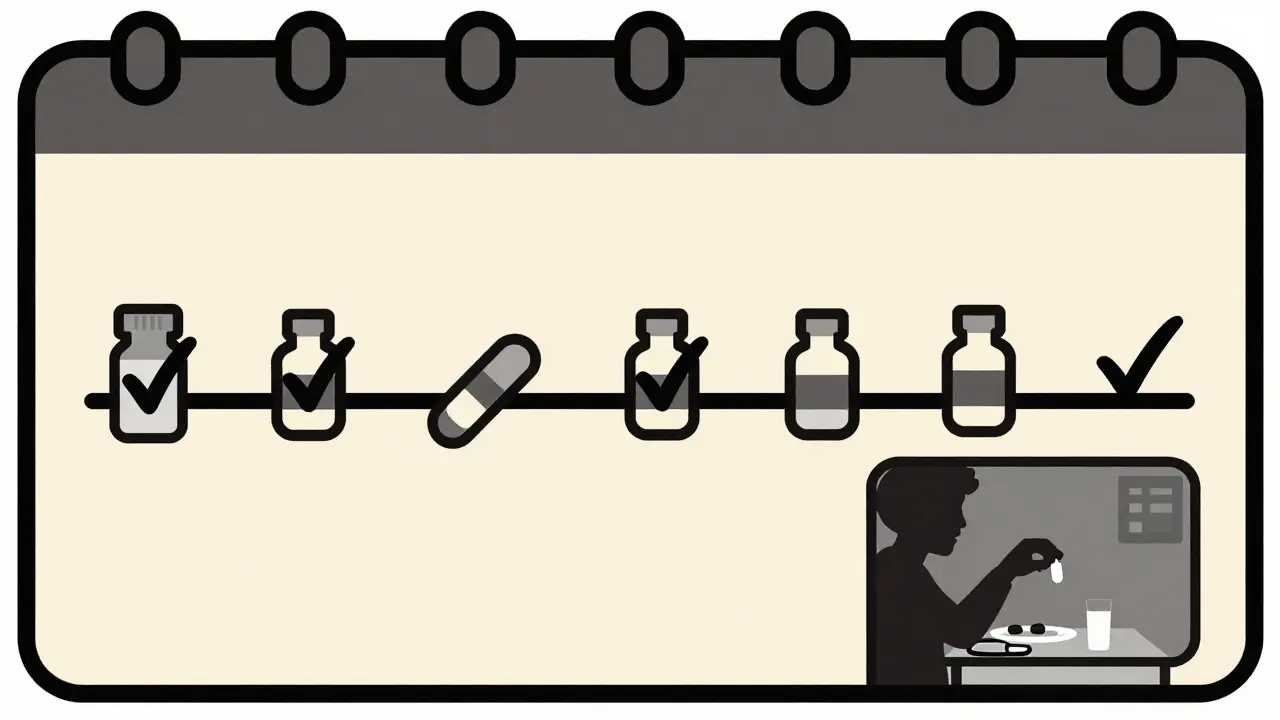
Whether you are starting fresh or trying to fix a bad reaction to your current prescription, timing is everything. The American Diabetes Association recommends a specific strategy to minimize the "turbocharged toilet" effect. Don't start at the max dose. Begin with 500 mg taken once a day, preferably with your largest meal. This food buffer helps dilute the drug in the stomach before it moves to the intestines. Increase the dose slowly-wait a week or two before bumping up another 500 mg.
For those switching from immediate to extended-release, the conversion is generally direct in terms of milligram strength. If you are on 1000 mg of IR twice a day, your doctor might move you to 1500 mg or 2000 mg of XR once a day. However, do not try to do this alone. There are specific bioavailability nuances, and splitting the XR tablet is a big mistake. These pills are designed to stay intact until they reach the target area. Crushing them defeats the purpose and turns your gentle XR into a harsh shock of medicine. Always swallow it whole.
| Feature | Immediate-Release (IR) | Extended-Release (XR) |
|---|---|---|
| Dosing Frequency | 2 to 3 times daily | Once daily |
| Absorption Time | Fast (3 hours) | Slow (7-8 hours) |
| GI Side Effects | More common | Significantly reduced |
| Cost Factor | Lower cost | Slightly higher cost |
Expert Guidelines and Regulatory Context
Navigating the regulatory landscape ensures you are getting safe medication. The FDA issued mandates in 2020 regarding NDMA levels, a chemical impurity found in some nitrosamine-containing drugs. While this initially spooked the market regarding XR quality, all major formulations have passed testing with flying colors as of late 2023. Safety-wise, the National Institute for Health and Care ExcellenceUK healthcare provider offering evidence-based guidanceNICE updated their guidelines in early 2022 to recommend XR specifically for those who cannot tolerate IR. It signals that the medical consensus aligns with the tolerability data.
Looking ahead, the industry continues to innovate. In 2023, a novel pH-dependent release technology received FDA approval, theoretically pushing the tolerability advantage even further. As we look toward 2026, the expectation is that generic competition will drive the price of XR down closer to IR, eventually making the superior tolerability option the standard of care rather than a luxury.
Can I split metformin extended-release tablets?
No, absolutely not. Extended-release tablets rely on special coatings or internal matrices to control the speed of drug release. Cutting, crushing, or chewing the tablet destroys this mechanism, releasing the entire dose at once and drastically increasing the risk of severe stomach upset or toxicity.
Is the blood sugar control different between IR and XR?
Clinical trials show they achieve comparable glycemic control when dosed correctly. The primary benefit of the extended-release version is improved tolerability leading to better adherence, which indirectly improves long-term blood sugar management.
Why does metformin cause stomach problems?
Metformin interferes with glucose transport in the intestinal wall. High concentrations of the drug can irritate the lining, causing malabsorption, gas production, and watery stools. Slowing the release reduces this peak irritation.
When should I take metformin XR?
Most experts recommend taking extended-release metformin once daily with your evening meal. Taking it at night may also offer metabolic benefits regarding blood sugar stability during fasting periods.
Is XR metformin covered by insurance?
Coverage varies by plan. While generic IR is almost always on Tier 1, XR is sometimes placed on a higher tier requiring a larger copay. It is worth asking your pharmacist about prior authorization or patient assistance programs.


Comments (13)