MTX & NSAID Interaction Risk Estimator
This tool provides an estimation of how different painkillers may impact Methotrexate clearance based on the clinical data provided in the article. Note: This is for educational purposes and not a substitute for professional medical advice.
Mixing Methotrexate is a dihydrofolate reductase inhibitor used to treat rheumatoid arthritis and various cancers with common over-the-counter painkillers can be a dangerous gamble for your kidneys. While many people take both to manage joint pain and inflammation, this combination can trigger a chemical chain reaction that traps the medication in your bloodstream, potentially leading to severe toxicity. If you're managing an autoimmune condition, understanding how these two drug classes clash is not just academic-it's a matter of safety.
How NSAIDs Change Your Methotrexate Levels
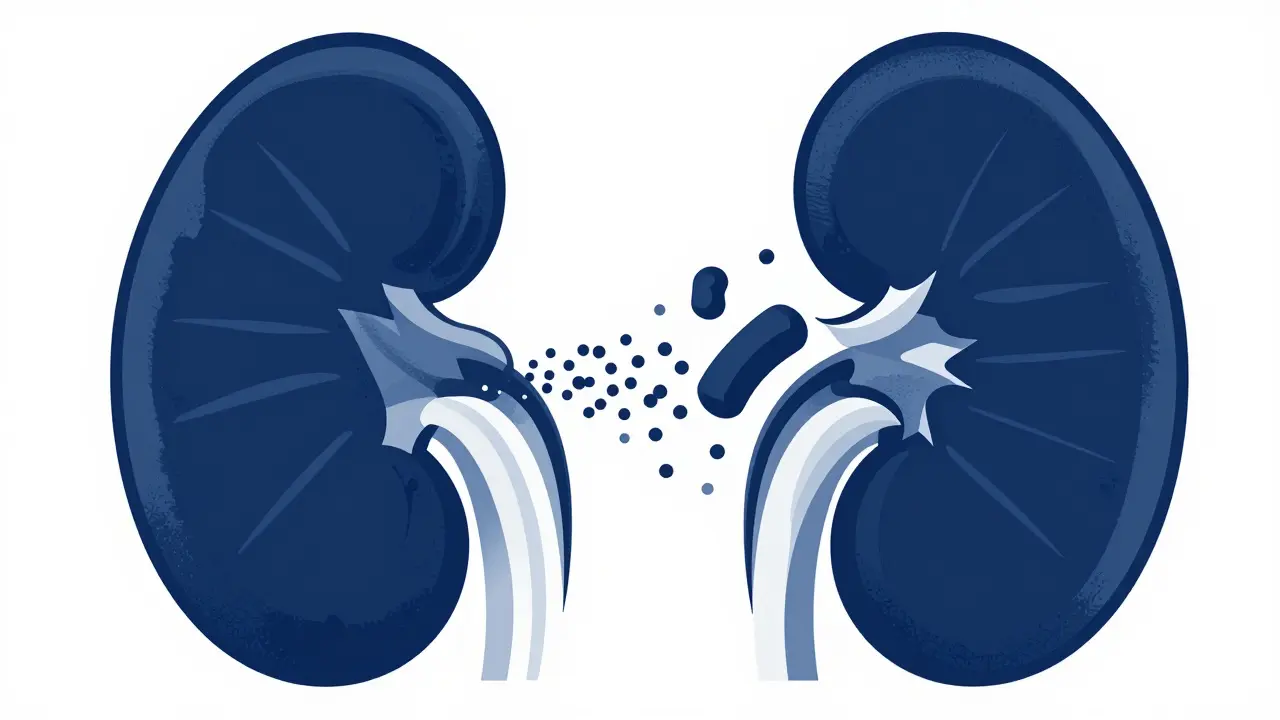
To understand why this happens, we have to look at how your body gets rid of drugs. Methotrexate relies heavily on your kidneys for elimination. It uses specific pathways, including organic anion transporters in the proximal tubule, to leave the body through urine. This is where NSAIDs (Non-Steroidal Anti-Inflammatory Drugs) come into play.
Drugs like ibuprofen, naproxen, and diclofenac work by blocking prostaglandins. While this stops pain, it also reduces blood flow to the kidneys by about 15-20%. When renal perfusion drops, the kidneys can't filter methotrexate as efficiently. Pharmacokinetic data shows that this can slash methotrexate clearance by 25-40%. Essentially, the "exit door" for the drug narrows, causing serum levels to spike by 25-50%.
It doesn't stop at blood flow. NSAIDs can also physically compete with methotrexate for the same transport proteins in the kidney and displace the drug from proteins in your blood. This increases the amount of "free" drug circulating in your system, making it far more likely to cause toxic side effects.
High-Dose vs. Low-Dose: Where Is the Danger?
Not every patient faces the same level of risk. The danger depends almost entirely on the dose you're taking and the current state of your kidneys.
For those on low-dose therapy (typically 5-25 mg weekly for rheumatoid arthritis), the risk is relatively low if your kidneys are healthy. Research involving over 4,000 RA patients showed no significant increase in adverse events for those with a normal eGFR (estimated Glomerular Filtration Rate) above 60 mL/min/1.73m². However, if you already have some kidney impairment, the risk of a serious reaction jumps more than three-fold.
The situation becomes critical with high-dose methotrexate (used in oncology, often ≥500 mg/m²). In these cases, adding an NSAID can increase the risk of life-threatening myelosuppression-where your bone marrow stops making enough blood cells-and acute kidney injury by nearly five times. This is why oncology wards have strict protocols against using these painkillers during high-dose chemotherapy.
| NSAID Type | Example Drug | Estimated MTX Level Increase | Risk Level |
|---|---|---|---|
| Potent Prostaglandin Inhibitors | Ketorolac | Up to 50% | Very High |
| Standard NSAIDs | Ibuprofen / Naproxen | 25-35% | Moderate |
| Selective COX-2 Inhibitors | Celecoxib | 10-15% | Low |
Spotting the Warning Signs of Toxicity
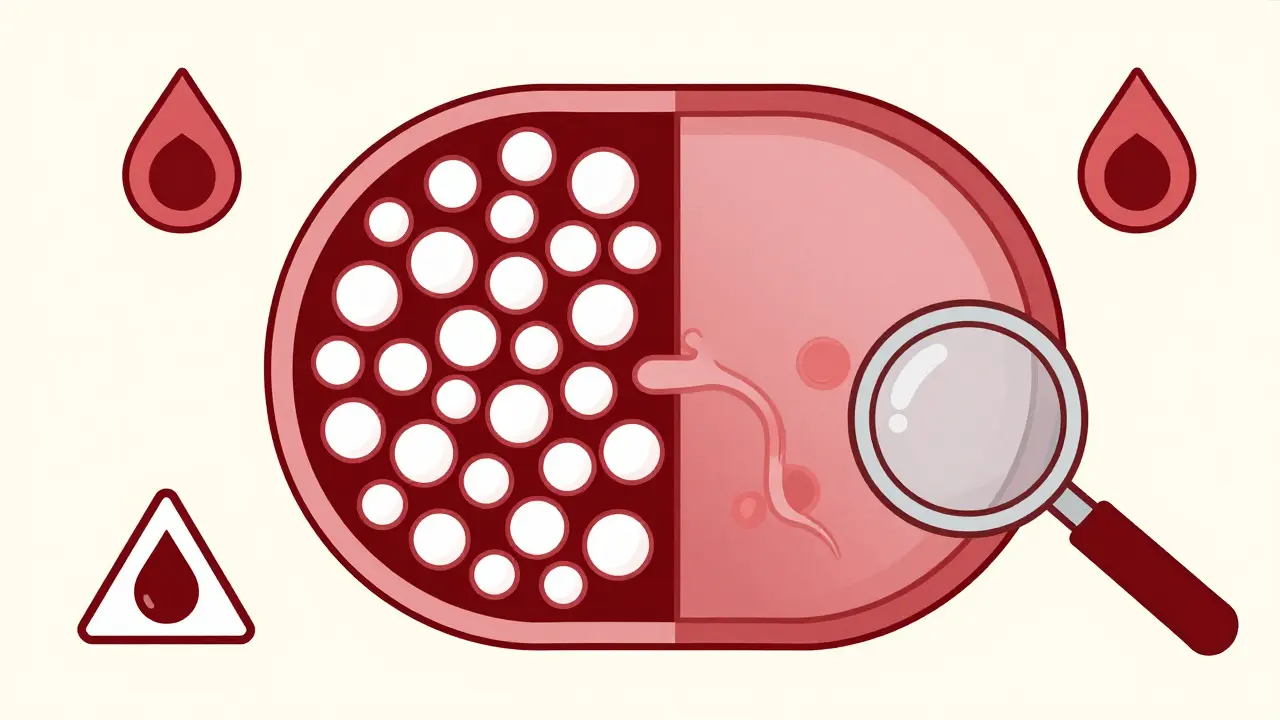
The scary part about this interaction is that it's often silent. About 63% of mild-to-moderate kidney impairment cases are asymptomatic, meaning you won't feel anything until a blood test reveals the damage. However, when toxicity does hit, it manifests in a few specific ways.
The most common red flags include severe, unexplained fatigue and the appearance of mouth ulcers. Because methotrexate suppresses the immune system and bone marrow, a drop in your white blood cell count (leukopenia) can happen quickly. In some reported cases, patients have seen their white blood cell counts plummet to dangerous levels within just a few days of starting an NSAID, requiring "leucovorin rescue" therapy to reverse the damage.
If you notice unusual bruising, a sudden sore throat, or extreme lethargy after taking a painkiller, it could be a sign that your drug levels have spiked.
Safety Protocols and Management
You don't necessarily have to avoid all painkillers, but you do need a strategy. The American College of Rheumatology suggests a few ground rules to keep the interaction under control.
- Check Your Baseline: Never start an NSAID if your eGFR is below 60 mL/min/1.73m².
- Timing Matters: Try to space your methotrexate dose and your NSAID dose by at least 12 hours. This prevents the two drugs from hitting their peak concentrations in your blood at the same time.
- Keep it Short: Use the lowest effective dose of the painkiller for the shortest time possible.
- Monitor Closely: Get your serum creatinine and complete blood count (CBC) checked 48-72 hours after you start a new NSAID regimen.
If you need a safer alternative for pain, Acetaminophen (Tylenol) is generally the preferred choice as it doesn't interfere with renal prostaglandins. For chronic inflammation, your doctor might suggest adjusting your DMARDs (Disease-Modifying Antirheumatic Drugs) rather than relying on daily NSAIDs.
The Role of Genetics and Future Tech
Why do some people handle this combination fine while others crash? The answer might be in your DNA. New research from the Methotrexate Genetics Consortium suggests that people with a specific genetic variation called the SLC19A1 80G>A polymorphism are much more susceptible. Those with this trait may see a 40% greater accumulation of the drug when taking NSAIDs compared to those without it.
We are also moving toward a world where we won't have to guess. Phase 3 clinical trials are currently testing point-of-care testing devices. These would allow doctors to check your actual methotrexate levels in real-time, right in the office, rather than waiting days for lab results. This could make the co-administration of these drugs significantly safer for high-risk patients.
Can I take Ibuprofen occasionally with my weekly Methotrexate?
For most people with healthy kidney function (eGFR >60), occasional use of low-dose ibuprofen is generally considered safe. However, it is vital to monitor your blood work, specifically creatinine and CBC, during the initial period of co-therapy to ensure your drug levels aren't rising.
Which NSAID is the safest to use with Methotrexate?
Among NSAIDs, Celecoxib tends to have the lowest interaction potential, increasing methotrexate levels by only 10-15% due to its selective COX-2 inhibition. In contrast, avoid Ketorolac, which can increase levels by up to 50%.
What are the early signs of Methotrexate toxicity?
Early signs often include severe fatigue, mouth ulcers, and nausea. More serious indicators include a drop in white blood cell counts, which can leave you vulnerable to infections. Because early stages are often asymptomatic, routine blood tests are the only reliable way to detect toxicity early.
Why does high-dose Methotrexate have a higher risk?
High-dose methotrexate follows nonlinear kinetics because the renal tubules become saturated. This means the kidneys are already working at maximum capacity, making any further reduction in blood flow or clearance caused by NSAIDs much more dangerous and likely to cause systemic toxicity.
Should I stop taking my NSAIDs immediately?
Do not stop prescribed medications without consulting your doctor. Instead, schedule a kidney function test and ask your provider if a safer alternative, such as acetaminophen, or a different dosing schedule would be appropriate for your specific health profile.