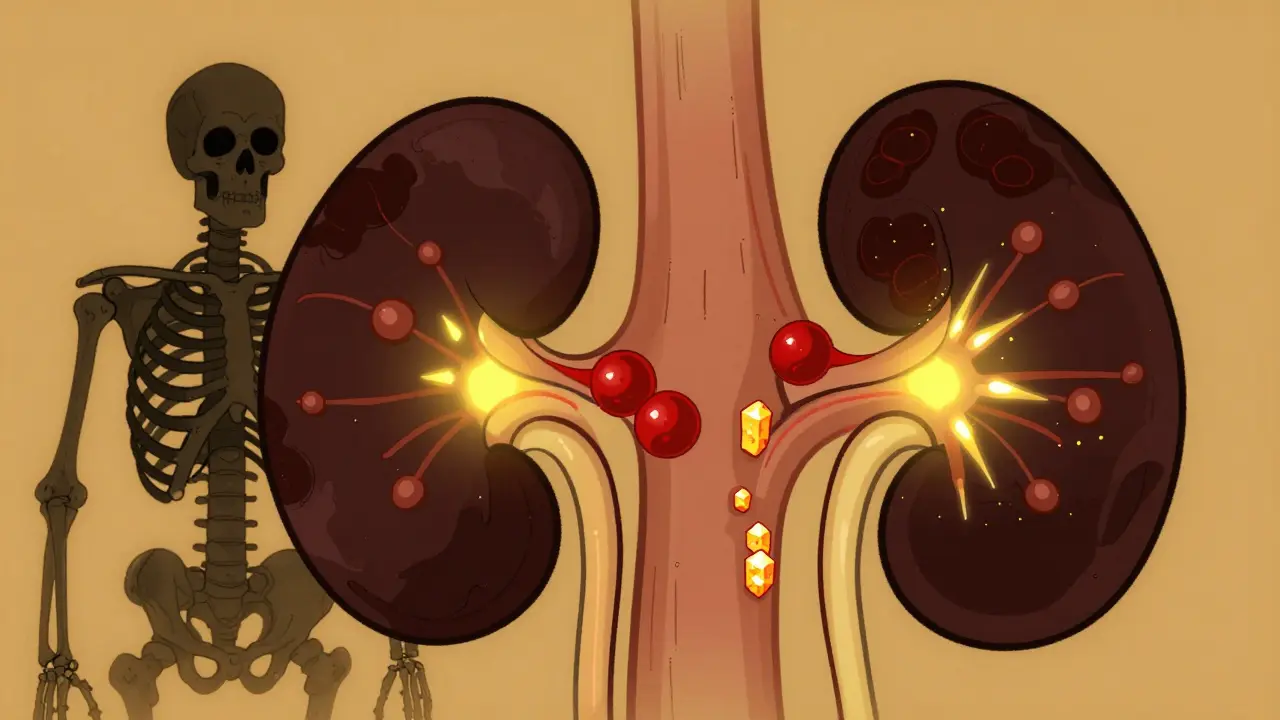
When your kidneys start to fail, they don’t just stop filtering waste. They also stop managing the minerals that keep your bones strong and your heart safe. This isn’t just about weak bones-it’s about a dangerous chain reaction involving calcium, parathyroid hormone (PTH), and vitamin D that can silently damage your heart, arteries, and skeleton. It’s called CKD-MBD-Chronic Kidney Disease-Mineral and Bone Disorder-and it affects nearly all patients with advanced kidney disease. Most people don’t hear about it until fractures happen or a scan shows their arteries are clogged with calcium. But it starts years before that.
How CKD-MBD Begins: The Silent Cascade
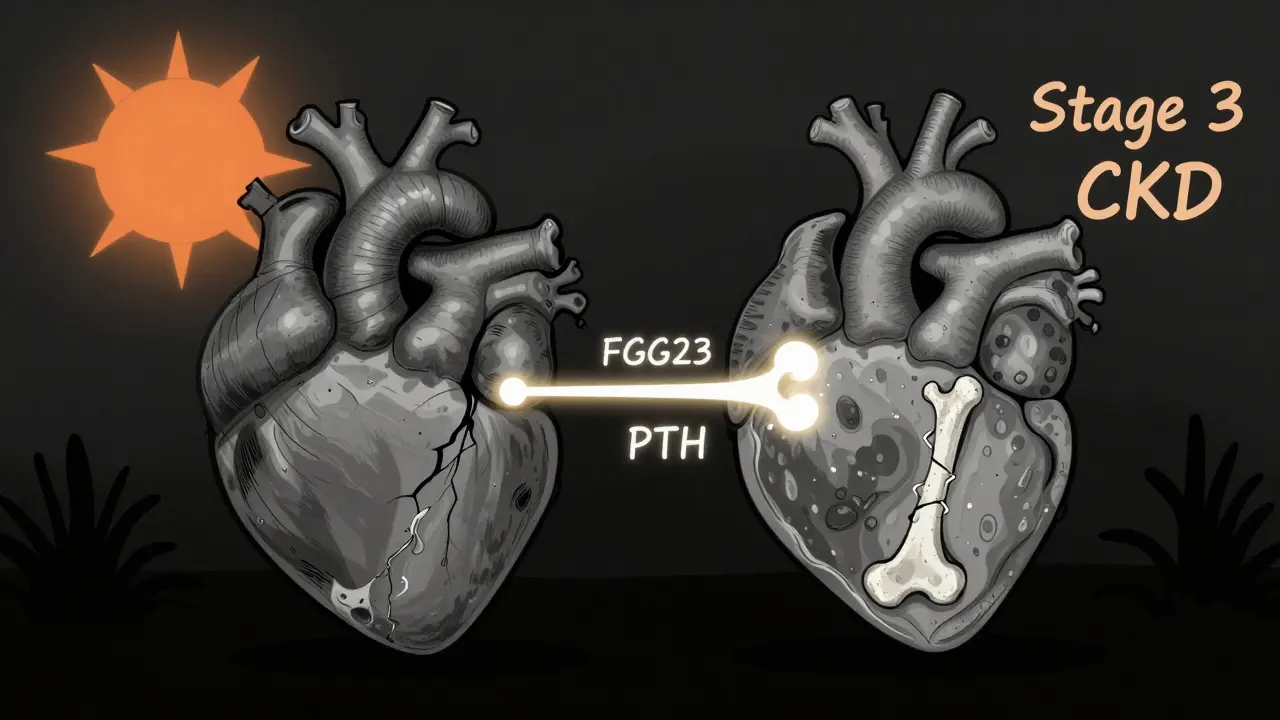
As kidney function drops below 60 mL/min (Stage 3 CKD), the first sign isn’t swelling or fatigue. It’s rising phosphate. Your kidneys can’t flush it out anymore, so it builds up in your blood. In response, bone cells release a hormone called FGF23, trying to force the kidneys to excrete more phosphate. But damaged kidneys can’t respond. FGF23 keeps climbing-sometimes 10 to 1000 times higher than normal.
This triggers a second problem: your kidneys stop making active vitamin D (calcitriol). Without it, your gut can’t absorb calcium from food. Blood calcium drops. Your parathyroid glands, sensing the drop, go into overdrive. They grow larger and pump out more PTH to pull calcium from your bones. This is called secondary hyperparathyroidism. At first, it’s a fix. But over time, it becomes the problem.
Here’s the twist: even with high PTH levels, your bones stop responding. Uremic toxins in your blood make bone cells resistant to PTH. So you have high PTH, but your bones aren’t being rebuilt properly. This is called functional hypoparathyroidism-a paradox where your body is screaming for help, but the signal isn’t getting through.
The Three Faces of CKD-MBD
CKD-MBD shows up in three ways: in your blood, your bones, and your blood vessels.
Biochemical chaos shows up in lab results: phosphate above 4.5 mg/dL, PTH above 70 pg/mL in Stage 3, and often over 300 pg/mL in dialysis patients. Vitamin D levels? Below 20 ng/mL in 80-90% of cases. These aren’t just numbers-they’re warning signs.
Bone damage comes in three forms. The oldest type, osteitis fibrosa cystica, is now rare. It happens when PTH is sky-high-over 500 pg/mL-and your bones are crumbling from constant breakdown. More common now is adynamic bone disease, where PTH is low (under 150 pg/mL) and bone turnover is almost stopped. Your bones look fine on a DEXA scan, but they’re brittle. Fractures happen with little or no trauma. Then there’s mixed disease, where both processes are happening at once.
Vascular calcification is the silent killer. Calcium and phosphate don’t just stick to bones-they stick to your arteries. By Stage 5D (dialysis), 75-90% of patients have visible calcification in their heart arteries. The calcium score in these patients is 3 to 5 times higher than in healthy people. Each year, their arteries calcify 15-20% faster. This isn’t just plaque. It’s hard, brittle deposits that stiffen the heart’s blood supply. That’s why heart disease causes half of all deaths in dialysis patients.
Why Normal Lab Ranges Don’t Apply
Doctors used to treat CKD-MBD by chasing every number into the “normal” range. That’s outdated-and dangerous. KDIGO guidelines now say: target, don’t normalize.
For phosphate, the goal isn’t 2.5-4.5 mg/dL like in healthy people. For dialysis patients, 3.5-5.5 mg/dL is acceptable. Too low? You risk malnutrition. Too high? You speed up heart damage. It’s a tight rope.
PTH targets are even more specific: 2 to 9 times the upper limit of your lab’s normal range. If your lab’s normal is 10-65 pg/mL, then your target is 130 to 585 pg/mL. Going below 100? You might be pushing your bones into adynamic disease. Going above 800? You’re at high fracture risk.
Vitamin D? Aim for 25-hydroxyvitamin D above 30 ng/mL. Not 20. Not 25. 30. That’s the level linked to lower death rates. And here’s something surprising: nutritional vitamin D (cholecalciferol) is now preferred over active forms like calcitriol-unless PTH is above 500 pg/mL. Why? Active forms raise calcium and phosphate, which can worsen calcification. Nutritional vitamin D lowers mortality by 15% without that risk.
Treatment: It’s Not Just Pills
Managing CKD-MBD isn’t about popping pills. It’s a three-part strategy: diet, binders, and drugs.
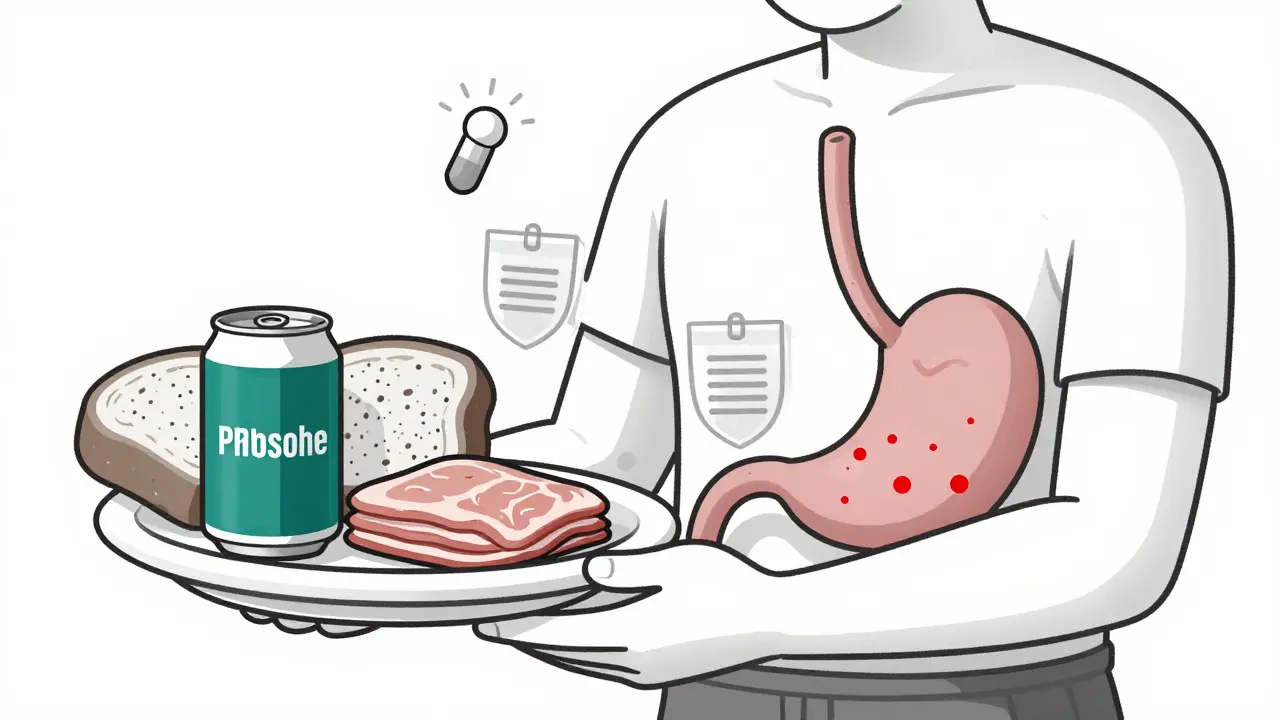
Dietary phosphate is the first line. But it’s tricky. You can’t just avoid dairy. Phosphate is hidden in processed foods-sodas, deli meats, frozen meals, even bread. The goal: 800-1000 mg per day. That’s less than one can of cola (40 mg per ounce). Most patients need help from a renal dietitian.
Phosphate binders are taken with every meal. Calcium-based binders (like calcium carbonate) are cheap but risky. Too much calcium adds to artery calcification. That’s why most guidelines limit calcium intake from binders to 1500 mg per day. Non-calcium binders like sevelamer or lanthanum are safer for the heart but cost more. They work by trapping phosphate in your gut before it gets absorbed.
Active vitamin D is used only when PTH is very high (over 500 pg/mL) and bone turnover is confirmed. Paricalcitol and calcitriol help suppress PTH but must be used carefully. Too much = high calcium = more calcification.
Calcimimetics like cinacalcet or etelcalcetide are game-changers. They trick the parathyroid gland into thinking blood calcium is higher than it is. That reduces PTH without raising phosphate or calcium. Cinacalcet cuts PTH by 30-50%. Etelcalcetide, an injectable form given after dialysis, works even better-up to 45% reduction. These are reserved for severe cases where PTH is over 800 pg/mL.
The New Frontier: Bone and Blood Vessels Are Connected
Doctors used to think bone disease and heart disease were separate. Now we know they’re the same disease, wearing different masks.
When bone formation slows (because of high sclerostin), calcium leaks into your blood. That calcium doesn’t vanish-it ends up in your arteries. When FGF23 rises, it doesn’t just hurt the kidneys-it directly causes heart muscle to thicken. And when vitamin D is low, your immune system goes haywire, fueling inflammation that speeds up both bone loss and artery damage.
This is why treating one piece fails. Lowering phosphate without fixing vitamin D? You’ll still get high PTH. Giving active vitamin D without controlling phosphate? You’ll calcify your heart faster. That’s why KDIGO says: integrated management is the only way.
What’s Changing in 2025?
The 2024 KDIGO draft guidelines are pushing for earlier action. Testing vitamin D and phosphate every 6-12 months should start in Stage 3 CKD-not Stage 5. Why? Because FGF23 rises 5 to 10 years before phosphate does. By the time phosphate is high, the damage is already underway.
New drugs are coming. Anti-sclerostin antibodies like romosozumab are in Phase 2 trials. They boost bone formation by blocking the signal that stops bone growth. In early studies, they increased bone density by 30-40% in CKD patients. Klotho replacement therapy is being tested in animals-and it cuts vascular calcification by 50-60%. Human trials are expected soon.
And the biggest shift? Recognizing that children with CKD aren’t just small adults. Their bones are still growing. By Stage 5, many are 1.5 to 2 standard deviations below average height. Aggressive vitamin D and phosphate control can help them grow closer to normal.
What You Can Do Today
If you have CKD, here’s what matters:
- Get your phosphate, calcium, PTH, and vitamin D checked every 3-6 months.
- Ask for a 25-hydroxyvitamin D test-don’t assume it’s normal.
- Work with a renal dietitian. Learn which foods hide phosphate.
- Don’t skip your phosphate binders. Take them with every bite of food.
- If your PTH is high, ask if a calcimimetic is right for you.
- Get a heart scan if you’re on dialysis. Coronary calcification is common and silent.
CKD-MBD isn’t a side effect of kidney disease. It’s part of the disease. Ignoring it means ignoring your heart, your bones, and your future. But with the right approach-early, balanced, and integrated-you can slow it down. Not cure it. But control it. And that’s enough to live longer, stronger, and with fewer fractures.
Is CKD-MBD the same as renal osteodystrophy?
No. Renal osteodystrophy only described bone changes in kidney disease. CKD-MBD is broader-it includes bone problems, abnormal calcium and phosphate levels, high PTH, low vitamin D, and dangerous calcium buildup in blood vessels and organs. The term changed in 2006 because doctors realized the heart and arteries are just as affected as the bones.
Can I fix CKD-MBD with supplements alone?
No. Taking vitamin D or calcium pills without controlling phosphate or PTH can make things worse. High calcium from supplements can speed up artery calcification. High phosphate from processed foods can overwhelm any supplement. CKD-MBD needs a full plan: diet, binders, medication, and regular monitoring. Supplements are just one piece.
Why are phosphate binders so important?
Because your kidneys can’t remove phosphate anymore. Even if you eat healthy, your body absorbs phosphate from processed foods, sodas, and even some medications. Binders stick to phosphate in your gut and flush it out in your stool. Without them, phosphate builds up, triggering high PTH, low vitamin D, and calcification. Taking them with every meal is non-negotiable.
Does low PTH mean my bones are healthy?
Not at all. Low PTH (under 150 pg/mL) often means you have adynamic bone disease-your bones aren’t remodeling at all. They look dense on scans, but they’re brittle and prone to fractures. This is common in patients over-treated with calcium binders or active vitamin D. Low PTH doesn’t mean improvement-it can mean danger.
Should I avoid calcium-rich foods completely?
No. You still need calcium for bone health. But you must control how much you get from supplements and binders. Natural sources like leafy greens, almonds, and fortified plant milks are safer than dairy and processed foods. The problem isn’t dietary calcium-it’s the extra calcium from binders and pills that builds up in your arteries. Focus on whole foods, avoid calcium-fortified processed foods, and never exceed 1500 mg of elemental calcium per day from all sources.
How often should I get tested for CKD-MBD?
Once you’re diagnosed with Stage 3 CKD or higher, get phosphate, calcium, PTH, and vitamin D checked every 3 to 6 months. If you’re on dialysis, monthly checks are common. Vitamin D should be tested at least once a year, even if you’re not on supplements. Early detection is the only way to prevent irreversible damage to your bones and heart.
Can CKD-MBD be reversed?
Some damage can be slowed or stabilized, but not fully reversed. Bone turnover can improve with better phosphate control and calcimimetics. Vascular calcification is harder to undo, but stopping its progression can cut your risk of heart attack in half. The goal isn’t perfection-it’s prevention. The earlier you act, the better your outcome.


Comments (12)