
When you start losing patches of hair-suddenly, without warning-it’s not just a cosmetic worry. It’s a shock. Alopecia areata hits hard because it doesn’t follow the rules of regular thinning. It doesn’t slowly recede. It just… disappears. And when that happens, people scramble for answers. One name keeps popping up: minoxidil topical.
What Is Alopecia Areata, Really?
Alopecia areata isn’t the same as male pattern baldness. It’s an autoimmune condition. Your immune system, for reasons doctors still don’t fully understand, starts attacking your hair follicles. The result? Round, smooth patches of hair loss on the scalp, eyebrows, beard, or even everywhere. Some people lose just one patch. Others lose all scalp hair (alopecia totalis) or every hair on their body (alopecia universalis).
This isn’t caused by stress, poor diet, or bad shampoo. It’s not contagious. And it doesn’t mean you’re unhealthy overall. But it can be emotionally devastating. Studies show that people with alopecia areata report anxiety and depression levels similar to those with chronic skin conditions like psoriasis. That’s why people try everything-from steroids to light therapy to supplements.
How Does Minoxidil Topical Work?
Minoxidil was originally developed in the 1970s as a blood pressure medication. Then, doctors noticed patients taking it started growing more body hair. That accidental discovery led to its use as a topical treatment for hair loss. Today, it’s sold under brand names like Rogaine and as generic solutions or foams.
It doesn’t stop your immune system from attacking your follicles. Instead, it tricks them into thinking they’re in growth mode. Minoxidil opens potassium channels in hair follicle cells, which increases blood flow and extends the anagen (growth) phase. It doesn’t cure the root cause-but it can help hair regrow even when the immune system is still active.
It’s FDA-approved for androgenetic alopecia (pattern hair loss). But it’s not approved for alopecia areata. That doesn’t mean it doesn’t work-it just means the studies aren’t as large or definitive.
What Does the Evidence Say for Alopecia Areata?
A 2023 meta-analysis in the Journal of the American Academy of Dermatology reviewed 12 clinical trials involving over 600 patients with mild to moderate alopecia areata. The results showed that about 40% of people using 5% minoxidil topical saw at least 50% regrowth after six months. That’s compared to only 15% in the placebo group.
Another study from 2022 tracked 87 adults with patchy alopecia areata. After 12 weeks of using 5% minoxidil twice daily, 68% showed visible regrowth. The best results? People under 40, with less than 50% scalp involvement, and who’d had hair loss for less than a year.
It’s not magic. Minoxidil doesn’t work for everyone. Some see nothing. Others get fine, pale fuzz that never thickens. But for a lot of people, it’s the first thing that actually moves the needle.
How to Use Minoxidil Topical for Alopecia Areata
If you’re going to try it, do it right. Here’s what works based on real-world use and clinical guidance:
- Use the 5% solution or foam. The 2% version is designed for women with pattern hair loss and is too weak for alopecia areata.
- Apply once or twice daily directly to the affected areas. Don’t rub it in-just dab it on. You don’t need to cover your whole scalp.
- Let it dry completely before touching your hair or lying down. It can stain pillowcases and clothes.
- Be consistent. Missing doses slows results. You won’t see anything for at least 8-12 weeks.
- Don’t wash your hair for 4 hours after applying. That’s how long it takes to absorb.
Some people combine minoxidil with corticosteroid injections or topical steroids. That combo often works better than either alone. A 2021 trial showed 72% of patients using both saw significant regrowth, compared to 48% using minoxidil alone.
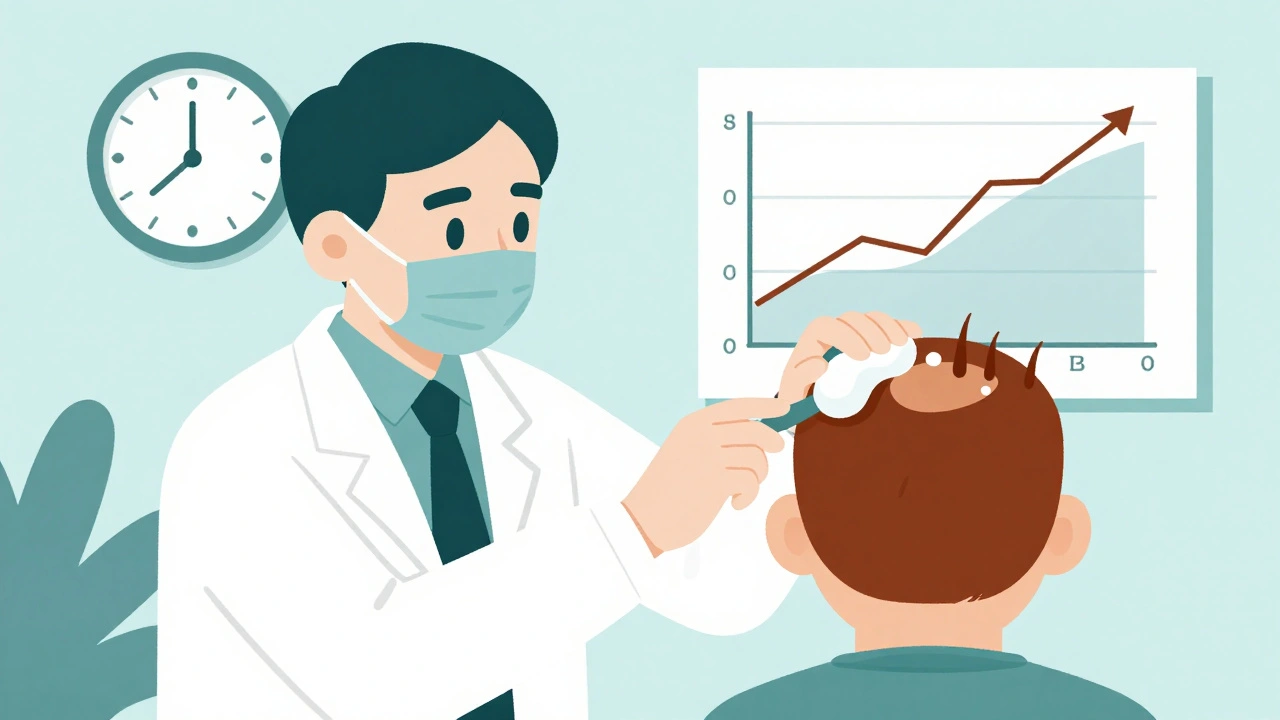
Side Effects and Risks
Minoxidil is generally safe. But it’s not harmless.
- Scalp irritation, itching, or redness is common-especially at first. Switching to the foam version (which has no propylene glycol) often helps.
- Unwanted hair growth on the face or neck? Rare, but possible. It’s usually temporary and fades if you stop.
- Some report dizziness or heart palpitations. That’s extremely rare with topical use, but if you have heart problems, talk to your doctor first.
- It won’t cause hair loss worse than before. But if you stop using it, any regrown hair will likely fall out within 3-6 months.
It’s not a long-term fix unless you keep using it. That’s the trade-off: daily application for as long as you want results.
Who Should Avoid It?
Minoxidil topical isn’t for everyone:
- Children under 18-safety data is limited.
- Pregnant or breastfeeding women-while studies haven’t shown harm, doctors usually advise against it.
- People with open sores or severe scalp inflammation-apply only to healthy skin.
- Those with rapidly progressing or extensive hair loss-minoxidil alone may not be enough.
If you’ve lost more than half your scalp hair or have had it for over two years, minoxidil is less likely to help. That’s when you need stronger options like immunotherapy or JAK inhibitors.
Alternatives to Minoxidil Topical
It’s not the only tool in the box. Here’s what else works:
- Corticosteroid injections: The gold standard for patchy alopecia. Done every 4-6 weeks by a dermatologist. Fast results, but painful and not for large areas.
- Topical immunotherapy (DPCP or SADBE): Applied weekly to trigger a controlled allergic reaction that redirects the immune system. Works for many, but takes months and causes skin irritation.
- JAK inhibitors (like baricitinib): Oral pills approved in the U.S. and EU for severe alopecia areata. Can regrow hair in 6-12 weeks. But they’re expensive and carry risks like infections and blood clots.
- Low-level laser therapy: Devices like the iRestore helmet show modest results in small studies. Might help as a support tool, not a standalone fix.
Many people use minoxidil alongside these. It’s not an either/or situation. It’s often part of a layered approach.
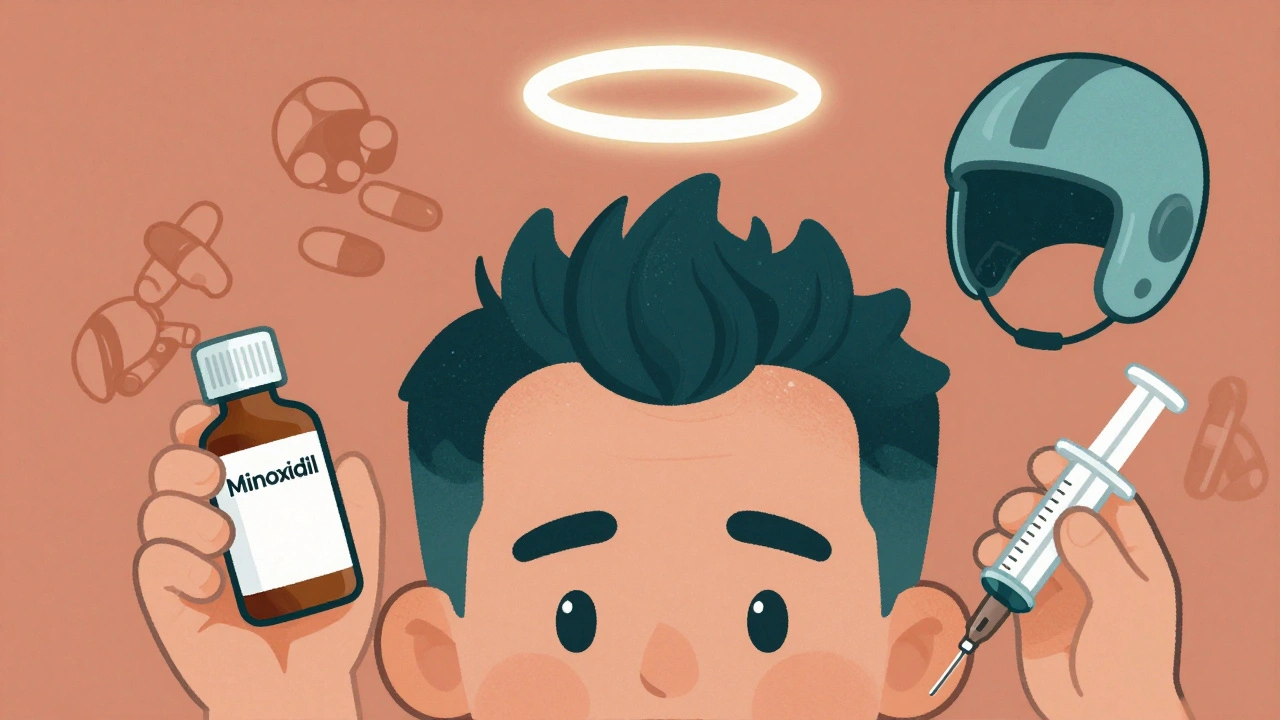
Real Results: What to Expect
One patient, 32, from Johannesburg, started using minoxidil after losing two large patches on her scalp. She used it daily for 6 months. At first, nothing. Then, soft, white fuzz appeared. By month 8, the fuzz turned into darker, thicker hair. She didn’t get back 100%-but she got enough to feel confident again.
Another man, 45, tried it for 10 months. His beard patch came back, but his scalp didn’t. He stopped. His dermatologist told him that’s normal-hair follicles in different areas respond differently.
There’s no guarantee. But for many, minoxidil topical is the most accessible, affordable, and least invasive option that actually has data behind it.
When to See a Dermatologist
You don’t need to wait until you’re desperate. If you notice sudden hair loss in patches, see a dermatologist within 4-6 weeks. Early treatment improves outcomes. They can confirm it’s alopecia areata (not fungal infection or traction alopecia) and recommend a plan.
Don’t self-diagnose. Some conditions look like alopecia areata but need completely different treatments. A biopsy or dermoscopy can rule out other causes in minutes.
If you’ve tried minoxidil for 6 months with no change, it’s time to talk about stronger options. Don’t keep applying it hoping for results that won’t come.
Final Thoughts
Minoxidil topical isn’t a cure for alopecia areata. But it’s one of the few treatments that actually helps regrow hair in a significant number of people. It’s not flashy. It doesn’t promise miracles. It’s just a daily step that, for many, leads to real change.
If you’re willing to stick with it, give it at least 6 months. Use the 5% strength. Apply it faithfully. And pair it with professional care. It won’t work for everyone-but for enough people, it’s the difference between hiding your scalp and seeing your reflection without fear.
Can minoxidil topical cure alopecia areata?
No, minoxidil topical does not cure alopecia areata. It doesn’t stop the immune system from attacking hair follicles. Instead, it helps stimulate hair regrowth in some people by extending the growth phase of existing follicles. Hair loss often returns if you stop using it.
How long does it take for minoxidil to work on alopecia areata?
Most people don’t see results until 3-6 months of daily use. Some notice fine, light fuzz around 8-12 weeks, but thicker, darker hair takes longer. Patience is key-stopping too early means missing potential results.
Is 5% minoxidil better than 2% for alopecia areata?
Yes. Studies show 5% minoxidil is significantly more effective than 2% for alopecia areata. The 2% version is designed for female pattern hair loss and lacks the strength needed for autoimmune-related hair loss. Stick with 5% for best results.
Can I use minoxidil with steroid injections?
Yes. Many dermatologists recommend combining minoxidil with corticosteroid injections. The injections suppress the immune attack locally, while minoxidil boosts regrowth. Together, they often produce better results than either alone.
Will minoxidil work if I’ve had alopecia areata for more than 2 years?
The longer you’ve had alopecia areata, the less likely minoxidil is to work. After 2 years, hair follicles may become inactive or damaged. Success rates drop significantly. In long-standing cases, other treatments like JAK inhibitors or immunotherapy are more appropriate.
Does minoxidil cause permanent side effects?
No. Side effects like scalp irritation, itching, or unwanted facial hair are temporary and go away after stopping use. There’s no evidence minoxidil causes permanent damage to hair follicles or skin. The main risk is losing regrown hair if you discontinue treatment.
Is minoxidil safe for children with alopecia areata?
There’s limited safety data for children under 18. Most dermatologists avoid prescribing it for kids unless other treatments have failed. For younger patients, topical steroids or light therapy are usually tried first.
Can I use minoxidil if I’m pregnant?
While no major studies show harm, most doctors recommend avoiding minoxidil during pregnancy and breastfeeding. The medication can be absorbed through the skin, and its effects on fetal development aren’t fully understood. Always consult your doctor before using it.


Comments (8)