Scopolamine Interaction Risk Calculator
Calculate Your Risk Level
Enter your current medications and habits to determine if scopolamine is safe for you.
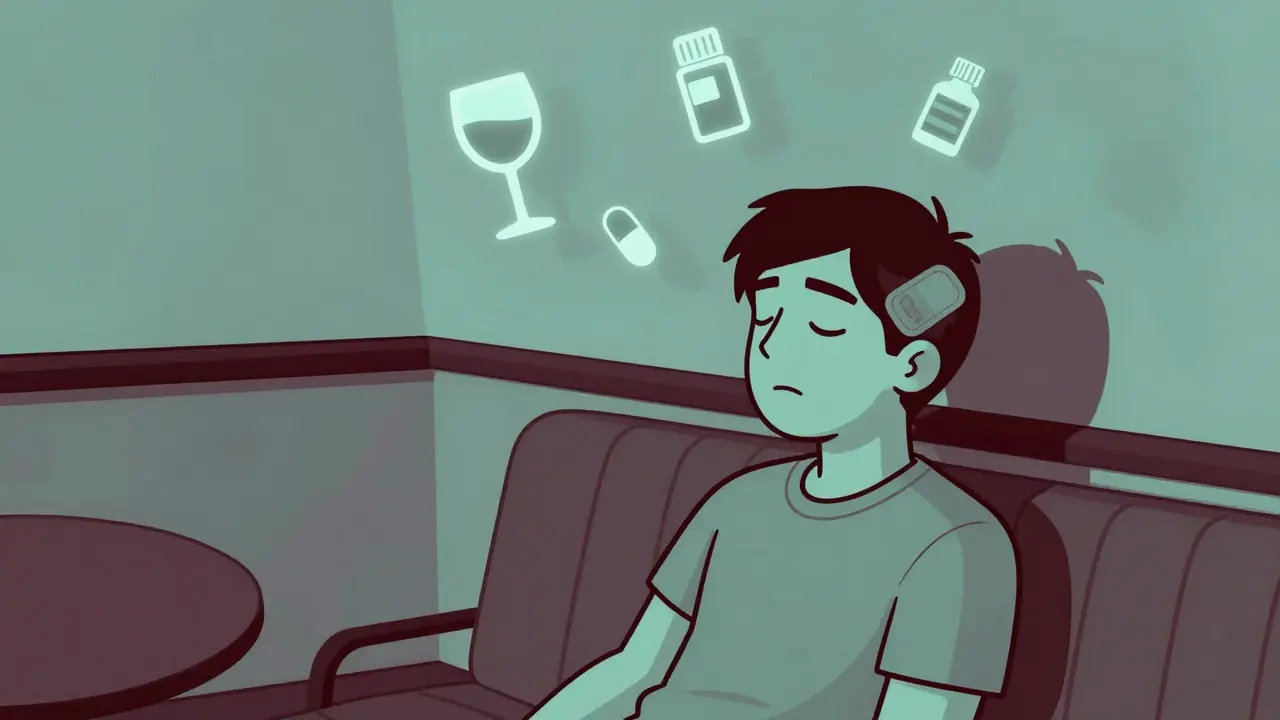
Most people know motion sickness as that dizzy, nauseous feeling when you’re on a boat, plane, or even just riding in a car. But what if the medicine meant to stop it makes you feel worse? That’s where scopolamine comes in - a powerful tool for preventing motion sickness, but one that doesn’t play nice with other sedatives. If you’ve ever worn a patch behind your ear and felt like you were floating through a fog, you’re not alone. And if you had a drink, took a sleeping pill, or tried CBD afterward? You might’ve been in danger without even knowing it.
How Scopolamine Actually Works
Scopolamine, also called hyoscine, is one of the oldest and most effective drugs for stopping motion sickness. It’s been used since the early 1900s, originally pulled from plants like henbane and Jimsonweed. Today, it’s mostly delivered through a small patch you stick behind your ear. The patch releases about 0.5 mg of scopolamine per day over three days, slowly getting into your bloodstream. It doesn’t just block nausea - it blocks the signals your brain gets from your inner ear telling you you’re moving when you’re not. That’s why it works so well for cruise ships, long flights, and even military aviation.
Unlike oral meds like Dramamine or Bonine, which you have to take every few hours, the patch lasts 72 hours. That’s why it’s the top choice for sailors, pilots, and people on multi-day trips. But here’s the catch: scopolamine doesn’t just work on your stomach. It crosses the blood-brain barrier and messes with your central nervous system. That’s why you get drowsy. Why your vision blurs. Why your mouth feels like a desert. These aren’t random side effects - they’re the direct result of how the drug shuts down acetylcholine, a key brain chemical.
Why Sedatives Make Scopolamine Dangerous
Scopolamine alone can make you sleepy. Add alcohol, benzodiazepines, opioids, or even over-the-counter sleep aids, and that drowsiness doesn’t just double - it multiplies. Studies show the risk of severe respiratory depression jumps 3.2 times when scopolamine is combined with other CNS depressants. That’s not a small increase. That’s life-threatening.
It’s not just about falling asleep. In older adults, mixing scopolamine with sedatives increases the chance of delirium by 40%. Imagine being on a cruise, wearing the patch, having a glass of wine at dinner, and suddenly not recognizing your spouse. That’s not a bad trip - that’s a medical emergency. The European Medicines Agency and the American Society of Anesthesiologists both warn against this combo, especially for anyone over 65.
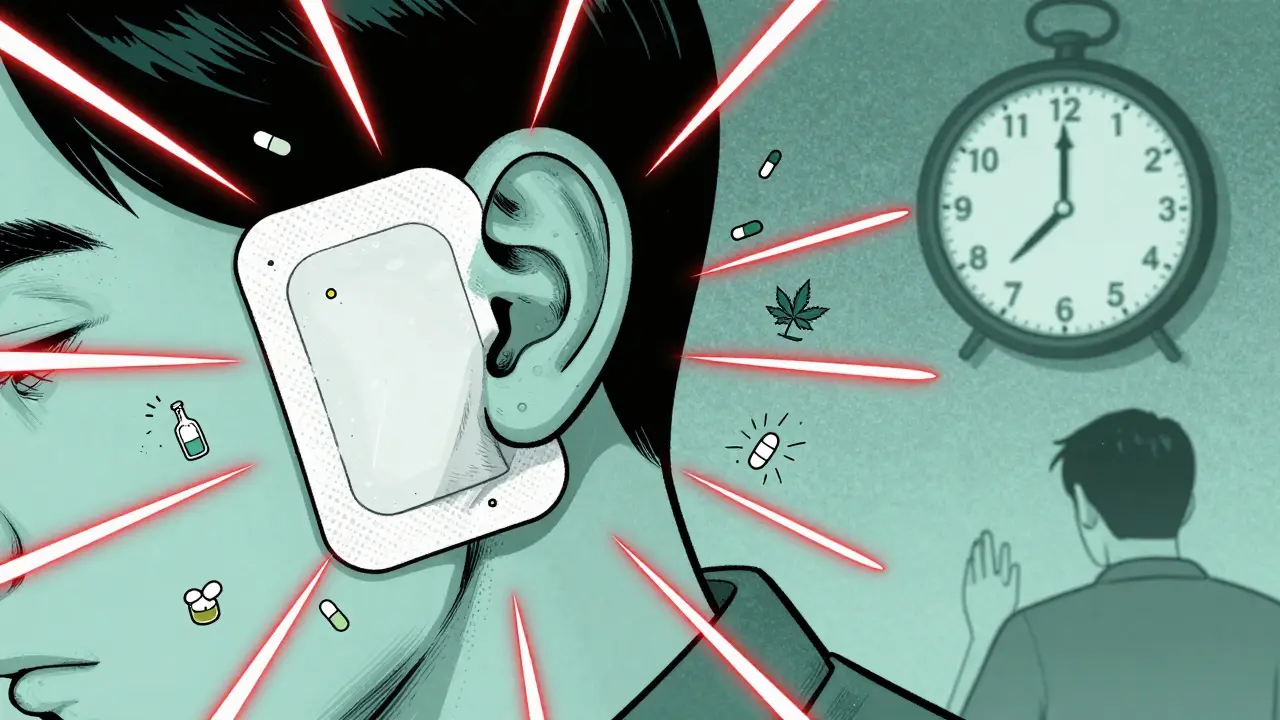
Even CBD, which many think is harmless, can make things worse. New research from late 2023 shows CBD may inhibit the liver enzyme CYP3A4, which breaks down scopolamine. That means more of the drug stays in your system longer, increasing sedation by up to 35%. People using CBD for anxiety or pain might not realize they’re turning a manageable side effect into a dangerous one.
Real People, Real Consequences
Online forums are full of stories. On Reddit, a thread from September 2023 with nearly 300 comments showed 68% of users felt knocked out by the patch. One user, CruiseLover87, said they had to rip the patch off after one day because they couldn’t stay awake. Another, MarineBio, who’s been using it for 12 years on research vessels, said they’ve seen colleagues become severely disoriented after just one beer. That’s not exaggeration - it’s documented risk.
But not all stories are bad. Some people love the sedation. SailorMike42 on Amazon said the drowsiness helped him sleep through rough seas instead of lying awake sick. For him, the side effect was a feature. But here’s the problem: you can’t control it. Once the patch is on, you can’t turn off the effect like you can with a pill. You’re stuck with it for three days. If you didn’t know how strong it would be, you might not realize you’ve made a mistake until it’s too late.

What You Should Do Before Using It
If you’re thinking about using a scopolamine patch, here’s what you need to do first:
- Don’t use it if you have glaucoma, myasthenia gravis, or a blockage in your gut. These are absolute no-gos.
- Apply it at least 4 hours before travel. It takes time to kick in. Don’t wait until you’re already nauseous.
- Put it behind your ear on clean, dry skin. Oily or sweaty skin reduces absorption.
- Avoid alcohol, sleeping pills, anti-anxiety meds, and opioids. Even one drink can be risky.
- Don’t drive, operate machinery, or make important decisions for the first 24 hours. Your reaction time is slower than you think.
- Test it at home first. Put the patch on the night before your trip. See how you feel while sleeping. If you wake up groggy or confused, you’re not a good candidate.
The American Academy of Neurology actually recommends this exact approach: apply it the night before so you experience the sedation while you’re already lying down. That way, you won’t be caught off guard.
What If You Already Took It and Feel Too Drowsy?
If you’ve already applied the patch and you’re feeling too out of it, the only reliable fix is to remove it. Symptoms usually start fading within 12 hours and are mostly gone in 24. Don’t try to “sleep it off” if you’re confused or having trouble breathing. Get help. Don’t wait.
Some people try cutting the patch in half to reduce the dose. But that’s not approved. The patch is designed to release a specific amount over time. Cutting it might cause uneven dosing or skin irritation. It’s not worth the risk.
New Developments - Is There a Better Way?
The FDA approved a new lower-dose scopolamine patch in April 2024 - 0.5 mg over 3 days instead of the old 1 mg. Early data suggests it cuts sedation without losing effectiveness. That’s promising.
Researchers are also testing a patch that slowly releases caffeine along with scopolamine to counteract drowsiness. A Phase III trial is underway and results are expected in late 2025. If it works, it could change everything.
There’s also a new drug called penehyclidine hydrochloride, which seems to block nausea just as well as scopolamine but with 37% less sedation. But it’s not available yet. For now, scopolamine remains the gold standard - not because it’s perfect, but because nothing else works as reliably.
The Bottom Line
Scopolamine is incredibly effective. But it’s not a casual drug. It’s a powerful tool that demands respect. If you’re planning a long trip and motion sickness has ruined your past vacations, it might be worth trying. But if you take any other sedatives - even occasionally - or drink alcohol, think twice. The interaction isn’t just inconvenient. It’s dangerous.
Don’t assume you’ll be fine because “it worked for someone else.” Your body reacts differently. Your age, weight, liver function, and other meds all matter. Talk to your doctor. Read the label. And if you’re unsure, skip it. There are alternatives - like ginger supplements, acupressure bands, or even meclizine - that won’t leave you helpless.
Motion sickness is frustrating. But losing control of your mind or breathing because of a drug interaction? That’s not worth the trade-off.
Can I drink alcohol while wearing a scopolamine patch?
No. Combining alcohol with a scopolamine patch can lead to severe drowsiness, confusion, slowed breathing, or even loss of consciousness. Even one drink can double the sedative effect. This combination is especially dangerous for older adults and has been linked to hospitalizations. Avoid all alcohol for at least 24 hours before and after using the patch.
How long does scopolamine stay in your system?
Scopolamine has a half-life of 4 to 6 hours, meaning half of it leaves your body in that time. But because the patch delivers it slowly over three days, the effects can last up to 24-48 hours after removal. Most people feel back to normal within 24 hours of taking the patch off, but some, especially older adults, may feel foggy for up to 72 hours.
Is scopolamine safe for older adults?
It carries higher risks for people over 65. The drug can cause delirium, confusion, urinary retention, and falls. The American Society of Anesthesiologists specifically advises against its use in elderly patients unless no alternatives exist and under close supervision. Many doctors now avoid prescribing it to seniors altogether.
Can I use scopolamine with CBD or marijuana?
Not safely. CBD inhibits liver enzymes that break down scopolamine, leading to higher drug levels in your blood. Early data shows this can increase sedation by 22-35%. If you use CBD for pain, anxiety, or sleep, combining it with scopolamine could leave you dangerously drowsy. Avoid this combo unless under direct medical supervision.
What should I do if I feel too drowsy after applying the patch?
Remove the patch immediately. Symptoms usually improve within 12 hours and resolve fully in 24-48 hours. Do not drive, operate machinery, or make important decisions until you feel completely alert. If you experience trouble breathing, extreme confusion, or hallucinations, seek emergency medical help.
Are there safer alternatives to scopolamine?
Yes. Meclizine (Bonine) and dimenhydrinate (Dramamine) are oral options with fewer sedative interactions. They require more frequent dosing but are easier to control. Non-drug options like ginger capsules, acupressure wristbands, and staying hydrated also help many people. For short trips, these are often better choices than the patch.


Comments (9)