Statin Muscle Pain Risk Calculator
Assess Your Statin Muscle Pain Risk
This tool helps you understand your personal risk of statin-related muscle symptoms based on key factors. Results are for informational purposes only and should not replace medical advice.
Your Risk Assessment
Statins Save Lives - But Many People Stop Taking Them Because of Muscle Pain
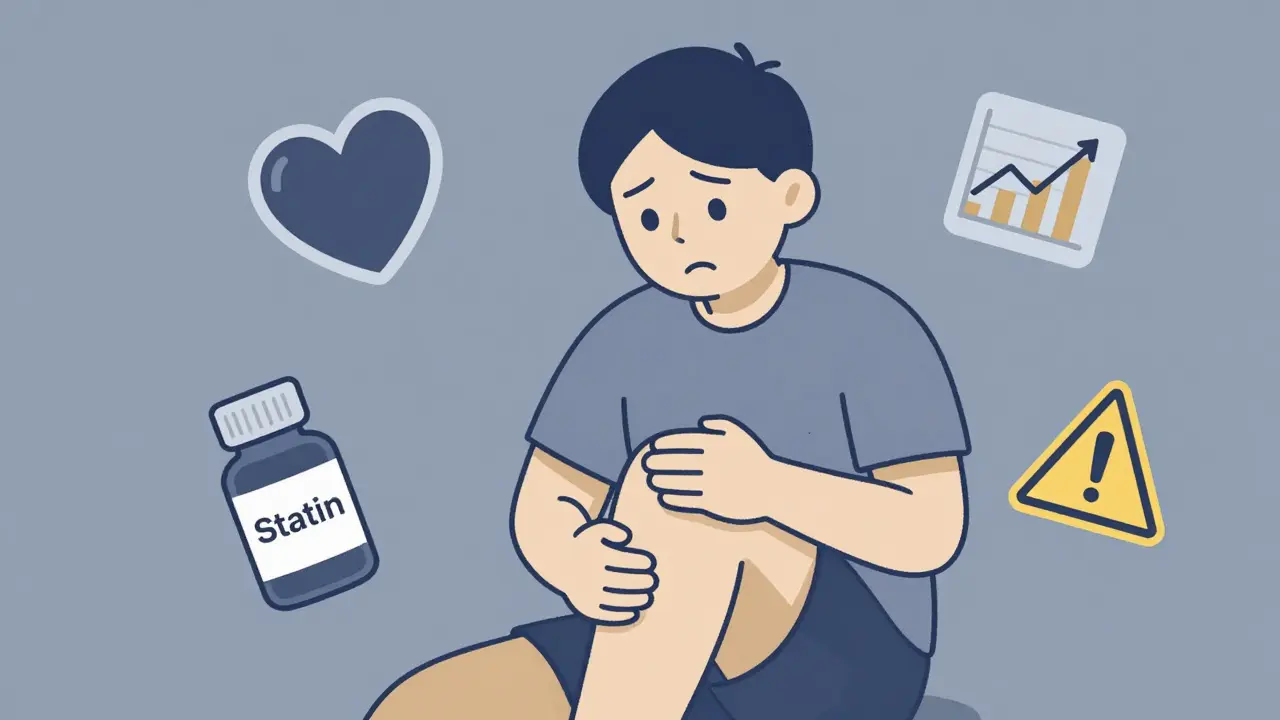
You’re taking a statin because your doctor told you it lowers your risk of a heart attack or stroke. That’s a good thing. Statins have been shown to cut cardiovascular events by 25% to 35% in people with high cholesterol or other risk factors. But now you’re feeling it - a dull, constant ache in your thighs, shoulders, or calves. It’s not sharp. It’s not from exercise. It’s just… there. And it’s making you wonder: is this the statin?
The truth? Muscle pain is the most common reason people stop taking statins. But here’s what most people don’t know: many of those aches aren’t actually caused by the drug. Studies show that up to 30% of people say they have muscle pain on statins, but when tested in blinded trials - where patients don’t know if they’re taking the real drug or a sugar pill - the pain rates are nearly identical. That’s the nocebo effect: expecting side effects makes you more likely to notice and report them.
Still, some people really do have real, drug-related muscle issues. And if you’re one of them, you need to know what to do next - without putting your heart at risk.
What Kind of Muscle Pain Are You Feeling?
Not all muscle discomfort is the same. Statin-related muscle symptoms fall into a clear spectrum:
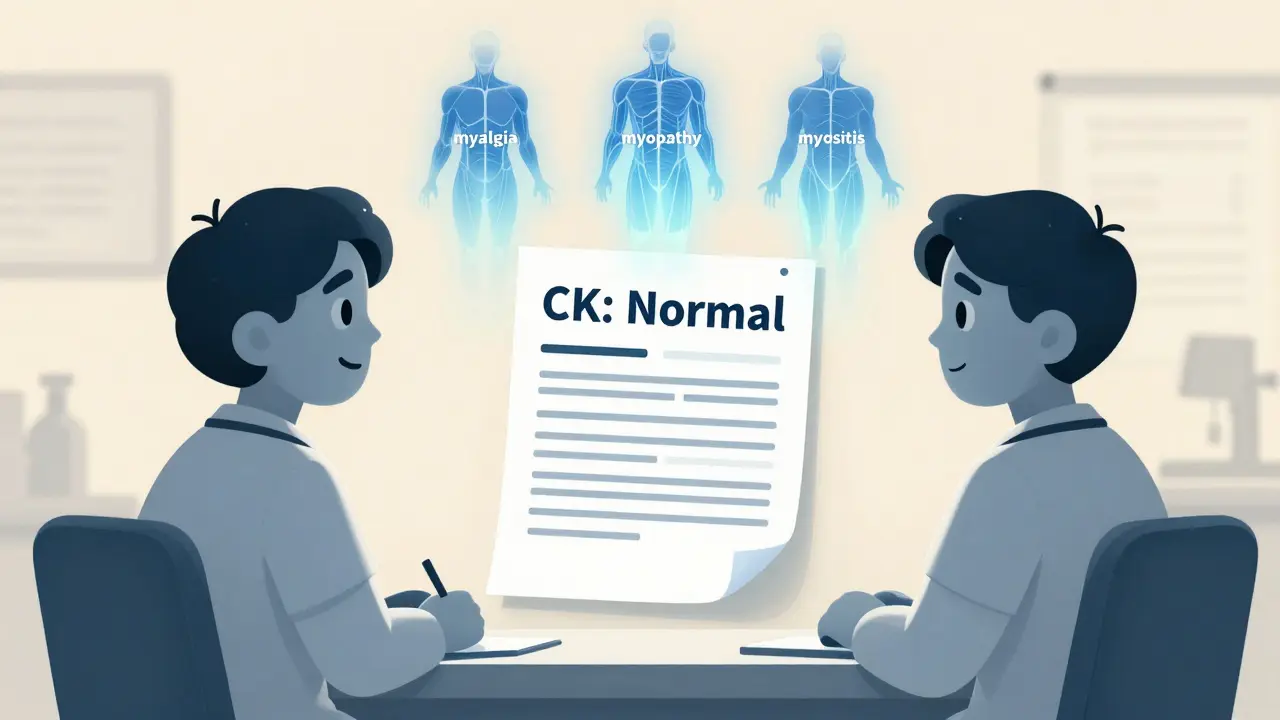
- Myalgia: Muscle aches or soreness without any rise in creatine kinase (CK), a muscle enzyme. This is the most common. It feels like a deep, persistent soreness, often in both legs or both shoulders. It doesn’t come and go with activity.
- Myopathy: Muscle weakness along with pain. You might notice climbing stairs is harder, or your arms feel heavy lifting groceries.
- Myositis: Inflammation of the muscle tissue. This is rarer and usually shows up with elevated CK levels.
- Rhabdomyolysis: The rarest - and most dangerous. Muscle cells break down, releasing proteins into the blood that can damage your kidneys. Symptoms include severe pain, dark urine (like cola), and extreme weakness. This happens in fewer than 1 in 10,000 people per year on statins.
Most people who complain of muscle pain have myalgia. If you’re just feeling sore and not weak, and your urine looks normal, you’re likely not in danger. But you still need to check it out.
Who’s More Likely to Get Statin Muscle Pain?
It’s not random. Certain factors make muscle pain more likely:
- Age 80+: Risk jumps by about 30%. Older muscles are more sensitive.
- Small body size: Women under 100 lbs have a 25% higher chance. Lower body weight means higher drug concentration per pound.
- Female gender: Women report muscle symptoms 40% more often than men. Partly because they’re often older when starting statins, and more likely to have undiagnosed hypothyroidism, which doubles the risk.
- Other health issues: Kidney disease, liver problems, or an underactive thyroid all make muscle side effects more likely.
- Other meds: Taking fibrates (like gemfibrozil), certain antibiotics (like erythromycin), or cyclosporine can spike statin levels in your blood - and your risk.
- High-dose statins: Atorvastatin 80 mg or rosuvastatin 40 mg carry about 15% higher risk than lower doses.
If you’re a woman over 70, on a high dose, with thyroid issues, and taking another med - you’re in the highest-risk group. That doesn’t mean you can’t take statins. It means you need to be monitored more closely.
What Should You Do If You Have Muscle Pain?
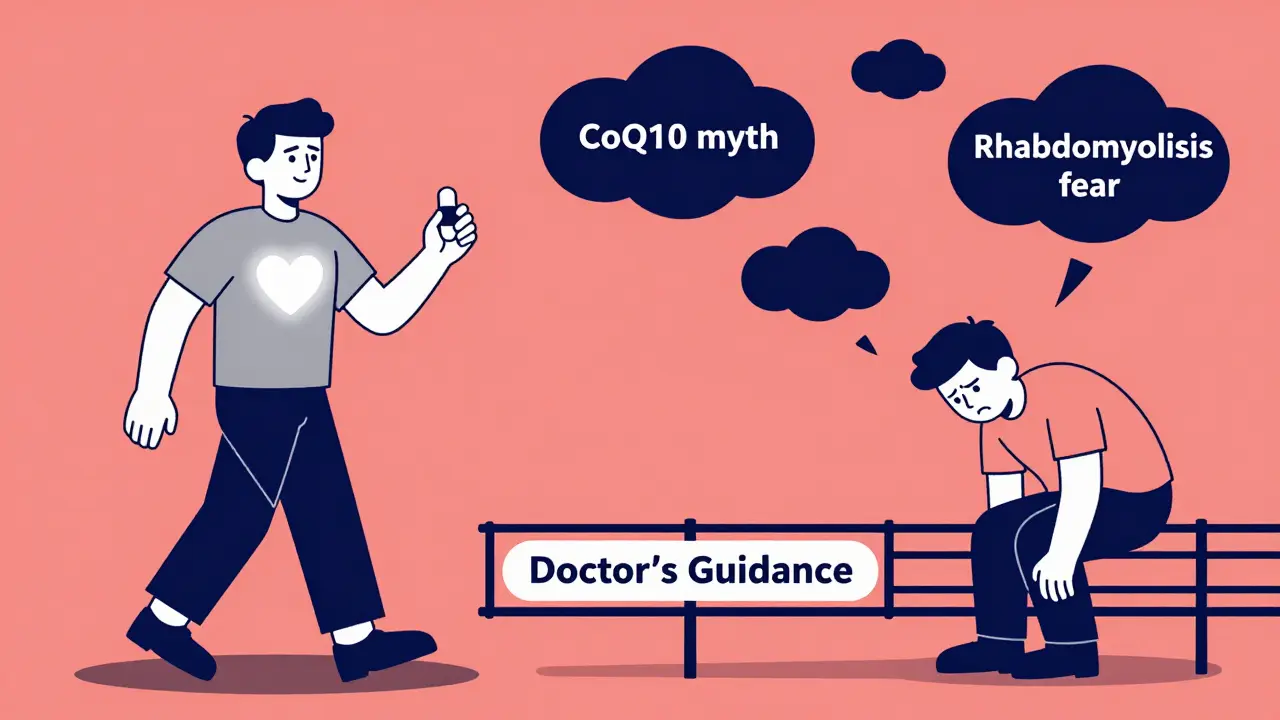
Don’t stop the statin on your own. Stopping without medical advice increases your heart attack risk by 25% to 50% within two years. Here’s what to do instead:
- Call your doctor. Don’t wait. Tell them exactly where the pain is, how long it’s lasted, and if you’ve noticed weakness or dark urine.
- Get a blood test. Your doctor will check your creatine kinase (CK) levels. If CK is more than 10 times the normal limit (over 1,900 U/L), you likely need to stop the statin immediately. If it’s only slightly elevated, they may just adjust your dose.
- Take a short break. Your doctor might suggest stopping the statin for 4 to 6 weeks. If the pain fades during that time, it’s a strong clue the statin was the cause.
- Try a different statin. Not all statins are the same. Pravastatin and fluvastatin are less likely to cause muscle issues. Switching to one of these helps about 60% of people who had problems with another statin.
- Go back on a lower dose. Many people can tolerate half the original dose. For example, if you were on atorvastatin 40 mg, try 10 mg. You still get most of the heart protection.
Some doctors will do a rechallenge: you restart the statin at a low dose and slowly increase it. If the pain returns, you know it’s the drug. If it doesn’t, you’re probably safe.
What About CoQ10 or Other Supplements?
You’ve probably heard that Coenzyme Q10 (CoQ10) helps with statin muscle pain. The theory? Statins lower CoQ10, which your muscles need for energy. So supplementing should fix it.
But the science doesn’t back it up strongly. A 2015 review of 12 studies found no significant benefit over placebo. A 2018 study did show improvement in 45% of people who took CoQ10, but that’s still less than half. It’s not a guaranteed fix.
That said, if your doctor says it’s safe and you want to try it, go ahead. It’s generally harmless. But don’t expect miracles. And never use it as a reason to keep taking a statin that’s clearly causing you pain.
What If You Can’t Tolerate Any Statin?
If you’ve tried different statins, lower doses, and still can’t take them - you’re not out of options. There are non-statin drugs that lower cholesterol too:
- Ezetimibe: Works by blocking cholesterol absorption in the gut. It’s taken as a pill, costs about $15 a month, and reduces LDL by 15-20%. Often combined with a low-dose statin.
- PCSK9 inhibitors (alirocumab, evolocumab): Injectable drugs given every 2 or 4 weeks. They drop LDL by 50-60%. But they cost about $5,000 a year - unless you have good insurance or qualify for patient assistance.
- Bempedoic acid: A newer oral pill that works similarly to statins but in a different part of the liver. It’s less likely to cause muscle pain and lowers LDL by 20-30%.
These aren’t as widely used as statins - but they’re real alternatives. And for people who truly can’t tolerate statins, they can still cut heart attack risk by 15% to 25%.
Why Most People Should Stay on Statins - Even With Aches
Let’s be clear: the benefits of statins far outweigh the risks for nearly everyone. A 2023 analysis of 21 studies found that for every 1 mmol/L drop in LDL cholesterol, major heart events drop by 29%. That’s huge.
Most people who say they have muscle pain from statins can actually stay on them - with the right approach. The 2023 Joint ACC/AHA Expert Panel says that with proper evaluation and personalized care, 80% to 90% of people who initially quit statins due to muscle pain can get back on them successfully.
That means: your pain is real, but it’s not always the drug. Your doctor isn’t dismissing you. They’re trying to protect your heart - and help you feel better.
Bottom Line: Don’t Quit. Get Tested. Try Again.
If you’re having muscle aches on a statin:
- Don’t stop cold turkey.
- Don’t assume it’s the statin - get your CK checked.
- Don’t give up on statins. Try a different one, a lower dose, or a different schedule.
- Don’t ignore the risk of stopping - heart attacks don’t wait.
Statins are one of the most studied drugs in history. They work. And for most people, the muscle pain is manageable - not a dealbreaker. Talk to your doctor. Get the right tests. Give yourself a fair shot. Your heart will thank you.
Is muscle pain from statins always serious?
No. Most muscle pain from statins is mild and doesn’t involve muscle damage. It’s called myalgia - just soreness without elevated enzymes. Only if you have severe weakness, dark urine, or creatine kinase levels over 10 times normal is it considered dangerous (rhabdomyolysis), which is extremely rare.
Can I take CoQ10 to stop statin muscle pain?
Some people report feeling better with CoQ10, but studies show mixed results. A major 2015 review found no clear benefit over placebo. It’s safe to try, but don’t rely on it as a fix. It won’t replace the need to adjust your statin dose or switch medications if needed.
How long does it take for muscle pain to go away after stopping statins?
For most people, muscle aches improve within 2 to 4 weeks after stopping the statin. In some cases, it can take up to 6 weeks. If pain persists beyond that, it’s likely not caused by the statin - and you should check for other causes like thyroid issues, vitamin D deficiency, or arthritis.
Are some statins less likely to cause muscle pain?
Yes. Pravastatin and fluvastatin are associated with the lowest risk of muscle side effects. Rosuvastatin and atorvastatin carry higher risk, especially at high doses. If you’ve had muscle pain with one statin, switching to pravastatin often helps - about 60% of the time.
What if I can’t tolerate any statin? Are there other options?
Yes. Ezetimibe is an oral pill that lowers LDL by 15-20% and costs about $15 a month. PCSK9 inhibitors (alirocumab, evolocumab) are injectables that lower LDL by 50-60%, but cost around $5,000 a year. Bempedoic acid is a newer oral option with lower muscle risk. These aren’t first-line, but they’re effective alternatives for those who truly can’t take statins.
Will stopping statins for muscle pain increase my risk of a heart attack?
Yes. Stopping statins without medical supervision increases your risk of heart attack or stroke by 25% to 50% within two years. That’s why it’s critical to work with your doctor - don’t quit on your own. There are almost always ways to keep you on therapy safely.
Next Steps: What to Do Today
If you’re on a statin and feeling muscle pain:
- Write down your symptoms: where, when, how bad, and how long.
- Check your latest blood work - do you have CK, liver, and thyroid results?
- Make an appointment with your doctor. Bring your symptom list and ask: “Could this be the statin? What’s my CK level? What are my options?”
- If you’ve stopped the statin on your own, restart it only under medical supervision.
You don’t have to choose between feeling bad and staying healthy. With the right approach, most people find a way to stay on therapy - and protect their heart without constant pain.


Comments (9)