Opioid Risk Assessment & MME Calculator
Enter your details to see your MME score and safety recommendations.
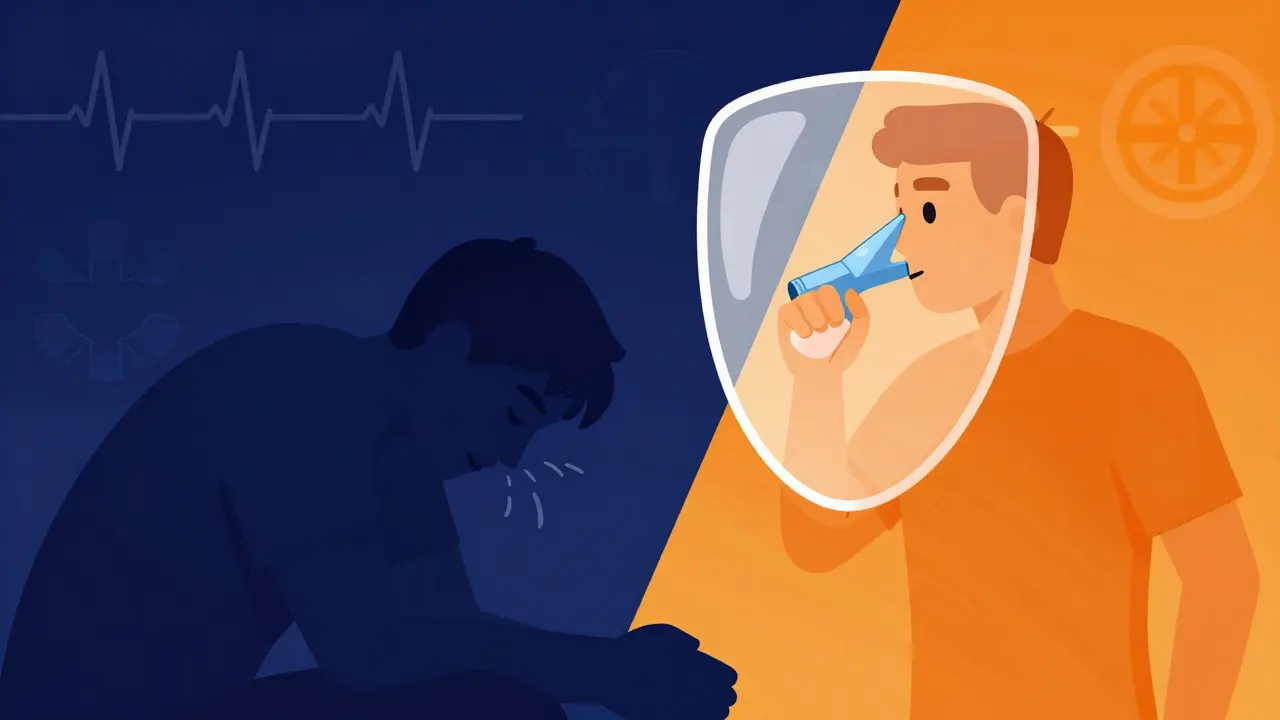
Imagine you are taking prescription painkillers for chronic back pain. You follow the doctor’s orders, but one day, you take a bit too much, or maybe you mix them with sleep aids. Your breathing slows down. Without help, this could be fatal. But what if there was a simple spray in your medicine cabinet that could reverse this within minutes? That is exactly what Naloxone is. It is not a sign of failure; it is a safety net, like wearing a seatbelt while driving.
The practice of prescribing naloxone alongside opioids-known as naloxone co-prescribingis a clinical strategy where healthcare providers prescribe naloxone, an opioid antagonist, simultaneously with opioid analgesics to patients at risk of overdose.-has become a standard of care in modern medicine. This isn't just about treating addiction; it is about preventing death among people who legally use opioids for pain management. With opioid-related deaths remaining high, understanding how and why we co-prescribe naloxone is crucial for patients, families, and doctors alike.
Why Co-Prescribing Is Now Standard Care
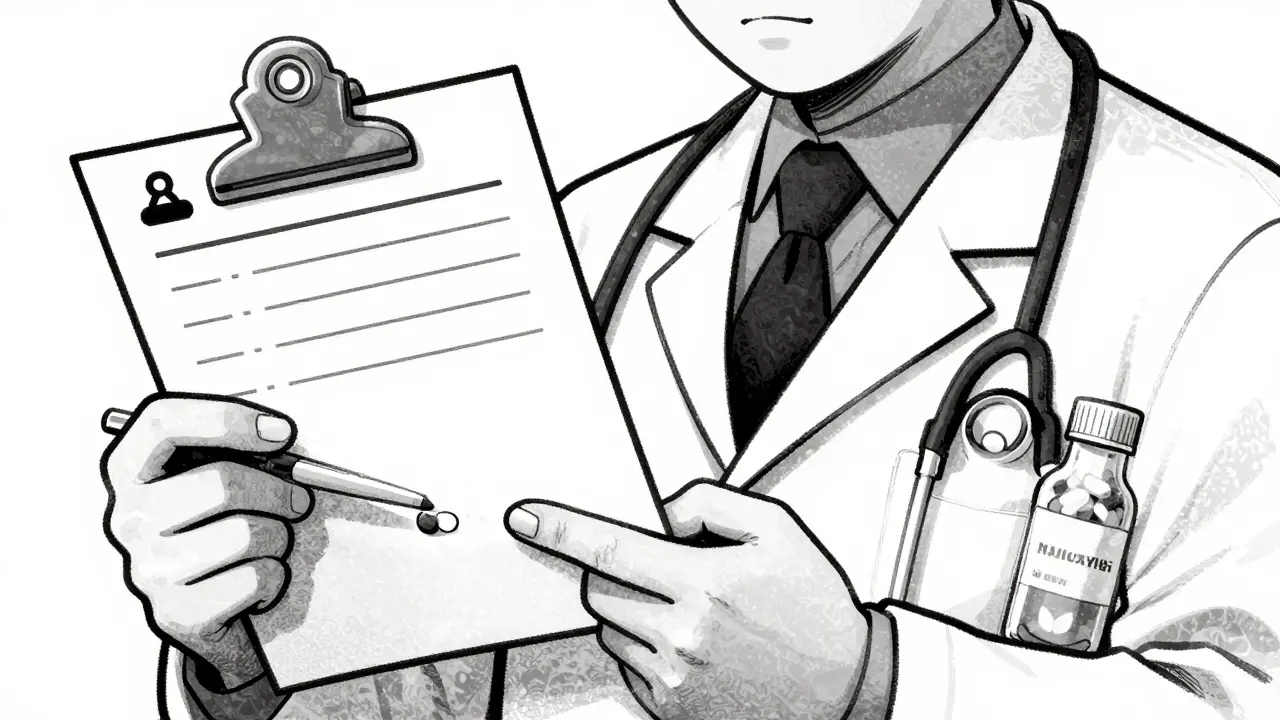
For years, doctors hesitated to bring up overdose risks because they feared stigmatizing their patients. However, the data became impossible to ignore. In 2016, the Centers for Disease Control and Prevention (CDC) released its Guideline for Prescribing Opioids for Chronic Pain. Recommendation 8 specifically stated that clinicians should offer naloxone when factors increase the risk of overdose.
What are those factors? They include:
- A history of previous overdose.
- A diagnosis of substance use disorder.
- Higher opioid dosages, specifically 50 morphine milligram equivalents (MME) per day or more.
- Concurrent use of benzodiazepines (like Xanax or Valium).
This recommendation wasn't pulled out of thin air. It responded to a crisis. By 2017, approximately 48,000 Americans died from drug overdoses involving opioids. The Substance Abuse and Mental Health Services Administration (SAMHSA) and the American Medical Association (AMA) now endorse co-prescribing as a critical harm reduction strategy. It acknowledges the reality of opioid therapy while providing a tangible safety net against fatal outcomes.
Understanding the Risk: The MME Calculator
You might wonder, "How do I know if my dose is dangerous?" Doctors don't just guess; they use a tool called the MME calculatora tool used by clinicians to convert different opioid medications into a standardized unit of morphine milligram equivalents to assess overdose risk.. Different opioids have different strengths. For example, 30 mg of oral morphine equals 20 mg of oral oxycodone, 15 mg of oral hydrocodone, or 25 mcg/hour of transdermal fentanyl.
According to guidance from the Department of Health and Human Services (HHS), patients receiving 50 MME per day or greater face a 100% increased risk of overdose compared to those on 20 MME/day. As the dose goes up, the risk climbs proportionally. If you have respiratory conditions like COPD or sleep apnea, or if you drink alcohol heavily, your risk profile changes even at lower doses. Understanding these numbers helps demystify why your doctor might suggest carrying naloxone.
| Opioid Medication | Dose Equivalent to 30mg Morphine |
|---|---|
| Morphine (Oral) | 30 mg |
| Oxycodone (Oral) | 20 mg |
| Hydrocodone (Oral) | 15 mg |
| Fentanyl (Transdermal Patch) | 25 mcg/hour |
Types of Naloxone and How to Use Them
When you get a prescription for naloxone, you aren't limited to one type. The FDA has approved several formulations, each with specific uses. The most common and user-friendly option is the intranasal spray, such as Narcan® or generic versions. Why is it so popular? Because it doesn't require drawing up a syringe or finding a vein during a panic-inducing emergency.
Here is a breakdown of the main options:
- Intranasal Spray (e.g., Narcan®): Delivered through the nose. It is easy to administer, requires no medical training, and works quickly. Most patients prefer this method.
- Intramuscular/Subcutaneous Injection: Injected into the muscle or under the skin. These are often found in older kits and require more dexterity to use correctly.
- Intravenous (IV): Used primarily in hospital settings by medical professionals.
The dosage is typically 2-4 mg for intranasal or intramuscular administration. The key is speed. Naloxone works by competitively binding to opioid receptors with greater affinity than the opioids themselves. This means it kicks the opioids off the receptors in your brain, rapidly reversing respiratory depression. It buys time until paramedics arrive.
Overcoming Stigma and Patient Resistance
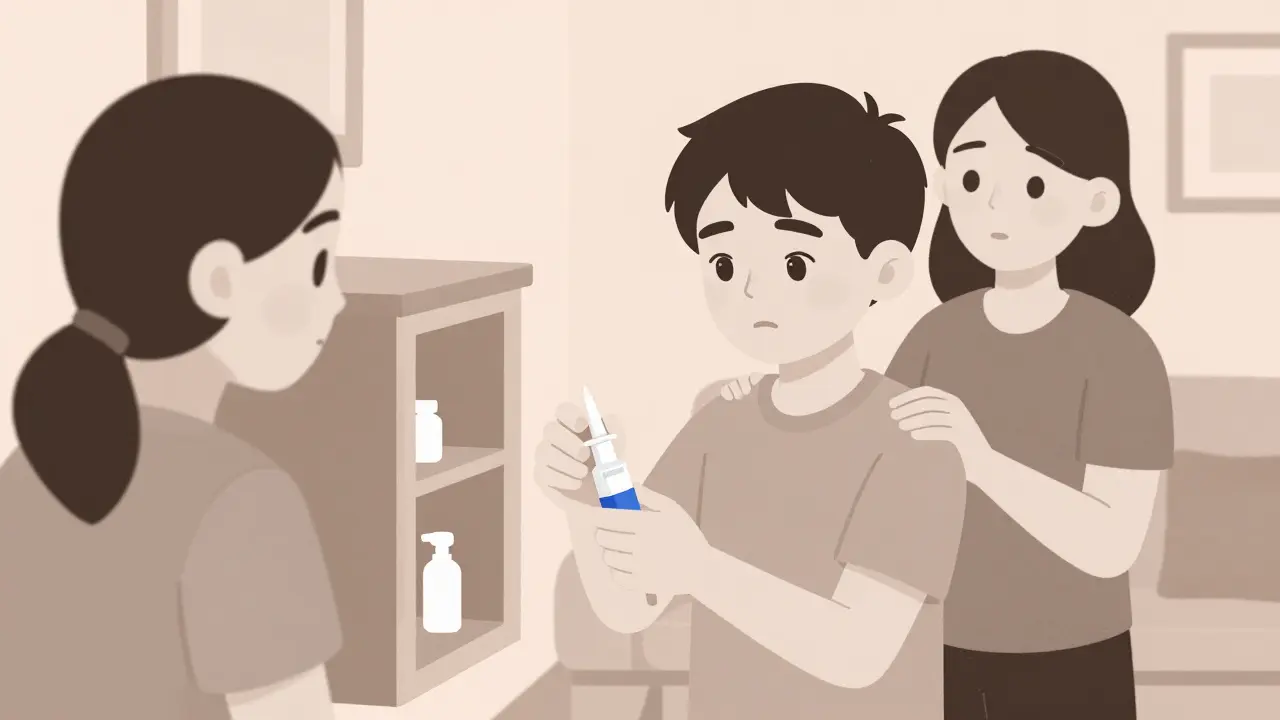
Even with clear benefits, getting patients to accept naloxone can be tricky. A survey published in JAMA Internal Medicine in 2021 found that 68% of primary care physicians felt discomfort discussing overdose risk. On the patient side, reports from the Indiana State Health Department indicate that 42% of refusals stem from stigma. Many patients interpret the prescription as a judgment-that their doctor thinks they are an addict or will inevitably overdose.
How do we fix this? Communication is everything. Doctors are increasingly using motivational interviewing techniques. Instead of saying, "You need this because you might OD," they frame it as, "This is a safety precaution, like having fire extinguishers in the house. We hope you never need it, but it's there just in case."
Real stories help too. Sarah Johnson, a chronic pain patient in Ohio, shared her experience: "When my doctor prescribed naloxone with my oxycodone, I was offended at first. But when my teenage son accidentally took my pills last year, that nasal spray saved his life." Hearing from others who have been in similar shoes reduces shame and increases acceptance.
Cost, Insurance, and Access
Access shouldn't depend on your wallet. Historically, cost was a barrier. Brand-name Narcan® nasal spray retails for around $130-$150 without insurance. Generic kits range from $25-$50. However, the landscape changed significantly with the SUPPORT for Patients and Communities Act of 2018.
This federal law mandated that Medicare Part D and Medicaid programs cover naloxone without restrictions. Most major private insurers also cover it with minimal or no copay. Despite this, gaps remain. A CDC report noted that while 85% of urban pharmacies consistently stock naloxone, only 42% of rural pharmacies do. If you live in a rural area, you might need to plan ahead and pick up your supply at a larger pharmacy or through a community health center.
Furthermore, 49 states now have standing orders allowing pharmacists to dispense naloxone without a specific doctor's prescription. In some places, you can walk into a pharmacy and buy it over the counter. Always check your local laws, but generally, access is easier than ever.
Practical Steps for Patients and Families
If you or a loved one is prescribed opioids, here is a practical checklist to ensure you are prepared:
- Ask Your Doctor: At your next visit, ask, "Am I at risk for overdose? Should I have naloxone on hand?" Don't wait for them to bring it up.
- Educate Your Household: Make sure family members, roommates, or close friends know where the naloxone is kept and how to use it. Use the S.L.A.M. framework recommended by the Indian Health Service:
- Signs of overdose (unresponsiveness, pinpoint pupils, slow breathing).
- Life-saving steps (call 911).
- Administer naloxone.
- Monitor until help arrives.
- Check Expiration Dates: Naloxone expires. Check the date every few months and replace it if needed.
- Store Properly: Keep it at room temperature. Avoid extreme heat or cold, which can degrade the medication.
Remember, naloxone is not a cure for opioid use disorder, nor does it treat pain. It is strictly an emergency reversal agent. Its purpose is to keep you alive long enough to get professional medical help. Embracing co-prescribing is an act of self-care and responsibility, not a admission of defeat.
Does naloxone affect pain relief?
Yes, naloxone blocks opioid receptors, which means it will temporarily reverse the effects of opioids, including pain relief. However, its duration of action (30-90 minutes) is shorter than many long-acting opioids. This is why calling 911 immediately after administering naloxone is critical, as the patient may slip back into overdose once the naloxone wears off.
Can I use naloxone if I'm not sure it's an opioid overdose?
Absolutely. If someone is unresponsive and breathing slowly or irregularly, and you suspect opioids, use naloxone. There is no harm in administering it if opioids are not present; it simply won't have any effect. It is always better to act than to wait.
How many doses of naloxone do I need?
Most kits come with two doses. One dose is usually sufficient to reverse an overdose caused by typical prescription opioids. However, if the overdose involves potent illicit opioids like fentanyl, a second dose may be needed after 2-3 minutes if there is no response. Always call 911 regardless of whether the person wakes up.
Is naloxone covered by insurance?
In most cases, yes. Due to the SUPPORT Act of 2018, Medicare and Medicaid must cover naloxone. Most private insurance plans also cover it with little to no copay. Check with your specific provider to confirm coverage details.
What are the signs of an opioid overdose?
Key signs include unresponsiveness (you cannot wake them up), slowed or stopped breathing, pale or clammy skin, limp body, and pinpoint pupils. A gurgling or snoring sound (often called the "death rattle") is also a common sign of airway obstruction due to shallow breathing.