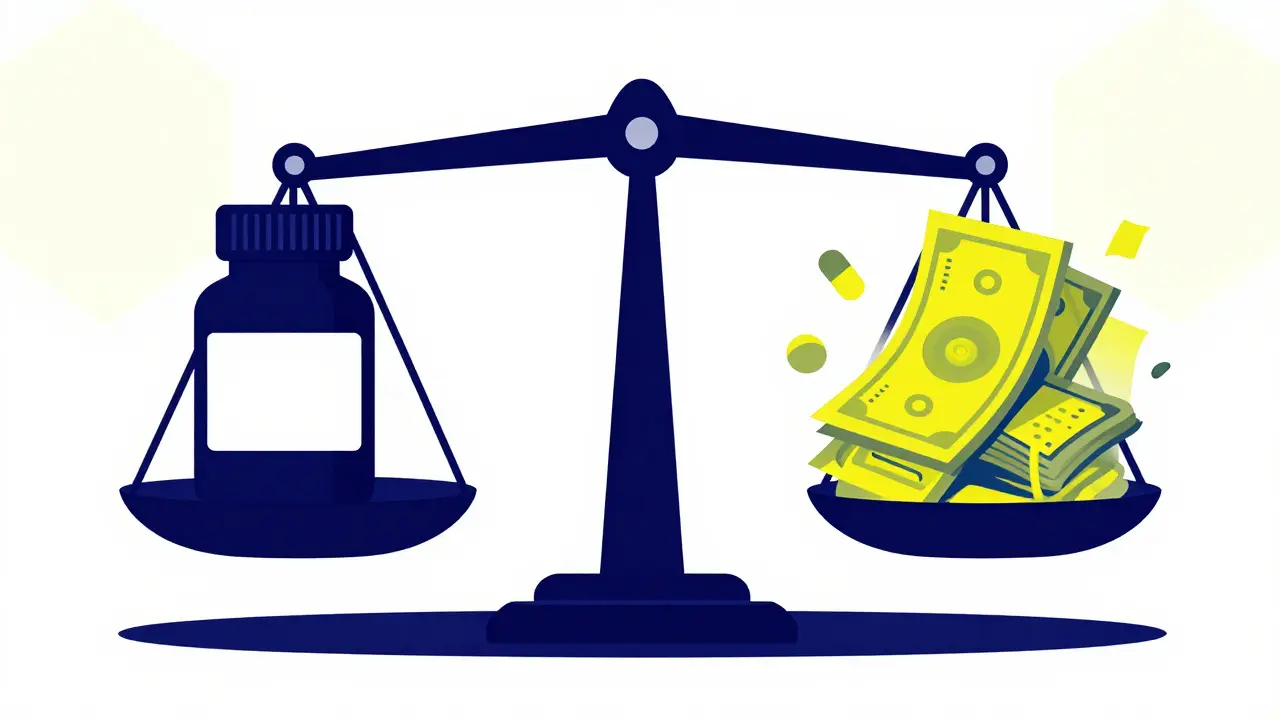
You probably assume your health insurance saves you money by negotiating prices down on generic drugs. It feels like common sense: cheaper pills mean lower costs for everyone. But here is the harsh reality: that isn't always how the money flows behind the scenes.
When you hear about massive discounts, most people picture the Negotiated Rebates on Generics is a mechanism that rarely exists in the way we expect. In the United States healthcare system, rebates are king. For expensive brand-name drugs, pharmaceutical companies pay billions in rebates back to Pharmacy Benefit Managers (PBMs) and insurers. However, this engine almost completely stops working once a drug becomes generic. Instead of getting a rebate kickback, insurers and employers often face a hidden layer of fees called spread pricing. Understanding this difference changes everything about how you view your plan's cost.
The Misconception of Generic Rebates
We tend to think of rebates as automatic savings. That is true for monopolies, but generic markets are competitive jungles. Unlike a single manufacturer holding a patent on a high-cost biologic, five or ten companies might manufacture a simple generic statin. Because supply outstrips demand, manufacturers cannot demand concessions through leverage. According to the Commonwealth Fund's 2025 analysis, PBMs and manufacturers negotiate rebates that are contingent on excluding lower-cost competitor drugs from the formulary. Since generic pricing is driven by open market competition, there is little room for post-purchase rebates that define brand-name drug deals.
Rightway Healthcare documented in 2023 that PBMs may favor brand-name drugs over generics to maximize rebate income. This creates a bizarre incentive structure. A brand-name drug costing $500 might come with a 60% rebate ($300), while a generic version costing $10 has a 0% rebate. On paper, the insurer pays less for the brand after the rebate ($200) than the upfront price of the generic ($10 + fees). Wait, does that really happen? It does in some specific contract scenarios. This structural difference stems from the competitive nature of the generic drug market where multiple manufacturers produce identical therapeutics, leaving little room for rebate negotiations that characterize brand-name drugs.
How PBMs Handle Generic Payments
If rebates aren't the story, where does the money go? The answer involves a concept called Pharmacy Benefit Manager is an intermediary organization that manages prescription drug benefits for health plans, insurers, and large employers.. These organizations sit between the patient, the pharmacy, and the insurer. When a PBM handles a generic script, they don't wait for a monthly rebate check like they do with specialty brands. Instead, they often engage in spread pricing.
In this arrangement, the PBM charges the insurance plan one amount-say $15 per pill-but pays the pharmacy significantly less, perhaps $4.25. The difference is "spread." It stays in the PBM's pocket as profit. A 2023 SmithRx analysis noted that legacy PBMs often obscure the true cost of generic medications through complex fee structures. One anonymous Fortune 500 HR director shared in a case study that their PBM was charging $8.50 per generic prescription while paying pharmacies only $4.25, keeping the $4.25 spread without disclosing this arrangement.
| Comparison Model | |
|---|---|
| Payment Type | Primary Mechanism |
| Brand-Name Drug | Retroactive Cash Rebate (Post-Purchase) |
| Generic Drug | Direct Price Concession / Spread Pricing |
| PBM Profit Source | Rebate Share (Brand) vs. Price Spread (Generic) |
| Typical Margin | 30-70% Discount Rate (Brand) vs. 100-300% Markup (Generic Spread) |
What the Numbers Actually Say
It helps to look at the aggregate data to understand the scale. The U.S. generic drug market was valued at $75.6 billion in 2023. Despite representing approximately 90% of all prescriptions filled in the U.S., generics account for only about 23% of total prescription drug spending. This highlights their cost-saving potential despite the lack of traditional rebate structures. Why is the spend so low? Because the list prices are already rock bottom.
However, the U.S. Government Accountability Office's 2022 Medicare Part D report confirms that when rebates do exist for generics, they are typically minimal. They often range from 2-5% of list price compared to 30-70% for brand-name drugs. This discrepancy means that for every dollar spent on a brand drug, the insurer might recover significant value later. For a generic dollar, there is often no recovery. The KFF's 2024 analysis showed that drugs qualified for price negotiation were single source brand-name drugs or biological products without therapeutically-equivalent generic alternatives, explicitly excluding the majority of generic inventory.
Who Really Pays?
This brings us back to the core question: what insurance actually pays. For self-insured employers, the answer is frustratingly murky. Most rebates aren't seen by an employer until months after a claim is processed-if they are passed through by the PBM at all. The Department of Labor's 2024 analysis outlines a process where the initial claim payment includes cost sharing and coverage, followed by a delayed rebate. However, because this model rarely applies to generics, the initial transaction remains sticky.
A key disadvantage of the current system is that PBMs may exclude generic drugs from their formularies in favor of higher-rebate brand-name drugs. This forces patients to pay out-of-pocket or navigate a complex appeals process for coverage. Dr. Erin Trish, codirector of the USC Schaeffer Center for Health Policy & Economics, noted in 2023 that the focus on rebate maximization rather than net price minimization has led PBMs to design formularies that systematically disadvantage generic medications. The result? Insurers thinking they negotiated a better deal, while the net cost to the patient might actually be higher due to tier placement.
Regulatory Shifts and Transparency
The landscape is finally shifting toward light. CMS announced on March 14, 2025, that agreements had been signed for the second cycle of Medicare Drug Price Negotiation covering 15 Part D drugs. While this program doesn't currently include generics due to statutory exclusions, the momentum around transparency is affecting everyone. The Biden administration's 2024 Executive Order on pharmaceutical competition specifically directed HHS to examine practices that may limit the use of lower-cost generic drugs with a report due in Q3 2025.
Industry trajectory shows a shift toward pass-through pricing models for generics. Currently, 42% of large employers are adopting this approach in 2024 compared to just 18% in 2020. Under pass-through pricing, the PBM charges an administrative fee rather than profiting from the drug spread. This cuts out the middleman margin on the generic itself. The Employee Benefit Research Institute's 2025 forecast predicts that transparency legislation targeting PBM practices will likely require full disclosure of generic drug acquisition costs by 2026, fundamentally changing how rebates-or their absence-impact what insurance pays.
Practical Implications for Patients and Employers
If you are managing your own health plan or trying to understand your benefits, the takeaway is clear. Look beyond the list price. A generic might have a $4 copay, but if your PBM keeps a $5 spread, the system is inefficient. The Department of Health and Human Services' 2022 report documented that the average spread between what PBMs charge plans and what they pay pharmacies for generics was $4.73 per prescription. That adds up to millions across large plans.
To protect against this, plan sponsors need to audit PBM contracts for "pass-through" language. If the PBM takes a percentage of the rebate, that's fine for brands. If they take a fixed dollar spread on generics, negotiate it down. As the National Business Group on Health's 2023 survey found, 68% of respondents reported difficulty determining the actual net cost of generic medications due to PBM opacity. Asking for data transparency is no longer optional; it is a necessity for financial control.
Do generic drugs offer any rebates?
Most generic drugs offer minimal to zero rebates, typically ranging between 2-5% of the list price. Unlike brand-name drugs which can see 30-70% rebates, the competitive generic market leaves little room for post-purchase concession deals.
What is spread pricing on generic drugs?
Spread pricing occurs when a PBM charges the insurance plan a higher rate for a generic medication than what they reimburse the pharmacy, keeping the difference as profit. This creates a hidden markup rather than a transparent service fee.
Why does insurance sometimes prefer brand over generic?
Insurance plans might prioritize brand-name drugs because PBMs negotiate large rebates on them that offset the purchase price, whereas generics provide negligible rebates. This can lead to perverse incentives where the net cost favors the more expensive branded option.
Are PBMs required to disclose generic spreads?
Currently, disclosure requirements are limited, but upcoming transparency legislation targeted for 2026 aims to force full disclosure of generic drug acquisition costs. Many large employers are moving to pass-through pricing contracts to mitigate this issue.
Does Medicare Part D cover generic rebates?
Medicare Part D utilizes rebates primarily for brand-name drugs. Generics are often excluded from certain price negotiation mechanisms due to their competitive market dynamics, relying instead on standard retail purchasing channels.


Comments (9)