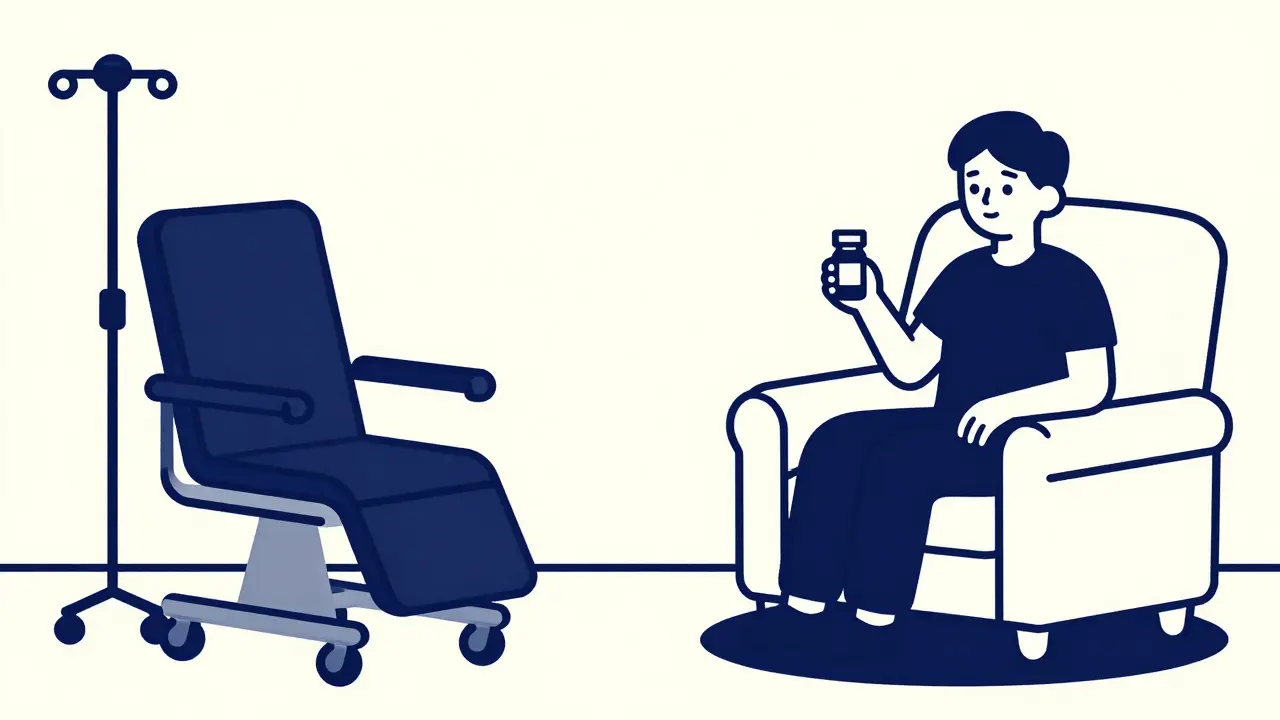
Imagine fighting cancer from your own living room instead of a hospital chair. That is the promise of oral chemotherapy, a type of cancer-fighting medication taken by mouth in tablet, capsule, or liquid form. It sounds like a dream come true for patients who dread long trips to the clinic or hours hooked up to IV drips. And it is convenient. But this convenience comes with a heavy responsibility that many patients underestimate until it is too late.
Unlike traditional intravenous (IV) chemotherapy, where nurses control every drop of medicine, oral chemo puts you in the driver’s seat. You decide when to take the pill, how to store it, and whether to skip a dose if you feel sick. This shift changes everything. While IV chemo has high adherence rates because it is supervised, oral chemo relies entirely on your daily discipline. The stakes are incredibly high. Missing doses can let cancer grow back. Taking extra doses can cause life-threatening toxicity. Understanding how these drugs work, how to stay safe, and how to stick to your schedule is not just helpful-it is essential for survival.
How Oral Chemotherapy Works Inside Your Body
To understand why oral chemo requires such careful handling, you first need to know what it does. These drugs are not vitamins; they are powerful toxins designed to kill rapidly dividing cells. They enter your bloodstream through your digestive system and travel throughout your body, seeking out cancer cells.
There are several main classes of oral chemotherapy agents, each attacking cancer in a different way:
- Alkylating Agents: Drugs like cyclophosphamide damage the DNA of cancer cells directly, preventing them from reproducing. They are non-specific, meaning they hit fast-growing cells wherever they find them.
- Antimetabolites: Medications like capecitabine mimic the building blocks of DNA. Cancer cells try to use these fake parts to build new genetic material, which causes their replication process to fail and the cell to die.
- Topoisomerase Inhibitors: Agents such as topotecan block enzymes that help untangle DNA strands during cell division, causing the DNA to snap and the cell to collapse.
- Mitotic Inhibitors: These drugs disrupt the physical structure needed for cell division, stopping the cancer from splitting into two new cells.
Newer targeted therapies add another layer of complexity. For example, imatinib (Gleevec), approved in 2001, specifically targets the protein that drives chronic myeloid leukemia. Because these drugs interact with specific molecular pathways, their effectiveness depends heavily on maintaining steady levels in your blood. If your absorption varies due to food or other medications, the drug may stop working entirely.
The Critical Challenge of Adherence
If there is one number you should remember about oral chemotherapy, it is this: only 55% to 75% of patients maintain optimal adherence. Optimal adherence means taking at least 90% of your prescribed doses exactly as directed. Compare that to IV chemotherapy, where adherence is nearly 100% because a professional administers it. That gap represents a significant risk.
Why do patients miss doses? It is rarely because they want to stop treatment. More often, it is because the regimen is complex or the side effects are overwhelming. Consider capecitabine, a common oral drug for breast and colon cancer. Patients must take it twice a day for 14 days, then take a 7-day break. Repeat. Missing a dose, taking it at the wrong time, or stopping early because of hand-foot syndrome can drastically reduce the drug’s ability to shrink tumors.
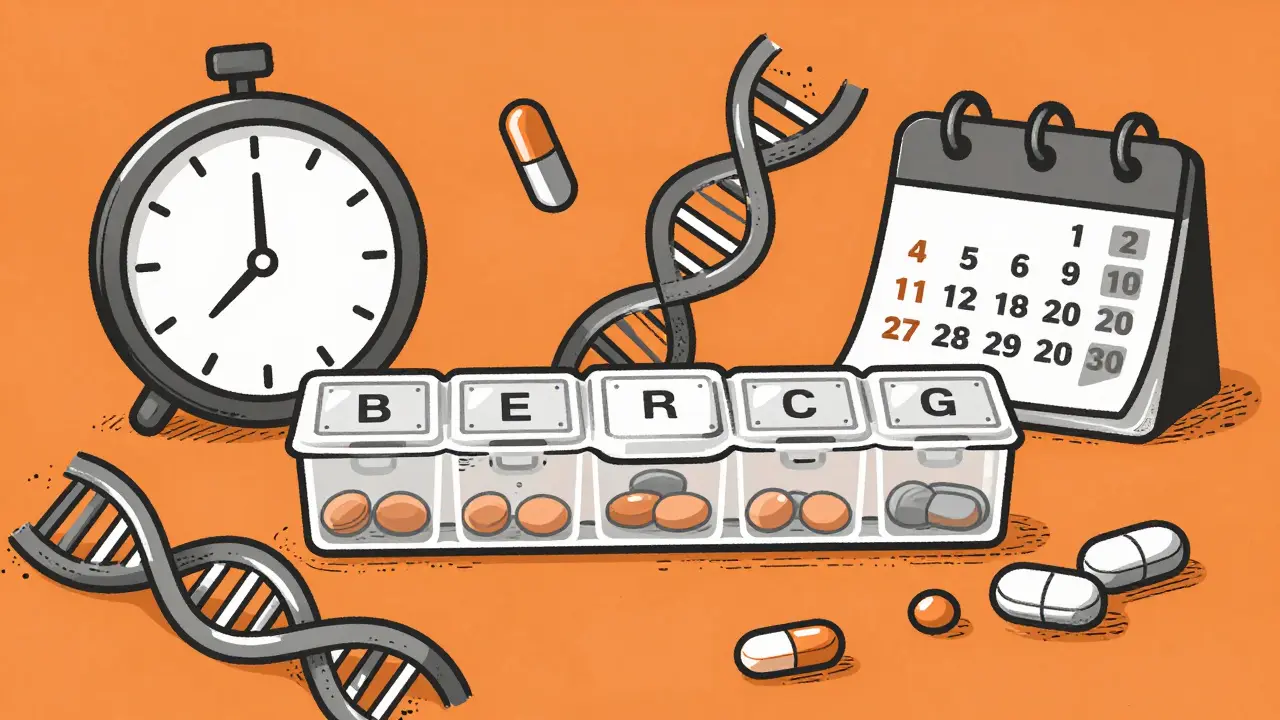
Dr. Charles Loprinzi of Mayo Clinic put it bluntly: a 25-45% non-adherence rate is equivalent to leaving one out of every three patients untreated. That is unacceptable in modern oncology. To combat this, leading institutions like Dana-Farber Cancer Institute now mandate structured education programs. This includes "teach-back" methods, where you explain the dosing schedule back to the nurse to prove you understand it, and the use of specialized pill organizers with compartments for each specific dose time.
| Strategy | Impact on Adherence | Practical Tip |
|---|---|---|
| Pill Organizers | Reduces missed doses by visual confirmation | Use weekly organizers with AM/PM slots; fill them immediately after pharmacy pickup. |
| Teach-Back Method | Ensures understanding of complex schedules | Ask your doctor: "Can I show you how I plan to take this today?" |
| Scheduled Follow-ups | Catches problems early before they lead to discontinuation | Expect calls on days 3, 7, and 14 of your cycle to check in on side effects. |
| Smart Technology | Provides real-time monitoring | Some clinics offer Bluetooth-enabled bottles or ingestible sensors to track intake. |
Safety First: Storage, Disposal, and Interactions
Because you are handling potent cancer drugs at home, safety extends beyond just taking the pill. It involves how you store it, who else might be exposed to it, and what else you put in your body while on treatment.
Storage Matters: Most oral chemotherapy drugs must be stored at room temperature, typically between 20°C and 25°C (68°F to 77°F). Do not store them in the bathroom humidity or near heat sources. Keep them in their original container, tightly closed, and out of reach of children and pets. Some drugs, like certain kinase inhibitors, are sensitive to moisture and light.
Disposal Is Critical: Never flush oral chemotherapy down the toilet unless specifically instructed by your pharmacist. Flushing can contaminate water supplies. Instead, use FDA-approved medication disposal bags or take unused pills to a designated drug take-back location. According to guidelines, 98% of oral chemotherapies require special disposal protocols to prevent accidental exposure to family members or waste management workers.
Drug Interactions Are Dangerous: Your liver uses enzyme systems, particularly CYP3A4, to break down many oral chemo drugs. Other medications can speed up or slow down this process, changing the concentration of chemo in your blood.
- Inducers (Speed up metabolism): Drugs like rifampin can lower chemo levels by up to 80%, making the treatment ineffective. St. John’s Wort is a common supplement that acts as an inducer and must be avoided.
- Inhibitors (Slow down metabolism): Antifungals like ketoconazole can raise drug levels by over 300%, leading to severe toxicity. Grapefruit juice also inhibits CYP3A4 and should generally be avoided unless your doctor says otherwise.
Even antacids and proton pump inhibitors (PPIs) can interfere. For example, if you take capecitabine, you must avoid antacids for two hours before and after your dose. Doing so can reduce drug absorption by 30-50%, significantly weakening its impact on the cancer.
Navigating Side Effects Without Giving Up
Side effects are the most common reason patients struggle with adherence. Unlike IV chemo, where you leave the clinic after infusion, you live with the side effects of oral chemo 24/7. Knowing what to expect helps you manage them rather than fear them.
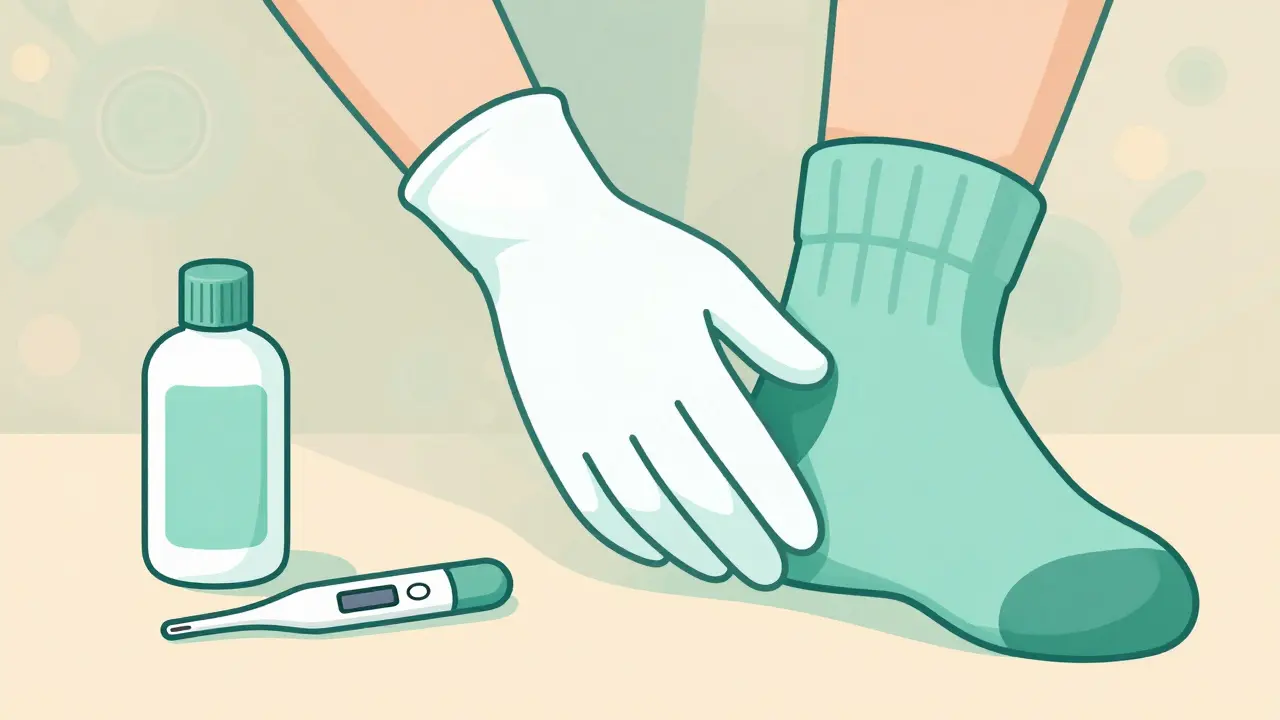
Hand-Foot Syndrome (Palmar-Plantar Erythrodysesthesia): Common with antimetabolites like capecitabine, this condition causes redness, swelling, and painful blisters on the palms of your hands and soles of your feet. It affects up to 53% of patients. Prevention starts early: wear loose cotton gloves and socks, avoid hot water, and moisturize frequently with urea-based creams. If you notice tingling or burning, contact your care team immediately. Dose adjustments can often prevent it from becoming severe.
Gastrointestinal Issues: Diarrhea and nausea are frequent companions of oral chemo. Diarrhea can lead to dangerous dehydration and electrolyte imbalances. Keep loperamide (Imodium) handy, but follow your doctor’s specific instructions on when to use it. Do not wait until it is unmanageable. For nausea, anti-nausea medications are often prescribed prophylactically-take them even if you feel fine, to stay ahead of the symptom.
Blood Count Changes: Many oral agents suppress bone marrow function, leading to low white blood cells (neutropenia), low red blood cells (anemia), or low platelets (thrombocytopenia). This increases your risk of infection, fatigue, and bleeding. Weekly complete blood count (CBC) monitoring is standard for drugs like dasatinib and lenalidomide. Watch for signs of fever (above 100.4°F or 38°C), unusual bruising, or extreme tiredness, and report them immediately.
Skin Toxicities: Targeted therapies, especially EGFR inhibitors, often cause a severe acne-like rash. This is actually a sign the drug is working, but it can be miserable. Use gentle, fragrance-free cleansers, apply broad-spectrum sunscreen daily, and ask your dermatologist for prescription treatments like topical steroids or antibiotics if over-the-counter options fail.
Building Your Support System
You should never have to navigate oral chemotherapy alone. The most successful patients treat their care team as partners. This team includes your oncologist, a clinical pharmacist, a nurse navigator, and often a dietitian.
Your pharmacist is a goldmine of information. They can review all your current medications for interactions, provide written instructions in plain language, and advise on timing issues with food or supplements. Ask them to walk you through the entire process: how to open the bottle, what to do if you miss a dose, and how to handle spills.
Keep a symptom diary. Track when you take your meds, what you ate, and any side effects you experience. Note the severity on a scale of 1 to 10. This data helps your doctor adjust your treatment proactively rather than reactively. If you experience a side effect, do not simply stop taking the drug. Contact your team. There are almost always strategies to manage symptoms while keeping you on treatment.
Finally, educate your household. Family members and caregivers need to know how to handle the medication safely, avoid contact with bodily fluids if necessary, and recognize signs of emergency. When everyone in the house understands the protocol, the burden on the patient decreases significantly.
What should I do if I miss a dose of oral chemotherapy?
Do not double up on the next dose to make up for the missed one, as this can cause severe toxicity. Check your specific drug’s patient information leaflet or call your oncology nurse immediately. Generally, if you remember within a few hours, you may take it, but if it is close to the next scheduled dose, skip the missed one. Always follow your care team’s specific protocol, as rules vary by drug.
Can I drink alcohol while taking oral chemotherapy?
It depends on the specific drug. Some oral chemotherapies, like lenalidomide, have no strict alcohol restrictions, while others may increase the risk of liver damage or worsen side effects like nausea and dizziness. Alcohol can also dehydrate you, worsening conditions like hand-foot syndrome. Always ask your doctor or pharmacist for guidance specific to your regimen before consuming any alcohol.
Is oral chemotherapy as effective as IV chemotherapy?
Yes, for cancers where oral options are available, studies confirm that oral chemotherapy maintains equivalent efficacy to intravenous administration when taken correctly. The American Cancer Society notes that the primary difference is convenience and quality of life, not potency. However, this equivalence relies heavily on strict adherence to the dosing schedule, which is why monitoring is critical.
How long does it take for oral chemotherapy to start working?
The timeline varies widely depending on the type of cancer and the specific drug. Some targeted therapies may show improvement in symptoms within weeks, while tumor shrinkage might take several months to become visible on scans. Your oncologist will schedule regular imaging tests to assess response. Do not judge effectiveness based solely on how you feel day-to-day, as some drugs work silently against the cancer while causing manageable side effects.
Are there natural supplements I should avoid with oral chemo?
Yes, many natural supplements can interfere with oral chemotherapy. Avoid St. John’s Wort, grapefruit juice, green tea extracts, and high-dose antioxidants like vitamin C or E unless approved by your oncologist. These substances can alter how your liver processes the drug, either reducing its effectiveness or increasing toxicity. Always disclose every supplement, herb, and vitamin you take to your healthcare team.