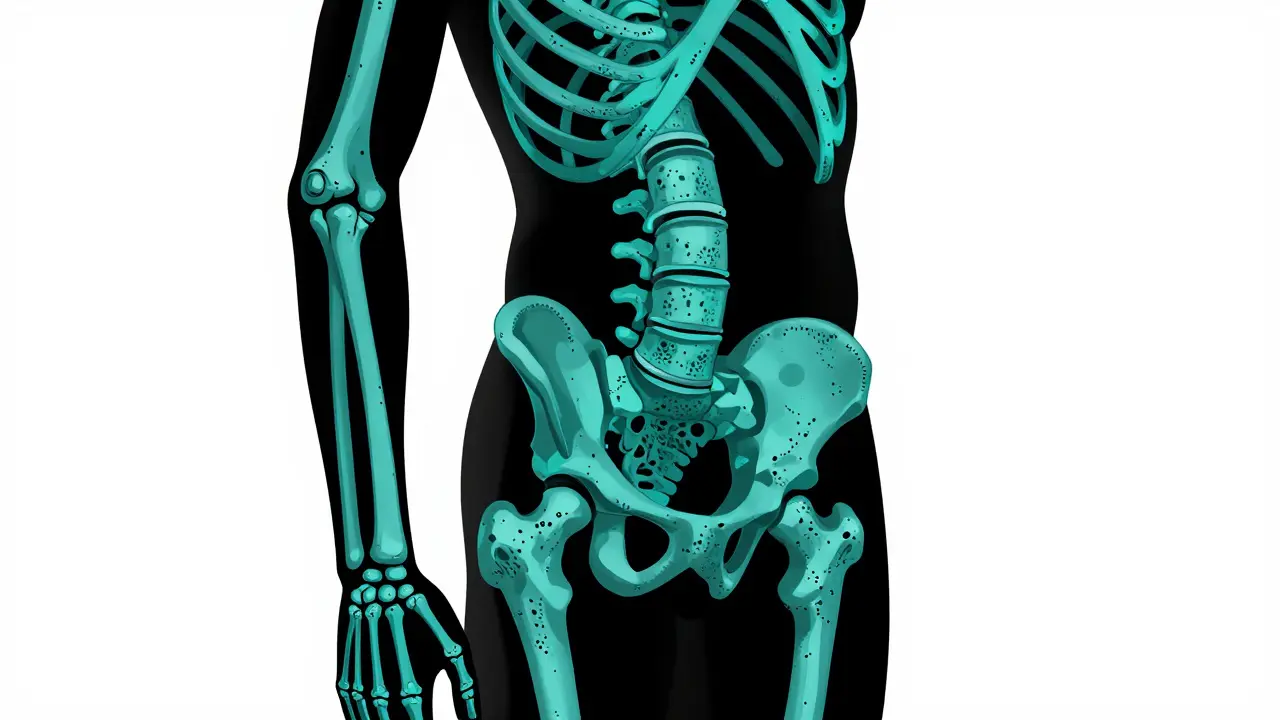
Most people think osteoporosis is just something that happens to elderly relatives. They imagine a sudden hip break after a minor trip on the sidewalk. But the truth is far more unsettling: by the time you hear that snap, your bones have been quietly hollowing out for decades. You might feel perfectly fine today, but if your bone density has dropped below a critical threshold, even getting out of bed could cause a fracture.
This isn't about fear-mongering. It's about understanding a silent epidemic. According to the International Osteoporosis Foundation, roughly 200 million women worldwide live with this condition. One in three women over 50 will experience an osteoporotic fracture. That’s not a statistic; that’s likely someone you know, or perhaps, your future self. The good news? You hold most of the cards. While you can’t change your genetics, you can drastically alter how your bones age through specific, evidence-based actions starting right now.
The Silent Thief: Understanding Bone Density Loss
To prevent bone loss, you first need to understand how it works. Think of your skeleton not as static rock, but as living tissue that is constantly being remodeled. Your body breaks down old bone cells (resorption) and builds new ones (formation). In your youth, formation outpaces resorption, allowing you to build peak bone mass between ages 25 and 30. After that, the balance shifts slightly. By age 30, you begin losing bone at a rate of 0.3% to 0.5% per year.
For women, this process accelerates dramatically during menopause. Estrogen protects bone density, and when levels drop, resorption speeds up to 2-3% annually for the first five to seven years post-menopause. This rapid decline is why women are four times more likely to develop osteoporosis than men. Men do lose bone too, but usually slower and later in life. The result is porous, fragile bone that bends or breaks under stress that healthy bone would easily withstand.
Osteopenia, or low bone mass, is the warning stage before full-blown osteoporosis. Many people stay in this zone for years without knowing it. It’s crucial to recognize that osteoporosis is systemic-it affects the entire skeleton, not just one spot. If your spine is weak, your hips and wrists are likely vulnerable too.
Who Is at Highest Risk?
Risk factors fall into two buckets: those you can control and those you cannot. Knowing where you stand helps you prioritize your prevention strategy.
Non-Modifiable Risks:
- Age: People over 65 face 4.2 times higher fracture risk than those under 50.
- Gender: Women are at significantly higher risk due to lower peak bone mass and hormonal changes.
- Race: White and Asian women have a 1.7 times higher risk compared to Black women.
- Family History: If a parent had a hip fracture, your risk jumps by 60-80%.
- Early Menopause: Going through menopause before age 45 increases risk by 2.1 times.
Modifiable Risks (The Ones You Can Change):
- Low Calcium Intake: Getting less than 1,000mg daily raises fracture risk by 30-40%.
- Vitamin D Deficiency: Low serum levels (<20ng/mL) increase fracture risk by 33%. About 42% of US adults suffer from this.
- Smoking: Smoking impairs calcium absorption and estrogen metabolism, elevating risk by 55%.
- Excessive Alcohol: More than two units a day increases hip fracture risk by 41%.
- Sedentary Lifestyle: Lack of weight-bearing exercise contributes to a 25-30% higher fracture risk.
It’s also worth noting secondary causes. Long-term use of corticosteroids can cause 5-15% bone loss in just the first year. Conditions like rheumatoid arthritis or type 1 diabetes also significantly weaken bone structure, independent of density measurements.
Knowing Your Numbers: DXA Scans and FRAX Scores
You can’t manage what you don’t measure. The gold standard for diagnosing bone health is the DXA scan (Dual-energy X-ray Absorptiometry). This quick, low-radiation test measures bone mineral density at your hip and spine. Results are reported as T-scores:
- Normal: -1.0 or above
- Osteopenia: Between -1.0 and -2.5
- Osteoporosis: -2.5 or below
The U.S. Preventive Services Task Force recommends screening for all women over 65. If you’re younger but have risk factors, ask your doctor earlier. However, don’t rely on the DXA score alone. Dr. Nelson Watts, former president of the National Osteoporosis Foundation, warns that relying solely on density tests misses up to 50% of people who will fracture.
That’s where the FRAX tool comes in. Developed by the WHO, this calculator estimates your 10-year probability of a major fracture. It combines your clinical risk factors-like age, weight, smoking status, and prior fractures-with or without DXA results. A single fragility fracture doubles your risk of another, making fracture history the strongest predictor of future events, often more so than the T-score itself.
Fueling Your Bones: Nutrition Strategies
Your bones are built from minerals, primarily calcium and phosphorus. But you can’t just chug milk and expect miracles. Absorption is key.
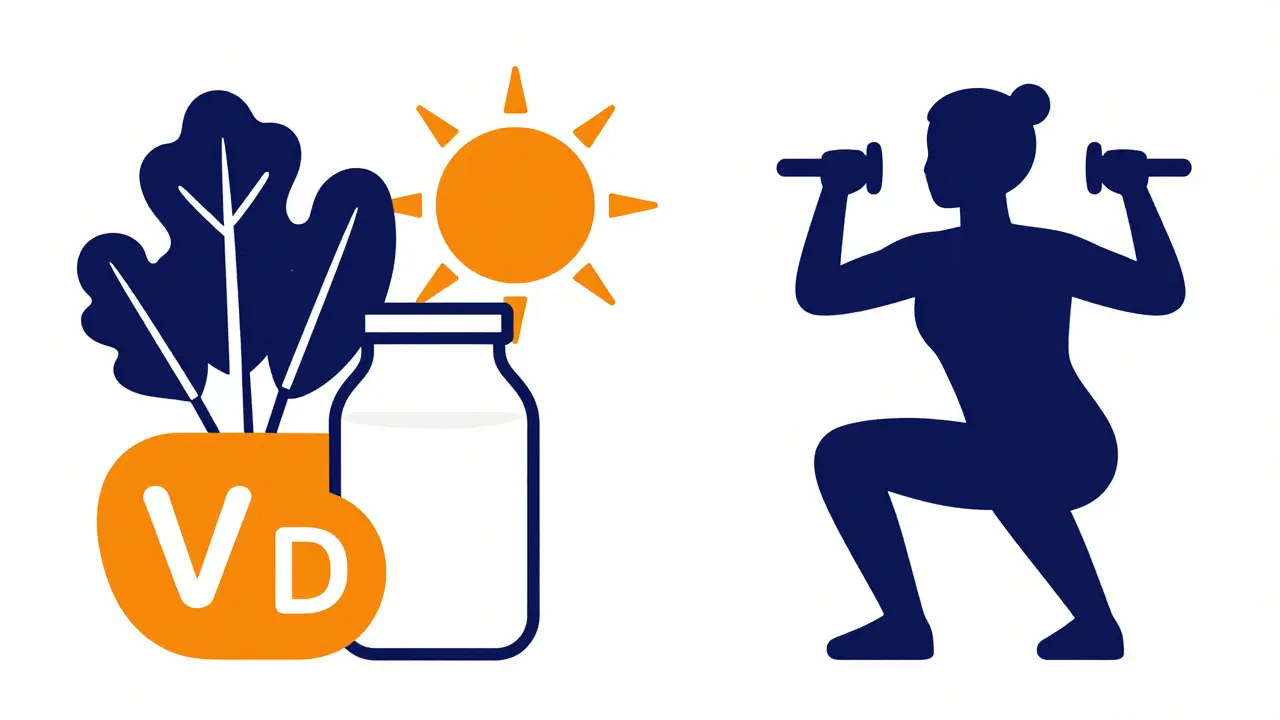
Calcium: Aim for 1,000-1,200mg of elemental calcium daily. Food sources are best because they come packaged with other beneficial nutrients. Leafy greens (kale, collard greens), sardines with bones, and fortified plant milks are excellent options. If you supplement, split doses into 500-600mg servings with meals. Your gut can only absorb so much at once, and taking too much at once leads to poor absorption and potential kidney stones.
Vitamin D: Calcium needs Vitamin D to enter the bloodstream. Without it, calcium sits in your gut or gets excreted. The Endocrine Society suggests 800-1,000 IU daily for most adults, though those with deficiency may need 2,000 IU. Sunlight helps, but many of us don’t get enough exposure. Ask your doctor for a blood test to check your levels. Target >30ng/mL for optimal bone protection.
Protein: Often overlooked, protein makes up half of bone volume. Low protein intake impairs calcium absorption and reduces muscle mass, which supports bone strength. Include lean meats, beans, or dairy in every meal.
Moving to Build Strength: Exercise Protocols
Bones follow Wolff’s Law: they adapt to the loads placed upon them. If you sit all day, your bones become lightweight and brittle. To keep them dense, you need mechanical stress.
The American College of Sports Medicine recommends a dual approach:
- Weight-Bearing Aerobic Exercise: Do this 5 days a week for 30-45 minutes. Brisk walking, jogging, stair climbing, and dancing force your bones to work against gravity. Swimming and cycling are great for heart health but do not build bone density because they are non-weight-bearing.
- Resistance Training: Lift weights or use resistance bands 2 days a week. Focus on compound movements like squats, lunges, and push-ups. This targets specific bone sites, particularly the hip and spine.
A Yale Medicine study involving over 2,500 participants showed that consistent weight-bearing exercise reduced fracture risk by 30-40%. You’ll start seeing measurable improvements in bone density after 6-12 months of consistent effort. Balance training, such as Tai Chi, is also critical for older adults to prevent falls, which are the primary trigger for fractures.
Fall Prevention: Protecting What You’ve Built
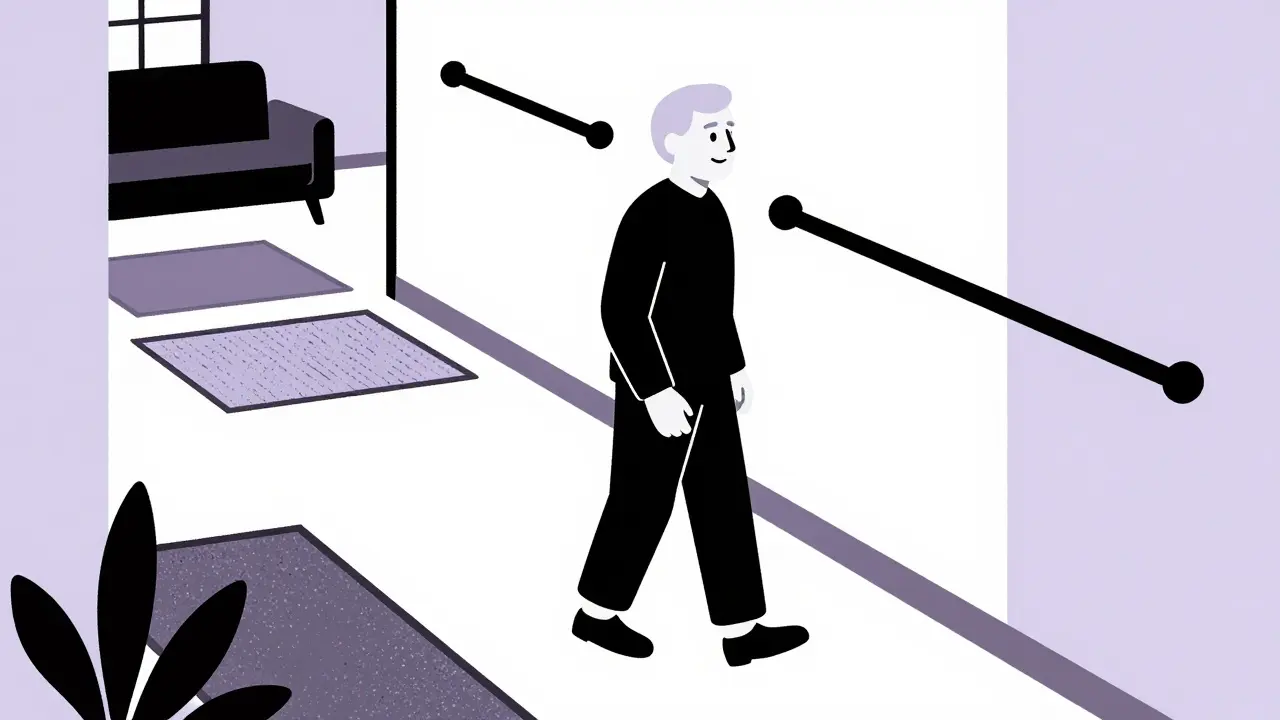
All the calcium and exercise in the world won’t help if you fall. Falls are the immediate cause of most osteoporotic fractures. The CDC’s STEADI program highlights simple home modifications that reduce fracture risk by 29%:
- Remove loose rugs and cords from walkways.
- Install grab bars in bathrooms and handrails on stairs.
- Improve lighting, especially in hallways and bedrooms.
- Wear sturdy shoes with non-slip soles indoors.
- Review medications with your doctor; some drugs cause dizziness or drowsiness.
Balance exercises, like standing on one foot while brushing your teeth, strengthen stabilizing muscles and improve proprioception-the body’s sense of position in space.
Treatment Options When Prevention Isn’t Enough
If you already have osteoporosis, lifestyle changes are still vital, but medication may be necessary. Bisphosphonates (like alendronate) are the most common, working by slowing bone breakdown. Newer treatments like romosozumab (Evenity) actually stimulate bone formation while reducing resorption, showing a 73% reduction in vertebral fractures in high-risk patients.
Side effects can be tricky. Some people experience gastrointestinal issues or muscle pain. Don’t stop treatment abruptly without consulting your doctor. There are alternatives, including injectable therapies and denosumab, which offers different mechanisms of action. The goal is to maintain therapy long enough to rebuild density and then reassess.
At what age should I start worrying about osteoporosis?
You should start caring about bone health immediately. Peak bone mass is achieved by age 30. The habits you form in your 20s and 30s determine your baseline for the rest of your life. Screening typically begins at 65 for women and 70 for men, but if you have risk factors like early menopause or steroid use, start testing in your 50s.
Can osteoporosis be reversed?
While you cannot completely restore bone to its youthful state, you can significantly improve density and strength. Medications like romosozumab can build new bone, and intense resistance training can stimulate growth. The goal is to halt progression and reduce fracture risk, which is entirely achievable.
Is yoga safe for people with osteoporosis?
Yes, but with caution. Avoid poses that involve deep forward bending or twisting of the spine, as these can compress vertebrae and cause fractures. Focus on standing poses and balance work. Always inform your instructor about your diagnosis so they can offer modifications.
What foods should I avoid to protect my bones?
Limit excessive sodium, caffeine, and alcohol. High sodium intake forces your kidneys to excrete calcium along with salt. Too much caffeine can interfere with calcium absorption. Alcohol suppresses bone formation. Also, be wary of very high-protein diets without adequate calcium, as excess acid from protein metabolism can leach calcium from bones if not buffered by dietary alkali (fruits/veg).
How accurate is the FRAX score?
The FRAX tool is highly validated, with about 76% accuracy in predicting major osteoporotic fractures over 10 years. It’s better than looking at bone density alone because it includes clinical risk factors like falls, smoking, and family history. However, it’s an estimate, not a guarantee. Use it as a guide for discussion with your healthcare provider.
Protecting your bones is a lifelong investment. Start small: add a glass of milk, take a brisk walk, and clear the clutter from your hallway. These tiny steps compound over time, keeping you strong, mobile, and independent well into your golden years.