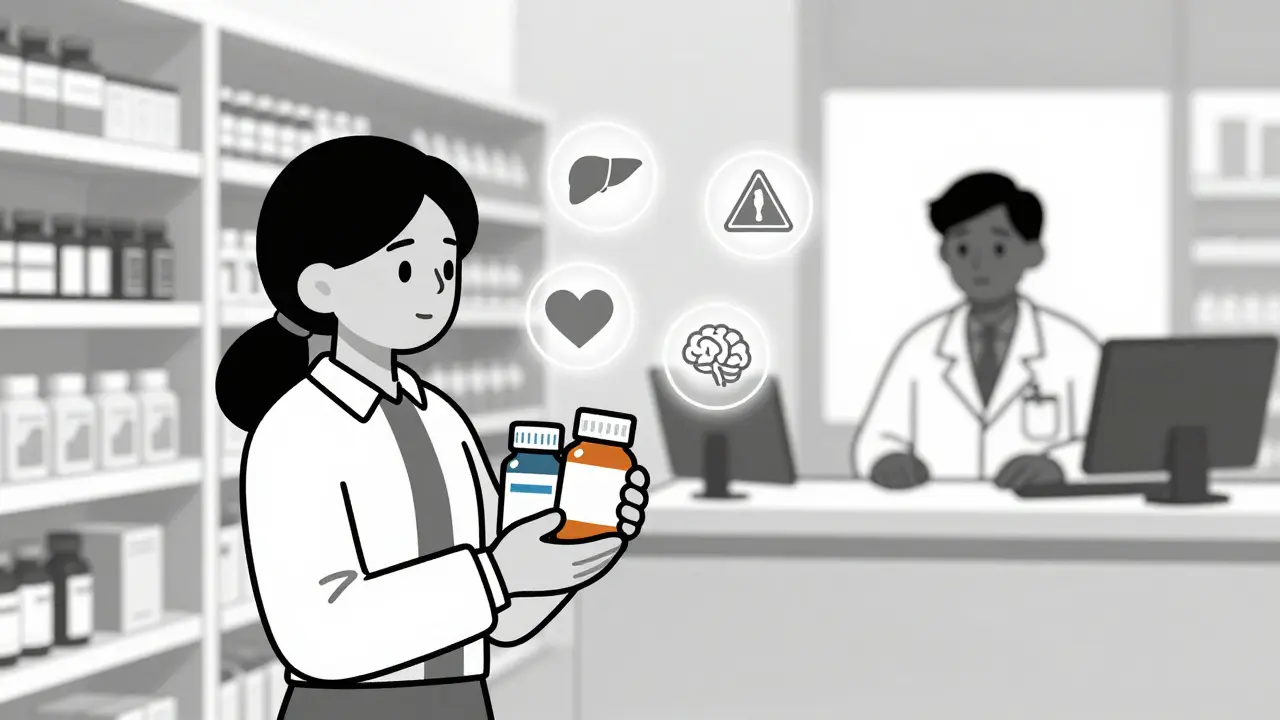
When a medication moves from prescription-only to over-the-counter (OTC), it sounds like good news-easier access, lower cost, more convenience. But behind that convenience is a complex safety story. Not every drug that works under a doctor’s watch is safe for you to grab off the shelf without any guidance. And too many people don’t realize that just because a pill is OTC doesn’t mean it’s harmless.
Why Do Drugs Switch from Prescription to OTC?
The idea behind switching a drug from prescription to OTC is simple: if a medication has a long history of safe use, clear labeling, and low risk of serious side effects when used as directed, then it makes sense to let people buy it without a doctor’s note. The U.S. Food and Drug Administration (FDA) has approved dozens of switches since the 1970s. Ibuprofen, for example, was prescription-only until 1984. After years of data showing it was safe for short-term pain relief in healthy adults, it became available in drugstores for under $10 a bottle-down from $30-$40 as a prescription.
But the switch isn’t just about price. It’s also about access. People with mild, common conditions-like occasional heartburn, allergies, or headaches-can treat themselves faster without waiting for an appointment. The Consumer Healthcare Products Association estimates these switches save the U.S. healthcare system over $100 billion a year in avoided doctor visits and tests.
The Hidden Risks: When ‘Easy Access’ Becomes ‘Easy Harm’
Here’s where things get dangerous. When a drug goes OTC, it doesn’t just become more available-it becomes more misused. People don’t think of OTC meds as real drugs. They treat them like candy. And that’s a problem.
Take acetaminophen. It’s in more than 600 OTC products-from Tylenol to cold medicines, sleep aids, and combination pain relievers. A 2023 Reddit thread from a pharmacy tech described seeing patients take double doses because they didn’t realize both their pain reliever and their cold tablet contained acetaminophen. One overdose can cause irreversible liver damage. In fact, acetaminophen overdose is the leading cause of acute liver failure in the U.S.
NSAIDs like ibuprofen and naproxen are another silent threat. They’re great for short-term pain, but long-term use without medical supervision can lead to stomach ulcers, kidney damage, heart attacks, or strokes. A 2023 study in the Journal of Clinical Pharmacy and Therapeutics found that 77% of OTC users had no idea their medication could worsen high blood pressure or interact with blood thinners.
Decongestants like pseudoephedrine are even trickier. They’re effective for stuffy noses, but they can spike blood pressure dangerously high-especially if you’re already on blood pressure meds, antidepressants, or MAO inhibitors. One nurse on Reddit reported multiple elderly patients developing severe hypertension after starting OTC nasal sprays, with no idea their prescription meds and OTC drugs were clashing.
Who’s Most at Risk?
Not everyone handles OTC switches the same way. Certain groups face much higher risks:
- Elderly adults: Their bodies process drugs slower. The American Geriatrics Society’s Beers Criteria lists 30 OTC medications that are risky for people over 65, including Benadryl (diphenhydramine), which can cause confusion, dizziness, and falls.
- People on multiple medications: Taking three or more drugs? You’re at high risk for dangerous interactions. A 2022 survey found only 32% of OTC users checked labels for interactions.
- People with chronic conditions: Diabetes, kidney disease, liver problems, asthma, or heart disease? OTC meds can make these worse. NSAIDs can trigger kidney failure in people with reduced kidney function. Antihistamines can worsen glaucoma or urinary retention.
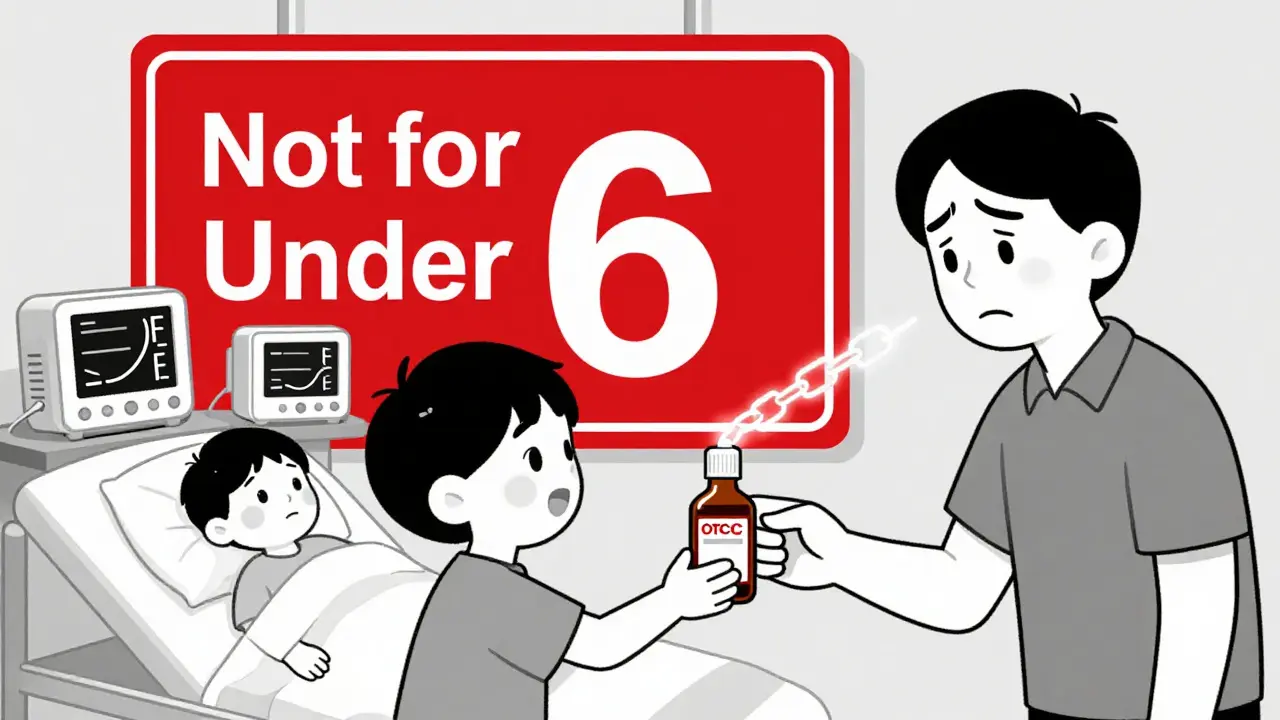
- Children and teens: Many OTC cough and cold products aren’t safe for kids under 6. Yet parents still give them-often because they think, “It’s just an OTC drug.”
What the Label Doesn’t Tell You
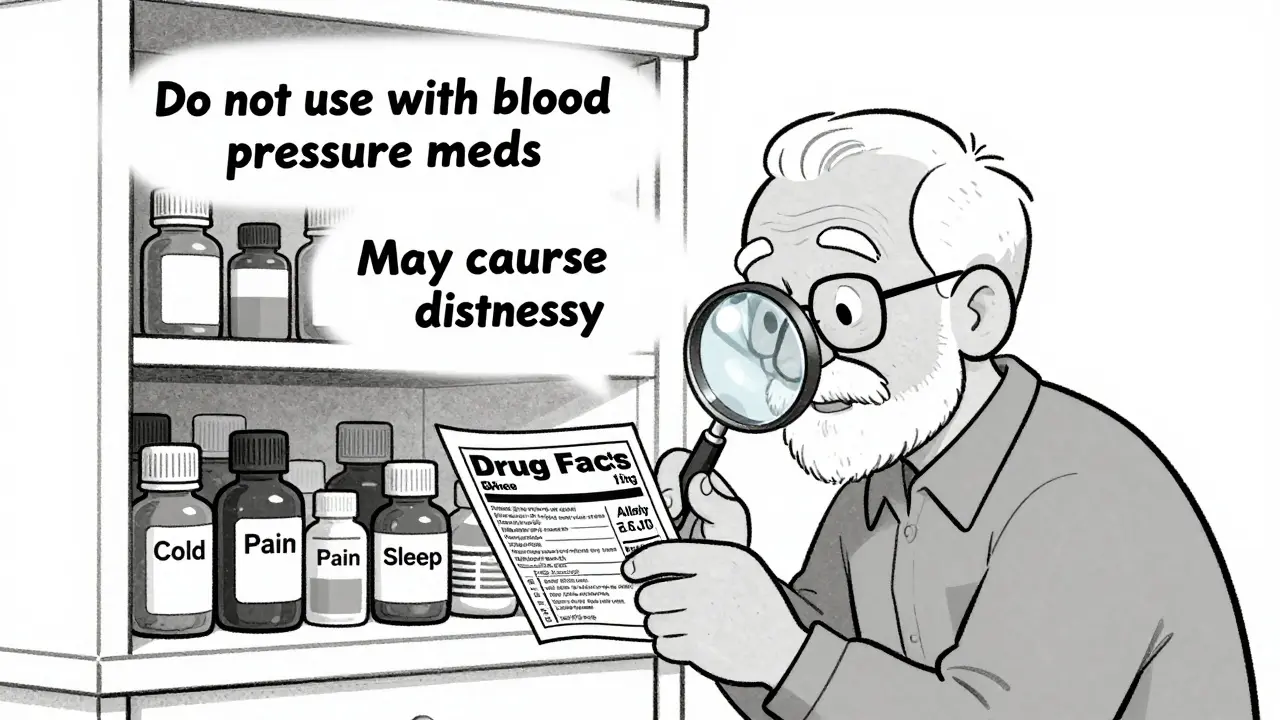
The FDA requires all OTC products to have a “Drug Facts” label. It looks like this:
- Active ingredients: The medicine’s actual drug components.
- Purpose: What it’s supposed to do.
- Uses: What it treats.
- Warnings: Who shouldn’t take it, when to stop, and what to avoid.
- Inactive ingredients: Fillers, dyes, sugars-important if you have allergies.
- Directions: How much and how often.
But here’s the catch: most people skip the warnings. A 2022 National Community Pharmacists Association survey found only 32% of consumers read the full label. And in places like India and parts of Africa, where regulation is looser, labels are often incomplete or misleading.
Three Steps to Stay Safe
If you’re using OTC meds, follow this simple checklist every time:
- Check the warnings. Does the label say “Do not use if you have high blood pressure”? Then don’t use it. Does it warn against mixing with alcohol or antidepressants? That’s not a suggestion-it’s a red flag.
- Compare active ingredients. Never take two OTC products with the same active ingredient. If you’re taking a cold medicine with acetaminophen, don’t also take Tylenol. Same with ibuprofen and Advil. Keep a list of everything you’re taking, including vitamins and supplements.
- Ask a pharmacist. Pharmacists aren’t just there to hand out pills. They’re trained to spot dangerous interactions. If you’re on more than three medications, or have a chronic condition, talk to one before buying anything OTC. Sixty-eight percent of consumers already do this-but you should be one of them.
What’s Changing? New Tools and Regulations
The FDA is trying to fix these problems. In 2022, it launched the OTC Drug Facts Label Modernization Initiative, requiring larger fonts, clearer language, and better organization. The goal? To help people with low health literacy-about 80 million U.S. adults-understand what they’re taking.
Some companies are adding QR codes to packaging. Scan it, and you get a video explaining side effects, or a tool that checks for interactions with your meds. Walmart started piloting this in 2023 on 15% of its private-label OTC products. It’s a step forward, but still rare.
There’s also talk of AI-driven personalized OTC recommendations-systems that suggest safe doses based on your age, weight, and current meds. But experts warn: if patients don’t understand the risks, even smart tech won’t help.
The Bottom Line
OTC switches aren’t good or bad-they’re tools. And like any tool, they can help or hurt depending on how you use them. The convenience of grabbing pain relief without a prescription is real. But so is the danger of taking too much, mixing meds, or ignoring your own health history.
The truth? OTC doesn’t mean “no risk.” It means “no doctor.” And that’s on you to manage.
Next time you reach for that bottle, pause. Read the label. Ask the pharmacist. Know what’s in it. Your body will thank you.
Are OTC medications safer than prescription drugs?
No, OTC medications are not inherently safer. They’ve been approved for use without a doctor’s supervision because they have a wide safety margin for common conditions. But they still carry risks-especially when misused, taken in excess, or combined with other drugs. Many serious liver injuries, kidney failures, and heart events are caused by OTC drugs, not prescriptions.
Can I take OTC painkillers if I have high blood pressure?
Some are okay, some aren’t. Acetaminophen (Tylenol) is generally safer for people with high blood pressure than NSAIDs like ibuprofen or naproxen, which can raise blood pressure and reduce the effectiveness of blood pressure meds. Always check the label for warnings and talk to your pharmacist before taking any pain reliever if you’re managing hypertension.
Why do OTC labels warn against alcohol?
Alcohol can intensify side effects. For example, mixing alcohol with antihistamines (like Benadryl) causes extreme drowsiness. With acetaminophen, it increases liver damage risk. With sleep aids or sedatives, it can slow your breathing to dangerous levels. These warnings exist because the combination can be deadly-even if you’re taking the OTC drug exactly as directed.
Is it safe to give OTC cold medicine to a child under 6?
No. The FDA and American Academy of Pediatrics strongly advise against giving OTC cough and cold medicines to children under 6. These drugs haven’t been proven effective for young kids and can cause serious side effects like rapid heart rate, seizures, or even death. Use saline drops, humidifiers, and hydration instead. Always check the age label on the box.
Do pharmacists always warn me about OTC drug interactions?
Not always. A 2023 study in Bangalore found that while 85% of patients believed pharmacists gave sufficient advice, in reality, many didn’t ask about existing conditions, allergies, or other medications. Don’t assume they’ll catch everything. Bring a list of all your meds-prescription and OTC-and ask: “Could this interact with anything I’m already taking?”


Comments (14)