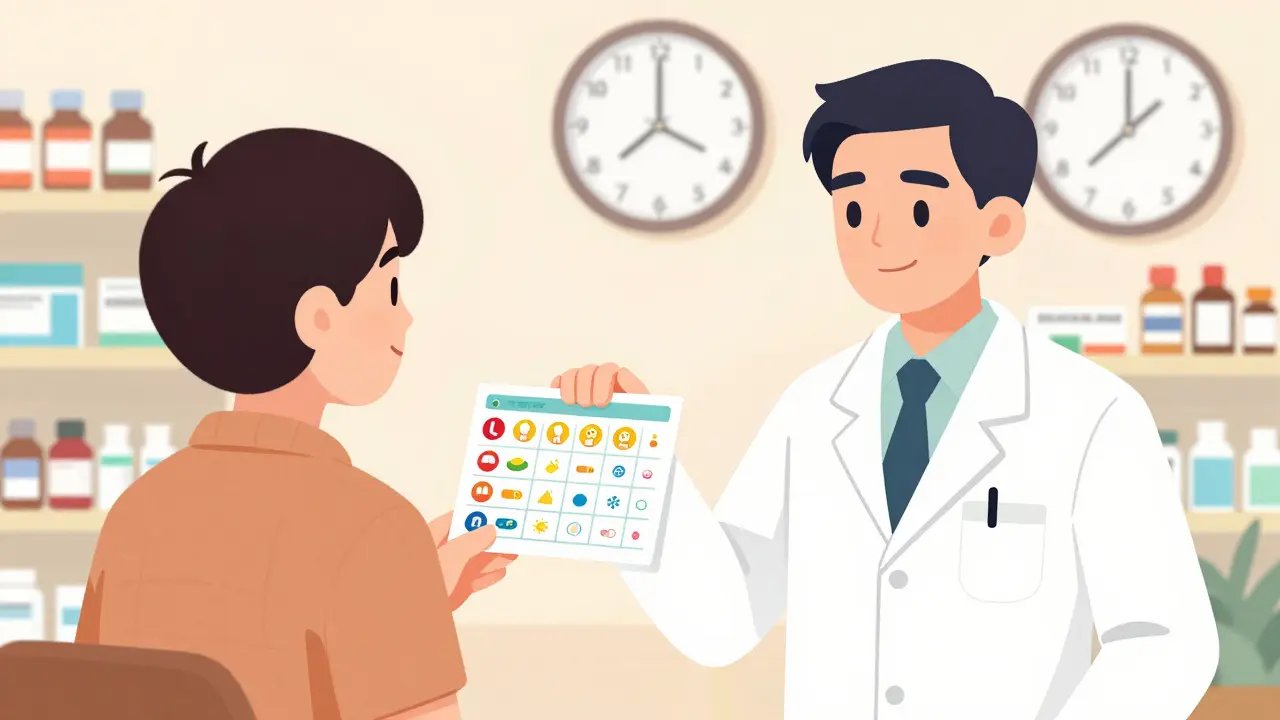
Most people think their doctor is the main source of information about their medications. But in reality, your pharmacist is often the best person to explain how to take them safely and correctly. Pharmacists spend years learning the ins and outs of every drug - not just what it does, but how to use it, what to watch out for, and how to make it work with your life. Yet too many patients leave the pharmacy without getting the full picture. If you’re not sure what to ask for, you might be missing out on help that could keep you healthier and avoid costly mistakes.
What You Should Always Ask For
Don’t wait for your pharmacist to hand you something. Be direct. Ask for written materials that match the official guidelines. The American Society of Health-System Pharmacists (ASHP) says patient education must include nine key points. If you don’t get all of them, ask again.
- The name and purpose of your medicine - not just "this is for your blood pressure," but why this one and not another.
- How and when to take it - morning or night? With food or on an empty stomach? Should you swallow it whole or chew it?
- What to do if you miss a dose - skip it? Take it right away? Wait until tomorrow? This is a common source of confusion.
- Expected side effects - not just a scary list, but which ones are normal and which mean you need to call someone.
- How to store it - some medicines need refrigeration. Others must stay dry. Others can’t be left in a hot car.
- How to tell if it’s working - when should you start feeling better? What changes should you notice?
- Drug interactions - can you drink alcohol? Take other pills? Use herbal supplements?
- Self-monitoring tools - do you need to check your blood sugar, blood pressure, or something else while on this drug?
- Contact info - who do you call if something goes wrong? Make sure the number is printed clearly, not just written on a sticky note.
These aren’t optional extras. They’re the minimum standard. If your pharmacist doesn’t offer this, ask why. You have the right to clear, complete information.
Ask for Demonstrations - Not Just Handouts
Reading instructions is one thing. Doing it right is another. For medicines like inhalers, insulin pens, or auto-injectors, seeing it done makes all the difference. A 2023 survey by Pharmacy Times found that 76% of patients who watched their pharmacist demonstrate how to use an inhaler or injector got it right on the first try. Only 41% did when they just got a printed sheet.
Don’t settle for watching. Ask your pharmacist to watch you do it. Say: "Can you watch me use this and tell me if I’m doing it right?" This is called return demonstration. It’s not a trick. It’s how professionals make sure you won’t mess up later. If you get it wrong, they’ll correct you. If you get it right, you leave confident.
This matters especially for older adults, people with arthritis, or anyone with vision or dexterity issues. A printed diagram won’t help if you can’t hold the device properly. A live demo will.
Request Materials in Your Language
If English isn’t your first language, or if you struggle with medical terms, ask for materials in your preferred language. The Patient Education Reference Center (PERC) offers over 15,000 handouts in both English and Spanish. Many pharmacies now use digital systems that can generate handouts in over 18 languages - including Tagalog, Arabic, Vietnamese, and Russian.
Don’t assume your pharmacist knows your language. Say it clearly: "I’d like the instructions in [language]." If they say they don’t have it, ask if they can print it from their system or email it to you. Most pharmacies have access to online libraries like UpToDate or PERC. If they don’t, ask for a phone number where you can call later to get it sent.
And don’t forget about readability. About 80 million adults in the U.S. have trouble reading health materials. If you find the handout too hard to understand, say: "Can you make this simpler?" The ASHP recommends materials be written at a 6th-grade reading level. Many pharmacy handouts are still written at a college level. You deserve plain language.
Ask for a Personalized Medication Schedule
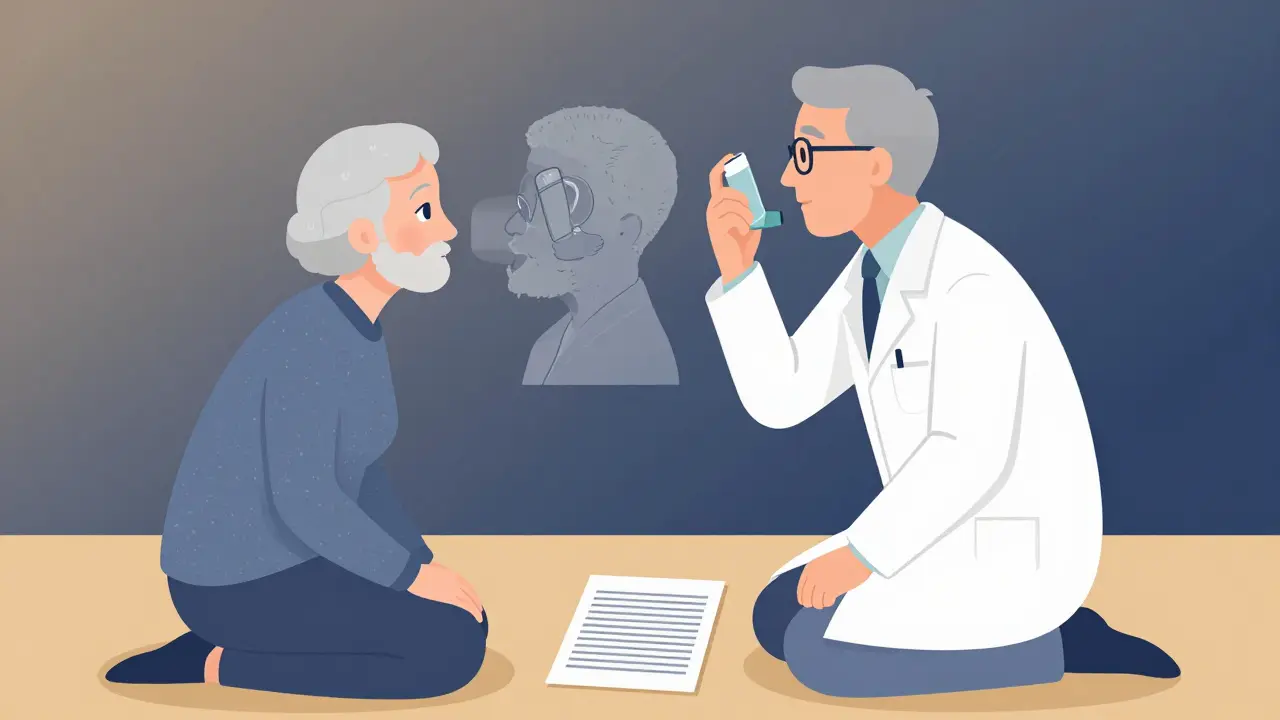
Most people don’t take their medicines the way they’re supposed to. Why? Because the schedule doesn’t fit their life. A 2023 study in the Annals of Pharmacotherapy found that 73% of patients improved their adherence when given a personalized schedule that matched their daily routine.
Instead of just getting a list of pills, ask: "Can you help me build a schedule that works with my work, meals, and sleep?" A good pharmacist will map out your meds based on when you wake up, when you eat, when you leave for work, or when you take your evening shower. They’ll even color-code them or put them in a pill organizer.
For example: If you work night shifts, your morning pill might need to be taken at 6 p.m. If you forget pills during the week but remember on weekends, your pharmacist can suggest a weekly pack with reminders. This isn’t magic - it’s basic problem-solving.
Check If Your Counseling Is Documented
Pharmacists are required by law in 47 states to document patient counseling in your medical record. This isn’t just paperwork. It’s protection. If there’s ever a mix-up - say, you were given the wrong dose - having a record shows you were properly informed.
Ask: "Will this counseling be added to my record?" If they say yes, ask if you can get a copy. Many pharmacies now offer patient portals where you can view your counseling notes. If they don’t have one, ask for a printed summary. You should get something that says: "Counseled on [medication] on [date]. Patient understood dosage, side effects, and storage." If they don’t offer this, ask why. It’s your right.
Ask About Costs and Alternatives
One of the biggest reasons people stop taking their meds? Cost. Yet only 18% of patients report their pharmacist ever discussed cheaper options - even though 62% said they needed help affording their prescriptions.
Ask: "Is there a generic version?" "Can I get a 90-day supply to save money?" "Is there a patient assistance program?"" Many pharmacies have access to discount cards, manufacturer coupons, or state programs that cut costs by 50% or more.
Pharmacists also know about therapeutic alternatives - other drugs that do the same thing but cost less. If your insulin costs $300 a month, ask if there’s a biosimilar that works just as well for $25. If your blood pressure pill is expensive, ask if another one in the same class is covered better by your insurance.
This isn’t about being cheap. It’s about being able to stick with your treatment. If you can’t afford it, the medicine doesn’t help - no matter how well it works.
Use the 7 Essential Questions
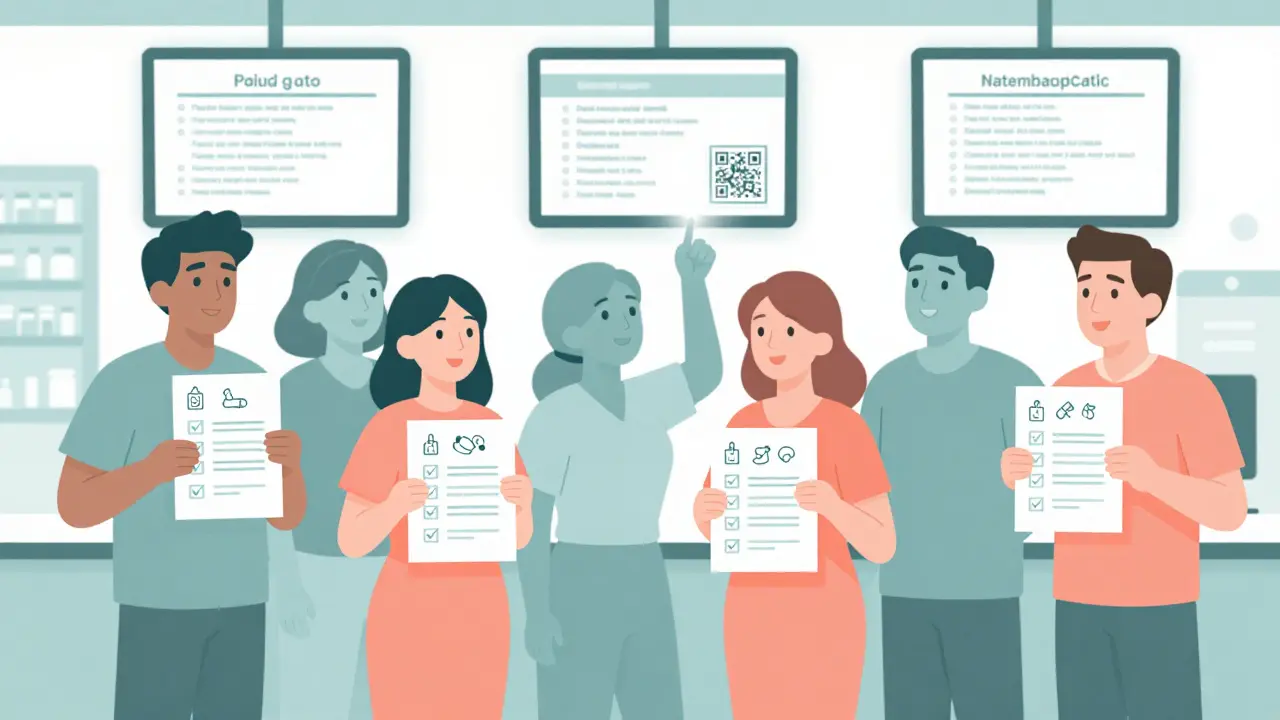
It’s hard to remember everything. Use this simple list before you leave the pharmacy:
- What is this medication for?
- How and when should I take it?
- What should I do if I miss a dose?
- What side effects should I expect?
- How will I know if it’s working?
- How should I store it?
- Is there anything else I need to know?
Print this list. Bring it with you. Tick off each answer as you get it. If one answer is vague or missing, say: "I need more detail on this."
Why This Matters More Than You Think
Medication errors cause about 7,000 deaths in the U.S. every year. Non-adherence - not taking your medicine right - costs the healthcare system $300 billion annually. These aren’t distant stats. They’re your risk.
When patients get clear, personalized education from their pharmacist, hospital visits drop by 30%. Emergency room trips fall by 40%. A 2023 Health Affairs study showed that for every dollar spent on pharmacist-led education, $4.30 is saved in avoided hospital care.
You’re not just getting a pill. You’re getting a safety net. But that net only works if you ask for it.
What’s Changing in 2026
Starting January 2026, Medicare Part D plans must include pharmacist-led medication therapy management as a required benefit. That means 52 million seniors will get structured, documented counseling - not just a quick chat.
The FDA is also pushing for simpler Medication Guides with QR codes that link to video instructions. And pharmacies are starting to use digital tools that track whether patients actually understood what they were told - not just if they were told it.
These changes are good. But they won’t help you unless you speak up now. Don’t wait for the system to change. Demand the care you’re entitled to today.
Can I ask for patient education materials even if I’m not on Medicaid?
Yes. While OBRA '90 originally required counseling for Medicaid patients, 47 states now require pharmacists to counsel all patients on key medication details. You don’t need special insurance. You just need to ask. Pharmacists are trained to provide this service to everyone.
What if my pharmacist says they don’t have printed materials?
Ask if they can email or text you a link to a digital handout. Most pharmacies use systems like UpToDate or PERC that generate customized materials in seconds. If they say they can’t, ask for the name of the system they use - you can often access it yourself through the pharmacy’s website or app. If they still refuse, ask to speak to the pharmacy manager. This is a standard service, not a favor.
Can I request materials for my elderly parent or caregiver?
Absolutely. Pharmacists are required to provide education to patients and their caregivers. Bring your parent with you, or ask for materials in large print, with simple language, or with step-by-step photos. Many pharmacies offer caregiver kits that include pill organizers, medication logs, and emergency contact cards.
Do pharmacists really know more about medications than doctors?
In terms of drug specifics - yes. Pharmacists have 6.2 years of average clinical experience focused entirely on medication therapy, according to the 2023 ACCP workforce survey. Doctors learn about medications as part of broader training. Pharmacists specialize in how drugs work, how they interact, how to dose them, and how to help patients take them correctly. That’s why patients report clearer instructions from pharmacists on how to use inhalers, injectables, and complex regimens.
How do I know if the handout I got is reliable?
Look for sources like ASHP, JCPP, UpToDate, or PERC - these are evidence-based and updated regularly. Avoid random internet printouts. Ask your pharmacist: "Is this from a trusted medical source?" Reputable pharmacies use materials reviewed by clinical pharmacists and aligned with national guidelines. If the handout has no author, date, or logo, it’s not reliable.


Comments (14)