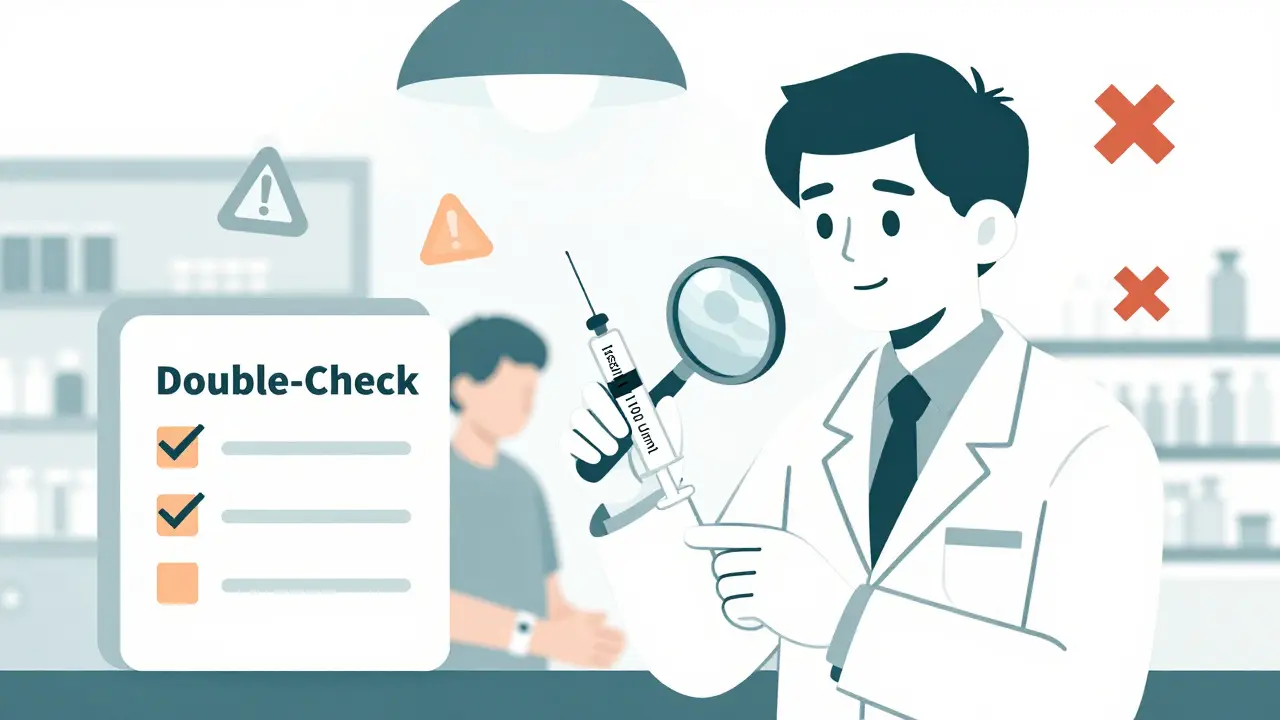
Every year, thousands of patients are harmed or killed because of mistakes made during medication dispensing. Not because pharmacists are careless. Not because nurses are sloppy. But because the systems we rely on are flawed. In 2026, medication errors still cause one in every 131 outpatient deaths in the U.S. That’s not a statistic from 20 years ago-it’s from 2021 data, and it’s still true today. If you work in a pharmacy, whether in a hospital, clinic, or community setting, you’re not just filling prescriptions. You’re the last line of defense before a mistake becomes a tragedy.
What Are the National Patient Safety Goals (NPSGs)?
The National Patient Safety Goals (NPSGs) are not suggestions. They’re mandatory standards set by The Joint Commission, the same group that accredits nearly every hospital in the U.S. First introduced in 2003, these goals were created because the medical system was failing patients-especially with medications. The Institute of Medicine’s 1999 report, To Err is Human, found that medication errors contribute to about 250,000 deaths annually in the U.S. That’s more than car accidents or breast cancer. The NPSGs were designed to force change.
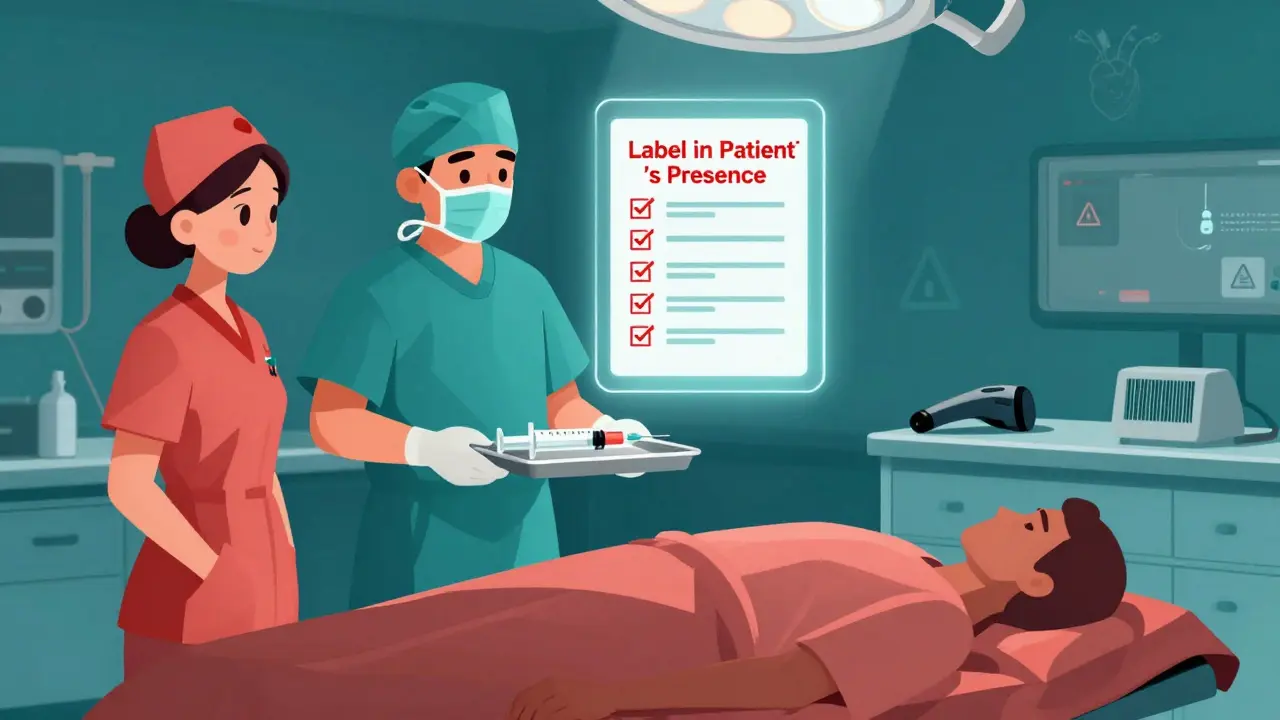
Today, the NPSGs focus on six key areas, but the most critical for pharmacists is Use medicines safely. This isn’t just about checking labels. It’s about fixing broken processes. For example, NPSG.03.04.01 requires every medication container-whether it’s a syringe, IV bag, or pill bottle-to be labeled with the drug name, strength, and concentration. The font size? Minimum 10-point. No exceptions. And in operating rooms, that label must be applied in the presence of the patient or the surgical team. Unlabeled syringes? Still happening in 27% of ORs. That’s not negligence-it’s a system failure.
High-Alert Medications: The Silent Killers
Not all drugs are created equal. Some, like insulin, heparin, and concentrated potassium chloride, can kill a patient in minutes if given wrong. These are called high-alert medications. The Institute for Safe Medication Practices (ISMP) lists 19 specific high-risk scenarios that demand extra safeguards. One example: injectable promethazine. Between 2006 and 2018, this common anti-nausea drug caused 37 amputations because it was accidentally injected into an artery instead of a vein. That’s not a rare mistake. It’s predictable. And it’s preventable.
The fix? Standardized protocols. Mandatory double-checks. Barcode scanning. At Children’s Hospital of Philadelphia, they introduced a double-check rule for all high-alert drugs in pediatric ICUs. Result? A 91% drop in weight-based dosing errors. Kids don’t get bigger doses just because they’re bigger. Their weight is calculated in kilograms, not pounds. One decimal point wrong? That’s an overdose. That’s death.
Barcode Scanning: The Game Changer (and the Bottleneck)
Barcode-assisted medication administration (BCMA) is one of the most effective tools we have. Hospitals that use it report up to an 86% reduction in wrong-drug errors. Sounds perfect, right? But here’s the catch: it slows things down. Nurses report spending an extra 7.2 minutes per dose scanning barcodes. That’s not just inconvenient-it’s exhausting during a 12-hour shift with eight patients. Some hospitals cut corners. They skip scans. Or worse, they override the system.
Automated dispensing cabinets (ADCs) are supposed to help. They store meds, track usage, and require authentication. But when pharmacists or nurses override them too often-say, for a "stat" order during a rush-the safety net breaks. Studies show that facilities with override rates above 5% have 3.7 times more medication errors. And guess what? 34% of pharmacists say their override rates are already above that threshold. The system is being abused because the workflow is broken, not because people are bad.
Why the "Five Rights" Are Not Enough
You’ve heard them: right patient, right drug, right dose, right route, right time. They’re taught in every pharmacy school. But here’s the truth: 83% of medication errors happen even when all five rights are confirmed. Why? Because the Five Rights put the burden on the person at the end of the line-the nurse, the pharmacist-while ignoring the broken system that made the mistake possible.
A 2023 survey of 1,200 nurses found that 78% believe this model unfairly blames individuals. One nurse wrote: "We’re taught to memorize the five rights but not given the tools to actually verify them during 12-hour shifts with 8 patients." That’s not a training problem. That’s a design problem. You can’t expect someone to be perfect when the system is set up for failure.
What’s New in the 2025 NPSGs?
The Joint Commission updates the NPSGs every year. The 2025 version adds two big changes. First, stricter rules around bedside specimen labeling. Before, lab samples were often mislabeled in the hallway or at the nurse’s station. Now, labels must be applied in front of the patient using two identifiers-name and date of birth. Why? Because mislabeled specimens cause 160,000 adverse events every year. Second, there’s new pressure on ADC override management. Facilities must now prove they’re actively reducing overrides-not just counting them.
These aren’t just paperwork changes. They’re cultural shifts. The Joint Commission no longer wants compliance. They want ownership. Are you just checking boxes? Or are you asking: "Why did this error happen? How do we stop it from happening again?"
The Real Solution: Culture, Not Checklists
Dr. Michael Cohen, former president of ISMP, says it best: "The NPSGs have driven improvements, but they’re minimum standards-not best practices." That’s the problem. Many hospitals treat the NPSGs like a to-do list. Do the label. Scan the barcode. Fill out the form. Done.
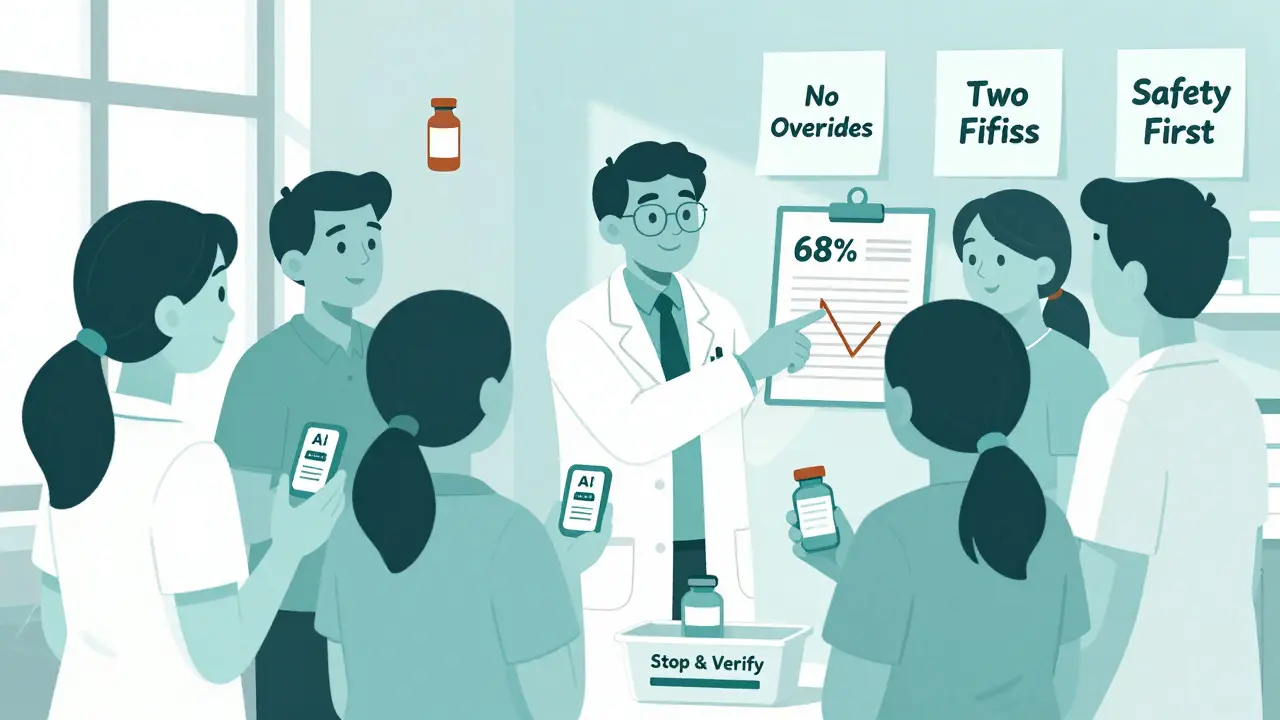
But the best-performing pharmacies don’t just follow rules. They build safety into their culture. They have leadership that talks about errors openly. They reward reporting, not punishment. They don’t just train staff once a year-they do monthly safety huddles. They use root cause analysis to dig into every near-miss. At Johns Hopkins, Dr. Terry Poling implemented the Model Strategic Plan for Medication Safety, which includes seven long-term goals: leadership commitment, standardized processes, error reporting, and controlled formularies based on safety-not cost.
Result? Their medication error rate dropped by 68% in three years.
What You Can Do Today
You don’t need a hospital budget to make a difference. Here’s what works, right now:
- Double-check high-alert meds-even if it takes 30 extra seconds. Insulin, heparin, opioids. Don’t skip it.
- Use two patient identifiers every single time. Not just for IV meds-for oral pills too.
- Speak up if a label looks wrong, a dose seems off, or a barcode doesn’t scan. Don’t assume someone else will catch it.
- Track your override rates. If your ADC overrides are above 5%, talk to your manager. Find out why. Is it staffing? Is it workflow? Is it fear of delays?
- Push for training. If your facility gives less than 4 hours of safety training per year, ask for more. Demand it.
Change doesn’t come from new software. It comes from people refusing to accept the status quo.
The Bigger Picture: Global Gaps and Future Tech
While the U.S. struggles with override rates and labeling, low- and middle-income countries still lack basic systems. The WHO says only 22% of those nations have any formal medication safety program. Meanwhile, in wealthy countries, AI is stepping in. Mayo Clinic’s pilot program used AI to predict which patients were at risk for adverse drug events. Result? A 47% drop in preventable harm. That’s not science fiction. That’s happening now.
But AI won’t fix bad processes. It won’t replace human judgment. It will only amplify what’s already there. If your pharmacy has a culture of silence, AI will just make faster mistakes.
The future of medication safety isn’t in new gadgets. It’s in accountability. In trust. In listening to the people on the front lines-the pharmacists, the nurses, the technicians-who see the cracks every day.
So ask yourself: Are you part of the problem-or the solution?
What are the most common medication dispensing errors in pharmacies?
The most frequent errors include wrong dosage (especially with pediatric or elderly patients), wrong drug (often due to look-alike or sound-alike names like hydralazine and hydroxyzine), incorrect labeling, and failure to verify patient identity. Automated dispensing cabinet overrides and mislabeled IV bags are also major contributors, particularly in high-pressure environments like emergency departments.
Are the Joint Commission’s NPSGs mandatory for all pharmacies?
The NPSGs are mandatory only for healthcare organizations accredited by The Joint Commission-which includes about 96% of U.S. hospitals and many large clinics. Community pharmacies are not directly accredited, but many follow NPSG standards because they work with hospitals, insurance providers, or government programs that require compliance. Even if not legally required, following NPSGs is considered best practice for patient safety.
How do barcode scanning systems reduce medication errors?
Barcode systems require pharmacists and nurses to scan both the patient’s wristband and the medication’s barcode before administration. This ensures the right drug, dose, and route are matched to the right patient. Studies show this reduces wrong-drug errors by up to 86%. However, the system only works if overrides are minimized and scanning is done consistently-not skipped during busy shifts.
Why are high-alert medications so dangerous?
High-alert medications have a narrow therapeutic window-meaning even a small overdose can cause serious harm or death. Examples include insulin, heparin, IV potassium chloride, and opioids. A 10% error in dose can turn a therapeutic dose into a lethal one. That’s why they require extra safeguards: double-checks, independent verification, and often, restricted access through automated dispensing cabinets.
What’s the difference between NPSGs and ISMP Best Practices?
The NPSGs are mandatory standards set by The Joint Commission for accredited facilities. The ISMP Targeted Medication Safety Best Practices are voluntary, evidence-based recommendations developed by pharmacists and safety experts. While NPSGs focus on minimum compliance, ISMP guidelines aim for best practices-like reducing ADC overrides below 5% or using standardized concentration labels. Many hospitals use both: NPSGs to meet accreditation, ISMP to improve safety beyond the baseline.
How can pharmacy staff reduce the risk of labeling errors?
Always label medications at the point of preparation, not before. Use pre-printed or electronic labels with the drug name, strength, concentration, expiration time, and preparer’s initials. Never use unlabeled syringes or containers-even if it’s "just for a moment." In operating rooms, labels must be applied in the presence of the surgical team. Use at least 10-point font, and always double-check the label against the prescription before handing it off.
What role does staffing play in medication safety?
Understaffing is one of the biggest hidden causes of dispensing errors. When pharmacists are handling 50+ prescriptions an hour, or nurses are managing 8 patients on a 12-hour shift, mistakes become inevitable. Studies show facilities with adequate staffing and dedicated pharmacy safety officers have 63% fewer medication-related adverse events. Adding one pharmacist to a busy unit can reduce errors faster than any new technology.
Is patient involvement really that important in medication safety?
Yes. Facilities that actively involve patients-asking them to confirm their name, medication names, and purpose-see 42% fewer errors. Patients often notice things staff miss: "I don’t take that pill," or "This looks different than last time." Empowering patients to speak up isn’t just polite-it’s a critical safety layer. Simple questions like, "Can you tell me what this medicine is for?" can prevent serious mistakes.
Medication safety isn’t about perfection. It’s about persistence. It’s about asking the hard questions. It’s about refusing to let a system that kills people stay unchanged. Every label you check. Every override you question. Every time you speak up-you’re not just doing your job. You’re saving a life.


Comments (13)