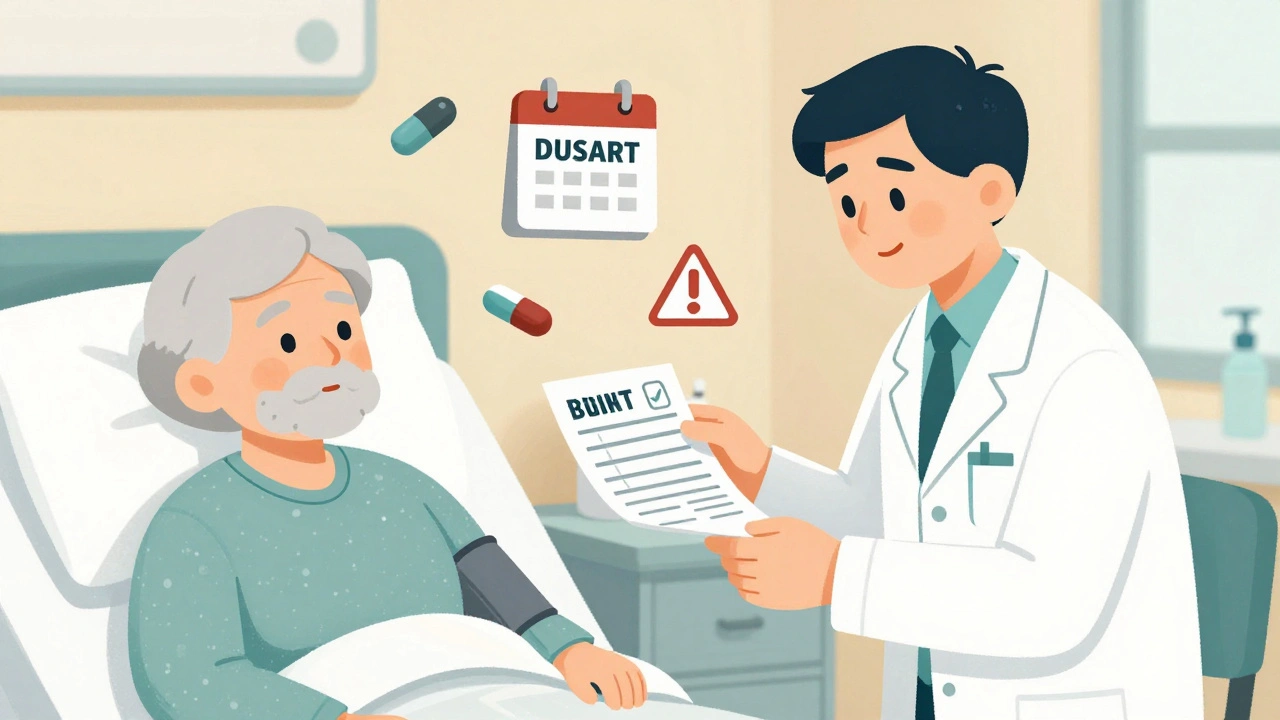
When patients move from hospital to home, their medications often get mixed up. A pill that was stopped in the ER might still be on the discharge list. A new blood pressure drug might clash with an old one they’ve been taking for years. These errors aren’t rare-they happen in one out of every three hospital discharges. And they lead to readmissions, ER visits, and sometimes death.
That’s where pharmacist-led substitution programs come in. These aren’t just about swapping one drug for another. They’re structured clinical services where pharmacists take charge of reviewing every medication a patient is taking, spotting dangerous gaps or overlaps, and making evidence-based changes to keep them safe. By 2023, 87% of U.S. academic medical centers had these programs running. And the results? A 49% drop in adverse drug events. An 11% drop in 30-day readmissions. And savings of up to $3,500 per patient.
How These Programs Actually Work
It starts the moment a patient walks in-or gets admitted. A medication history technician, often trained and certified, interviews the patient, checks their pill bottles, calls their pharmacy, and even talks to family members to build a full picture of what they’re really taking. This isn’t just a checklist. It’s detective work. One study found an average of 3.7 medication discrepancies per patient when comparing what was documented versus what the patient was actually using.
Then the pharmacist steps in. They don’t just look at the list. They ask: Is this drug still needed? Is there a safer, cheaper alternative in the hospital’s formulary? Is this patient on five drugs that all lower blood pressure-and none of them are working? They check for drug interactions, duplicate therapies, and outdated prescriptions. If a patient is on a non-formulary drug, they recommend a substitution only if it’s clinically appropriate. In one hospital system, 68.4% of non-formulary medications were successfully replaced with better options.
The process isn’t magic. It’s methodical. Programs use electronic health records to flag high-risk meds like anticholinergics, benzodiazepines, or proton pump inhibitors. They run automated alerts when a patient has more than five prescriptions, is over 65, or has been hospitalized before. And they don’t stop at admission. The best programs follow patients through discharge, ensuring they leave with a clear, updated list-and an explanation they can understand.
Why Pharmacists? Not Doctors or Nurses
Doctors are busy. Nurses have 15-minute discharge windows. Pharmacists? They’re trained to think like pharmacologists, not just dispensers. They know how drugs interact, how metabolism changes with age, how kidney function affects dosing, and how to spot a prescribing cascade-where one drug is prescribed to fix a side effect of another, creating a spiral of unnecessary pills.
A 123-study review found that 89% of pharmacist-led programs reduced 30-day readmissions. Compare that to only 37% of non-pharmacy-led efforts. The difference isn’t just skill-it’s focus. Pharmacists spend time on medication details that others don’t have time for. In the OPTIMIST trial, patients who got a full pharmacist review (including education and follow-up) had a 38% lower risk of being readmitted than those who just got a standard discharge summary.
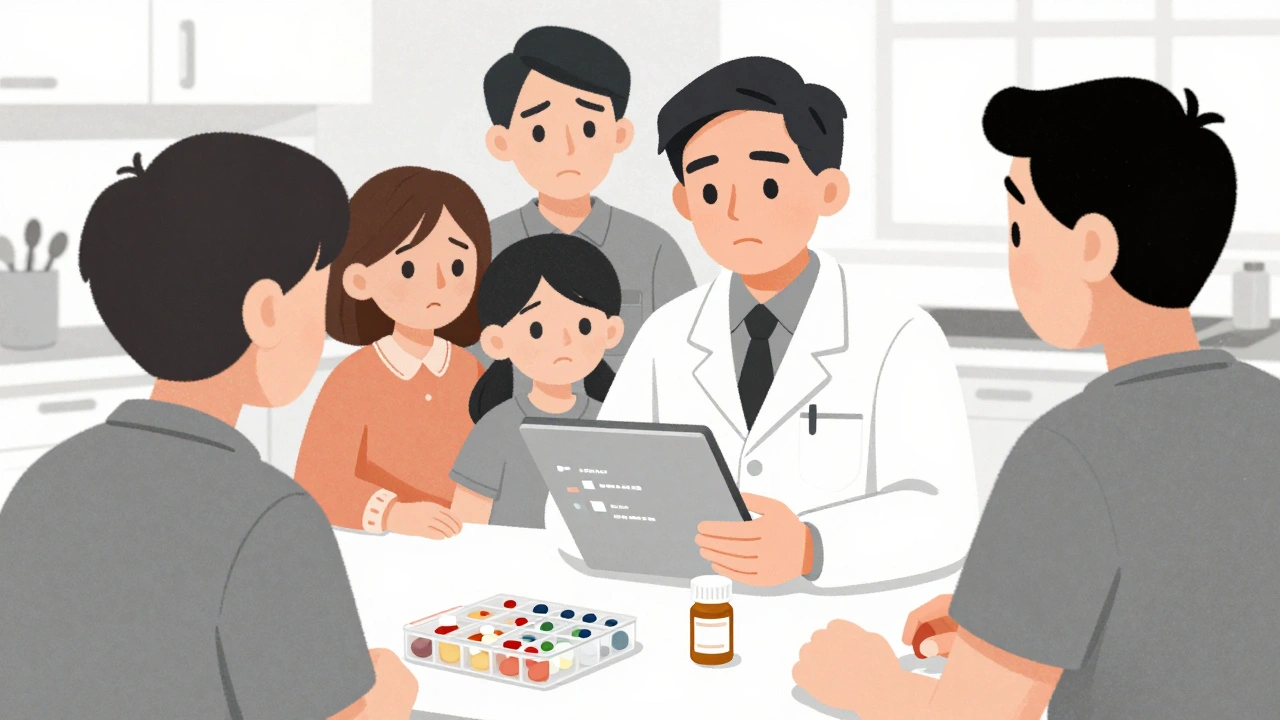
High-risk groups benefit the most. Elderly patients on five or more drugs? Their readmission risk drops by 22% when pharmacists are involved. Patients with poor health literacy? Pharmacists simplify their regimens, use color-coded pill boxes, and record voice instructions. One study showed that after pharmacist intervention, 83% of these patients could correctly name all their meds-up from 29% before.
Deprescribing: The Quiet Revolution
One of the most powerful tools in these programs is deprescribing-not adding more drugs, but taking them away. Many elderly patients are on medications that no longer help-or hurt more than they help. Anticholinergics can cause confusion and falls. Long-term PPIs increase risk of C. difficile and bone fractures. Benzodiazepines raise fall risk by 60% in seniors.
In the Beirut deprescribing study, 52% of pharmacist recommendations focused on stopping drugs. But here’s the catch: doctors only accepted about 30% of those suggestions. Why? Lack of communication. Lack of trust. Lack of time.
Successful programs fix this by embedding pharmacists into care teams. Instead of sending a note saying “Stop this drug,” they walk into the physician’s office, show the data, and say: “This patient is 82, on eight meds, had two falls this year, and is on a PPI they’ve taken for 12 years. The risk of C. difficile is 29% higher than average. Let’s taper it over two weeks and monitor.” That kind of collaboration changes minds.
Real-World Challenges and How to Beat Them
These programs don’t run on goodwill. They need structure. One of the biggest hurdles? Time. A full medication review can take 67 minutes per patient. That’s not feasible if the pharmacist is also filling prescriptions.
The solution? Teamwork. Most high-performing programs use a technician-pharmacist model. Technicians collect the history-interviewing patients, calling pharmacies, entering data. Pharmacists focus on analysis and decision-making. One program used two full-time technicians and 12 interns for weekends. The result? 92.3% accuracy in medication histories after training.
Another barrier? Physician resistance. In 43% of hospitals, doctors ignore pharmacist recommendations. The fix? Integration. Programs that embed their tools directly into the EHR-auto-flagging high-risk meds, suggesting alternatives with evidence, and documenting rationale in real time-see acceptance rates jump to 70% or higher.
Reimbursement is still a mess. Only 32 states fully reimburse pharmacist-led substitution under Medicaid. Medicare Part D covers some services, but the paperwork is so heavy that many pharmacists can’t keep up. Still, the market is growing fast. The U.S. medication reconciliation services market hit $1.87 billion in 2022 and is projected to hit $3.24 billion by 2027.
What’s Next? AI, Regulation, and Expansion
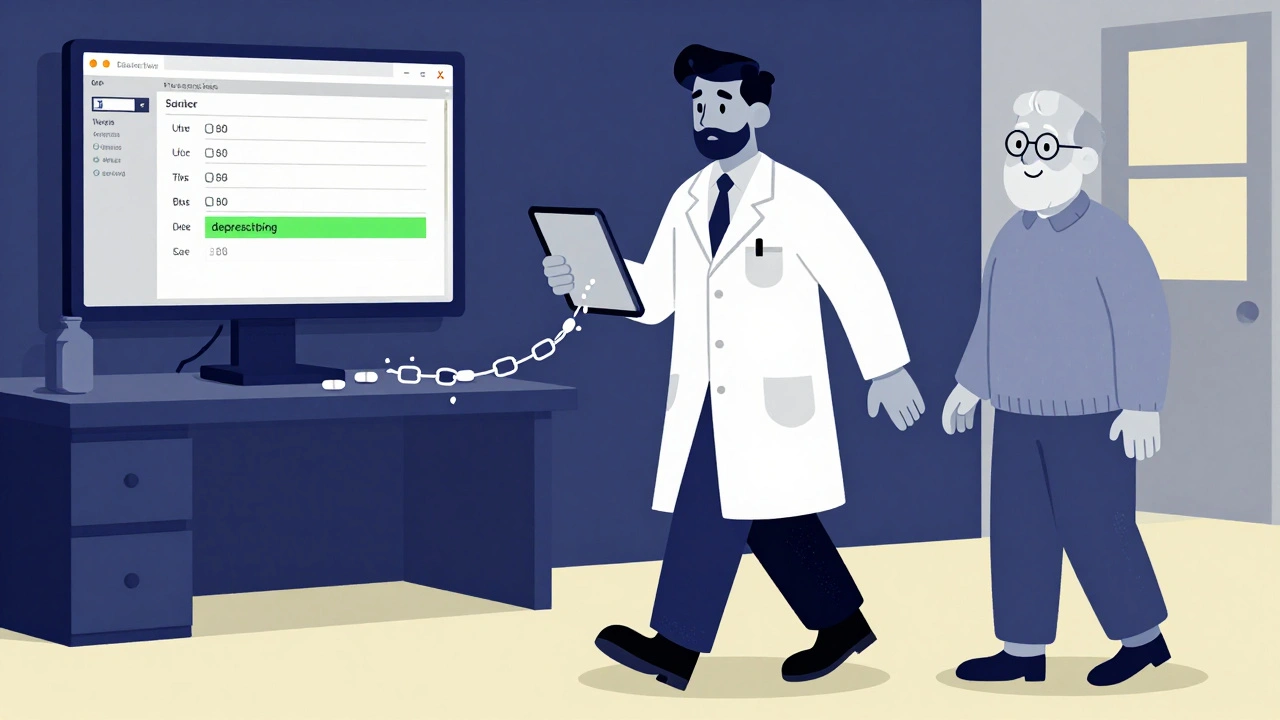
AI is starting to help. New tools can scan a patient’s pharmacy records in seconds, auto-populate medication lists, and flag inconsistencies. One pilot at 14 academic centers cut data collection time by 35%. That’s huge when you’re managing 20 patients a day.
Regulations are catching up. The 2022 Consolidated Appropriations Act now requires medication reconciliation for all Medicare Advantage patients. That’s a $420 million market opening up. And CMS’s 2024 interoperability rules are starting to recognize pharmacist-led substitution as a billable service-potentially boosting reimbursement by 18-22%.
These programs are no longer just for big hospitals. By 2023, 42% of skilled nursing facilities had started pharmacist-led deprescribing programs-up from 18% in 2020. The next frontier? Rural clinics. But here’s the problem: only 22% of critical access hospitals have these programs, compared to 89% in urban academic centers. Pharmacist shortages are real. And until we solve that, the gap will widen.
Why This Matters for Patients
At the end of the day, this isn’t about policy or budgets. It’s about a 78-year-old woman who stops falling because her sedative was removed. A man with diabetes who doesn’t get hospitalized because his new insulin was properly explained. A widow who finally understands why she doesn’t need that old antibiotic anymore.
Pharmacist-led substitution programs turn chaos into clarity. They turn guesswork into science. And they prove that when pharmacists are given the authority, the tools, and the time-they don’t just manage medications. They save lives.
What exactly is a pharmacist-led substitution program?
A pharmacist-led substitution program is a structured clinical service where pharmacists review a patient’s complete medication list, identify harmful or unnecessary drugs, and replace them with safer, more effective alternatives-especially during transitions like hospital admission or discharge. This includes deprescribing, formulary substitutions, and patient education to prevent adverse drug events and hospital readmissions.
How effective are these programs at reducing hospital readmissions?
Studies show pharmacist-led programs reduce 30-day hospital readmissions by an average of 11%, with some high-risk groups seeing up to 22% reductions. One major trial found that patients who received full pharmacist intervention had a 38% lower risk of being readmitted compared to those who didn’t. These programs are especially effective for elderly patients on five or more medications.
Can pharmacy technicians do this work without pharmacists?
No. Pharmacy technicians can collect medication histories and enter data, but only licensed pharmacists can make clinical decisions about substitutions, deprescribing, and drug interactions. Technicians are critical for efficiency, but the clinical judgment, risk assessment, and communication with physicians must come from a pharmacist. Studies show technician accuracy improves to 92.3% after training, but final decisions require pharmacist oversight.
Why do doctors sometimes refuse pharmacist recommendations?
Doctors may refuse because they’re not consulted directly, the recommendation isn’t clearly explained, or they don’t trust the pharmacist’s authority. Successful programs solve this by integrating into EHRs, using standardized communication templates, and having pharmacists join care rounds. When recommendations come with evidence, timing, and a clear plan-physicians accept them 70% of the time or more.
Are these programs expensive to implement?
They require staffing-typically one pharmacist supported by technicians-but the cost is offset by savings. Each program prevents $1,200-$3,500 per patient in avoided hospitalizations and ER visits. With 11% fewer readmissions, hospitals also avoid CMS penalties under the Hospital Readmissions Reduction Program. Many institutions break even within six months and start saving money after one year.
Do these programs work in rural or small hospitals?
They can, but they’re harder to sustain. Only 22% of critical access hospitals have full programs, compared to 89% in urban academic centers. The main barriers are pharmacist shortages and lack of funding. Smaller hospitals can start with part-time pharmacists, use telepharmacy for consultations, and focus on high-risk patients first. Even basic medication reconciliation at discharge can cut readmissions by 6-8%.
What’s the biggest mistake hospitals make when starting these programs?
Trying to do everything at once. The most common error is hiring pharmacists but not giving them time, tools, or authority. Programs fail when pharmacists are stuck doing dispensing work or when EHRs don’t support their workflow. Start small: focus on one unit, one high-risk drug class, or one transition point (like discharge). Prove the results, then expand.
How do these programs affect patient safety?
They dramatically improve safety. Multi-center trials show a 49% reduction in adverse drug events. That means fewer allergic reactions, fewer drug interactions, fewer overdoses from duplicate prescriptions, and fewer falls caused by sedatives. One study found that deprescribing anticholinergics in seniors reduced falls by 41%. These programs turn medication errors-which are the third leading cause of death in the U.S.-into preventable events.


Comments (8)