
After giving birth, many women feel exhausted, overwhelmed, or emotionally drained. It’s normal. But what if your fatigue isn’t just from sleepless nights? What if your hair is falling out, you’re gaining weight despite eating less, or you’re suddenly freezing when everyone else is sweating? These aren’t just signs of being a new mom-they could be symptoms of postpartum thyroiditis, a hidden thyroid condition that affects 5 to 10% of women after childbirth.
What Exactly Is Postpartum Thyroiditis?
Postpartum thyroiditis is an autoimmune reaction that happens when your immune system, which was suppressed during pregnancy to protect the baby, rebounds after delivery. Instead of calming down, it starts attacking your thyroid gland-mistaking it for a threat. This leads to inflammation and temporary damage, causing your thyroid to leak hormones at first (hyperthyroid phase), then burn out and stop making enough (hypothyroid phase).
It’s not Graves’ disease. It’s not permanent Hashimoto’s-at least not yet. Unlike those conditions, postpartum thyroiditis usually resolves on its own within 12 to 18 months. But while it lasts, the symptoms can feel overwhelming. And because they mimic postpartum depression or plain old exhaustion, many women go months without a proper diagnosis.
The Two Phases: Hyperthyroid Then Hypothyroid
This condition doesn’t hit you all at once. It comes in two waves.
Phase One: Hyperthyroid (1-4 months postpartum)
During this phase, damaged thyroid cells spill stored hormones into your bloodstream. Your body thinks it’s swimming in thyroid hormone. You might feel:
- Heart racing (over 100 beats per minute)
- Shaky hands or tremors
- Unexplained weight loss (4-7 pounds)
- Heat intolerance-sweating through clothes while others are cold
- Insomnia, even when your baby is sleeping
Here’s the catch: up to half of women have mild or no symptoms during this phase. Doctors often miss it because the signs look like stress, anxiety, or caffeine overload. But if you’re having palpitations or losing weight without trying, it’s worth checking.
Phase Two: Hypothyroid (4-8 months postpartum)
This is where most women finally notice something’s wrong. The thyroid is now exhausted. It can’t produce enough hormone. Symptoms include:
- Extreme fatigue-so deep it doesn’t improve with sleep
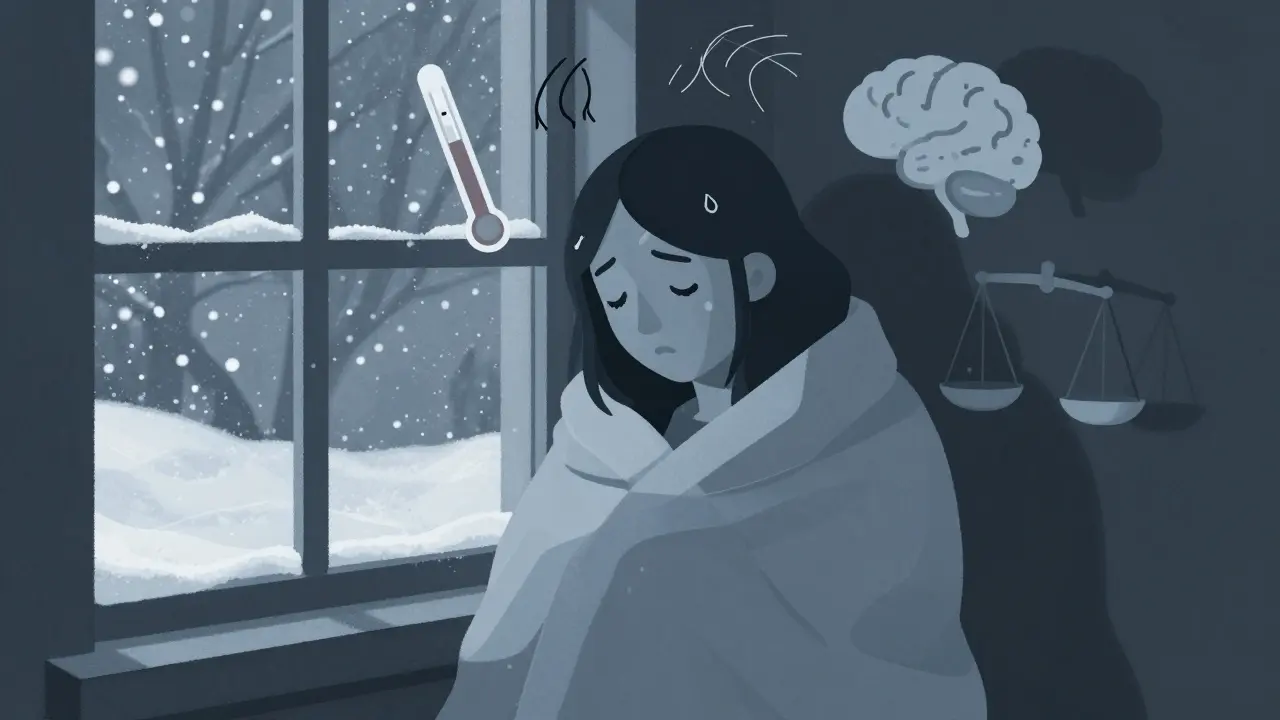
- Feeling cold all the time, even in warm rooms
- Constipation, dry skin, brittle nails
- Hair thinning or shedding (more than normal postpartum shedding)
- Brain fog-forgetting names, struggling to focus, feeling mentally sluggish
- Weight gain (5-10 pounds) despite no change in diet or activity
Some women skip the hyperthyroid phase entirely and go straight into hypothyroidism. About 10-25% of cases present this way. Others have only a brief hyperthyroid phase and never develop hypothyroidism. But if you’re in the 70-80% who recover fully, your thyroid will bounce back-usually by 12-18 months.
How Is It Diagnosed?
You can’t diagnose this by symptoms alone. Blood tests are essential.
During the hyperthyroid phase:
- TSH (thyroid-stimulating hormone) is low (<0.4 mIU/L)
- Free T4 (thyroid hormone) is high
During the hypothyroid phase:
- TSH is high (>4.5 mIU/L)
- Free T4 is low
And here’s the key marker: thyroid peroxidase antibodies (TPOAb). If you test positive for these, your immune system is actively targeting your thyroid. Around 80-90% of women with postpartum thyroiditis have elevated TPOAb levels.
Doctors may also check for a painless, slightly enlarged thyroid (no tenderness, unlike subacute thyroiditis). A radioactive iodine uptake test can confirm it’s not Graves’ disease-postpartum thyroiditis shows uptake below 2%, while Graves’ is above 60%.
Testing isn’t routine for every new mom. But if you have any of these risk factors, you should ask:
- Type 1 diabetes
- History of postpartum thyroiditis in a previous pregnancy
- Other autoimmune conditions (like lupus or rheumatoid arthritis)
- Family history of thyroid disease
- High TPO antibody levels during pregnancy
For women with these risk factors, testing at 6-12 weeks postpartum is strongly recommended. Even if you don’t have symptoms, early detection can prevent complications.
Why Misdiagnosis Is So Common
Most women are told they’re just “tired from being a new mom.” And honestly? That’s often true. But when fatigue is paired with cold intolerance, hair loss, brain fog, and a racing heart-it’s not just exhaustion.
Studies show that 30% of women with postpartum thyroiditis are initially misdiagnosed with postpartum depression. In one Reddit thread with over 140 stories, 78% of women said they were told their symptoms were “all in their head” before getting a thyroid test. One woman waited 11 months before a doctor finally ordered bloodwork. By then, she was so depleted she couldn’t lift her baby.
Doctors aren’t always to blame. Many OB-GYNs aren’t trained to think thyroid first. Only 42% of obstetricians routinely consider thyroid issues in women with symptoms beyond 12 weeks postpartum, according to ACOG data. Endocrinologists are better equipped, but most women never see one unless they push for it.
The real danger? Being put on antidepressants when you need thyroid hormone. One Cleveland Clinic study found that 40% of women initially diagnosed with postpartum depression were later found to have thyroid dysfunction. Their mood improved within weeks of starting levothyroxine-not SSRIs.
Treatment: When to Medicate and When to Wait
The good news? Most women don’t need lifelong treatment.
Hyperthyroid phase: Usually no medication is needed. If your heart is racing or you’re anxious, a short course of beta-blockers (like propranolol) can help manage symptoms without touching your thyroid. You’re not making too much hormone-you’re leaking it. The body will stop leaking on its own.
Hypothyroid phase: If your TSH is above 10 mIU/L or you have symptoms, doctors typically prescribe levothyroxine. It’s safe, even while breastfeeding. Most women take it for 6-12 months. Then, they stop and get retested. If TSH returns to normal, they’re done. If not, it’s likely permanent hypothyroidism.
Here’s the hard truth: 20-30% of women end up needing lifelong thyroid replacement. That’s not rare. It’s common enough that if you’ve had postpartum thyroiditis once, your risk of developing permanent hypothyroidism within 10 years jumps to 50%. That’s why follow-up testing at 6, 12, and 24 months is critical.
What About Breastfeeding?
Levothyroxine is safe during breastfeeding. Only tiny amounts pass into milk, and studies show no effect on infant thyroid function. In fact, untreated hypothyroidism is more dangerous for milk supply than the medication. About 38% of women report lower milk production during the hypothyroid phase. Once treated, supply often improves.
Don’t avoid treatment out of fear. Your baby needs you at your best.
Long-Term Outlook and Future Risks
If your thyroid returns to normal, you’re not in the clear forever. Women who’ve had postpartum thyroiditis have a much higher risk of developing permanent hypothyroidism later-especially if they’re still positive for TPO antibodies. One study showed 50% developed Hashimoto’s within 10 years.
It also increases your risk of thyroid issues in future pregnancies. If you’ve had it once, your chance of getting it again is 70%. That’s why, if you plan another pregnancy, you should get your TSH and TPOAb checked before conceiving.
And if you have type 1 diabetes? Your risk is even higher-25-30% develop postpartum thyroiditis. That’s why the American Thyroid Association now recommends TPO antibody testing for all pregnant women with type 1 diabetes.
What’s Changing in 2025?
There’s growing momentum to make thyroid screening standard after birth. In Europe, 85% of countries screen high-risk women routinely. In the U.S., only 62% of endocrinologists test women with persistent symptoms beyond 8 weeks-but that’s up from 38% in 2018.
Experts like Dr. Angela Leung from UCLA predict universal TSH screening at 6 and 12 weeks postpartum will become standard within five years. Why? Because it saves money. One study found that correctly diagnosing postpartum thyroiditis saves $2,300 per woman by avoiding unnecessary antidepressants, ER visits, and lost productivity.
New tools are also emerging. The Cleveland Clinic launched a digital symptom tracker in early 2024 that flags thyroid dysfunction with 80% accuracy based on user-reported fatigue, weight changes, and mood shifts. Early results show it cuts diagnosis time by 40%.
And research is moving beyond TPO antibodies. Scientists are now studying interleukin-10 as a predictive biomarker-with 88% sensitivity for identifying who will develop the condition before symptoms even start.
What You Can Do Now
If you’re a new mom and something feels off-beyond the usual exhaustion-don’t wait. Don’t assume it’s normal. Ask for a TSH and free T4 blood test. If you have risk factors, ask for TPO antibody testing too.
Write down your symptoms. Track when they started. Note if you’ve had weight changes, heart palpitations, or brain fog. Bring this list to your doctor. If they dismiss you, ask for a referral to an endocrinologist.
You’re not imagining it. Your body is sending signals. Postpartum thyroiditis is real, treatable, and far more common than most people think. Catching it early doesn’t just fix your thyroid-it gives you back your energy, your clarity, and your ability to enjoy motherhood without feeling like you’re running on empty.


Comments (11)