When you take a pill every day, you assume it’s safe. But what if that pill has hidden risks you never knew about? In 2025, the U.S. Food and Drug Administration (FDA) issued more than 60 official safety alerts about medications already on the market - some leading to label changes, others to full recalls. These aren’t hypothetical warnings. They’re real updates that affect how doctors prescribe, how pharmacists dispense, and how patients manage their health.
Why Drug Safety Alerts Happen After Approval
Medications get approved based on clinical trials involving thousands of people. But those trials last months, not years. They don’t include elderly patients with five other conditions. They don’t capture what happens when someone takes a drug for 10 years straight. That’s why the FDA keeps watching after a drug hits the shelves. The agency uses real-world data - hospital records, pharmacy logs, patient reports, and long-term studies - to spot problems that didn’t show up during testing. In 2024 alone, the FDA issued 68 safety communications, up from 47 in 2020. That’s a 45% increase in just four years. And it’s not because drugs are getting riskier. It’s because we’re getting better at seeing the risks.Opioid Labeling Changes: A Landmark Update
The biggest drug safety update of 2025 came on July 31. The FDA required all opioid pain medications - from oxycodone to morphine to fentanyl patches - to include new, specific numbers about long-term risks. For the first time, prescribing information now states that 1 in 12 patients who take opioids for more than 90 days will develop an opioid use disorder. This wasn’t based on guesswork. Two postmarketing studies, funded by drugmakers and reviewed by the FDA, tracked over 120,000 patients. They found that 10.2% developed dependence. That’s more than 10% of people who thought they were just managing pain. The new labels also warn about rare but deadly brain damage called toxic leukoencephalopathy, which can happen even without overdose. And they now list gabapentin (Neurontin) and pregabalin (Lyrica) as dangerous when mixed with opioids - a combination many doctors still prescribe. Doctors are split. Some say this finally gives them hard data to talk to patients. Others worry it will push people off pain meds too quickly, leading to withdrawal or untreated pain. The U.S. Pain Foundation warned that without better access to physical therapy or nerve blocks, patients could suffer more.ADHD Medications and Weight Loss in Young Children
On June 30, 2025, the FDA updated warnings for extended-release stimulants like Adderall XR, Vyvanse, and Concerta. These drugs, commonly prescribed to children with ADHD, can cause significant weight loss - especially in kids under 6. The new guidance says doctors must measure a child’s weight at the start of treatment and every three months after. Why now? A review of 12,000 pediatric cases showed that 18% of children under 6 lost more than 5% of their body weight in the first six months. Some dropped below the 5th percentile for BMI. The FDA didn’t pull these drugs. Instead, it said: monitor closely. If weight keeps falling, switch to non-stimulant options like atomoxetine or guanfacine.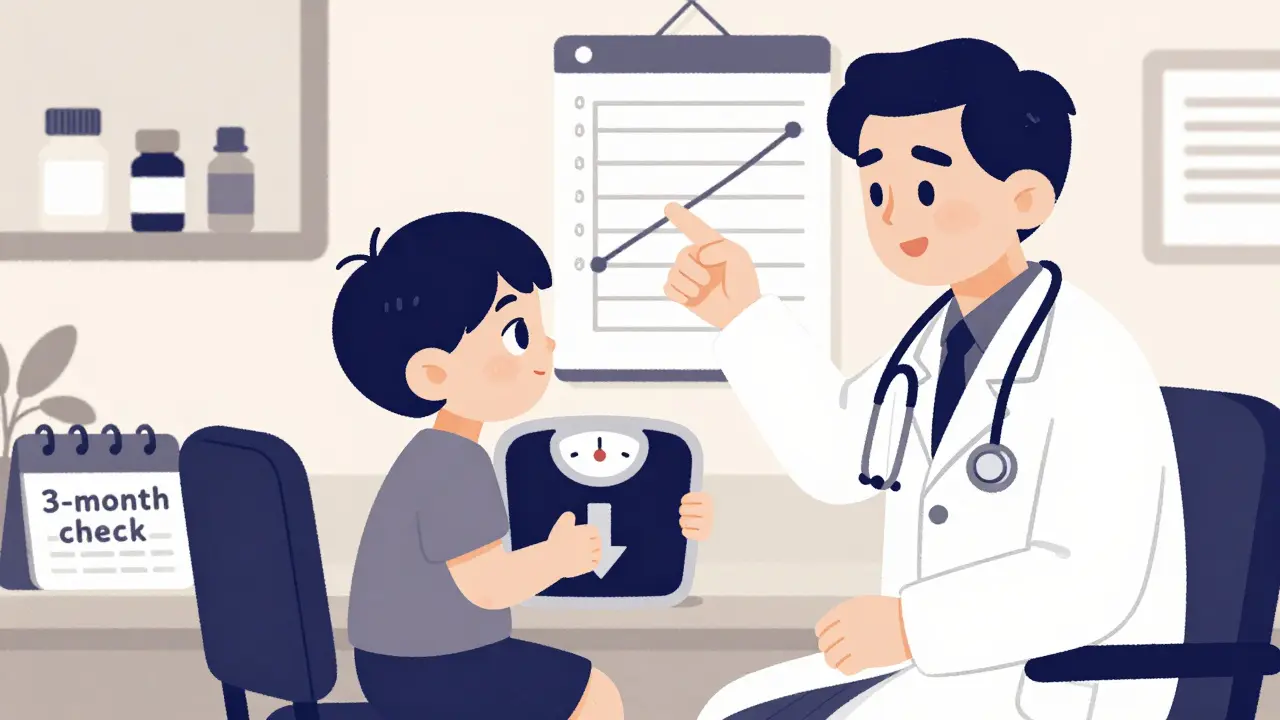
Alzheimer’s Drug Leqembi and the MRI Requirement
Leqembi, the newest Alzheimer’s drug approved in 2023, became the first dementia treatment to get mandatory MRI monitoring. On August 28, 2025, the FDA said all patients starting Leqembi must get brain scans at 5 and 14 months. Why? Because 274 patients developed a condition called ARIA - amyloid-related imaging abnormalities - in the first year of use. Most had no symptoms, but 1 in 20 had headaches, confusion, or seizures. ARIA is caused by the drug clearing amyloid plaques too fast, which can cause tiny brain bleeds or swelling. It’s not fatal for most, but it’s serious enough that doctors now need to check before every dose. The FDA didn’t ban the drug. It just said: if you’re going to use it, you must scan.Weight Loss Drugs, Heart Risks, and the Mounjaro Effect
GLP-1 drugs like semaglutide (Wegovy, Ozempic) and tirzepatide (Mounjaro) are exploding in popularity. But in 2025, the FDA flagged a pattern: patients using these drugs for weight loss were reporting rapid heart rate, palpitations, and dizziness. The agency didn’t issue a recall. Instead, it added a new warning to labels: “May cause tachycardia and increased cardiac workload. Use caution in patients with pre-existing heart conditions.” Doctors are now checking resting heart rates before prescribing. One study from the Mayo Clinic found that 17% of patients on high-dose semaglutide had heart rates over 100 bpm after 12 weeks - even if they were otherwise healthy.When the FDA Removes a Warning: The Clozapine Story
Not all updates are about adding danger. Sometimes, the FDA removes a restriction because it learns a drug is safer than thought. On August 27, 2025, the FDA lifted the Risk Evaluation and Mitigation Strategy (REMS) for clozapine, an antipsychotic used for treatment-resistant schizophrenia. For 30 years, patients had to get weekly blood tests to check for a rare but deadly drop in white blood cells. The FDA reviewed over 1.2 million patient records and found the risk had dropped to less than 0.1% - lower than the risk of a car accident. Now, blood tests are only needed monthly. This change means fewer hospital visits, lower costs, and better adherence. It’s a rare win for patients who’ve been stuck in a system designed for fear, not evidence.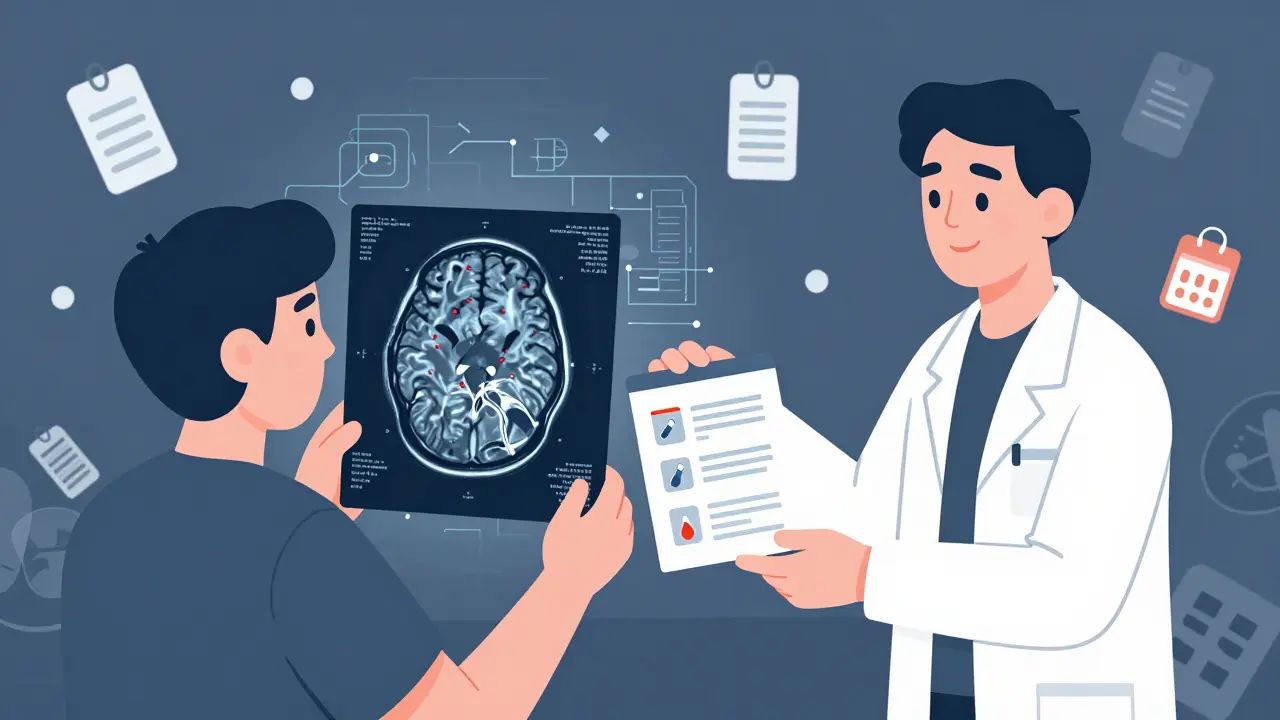
What Patients Should Do Right Now
You don’t need to panic. But you do need to be informed.- If you take opioids - ask your doctor if you’re on the new label. Ask what the 1 in 12 risk means for you.
- If you’re on ADHD meds and your child is under 6 - check their weight chart. If they’ve lost more than 5% of their body weight, talk to your doctor.
- If you’re on Leqembi - make sure your next MRI is scheduled. Don’t skip it.
- If you’re on a weight loss drug and feel your heart racing - write it down. Bring it to your next visit.
- If you’re on clozapine - ask if your blood test schedule can be reduced.
How to Stay Updated
You won’t get a letter from the FDA. You won’t get a call from your pharmacy. You have to check. The FDA posts all Drug Safety Communications on their website. Search for “FDA Drug Safety Communications” and filter by date. You can also sign up for email alerts. Most major pharmacy chains now include FDA updates in their patient portals. Ask your pharmacist to show you the latest alerts for your meds.What’s Next?
The FDA plans to cut the time between spotting a risk and issuing a warning from 60-90 days to just 30 days by 2027. They’re using AI to scan millions of electronic health records in real time. By 2028, every drug with a black box warning may be required to generate real-world safety data - meaning drugmakers will have to pay for ongoing studies, not just one-time trials. That means more alerts. More changes. More questions. But it also means fewer surprises. Fewer people dying from side effects that could have been caught earlier. Your medication isn’t just a pill. It’s a tool. And tools need regular checkups - even if they’ve been working fine for years.Are medication recalls common?
Full recalls are rare. Most safety updates are label changes, not withdrawals. In 2025, the FDA issued only 3 full recalls out of 68 safety communications. The rest were updates to prescribing information, new warnings, or monitoring requirements. A recall usually only happens if a drug causes serious harm - like liver failure, heart attacks, or death - and there’s no safe way to use it.
Can I stop my medication if I see a safety alert?
No. Never stop a prescription without talking to your doctor. Many safety alerts apply to a small group of people or require monitoring, not stopping. For example, the Leqembi MRI warning doesn’t mean you can’t take the drug - it means you need an MRI before each dose. Stopping suddenly can be dangerous, especially with antidepressants, seizure meds, or opioids. Contact your provider first.
Do these alerts mean the drugs are unsafe?
Not necessarily. They mean the risks are better understood now. Many drugs on the market today are still safe for most people - if used correctly. The opioid labeling update doesn’t mean opioids are bad. It means we now know that 1 in 12 long-term users will develop dependence. That’s not a reason to avoid them for everyone - it’s a reason to use them carefully.
Why do some drugs get warnings while others don’t?
It depends on how many people use the drug and how severe the side effect is. A drug used by 25 million people (like Zyrtec) gets attention even for mild side effects. A drug used by 10,000 people (like a rare cancer treatment) needs a much stronger signal before the FDA acts. Also, drugs with black box warnings - the strongest FDA alert - get more scrutiny.
How do I know if my pharmacy has the updated label?
Pharmacies are required to update Medication Guides within 90 days of an FDA alert. Ask your pharmacist for the latest guide for your drug. They should have it printed or available digitally. You can also check the FDA website - each safety communication includes a link to the updated label. If your guide is older than 2025, request the new version.


Comments (13)