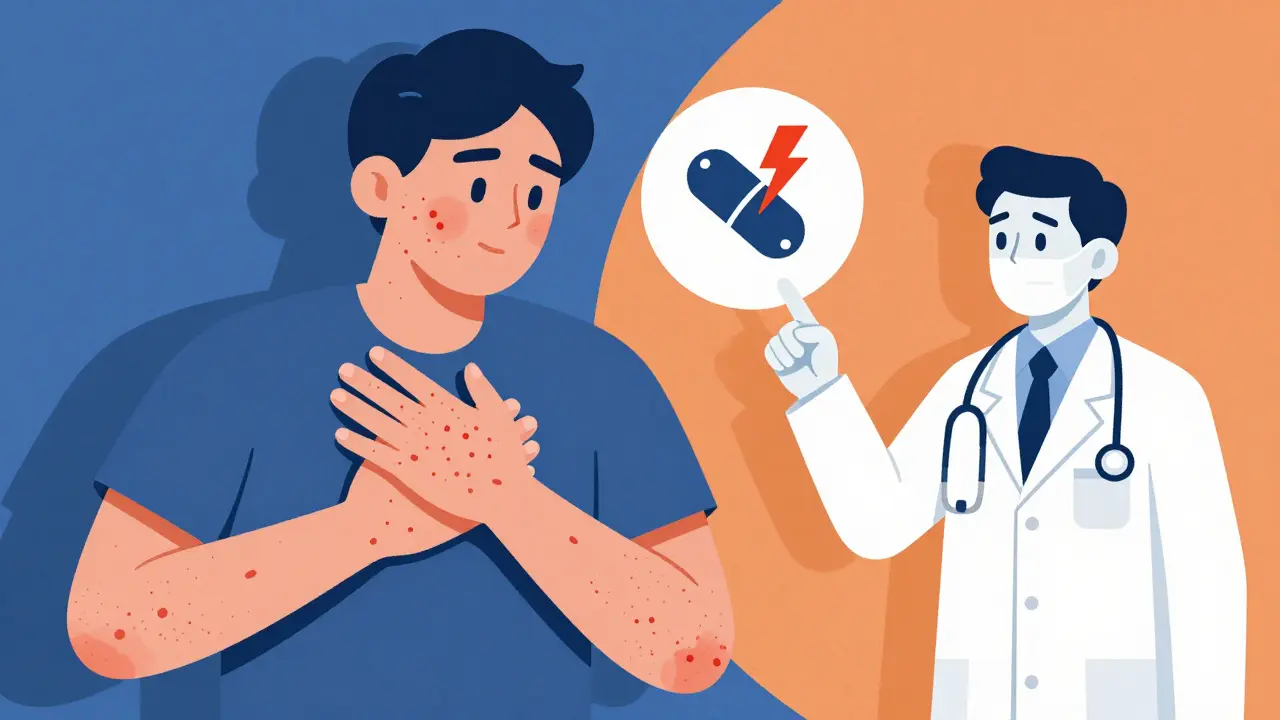
What Really Counts as a Drug Allergy?
Not every bad reaction to a medicine is an allergy. If you get a stomachache after taking ibuprofen, that’s likely a side effect-not an allergy. A true drug allergy means your immune system mistakes the medicine for a threat and attacks it. That’s what triggers the scary symptoms: hives, swelling, trouble breathing, or worse. The difference matters because mislabeling yourself as allergic to penicillin, for example, can mean doctors give you stronger, pricier, and riskier antibiotics instead.
Here’s the reality: about 10% of Americans say they’re allergic to a drug. But studies show more than 90% of those people aren’t actually allergic when tested. That’s not just a mistake-it’s dangerous. It leads to longer hospital stays, higher costs, and avoidable complications like C. diff infections. So if you think you’re allergic to something, it’s worth getting it checked.
Common Signs of a Drug Allergy
Most drug allergies show up on your skin. A rash is the #1 sign. But not all rashes are the same. Here’s how to tell what you’re dealing with:
- Hives: Raised, red, itchy welts that come and go. They can appear anywhere and change shape fast. This is a classic sign of an IgE-mediated reaction.
- Flat red spots or small bumps: These often show up days after starting a new drug. They don’t itch much at first, but they spread. This is a delayed exanthem-common with antibiotics like amoxicillin.
- Swelling: Lips, tongue, eyelids, or throat swelling is serious. It can block your airway. Don’t wait-call 911.
- Itching: Even without a visible rash, intense itching can mean your immune system is reacting.
Other symptoms that shouldn’t be ignored:
- Wheezing or shortness of breath
- Nausea, vomiting, or diarrhea
- Dizziness or fainting
- Fever with joint pain or swollen lymph nodes (this could be DRESS or serum sickness)
When a Reaction Turns Emergency
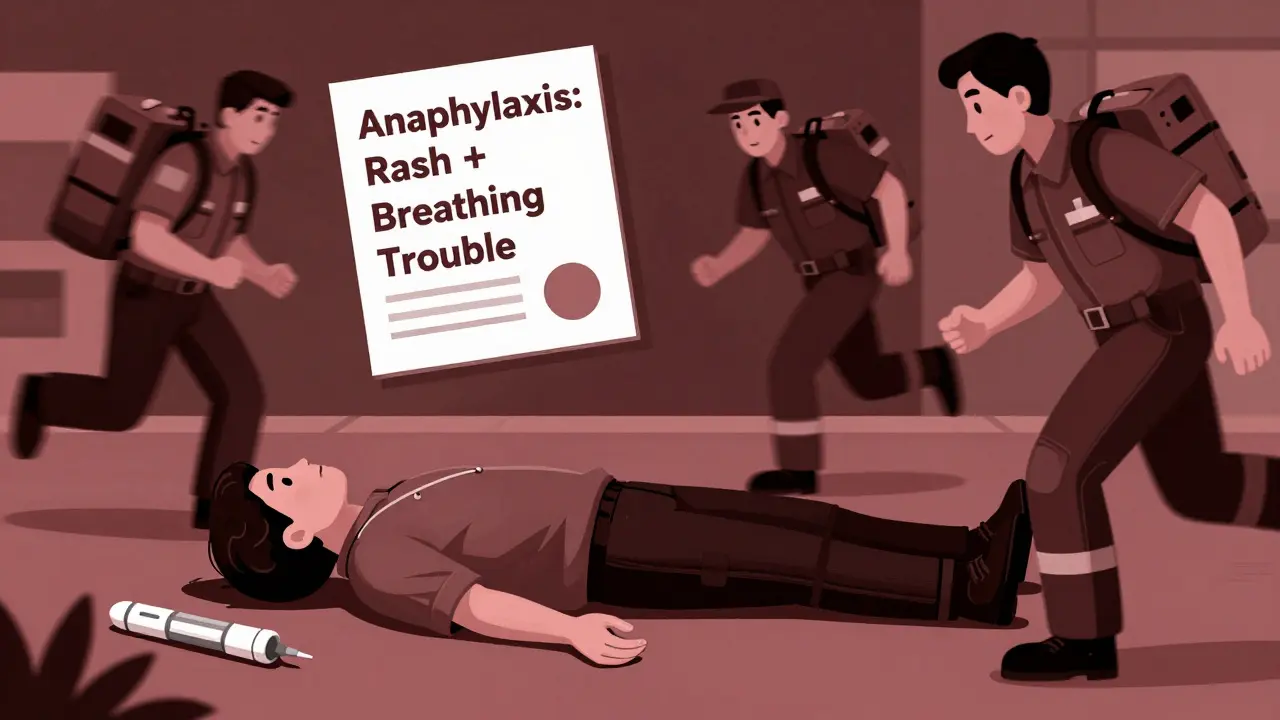
Anaphylaxis isn’t just a bad reaction. It’s a full-body crisis. It hits fast-usually within minutes to an hour after taking the drug. It affects two or more body systems at once. For example: a rash and trouble breathing. Or swelling and vomiting. Or low blood pressure and confusion.
If you or someone else has these signs:
- Call 911 immediately.
- If you have an epinephrine auto-injector (like an EpiPen), use it now.
- Stay lying down with legs raised if possible. Don’t stand or walk.
- Even if you feel better after the shot, you still need to go to the ER. Symptoms can come back.
Don’t wait to see if it gets better. Anaphylaxis can kill in under an hour if untreated. Emergency teams carry medications that can reverse this reaction-but only if they get there in time.
Delayed Reactions You Can’t Ignore
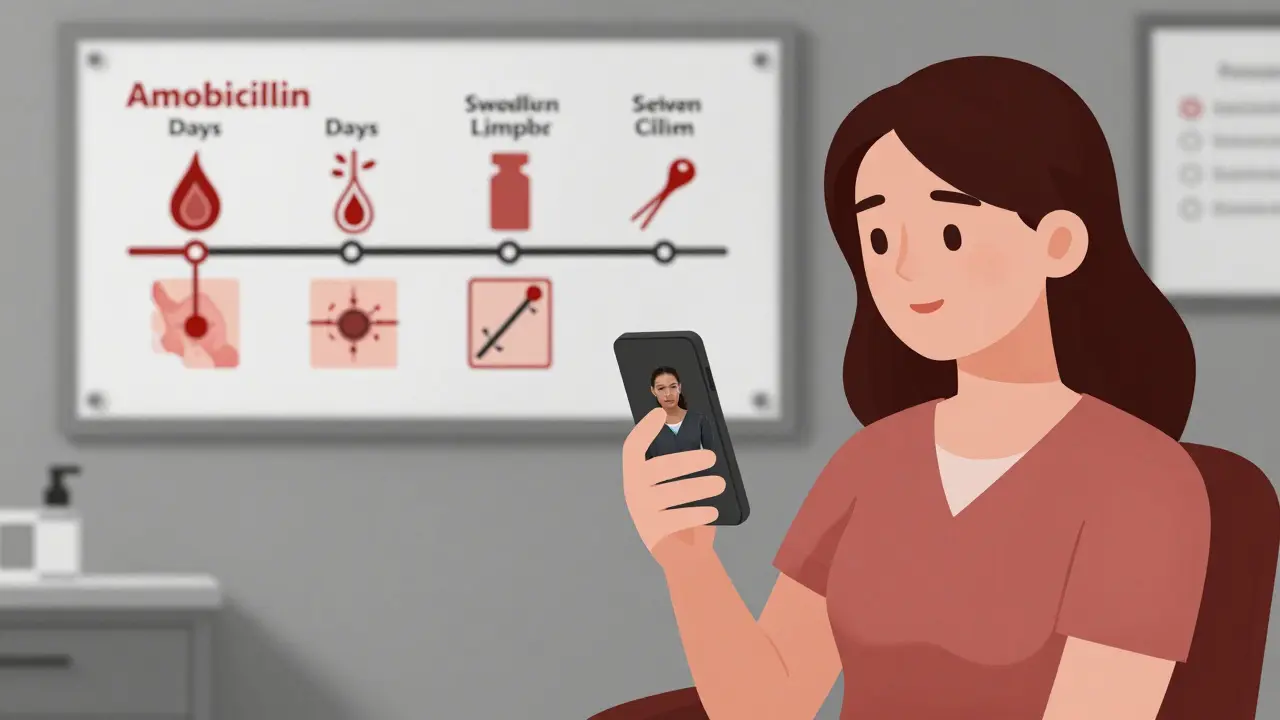
Not all drug allergies strike right away. Some take days-or even weeks-to show up. That’s why people often miss the connection. You take amoxicillin for a sinus infection. Three days later, you get a rash. You think it’s a virus. It’s not. It could be your immune system reacting.
Here are two delayed reactions that need medical attention:
- DRESS syndrome: Rash + high fever + swollen glands + liver problems. It can damage your organs. Often starts 2-6 weeks after starting the drug. Common triggers: antiseizure meds, allopurinol, some antibiotics.
- Serum sickness-like reaction: Rash, fever, joint pain, swollen lymph nodes. Appears 1-3 weeks after taking the drug. Often linked to antibiotics like cefaclor or antivirals.
If you develop a rash and fever after starting a new drug-even if it’s been days-see your doctor. Don’t assume it’s harmless.
Stevens-Johnson Syndrome and Toxic Epidermal Necrolysis
These are rare but deadly. They start like a bad flu: fever, sore throat, burning eyes. Then, your skin begins to blister and peel-like a severe burn. Mucous membranes in your mouth, eyes, and genitals are often involved.
They’re medical emergencies. You need to be admitted to a burn unit or ICU. Mortality rates can hit 30% if not treated fast. Common triggers: sulfa drugs, NSAIDs like ibuprofen or naproxen, anticonvulsants, and some antibiotics.
If you notice:
- Red or purple skin patches that spread
- Blisters or peeling skin (especially on the face, chest, or groin)
- Sores in your mouth, eyes, or genitals
Go to the ER right now. Don’t wait. Don’t call your doctor first. This is a life-or-death situation.
How Doctors Diagnose Drug Allergies
There’s no simple blood test for most drug allergies. The best tool? Your story.
Doctors ask: When did you start the drug? When did symptoms begin? What did they look like? Did you have trouble breathing? Did your skin peel? Did you feel dizzy? They’ll also check your medical history and do a physical exam.
For penicillin, there’s a reliable test: skin testing. A tiny drop of penicillin is placed on your skin, then gently pricked. If you’re allergic, a red bump appears within 15-20 minutes. If negative, you might get a small oral dose under supervision to confirm you’re safe.
For other drugs, testing is harder. Blood tests can help with DRESS or other severe delayed reactions by checking for certain immune markers. But for most allergies, the only way to be sure is to carefully re-expose you to the drug in a controlled setting-with a specialist watching.
That’s why allergists are key. If you’ve had a serious reaction, seeing one isn’t optional. It’s life-saving.
What to Do If You Think You’re Allergic
- Stop the drug-but only if it’s safe to do so. Don’t quit antibiotics cold turkey without talking to your doctor.
- Take photos of rashes, swelling, or blisters. Visuals help doctors more than descriptions.
- Write down everything: drug name, dose, when you took it, when symptoms started, how they changed.
- Don’t self-diagnose. Many people think they’re allergic to penicillin because they got a rash as a kid. But 9 out of 10 aren’t allergic anymore-or never were.
- See an allergist if you’ve had a serious reaction. Don’t wait. Get tested.
Why Getting Tested Matters
Being labeled allergic to penicillin sounds harmless. But it’s not. Doctors avoid it. They give you vancomycin, clindamycin, or azithromycin instead. These are broader-spectrum antibiotics. They kill more good bacteria. They cost more. And they raise your risk of deadly infections like C. diff.
Studies show that people wrongly labeled as penicillin-allergic have 2-3 times higher risk of C. diff and longer hospital stays. They’re also more likely to get MRSA. That’s not a small trade-off. That’s a huge public health problem.
Testing isn’t just about comfort. It’s about safety. If you’re cleared, you can use safer, cheaper, more effective drugs. Your next infection? It could be treated faster-with less risk.
What to Tell Your Doctor
When you talk to your doctor or allergist, be specific:
- What drug? Exact name, not just “antibiotic” or “painkiller.”
- When did you take it? How many doses?
- What happened? Describe the symptoms exactly.
- How long did it take to start? Minutes? Hours? Days?
- Did you need emergency care?
- Did you get better after stopping the drug?
Don’t say, “I’m allergic to penicillin.” Say, “I broke out in hives two hours after taking amoxicillin when I was 8. I didn’t have trouble breathing.” That’s the kind of detail that saves lives.
What Not to Do
- Don’t avoid all antibiotics because you think you’re allergic to one.
- Don’t assume your child’s rash means they’re allergic forever.
- Don’t skip follow-up testing because “it’s not a big deal.”
- Don’t take the same drug again just because you’re “sure you’ll be fine.”
Drug allergies can change. Kids outgrow them. Adults can develop new ones. But the only way to know is to get tested by a specialist.
Final Thought: Don’t Guess. Get Tested.
If you’ve ever had a reaction to a drug-even if it was years ago-don’t assume you’re still allergic. Don’t let a label from childhood hold you back from better care. Most people who think they’re allergic aren’t. And those who are? They need the right tools to stay safe.
One phone call to an allergist could save you from dangerous antibiotics, long hospital stays, or worse. If you’ve had a rash, swelling, breathing trouble, or fever after a drug-get it checked. Your future self will thank you.
Can you outgrow a drug allergy?
Yes, especially with penicillin. Studies show up to 90% of people who were told they were allergic to penicillin as children can safely take it again as adults after proper testing. Allergies can fade over time, but you shouldn’t assume you’re no longer allergic-you need to get tested to be sure.
Can you have a drug allergy without a rash?
Absolutely. While rashes are common, some drug allergies only affect your breathing, gut, or blood pressure. Symptoms like wheezing, vomiting, dizziness, or low blood pressure without a rash can still mean you’re having an anaphylactic reaction. Never ignore these signs just because your skin looks fine.
Is it safe to take a drug again if I had a mild reaction before?
No. Even a mild reaction can become severe the next time. Your immune system remembers. If you had hives, swelling, or trouble breathing-even once-you should avoid the drug until you’ve been evaluated by an allergist. Never try it again on your own.
Can over-the-counter drugs cause allergies?
Yes. Common culprits include ibuprofen, naproxen, aspirin, and even some antihistamines. People often assume OTC drugs are safe, but any medication can trigger an immune reaction. If you get a rash, swelling, or breathing trouble after taking something like Advil or Tylenol, treat it like a serious reaction and get checked.
Do I need to carry an epinephrine pen if I’m allergic to a drug?
If you’ve had anaphylaxis from a drug before, yes. Your allergist will likely prescribe one. Keep it with you at all times, and make sure family or coworkers know how to use it. Even if you’re careful, accidental exposure can happen-having the pen ready could save your life.
How long does it take for a drug allergy to go away?
Symptoms usually clear up within days to weeks after stopping the drug. Hives fade fast-often in 24-48 hours. Rashes from delayed reactions can take up to two weeks. But the allergy itself? That’s a permanent immune memory unless you get tested and cleared. Stopping the drug doesn’t erase your allergy-it just stops the reaction.
Can I be allergic to a drug I’ve taken before without problems?
Yes. Your immune system can suddenly start reacting to a drug you’ve taken safely for years. This is common with antibiotics, painkillers, and even vaccines. You don’t need to have had a reaction before to become allergic. That’s why every new drug carries some risk.
Are there any home remedies for drug allergy symptoms?
For mild itching or rash, cool compresses or antihistamines like Benadryl can help. But if you have swelling, breathing trouble, or dizziness-no home remedy is safe. These are signs of a system-wide reaction. Only medical treatment can stop it. Don’t delay care hoping a home fix will work.


Comments (13)