Steroid Taper & Risk Estimator
Quick Safety Check
Based on Endocrine Society Guidelines (2023)
- Short Term (<3-4 weeks):
- Long Term (>4 weeks):
Usually safe to stop abruptly unless dose is very high.
Taper likely required. ACTH stimulation testing recommended before stopping.
* This tool provides estimates for educational purposes only. Always consult your healthcare provider for medical advice.
Estimated Taper Schedule
| Phase | Target Dose | Duration per Step | Notes |
|---|
Stopping steroids isn't like quitting a bad habit. If you've been taking them for more than a few weeks, your body has likely stopped making its own cortisol. Cutting off the supply abruptly doesn't just cause discomfort; it can trigger adrenal crisis, a life-threatening condition involving shock, severe vomiting, and dangerously low blood pressure. The difference between a smooth exit and a medical emergency is a carefully managed taper schedule. This guide breaks down exactly how those schedules work, why they vary so much, and what you need to watch for to keep yourself safe.
The Biology Behind the Taper: Why You Can't Just Stop
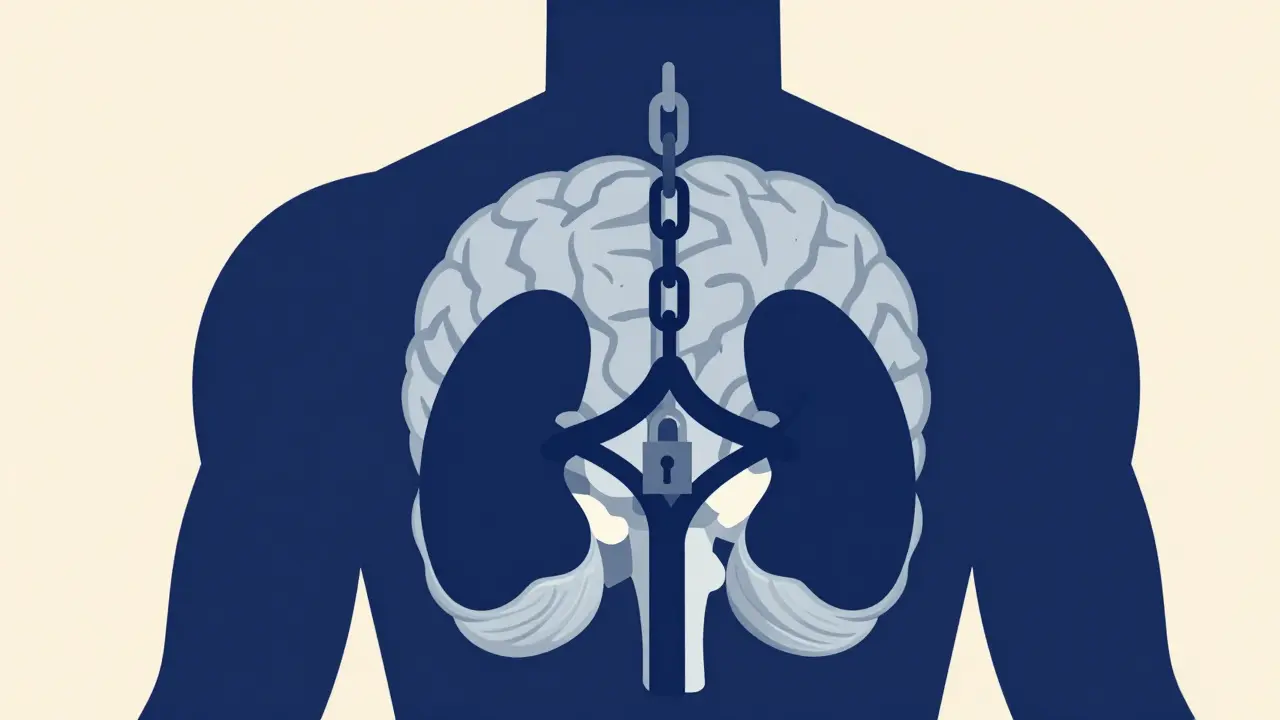
To understand the schedule, you first have to understand the machinery. When you take synthetic glucocorticoids like prednisone or hydrocortisone, you are flooding your system with cortisol. Your brain’s hypothalamus and pituitary gland notice this surplus and tell your adrenal glands to shut down production. This suppression of the hypothalamic-pituitary-adrenal (HPA) axis is usually temporary, but if it lasts too long, your adrenal glands atrophy. They literally shrink from disuse.
If you stop the medication suddenly while your adrenals are still asleep, your body has no cortisol to handle daily stress, let alone illness or injury. Research published in the Journal of Clinical Endocrinology & Metabolism indicates that mortality rates from adrenal crisis can reach 0.5 per 100 patient-years when management fails. The goal of a taper is to slowly lower the external dose enough to stimulate your adrenal glands to wake up and start producing their own hormone again. It’s a delicate dance of replacement and recovery.
When Is a Taper Actually Necessary?
Not every course of steroids requires a complex weaning process. The risk depends on two main factors: the duration of therapy and the dosage. According to the Endocrine Society's Clinical Practice Guideline (updated 2023), treatments lasting less than 3 to 4 weeks generally do not suppress the HPA axis significantly. In these short-term cases, abrupt discontinuation is often safe.
However, once you cross that 3-to-4-week threshold, the rules change. The guidelines specify that doses equal to or greater than 7.5 mg of prednisone per day, 20 mg of hydrocortisone per day, or 0.75 mg of dexamethasone per day pose a significant risk. If you have been on any of these doses for longer than a month, you should assume your adrenal function is suppressed. Even lower doses taken for several months can cause suppression. The key takeaway is time and potency. Long-term use of even mild steroids demands respect for the tapering process.
Example Schedule 1: The High-Dose Reduction Phase
Most tapers happen in two distinct phases. The first phase is rapid reduction from high therapeutic doses down to physiological levels. Physiological levels mimic what a healthy body produces naturally-roughly equivalent to 5 mg of prednisone or 20 mg of hydrocortisone per day. Let’s look at a common scenario for a patient starting on 40 mg of prednisone daily.
| Dose (mg) | Duration | Action |
|---|---|---|
| 40 mg | Current baseline | Maintain until inflammation is controlled |
| 30 mg | 3-7 days | Reduce by 10 mg |
| 20 mg | 3-7 days | Reduce by 10 mg |
| 10 mg | 1-2 weeks | Reduce by 10 mg (slower pace begins) |
| 5 mg | 1-2 weeks | Reduce by 5 mg (approaching physiological limit) |
In this initial phase, reductions of 5 to 10 mg every few days are typical because the body is highly responsive to large changes when the absolute dose is high. The Australian Prescriber’s Practical Guidance (2021) supports this aggressive early reduction to get patients off supraphysiological doses quickly, minimizing side effects like weight gain and bone loss. However, as you approach 10 mg, the pace must slow down dramatically. This is where many people make mistakes, assuming the easy part is over. It isn't.

Example Schedule 2: The Slow Descent Below 5 mg
Once you hit 5 mg of prednisone (or roughly 20 mg of hydrocortisone), you are in the danger zone for withdrawal symptoms and adrenal insufficiency. At this level, small changes feel huge. A reduction from 5 mg to 2.5 mg is a 50% cut in your total intake. Most protocols recommend reducing by 1 mg or even 0.5 mg every 1 to 2 weeks below this threshold.
Consider a patient who has been on steroids for six months. Their schedule might look like this:
- Weeks 1-2: 5 mg daily
- Weeks 3-4: 4 mg daily
- Weeks 5-6: 3 mg daily
- Weeks 7-8: 2 mg daily
- Weeks 9-10: 1 mg daily
- Weeks 11-12: 0.5 mg every other day
- Week 13: Discontinue
This slow grind allows the HPA axis to recover gradually. Dr. Lynnette Nieman from the National Institute of Diabetes and Digestive and Kidney Diseases notes that if the period of suppression was long, tapering should extend over months, sometimes up to a year. Rushing this final leg is the most common cause of relapse into adrenal crisis. Patients often report severe fatigue, joint pain, and nausea during this phase. These are signs of steroid withdrawal, distinct from the return of the original disease. Distinguishing between the two is critical and requires close communication with your doctor.
Avoiding Adrenal Crisis: Recognition and Emergency Action
Even with a perfect schedule, life happens. Illness, surgery, or trauma creates physical stress that demands more cortisol than your recovering adrenals can provide. This is where education saves lives. You must know the signs of an impending crisis. Symptoms include systolic blood pressure dropping below 90 mmHg, heart rate exceeding 100 bpm, persistent vomiting, and profound weakness.
If you experience these symptoms, especially vomiting which prevents oral absorption, you need immediate action. The Endocrine Society recommends carrying an emergency injection kit containing 100 mg of intramuscular hydrocortisone. Administer this immediately if you cannot keep fluids down and seek emergency care. Do not wait. Adrenal crisis progresses rapidly to shock and death without intervention.
For minor stresses, such as a fever above 38.5°C (101.3°F), the standard advice is "stress dosing." This typically means doubling your maintenance dose for the duration of the illness. For example, if you are on 5 mg of prednisone, take 10 mg while you have a fever. Once the fever breaks, return to your regular taper schedule. Always confirm specific stress-dosing instructions with your healthcare provider, as individual needs vary based on the severity of the underlying condition.
Testing and Monitoring: Knowing When You're Done
How do you know if your adrenals have fully woken up? Time alone is not a reliable indicator. The Endocrine Society (2023) strongly recommends ACTH stimulation testing before complete discontinuation for patients who were on therapy for more than four weeks. In this test, synthetic ACTH is injected, and cortisol levels are measured at baseline and 30 minutes later. A peak cortisol level greater than 18 mcg/dL is generally considered evidence of adequate HPA axis recovery.
Without this testing, many patients are tapered based solely on calendar dates. A survey by Adrenal Insufficiency United found that 74% of patients reported being tapered without functional testing. This gap in care contributes to the high rate of withdrawal symptoms. If possible, request this test. It provides objective data rather than guessing. Additionally, avoid using long-acting steroids like dexamethasone during the taper phase. They suppress the HPA axis for longer periods and increase the risk of crisis by 37% compared to hydrocortisone-based protocols, according to recent analyses.
Practical Tips for a Smoother Taper
Tapering is physically and mentally draining. Here are practical strategies to manage the process:
- Timing Matters: Take your morning dose as early as possible, ideally between 6 AM and 8 AM. This mimics the body’s natural cortisol spike upon waking. Taking steroids late in the day can disrupt sleep and further confuse your hormonal rhythm.
- Listen to Your Body: If you experience severe joint pain or exhaustion after a reduction, pause at the current dose for another week or two before cutting again. Symptom-guided tapering showed a 23% lower incidence of withdrawal symptoms in a 2022 study published in Endocrine Connections.
- Wear Medical Alert Jewelry: You may need supplemental steroids during unexpected illnesses for up to a year after stopping. Wear a bracelet that states you have adrenal insufficiency or are on steroid therapy. This ensures paramedics treat you correctly in an emergency.
- Avoid Long-Acting Agents: Ask your doctor to switch you to hydrocortisone or prednisolone for the taper. These shorter-acting drugs allow for finer control and faster clearance if side effects occur.
Remember, there is no one-size-fits-all schedule. Your history, the reason for steroid use, and your overall health dictate the pace. Work closely with an endocrinologist if possible. General practitioners often lack the specialized training needed for complex tapers, with studies showing only 43% correctly identify tapering indications. Advocating for expert guidance is one of the safest steps you can take.
Can I stop taking prednisone after 2 weeks?
Generally, yes. If you have taken prednisone for less than 3 to 4 weeks, your HPA axis is unlikely to be significantly suppressed. Abrupt discontinuation is usually safe in these short-term cases, provided you are not on very high doses. However, always consult your prescribing doctor to ensure the underlying condition does not require continued treatment.
What are the symptoms of adrenal crisis?
Symptoms include severe low blood pressure (shock), rapid heartbeat, persistent vomiting and diarrhea, extreme weakness, confusion, and loss of consciousness. It is a medical emergency requiring immediate injection of hydrocortisone and hospitalization.
How long does it take for the HPA axis to recover?
Recovery varies widely. For some, it takes a few weeks; for others, it can take 6 to 12 months. Factors include the duration of steroid use, the dosage, and individual biological differences. ACTH stimulation testing is the best way to confirm recovery.
Is it better to taper slowly or quickly?
It depends on the dose. High doses should be reduced relatively quickly to minimize side effects, but once you reach physiological levels (around 5 mg prednisone), the taper must be very slow. Rapid reduction at low doses significantly increases the risk of adrenal insufficiency and severe withdrawal symptoms.
What should I do if I miss a dose during a taper?
If you miss a dose, take it as soon as you remember unless it is close to the time for your next dose. Never double up. If you miss multiple doses or go more than 24 hours without medication, contact your doctor immediately, as you may be at risk for adrenal crisis, especially if you are under physical stress.