
Imagine trying to eat a sandwich, but every bite feels like swallowing sand. You blink constantly, your eyes sting, and no amount of eye drops helps. You sip water nonstop just to get through a meal. This isn’t just dehydration - it’s what millions of people live with every day because of Sjögren’s Syndrome.
It’s Not Just Dryness - It’s an Autoimmune War
Sjögren’s Syndrome isn’t a simple case of dry skin or low humidity. It’s an autoimmune disease where your immune system, which normally fights off viruses and bacteria, turns on your own body. Specifically, it attacks the glands that make moisture: the tear ducts in your eyes and the salivary glands in your mouth. The result? Chronic, debilitating dryness that doesn’t go away with more water or eye drops.This condition was first identified in 1933 by Swedish doctor Henrik Sjögren, but for decades, it was dismissed as "just aging" or "stress." Today, we know better. About 4 million Americans have it, and 90% of them are women, usually diagnosed between ages 45 and 55. It’s one of the most common autoimmune diseases in the U.S., yet most people - including many doctors - still don’t recognize it.
What Happens Inside Your Body?
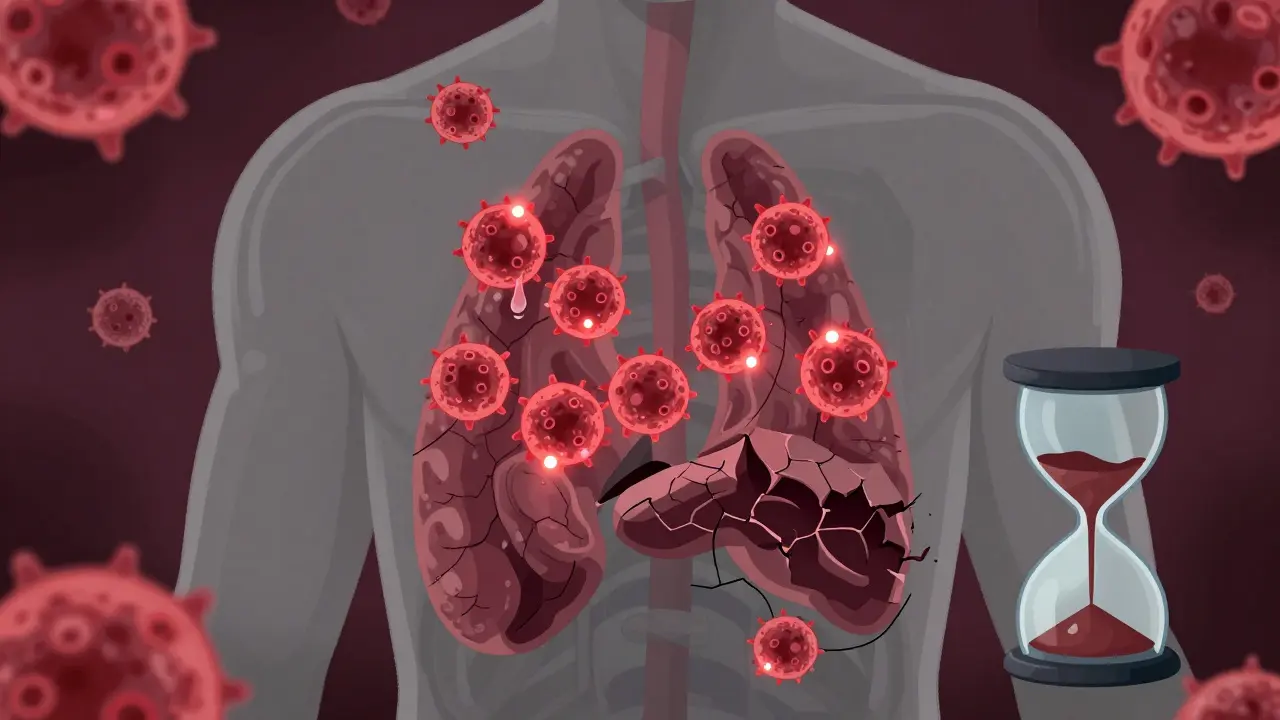
Your body has exocrine glands - tiny organs scattered across your eyes, mouth, nose, skin, and even reproductive organs - that produce fluids to keep things lubricated. In Sjögren’s, immune cells gather around these glands like invaders storming a fortress. They don’t just block fluid production; they damage the gland tissue itself. Over time, this leads to permanent changes.The most obvious signs are dry eyes and dry mouth, but that’s only the tip of the iceberg. Up to 70% of patients experience extreme fatigue that doesn’t improve with sleep. About 50% of women report vaginal dryness, which is rarely discussed but deeply impacts relationships and mental health. Around 25% develop lung issues, like a persistent dry cough. Nerve damage can cause numbness or tingling in hands and feet. Joint pain, rashes, and even brain fog - trouble finding words or remembering things - are common.
It’s not just discomfort. Without proper care, dry mouth can lead to rapid tooth decay, oral infections, and even tooth loss. Dry eyes can cause corneal damage. And while most people live a normal lifespan, about 4-5% develop non-Hodgkin lymphoma - a cancer linked to long-term immune system overactivity.
Why Is It So Hard to Diagnose?
The average time from first symptom to diagnosis is 2.8 years. Why? Because symptoms creep in slowly. People chalk up dry eyes to screen use, dry mouth to caffeine, fatigue to stress. Doctors often misdiagnose it as allergies, acid reflux, or even depression.One Reddit user, "DryEyes2020," visited four different doctors over three years before getting diagnosed. Her primary care doctor said it was allergies. An ENT thought it was acid reflux. Her dentist told her to drink more water. Sound familiar?
Diagnosis requires more than symptoms. Doctors look for:
- Consistent dry eyes for at least three months
- Reduced tear production (Schirmer’s test: less than 5mm of moisture in 5 minutes)
- Low saliva flow (under 1.5mL in 15 minutes)
- Presence of anti-SSA/Ro or anti-SSB/La antibodies in blood (found in 60-70% of cases)
- Biopsy of a minor salivary gland showing immune cell infiltration
Even then, some people test negative for antibodies but still have the disease. That’s why specialists now use salivary gland ultrasound - a newer tool that shows swelling and damage in the glands with 85% accuracy.
How Is It Different From Other Autoimmune Diseases?
Sjögren’s often shows up alongside lupus or rheumatoid arthritis (in about 30-50% of cases). When it does, it’s called secondary Sjögren’s. But primary Sjögren’s - the kind that stands alone - is unique.Unlike lupus, which attacks kidneys, skin, and joints all at once, Sjögren’s starts by targeting moisture glands. Unlike rheumatoid arthritis, which destroys joint cartilage, Sjögren’s joint pain is usually milder and doesn’t cause deformity. And unlike sicca syndrome (dryness from medications or aging), Sjögren’s has specific antibodies and immune cell patterns that confirm it’s autoimmune.
One key difference: Sjögren’s patients are more likely to develop lymphoma than those with other autoimmune diseases. That’s why monitoring isn’t optional - it’s lifesaving.
Treatment Isn’t One-Size-Fits-All
There’s no cure yet. But there are ways to manage it - and new treatments are finally emerging.For dry eyes: Preservative-free artificial tears, used 8-10 times a day. Some patients need punctal plugs - tiny devices inserted into tear ducts to keep tears from draining too fast.
For dry mouth: Sugar-free gum, saliva substitutes, and drinking water constantly. But the real game-changers are prescription drugs like pilocarpine (5mg three times daily) or cevimeline (30mg three times daily). These stimulate your glands to produce more saliva. About 60-70% of users report noticeable improvement.
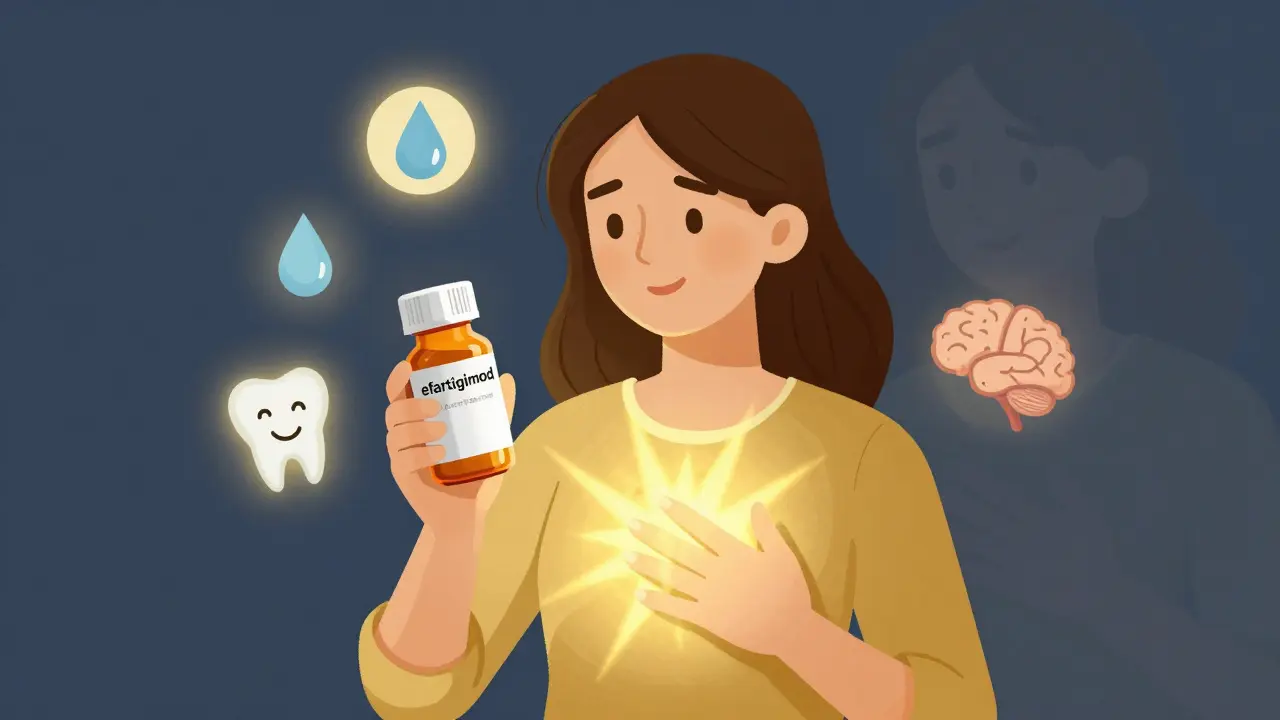
For systemic symptoms: Hydroxychloroquine (a malaria drug repurposed for autoimmune conditions) helps about 30-40% of patients with joint pain and fatigue. Newer drugs like efgartigimod (brand name Vyvgart Hytrulo), approved by the FDA in June 2023, showed a 35% improvement in dry mouth in clinical trials - the first new Sjögren’s treatment in 20 years.
Dental care is critical: Patients need checkups every 3-4 months, not every 6. Fluoride treatments, antibacterial rinses, and strict hygiene are non-negotiable. One study found Sjögren’s patients have 5-10 times more cavities than others.
Lifestyle matters: Use a humidifier (40-60% humidity). Avoid alcohol, caffeine, and mouthwashes with alcohol. Wear wraparound sunglasses outdoors. Skip spicy or dry foods. Drink water with meals.
The Hidden Costs - Physical, Emotional, Financial
Sjögren’s doesn’t just hurt your body - it hurts your life.A 2022 survey of 1,200 patients found:
- 87% struggled with daily activities because of dry mouth
- 79% said eye pain affected their work
- 63% felt socially isolated
- 42% had symptoms of depression
Annual healthcare costs for someone with Sjögren’s are about $12,500 - nearly triple that of someone without it. Dental care makes up 35-40% of that. Productivity losses from missed work and reduced performance add up to $3.8 billion a year in the U.S. alone.
And yet, research funding is shockingly low. In 2022, the NIH spent $28.7 million on Sjögren’s research. Compare that to $167 million for lupus and $114 million for rheumatoid arthritis - diseases that affect fewer people.
New Hope on the Horizon
In 2023, things started changing. The FDA approved efgartigimod. The National Institutes of Health launched the Sjögren’s Precision Medicine Network, enrolling 5,000 patients to tailor treatments based on genetic and biomarker profiles. Researchers identified a specific T-cell signature present in 78% of primary Sjögren’s patients - a potential diagnostic breakthrough.Also in 2023, the Sjögren’s Syndrome Foundation launched TARGET, a $15 million initiative to find genetic markers that predict how severe the disease will become. Twelve new therapies are in clinical trials, including drugs that target B-cells - the immune cells responsible for the attack.
These aren’t just lab experiments. They’re real tools that could change how we diagnose and treat Sjögren’s - from guessing to precision medicine.
What You Can Do Right Now
If you’ve been told "it’s just dryness" but still feel awful:- Track your symptoms: When do your eyes sting? When does your mouth feel like cotton? How often do you drink water?
- Ask for a rheumatologist referral - not just an ENT or dentist.
- Request the anti-SSA/Ro and anti-SSB/La blood tests.
- Ask about salivary gland ultrasound - it’s becoming standard in major clinics.
- Join a community like MySjogrensTeam or r/Sjogrens. You’re not alone.
Sjögren’s Syndrome isn’t a minor inconvenience. It’s a systemic disease that steals your comfort, your confidence, and sometimes your health. But with better awareness, better tools, and better research, it doesn’t have to be a life sentence.
Is Sjögren’s Syndrome the same as dry eye syndrome?
No. Dry eye syndrome can be caused by screen use, aging, or environmental factors - and it usually doesn’t come with dry mouth, fatigue, or joint pain. Sjögren’s is an autoimmune disease that attacks moisture-producing glands, leading to chronic, systemic symptoms. If you have dry eyes plus dry mouth, persistent fatigue, or recurrent oral infections, it’s not just dry eye - it could be Sjögren’s.
Can Sjögren’s Syndrome be cured?
There’s no cure yet. But treatments can control symptoms and prevent complications. Medications like pilocarpine and cevimeline help stimulate saliva and tear production. New drugs like efgartigimod show promise in reducing dryness. Managing the disease early can prevent serious issues like tooth loss, lung damage, or lymphoma. Research is accelerating, and personalized treatments are on the horizon.
Why do so many people get misdiagnosed?
Symptoms develop slowly and overlap with common conditions. Dry eyes are blamed on screens. Dry mouth is called dehydration or acid reflux. Fatigue is labeled as stress or depression. Doctors unfamiliar with Sjögren’s don’t connect the dots. Plus, some patients test negative for antibodies, making diagnosis harder. On average, it takes nearly three years and visits to multiple specialists before a correct diagnosis is made.
Is Sjögren’s Syndrome only found in women?
No - but 90% of cases are in women. Men and children can get it too, though it’s rare. Diagnosis in children under 18 accounts for only 3-5% of cases. Men often experience more severe systemic symptoms, but they’re less likely to be tested because the disease is seen as "a women’s condition." This delay can lead to worse outcomes.
Does Sjögren’s Syndrome shorten life expectancy?
Most people with Sjögren’s - about 90% - live a normal lifespan. The biggest risk is developing non-Hodgkin lymphoma, which occurs in 4-5% of patients over their lifetime. Regular monitoring, good dental care, and managing systemic inflammation can reduce this risk. Quality of life is often significantly lowered due to fatigue and pain, but with proper management, many live full, active lives.
Are there any new treatments in development?
Yes. In 2023, the FDA approved efgartigimod (Vyvgart Hytrulo), the first new treatment in 20 years. Twelve more therapies are in clinical trials, including biologics that target B-cells and T-cells involved in the autoimmune attack. The Sjögren’s Precision Medicine Network and the TARGET initiative aim to match patients with treatments based on their unique biomarkers - a major step toward personalized care.
How does Sjögren’s affect mental health?
Chronic pain, fatigue, brain fog, and social isolation take a heavy toll. Studies show 42% of Sjögren’s patients experience depression - more than five times the general population rate. The invisibility of symptoms often leads to being dismissed by doctors, family, or coworkers. This emotional burden is real and deserves attention. Therapy, support groups, and mental health care should be part of every treatment plan.
Can diet help manage Sjögren’s symptoms?
Diet won’t cure it, but it can help. Avoid dry, crunchy, or spicy foods that worsen mouth dryness. Stay hydrated. Omega-3 fatty acids (found in fish oil) may reduce inflammation - 52% of patients use them. Limit alcohol and caffeine, which dry out mucous membranes. Some find relief with humidifying foods like soups, stews, and smoothies. Always consult your doctor before adding supplements.
Is Sjögren’s Syndrome genetic?
It’s not directly inherited, but genetics play a role. Certain gene variations increase susceptibility, especially in people with a family history of autoimmune diseases. Environmental triggers - like viral infections - often set off the disease in genetically prone individuals. Research is now focused on identifying these genetic markers to predict who’s at risk and how severe the disease might become.
What specialists should I see for Sjögren’s?
A rheumatologist is essential - they coordinate care. You’ll also need an ophthalmologist for eye care, a dentist experienced in autoimmune dry mouth, and possibly a pulmonologist if you have lung symptoms. For women, a gynecologist familiar with vaginal dryness is critical. A dermatologist may help with skin rashes. A multidisciplinary team is the gold standard for managing this complex disease.


Comments (11)