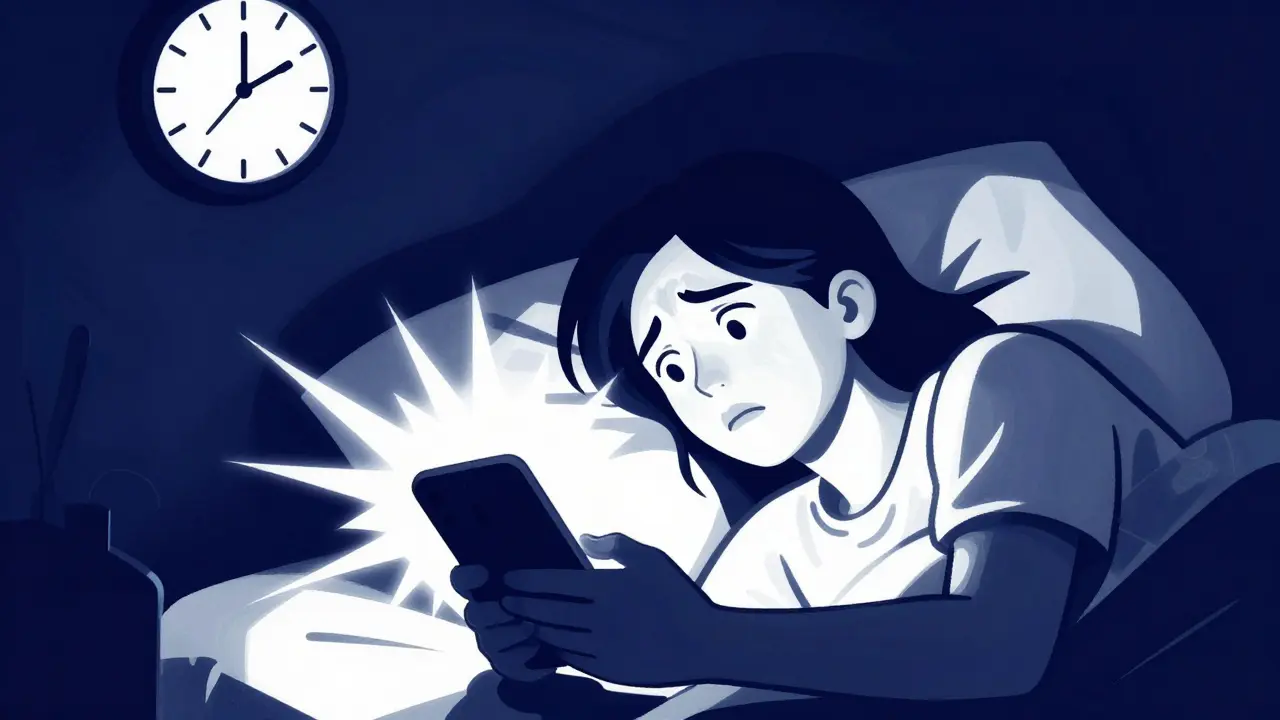
Most of us treat sleep like an afterthought. We scroll through our phones until our eyes burn, drink coffee at 4 PM, and then wonder why we’re staring at the ceiling at 3 AM. It’s frustrating, right? You want to rest, but your brain won’t shut off. The good news is that you don’t necessarily need pills or expensive gadgets to fix this. You just need sleep hygiene. This isn’t about buying a new mattress or downloading another tracking app. It’s about changing the specific behaviors that tell your body it’s time to wind down.
Sleep hygiene refers to a set of evidence-based habits designed to optimize your sleep quality and duration. The concept wasn’t invented by wellness influencers; it was formally established in sleep medicine literature by Peter Hauri in 1977 during his work at the Mayo Clinic. Since then, organizations like the American Academy of Sleep Medicine (AASM) have refined these guidelines. A 2023 systematic review showed that implementing proper sleep hygiene can reduce insomnia severity by 30-40%. That’s a massive improvement without any pharmaceutical intervention. So, what exactly does it take to get there?
The Four Pillars of Effective Sleep Hygiene
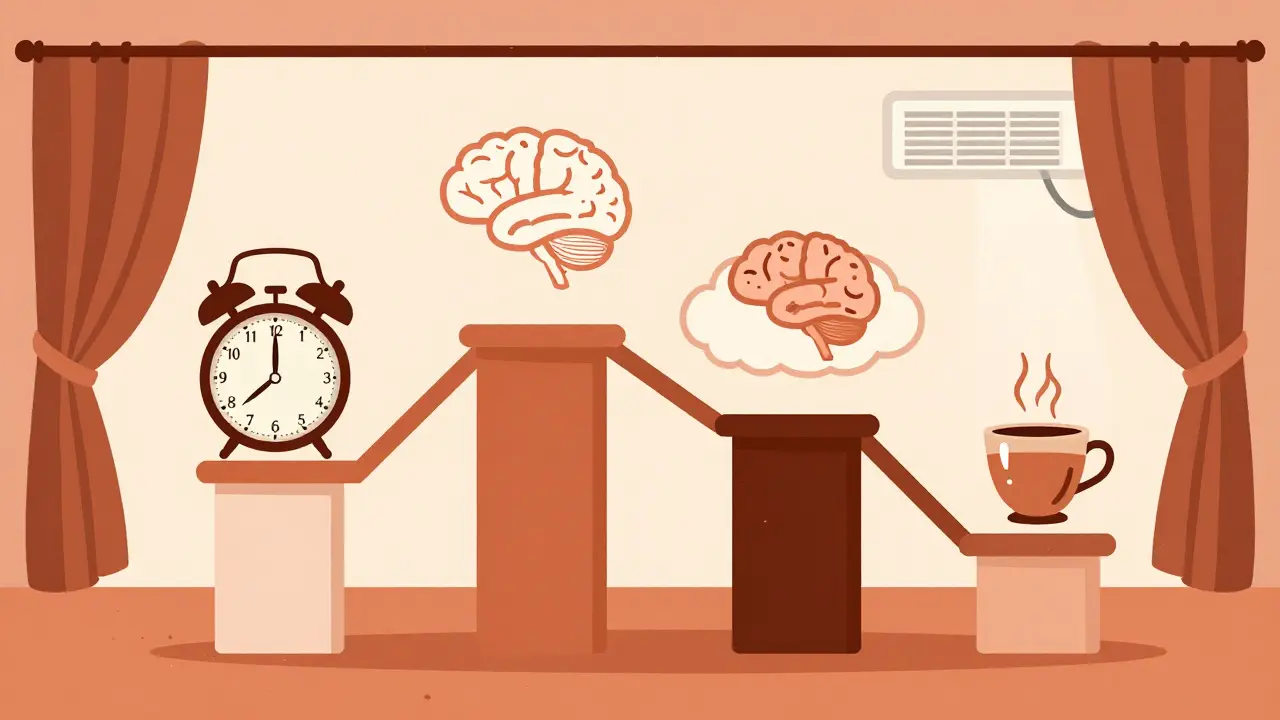
To make sleep hygiene work, you need to focus on four main areas: routine, environment, cognitive regulation, and physiological preparation. Think of these as the foundation of your sleep house. If one pillar is weak, the whole structure wobbles.
- Routine Consistency: This is non-negotiable. You should go to bed and wake up at the same time every day, within a 30-minute window. Yes, even on weekends. The National Sleep Foundation recommends 7-9 hours for adults. When you vary your schedule, you confuse your internal clock, known as your circadian rhythm. A 2023 study found that consistent wake times were the strongest predictor of better sleep quality.
- Environmental Optimization: Your bedroom should be a cave. Cool, dark, and quiet. Keep the temperature between 60-67°F (15.6-19.4°C). Light exposure should be below 5 lux during sleep. If you live in a noisy city, white noise machines can help mask disruptive sounds.
- Cognitive Regulation: This means calming your mind before bed. Reduce "perseverative cognition"-that’s the fancy term for obsessing over problems-in the 60 minutes leading up to sleep. Write down your to-do list earlier in the evening so your brain doesn’t rehearse it while you’re trying to drift off.
- Physiological Preparation: Treat your body like a machine that needs fuel management. Avoid caffeine 8 hours before bedtime. Limit fluids 2 hours before sleep to avoid nighttime bathroom trips. And skip heavy meals within 3 hours of bed, as digestion keeps your body active.
Why Willpower Isn't Enough: The Science Behind Behavior Change
You might think, "I know I should do this, but I can’t." That’s because sleep hygiene requires behavior change, not just knowledge. A 2023 meta-analysis by Pegado et al. confirmed that interventions based on behavior-change theory produce statistically significant improvements in sleep quality. But here’s the catch: consistency matters more than perfection.
Implementing five or more evidence-based practices can drop your score on the Pittsburgh Sleep Quality Index (PSQI) from clinically impaired to subclinical. However, individual variability plays a huge role. For example, going to bed hungry helped 63% of participants in one study but hurt 22%. You have to experiment to find what works for your body. Don’t copy-paste someone else’s routine blindly. Track your own patterns using a simple sleep diary for 7-10 days to establish a baseline.
Sleep Hygiene vs. Other Interventions
Is sleep hygiene enough on its own? It depends on how bad your sleep is. Compared to Cognitive Behavioral Therapy for Insomnia (CBT-I), sleep hygiene alone has moderate effect sizes. CBT-I is more intensive and addresses deep-seated anxiety around sleep. Sleep hygiene components actually account for 45-60% of CBT-I’s effectiveness, making it a crucial part of the puzzle.
| Strategy | Effect Size | Time to Benefit | Best For |
|---|---|---|---|
| Sleep Hygiene Alone | Moderate (d = 0.35) | 2-4 weeks | Mild disturbances, prevention |
| CBT-I | Large (d = 0.81) | 4-8 weeks | Chronic insomnia |
| Pharmaceuticals (e.g., Zolpidem) | High initial impact | Immediate (first week) | Short-term crisis only |
Medications like zolpidem might knock you out faster, reducing sleep onset latency by 22 minutes in the first week. But they come with risks. FDA data shows dependence in 30% of users after just 8 weeks. Sleep hygiene takes longer to kick in-usually 14-21 days-but it builds sustainable resilience against poor sleep. It’s an investment, not a quick fix.

Common Pitfalls and How to Avoid Them
Many people fail at sleep hygiene because they try to change everything at once. This leads to burnout. Dr. Daniel J. Buysse noted in a 2020 commentary that many traditional recommendations lack empirical support. For instance, avoiding exercise 3 hours before bed is often cited, but a 2023 University of Tsukuba study found it actually improved sleep quality for 68% of participants. Listen to your body.
Another major hurdle is the "paradoxical effect." About 29% of users report that focusing too hard on sleep hygiene increases their pre-sleep anxiety. They become obsessed with getting it right, which keeps them awake. If you feel this pressure, step back. Focus on relaxation rather than performance. Also, be realistic about your environment. A 2023 Lancet study highlighted that low-income populations face structural barriers, like inability to control bedroom temperature. If you can’t cool your room, use breathable bedding and fans. Do what you can with what you have.
Practical Steps to Start Today
You don’t need a PhD in neurology to improve your sleep. Here are actionable steps you can take immediately:
- Habit Stacking: Pair a new sleep habit with an existing one. For example, brush your teeth, then immediately dim the lights. This creates a trigger-response loop.
- Implementation Intentions: Use "if-then" planning. "If it is 9 PM, then I will put my phone in the other room." This removes decision fatigue.
- Light Management: Get bright light exposure in the morning. This anchors your circadian rhythm. Conversely, wear blue-light filtering glasses if you must use screens at night, though studies show they only reduce sleep onset latency by 4-7 minutes. Consistent scheduling is far more impactful.
- Track Progress: Use apps like Sleep Cycle or ShutEye if they help you stay accountable. However, remember that data is secondary to how you feel. If you wake up refreshed, you’re doing it right.
Remember, sleep hygiene is necessary but insufficient for treating severe insomnia. As Dr. Rachel Salas from Johns Hopkins University stated, it serves as the foundation upon which more intensive therapies are built. Start here, build consistency, and see where you stand in a month. If issues persist, consult a specialist for CBT-I or further evaluation.
How long does it take for sleep hygiene to work?
Most people notice measurable improvements after 14-21 days of consistent practice. Establishing a baseline pattern typically takes 7-10 days of tracking. Be patient; your body needs time to adjust its circadian rhythm.
Is sleep hygiene effective for chronic insomnia?
Sleep hygiene alone is generally not sufficient for clinical insomnia (PSQI > 8). The American Academy of Sleep Medicine gives it a "weak recommendation" for chronic cases. It works best as a preventive measure or as part of a broader treatment plan like CBT-I.
What is the most important sleep hygiene rule?
Consistency is key. Maintaining a regular wake time within a 30-minute window daily is the strongest predictor of sleep quality according to recent studies. This anchors your circadian rhythm more effectively than any single environmental tweak.
Does exercising before bed ruin sleep?
Not necessarily. While intense workouts close to bedtime can be stimulating for some, a 2023 study found that exercise improved sleep quality for 68% of participants regardless of timing. Listen to your body; if you feel energized, wait a few hours. If you feel relaxed, it may be fine.
Can sleep hygiene replace sleeping pills?
For mild sleep disturbances, yes. Sleep hygiene addresses the root causes of poor sleep without the risk of dependence associated with medications like zolpidem. However, for severe insomnia, it should be combined with professional therapy rather than used as a sole replacement for prescribed medication without medical advice.