Statin Diabetes Risk Calculator
Discover your personalized risk of developing diabetes while taking statins based on your medication type, dose, and health factors.
Your Personalized Risk
When you take a statin to lower your cholesterol, you’re doing it to protect your heart. But for some people, that same pill might be quietly raising their blood sugar - enough to push them into prediabetes or even type 2 diabetes. It’s not common, and it’s not inevitable. But it’s real, and it’s backed by solid science.
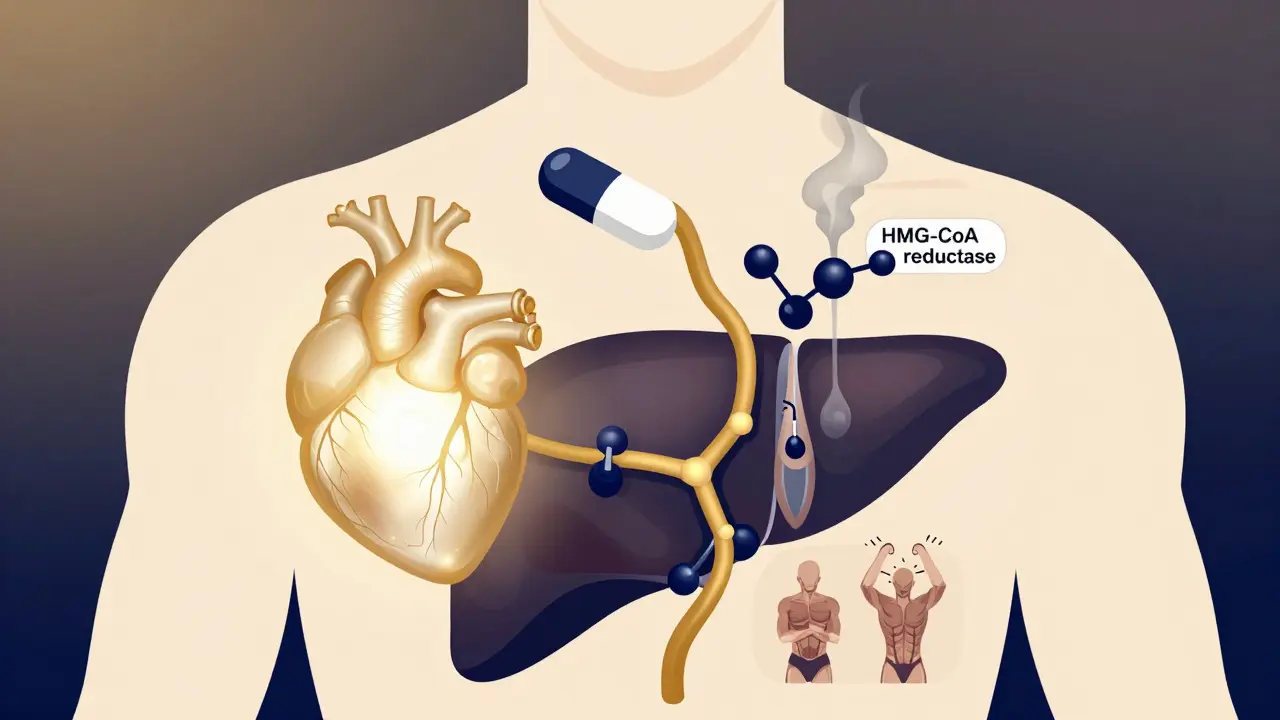
Statins work by blocking a liver enzyme that makes cholesterol. That’s good for your arteries. But that same enzyme is also involved in making other important molecules, including ones your body needs to manage insulin and glucose. When statins interfere with those pathways, your pancreas might not release insulin as well, and your muscles might not respond to insulin like they should. The result? Blood sugar climbs - slowly, but steadily.
How Big Is the Risk?
The increase in diabetes risk isn’t huge - but it’s measurable. Studies show that for every 100 people taking statins for five years, about 1 to 2 extra cases of diabetes might occur. That sounds small, but when you consider that over 35 million Americans take statins, those numbers add up. The real question isn’t whether the risk exists - it’s who’s most likely to feel it.
Research from the Cholesterol Treatment Trialists’ Collaboration in 2021 found that statin users had a 9% to 36% higher chance of developing diabetes, depending on the dose. Lower doses? Around a 10% increase. High doses? Up to 36%. And it’s not just about how much you take - it’s about what kind you take. Atorvastatin and rosuvastatin, especially at high doses, carry the highest risk. Simvastatin and pravastatin? Lower risk.
Here’s the thing: most people taking statins won’t develop diabetes. But if you’re already at risk - if you have prediabetes, carry extra weight around your middle, have high blood pressure, or have a family history of type 2 diabetes - then statins might be the final nudge your body needs to cross the line.
Why Does This Happen?
Statins don’t just block cholesterol. They block the mevalonate pathway - a chain of chemical reactions your body uses to make not just cholesterol, but also other critical compounds. Two of those compounds, geranylgeranyl pyrophosphate (GGPP) and farnesyl pyrophosphate (FPP), help insulin signaling work properly. When statins cut off their supply, your muscle and fat cells become less responsive to insulin. That’s insulin resistance - the first step toward type 2 diabetes.
At the same time, statins can affect your pancreas. Beta cells, the ones that produce insulin, start taking in more LDL cholesterol from the blood. That triggers inflammation inside the cells, which messes with their ability to release insulin when needed. Studies show insulin secretion drops by about 12% in statin users. So you’re getting less insulin, and your body’s less able to use what little you do make.
One 2021 study from Stanford followed 120 people without diabetes who were put on high-dose atorvastatin for 10 weeks. Their insulin resistance went up. Their insulin levels also went up - not because their bodies were getting better at using it, but because the pancreas was working harder to compensate. It’s like revving an engine to keep the car moving, even as the fuel line gets clogged.

Who’s Most at Risk?
Not everyone is equally affected. The risk isn’t random. It clusters around certain profiles:
- People with prediabetes - fasting blood sugar between 100 and 125 mg/dL
- Those with metabolic syndrome - belly fat, high triglycerides, low HDL, high blood pressure
- Individuals with a BMI over 30
- People over 65
- Those with a family history of type 2 diabetes
- Patients taking steroids like prednisone at the same time
Genetics also play a role. A 2023 study in Nature Medicine found that people with certain variations in the SLCO1B1 gene were more likely to develop high blood sugar on statins. This isn’t routine testing yet - but it’s coming.
On the flip side, people with normal weight, no family history, and healthy blood sugar levels are very unlikely to see any change. For them, the heart benefits far outweigh any tiny glucose shift.
What Do Doctors Do About It?
Doctors don’t stop prescribing statins because of this risk - and they shouldn’t. The American Heart Association, the American Diabetes Association, and the European Atherosclerosis Society all agree: the cardiovascular protection statins offer is far greater than the diabetes risk.
For someone with a 40% chance of having a heart attack in the next decade, preventing that one event is worth the 0.1% annual risk of developing diabetes. But that doesn’t mean you’re left on your own.
The American Diabetes Association recommends that if you’re at high risk for diabetes - say, you have prediabetes - your doctor should check your fasting blood sugar and HbA1c before starting a statin, and then again 3 to 6 months after. If your numbers climb, it doesn’t mean you stop the statin. It means you adjust your plan.
That might mean:
- Switching to a lower-intensity statin (like pravastatin or fluvastatin)
- Reducing the dose if your cholesterol is under control
- Adding a lifestyle plan - more walking, less sugar, weight loss
- Monitoring your blood sugar more often
Some patients report needing to start or increase their diabetes meds after beginning statins. That’s not unusual. It doesn’t mean the statin failed - it means your body’s metabolism changed, and you need to adapt.

Can You Reverse It?
If you develop higher blood sugar on statins, can you fix it? Sometimes. When people stop taking statins, their insulin sensitivity often improves within weeks. But here’s the catch: if you stop statins because of rising blood sugar, you might be trading one risk for a much bigger one - heart attack or stroke.
That’s why stopping statins is rarely the answer. Instead, the goal is to manage both conditions. Many patients successfully control their blood sugar with diet, exercise, and sometimes metformin - while still staying on their statin.
One 2022 study from UCLA showed that patients who started a 150-minute-per-week walking program and cut back on refined carbs while on statins saw their HbA1c levels drop - even as their LDL stayed low. Lifestyle isn’t just helpful. It’s essential.
What Should You Do?
If you’re on a statin and you’re worried about your blood sugar:
- Don’t stop the pill. Talk to your doctor first. Stopping statins without a plan is riskier than the diabetes risk.
- Ask for a blood test. Get your fasting glucose and HbA1c checked if you haven’t had them in the last 6 months.
- Track your weight and waist size. If you’ve gained belly fat, that’s a red flag.
- Move more. Walk 30 minutes a day. That’s more powerful than any supplement.
- Eat less sugar. Soda, candy, white bread, pastries - they all spike insulin. Your body doesn’t need them.
- Know your numbers. If your fasting blood sugar is over 100, or your HbA1c is above 5.7%, you’re in the prediabetes range. That’s your cue to act - not panic.
The bottom line? Statins save lives. But they’re not magic. They’re medicine - and like all medicines, they come with trade-offs. For most people, the trade-off is worth it. For others, it means being smarter about how you take them.
Do all statins raise blood sugar the same amount?
No. High-intensity statins like atorvastatin and rosuvastatin carry the highest risk, especially at higher doses. Lower-intensity statins like pravastatin, fluvastatin, and simvastatin have much smaller effects on blood sugar. If you’re at risk for diabetes, your doctor might choose one of the lower-risk options.
Can I avoid diabetes by taking a different cholesterol drug?
Some alternatives, like ezetimibe or PCSK9 inhibitors, don’t raise blood sugar. But they’re not as effective at preventing heart attacks as statins - and they’re much more expensive. For most people, the benefit of statins still outweighs the risk. Only consider switching if you’ve already developed diabetes or prediabetes while on a statin, and your doctor agrees.
If I have type 2 diabetes, should I avoid statins?
No. In fact, people with diabetes have a much higher risk of heart disease, so statins are often even more important. Studies show statins reduce heart attacks and strokes in diabetic patients by 25% to 30%. The slight rise in blood sugar is usually manageable with existing diabetes meds. The real danger is skipping statins.
How long does it take for statins to raise blood sugar?
Changes can show up as early as 3 months after starting, but most often appear within 6 to 12 months. That’s why doctors recommend checking blood sugar 3 to 6 months after starting a statin - especially if you’re at risk.
Is there a way to test if I’m genetically at risk for statin-induced diabetes?
Not yet in routine practice. A gene called SLCO1B1 has been linked to higher risk, but testing isn’t standard. If you have a strong family history of diabetes and are starting a high-dose statin, talk to your doctor about whether genetic testing might be useful. For now, focus on lifestyle and monitoring.


Comments (9)