
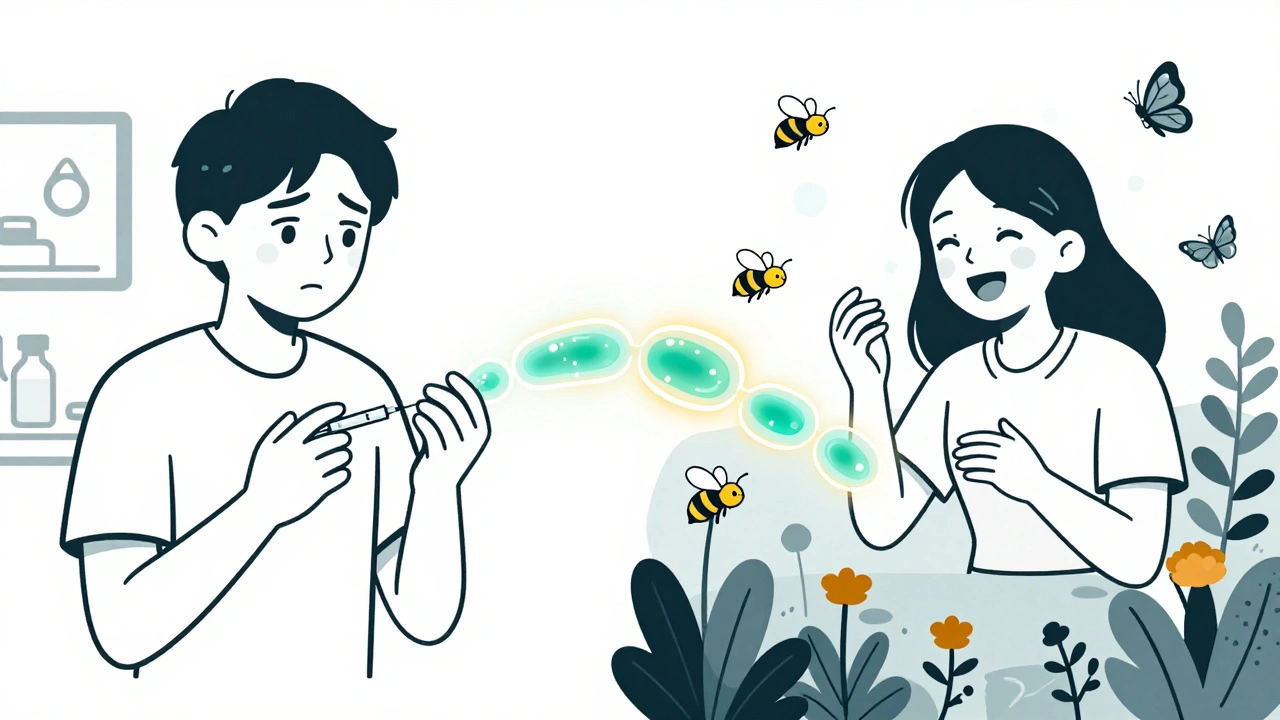
Imagine being terrified to step outside during summer. Not because of the heat, but because a single bee sting could send you to the hospital - or worse. For people with severe stinging insect allergies, this isn’t fear. It’s reality. Every year, thousands of people in the U.S. experience life-threatening reactions to bees, wasps, hornets, yellow jackets, and even fire ants. Most turn to epinephrine auto-injectors as a safety net. But what if there was a way to stop the fear before it starts? That’s where venom immunotherapy comes in.
What Is Venom Immunotherapy?
Venom immunotherapy, or VIT, is a treatment that reprograms your immune system to stop overreacting to insect venom. It’s not a pill. It’s not a cream. It’s a series of tiny injections, given over several years, that slowly teach your body to ignore the venom that once terrified it.
Unlike epinephrine, which only treats a reaction after it happens, VIT changes how your body responds long-term. It’s the only treatment that actually modifies the disease itself. Developed in the 1970s, it’s now backed by decades of research and used by hundreds of thousands of people worldwide.
The venom used in these shots isn’t raw stinger fluid. It’s purified, standardized, and tested to ensure every dose is exact. For honeybees, it’s Api m 1. For yellow jackets, it’s Ves v 5. For fire ants, it’s Sol i 3. These are the key proteins your immune system learns to tolerate.
How It Works: The Two Phases
VIT has two clear stages: buildup and maintenance.
During the buildup phase, you get injections once or twice a week. Each shot contains a slightly higher dose of venom. It starts at less than 0.1 microgram - barely enough to trigger a reaction - and climbs over 8 to 20 weeks until you reach the full maintenance dose of 100 to 200 micrograms. That’s the amount your body needs to stay protected.
Most reactions during this phase are mild: redness, swelling at the injection site, or a slight itch. But about 2% to 5% of people have a systemic reaction - hives, trouble breathing, dizziness - and that’s why every shot is given in a clinic. You must wait 30 to 60 minutes after each injection. No exceptions.
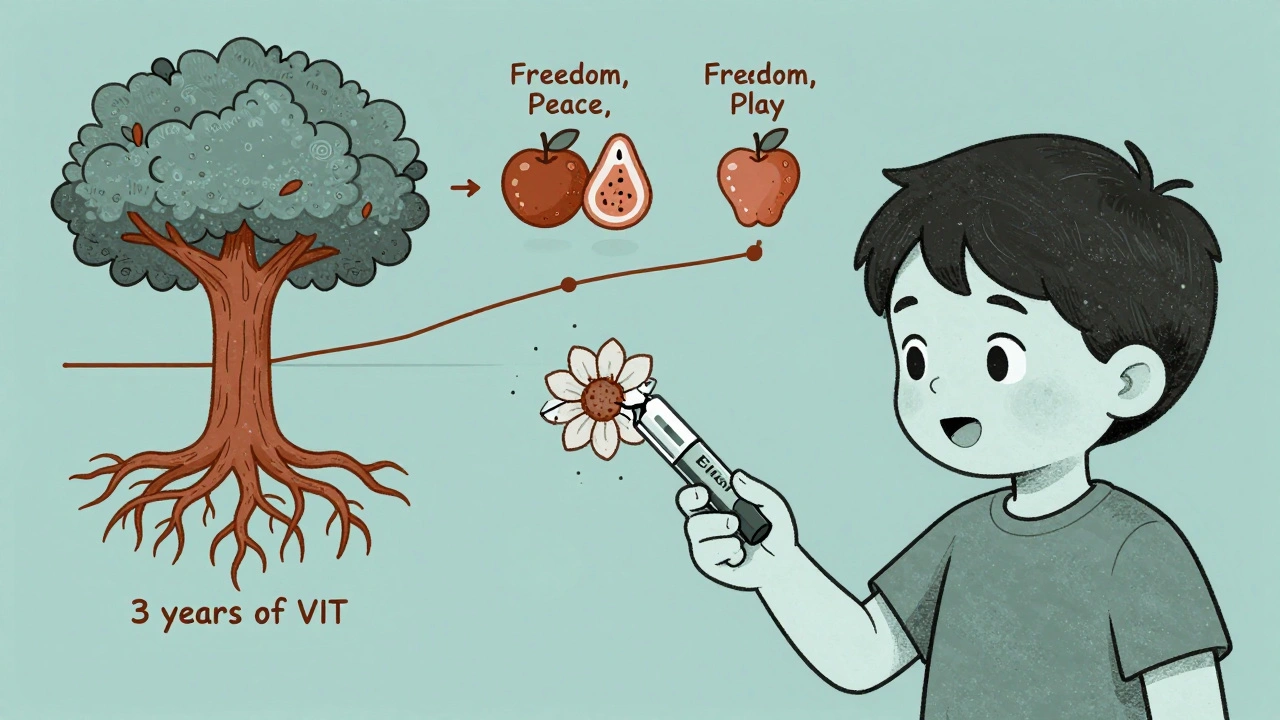
Once you hit the maintenance dose, you switch to monthly shots. These continue for at least three to five years. Some people need them longer, especially if they had a severe reaction before treatment or have a condition like mastocytosis.
How Effective Is It?
The numbers speak for themselves.
Without treatment, someone with a history of systemic reaction has a 40% to 70% chance of having another serious reaction if stung again. With VIT? That drops to 3% to 15%. That’s a 90% reduction in risk.
For wasp and yellow jacket venom, protection rates are even higher - 91% to 96%. For honeybee venom, it’s still strong at 77% to 84%. That’s better than almost any other allergy treatment out there.
And it doesn’t just stop reactions. It changes your life. A 2022 study found 92% of people on VIT reported better quality of life. People stopped avoiding picnics, gardening, hiking, or even backyard barbecues. Many stopped carrying multiple epinephrine pens. One patient on a Reddit thread said, “I finally let my kids play in the grass without me panicking.”
Who Should Get It?
Not everyone with a sting reaction needs VIT. The guidelines are clear:
- You had a systemic reaction - not just a big bump or itching. That means symptoms like swelling of the throat, trouble breathing, nausea, dizziness, or loss of consciousness.
- Your reaction happened within 15 minutes of the sting.
- You’ve been tested and confirmed to have venom-specific IgE antibodies.
- You’re at risk of future stings - whether you garden, work outdoors, or live in an area with lots of insects.
Children under 18 rarely get VIT unless they’ve had a life-threatening reaction. Adults between 40 and 65 make up the majority of patients - not because kids are less at risk, but because doctors are more cautious with younger patients.
People with mast cell disorders like mastocytosis are at higher risk of severe reactions - and also at higher risk of VIT failure. But even then, VIT is often still recommended, just with closer monitoring.
What About Other Treatments?
Some people ask: Why not try sublingual drops instead of shots? Or swallow venom tablets?
Sublingual immunotherapy (SLIT) for insect venom exists, but it’s not nearly as effective. Studies show it works in only 40% to 55% of cases - compared to 77% to 96% for injections. And there’s no FDA-approved oral version yet. The science just isn’t there.
Epinephrine is essential - but it’s a rescue tool, not a cure. Relying on it alone means you’re always one sting away from disaster. VIT gives you back control.
The Downsides
Let’s be real: VIT isn’t perfect.
You have to commit. That’s 12 to 20 visits during buildup, then monthly shots for years. Missing a dose can reset progress. Some people miss work. Others struggle with insurance.
Costs range from $2,800 to $4,500 per year in the U.S., depending on coverage. Medicare covers 80% after your deductible. Private insurers approve about 8 out of 10 requests - but only if you have proper documentation.
And yes, there’s a small risk. About 2% to 5% of people have a reaction during treatment. Most are mild, but a few require emergency care. That’s why clinics require observation after every shot.
Still, for most patients, the trade-off is worth it. One patient wrote on Yelp: “I used to carry three EpiPens. Now I carry one - and I sleep better.”
What Happens After You Stop?
This is the magic part.
Most people - 85% to 90% - stay protected for 5 to 10 years after stopping VIT. Some even longer. That means after five years of monthly shots, you might never need another one again.
But not everyone. If you had a very severe reaction before treatment, or if you still test positive for venom IgE after stopping, your doctor may recommend continuing longer. There’s no one-size-fits-all timeline.
Doctors don’t usually retest you with live stings - it’s too risky. But they can check your venom-specific IgG4 levels. When those rise above 10 mg/L, it’s a good sign your immune system is learning to tolerate the venom.
The Future of VIT
Science is making VIT better.
Now, there are “rush” protocols that get you to the maintenance dose in just 1 to 3 days instead of months. They work just as well - but come with a 35% higher chance of early reactions. So they’re not for everyone.
In January 2023, the FDA approved a new fire ant venom extract. That’s huge for the 600,000 Americans allergic to fire ants, especially in the South.
Researchers are now working on recombinant venom proteins - made in labs, not extracted from insects. This could mean more consistent doses, fewer side effects, and maybe even a future without shots at all.
One big goal? Finding a blood test that can predict who will respond to VIT. Right now, it’s a trial-and-error process. But measuring IgG4 levels is getting closer to being a reliable marker.
Getting Started
If you’ve had a serious sting reaction, talk to an allergist. Don’t wait. Bring your history: when the reaction happened, what symptoms you had, how long they lasted, and whether you’ve been tested for venom IgE.
Ask about:
- Which venom extract they use
- Whether they follow AAAAI or WAO guidelines
- How they handle reactions during buildup
- Insurance pre-authorization help
There are also support groups like the Venom Allergy Support Network, which connects patients with mentors who’ve been through it. You’re not alone.
The biggest barrier? Access. One in three rural Americans lives more than 50 miles from an allergist. Telehealth helps with consultations, but the shots still require in-person visits.
Still, if you’re eligible, VIT is one of the most powerful tools in modern allergy care. It doesn’t just reduce risk. It gives you freedom.
Is venom immunotherapy safe?
Yes, for most people. Systemic reactions during treatment happen in 2% to 5% of cases, and nearly all are mild - like hives or stomach upset. Serious reactions are rare. Every injection is given in a clinic with staff trained to respond immediately. The risk of a reaction during treatment is far lower than the risk of a severe reaction from a wild sting without treatment.
How long does venom immunotherapy take?
The buildup phase lasts 3 to 6 months, with weekly or biweekly shots. After that, you move to maintenance, which requires monthly shots for at least 3 to 5 years. Some people continue longer based on their risk and test results. Most stay protected for years after stopping.
Can children get venom immunotherapy?
Yes, but it’s less common. Doctors usually recommend it only for children who’ve had life-threatening reactions. The risk-benefit balance is tighter in younger patients, and many outgrow their allergy. But if a child has a history of anaphylaxis, VIT can be lifesaving.
Does insurance cover venom immunotherapy?
Most do - but not always easily. Medicare covers 80% after your deductible. Private insurers usually require prior authorization. Approval rates are around 75% to 85%, but you’ll need detailed documentation of your sting history and test results. Some clinics help with the paperwork.
What if I miss a shot?
If you miss one maintenance shot, you can usually resume at the same dose. If you miss more than a few weeks, your doctor may lower the dose and rebuild slowly. Missing shots during buildup can delay progress - but it doesn’t ruin the treatment. Just call your clinic right away.
Can I stop VIT if I feel better?
Don’t stop without talking to your allergist. Even if you feel fine, stopping too early can mean losing protection. Most people stay on treatment for at least 3 to 5 years. After that, your doctor may suggest a sting challenge or check your IgG4 levels before stopping. Never quit on your own.
Is VIT worth the cost and effort?
For people with a history of systemic reactions, yes. The cost-benefit ratio is 1:7.3 - meaning for every dollar spent on VIT, you save $7.30 in avoided emergency visits, hospital stays, and lost work. But beyond money, it’s about peace of mind. People who complete VIT report being able to enjoy life again - without fear.


Comments (8)