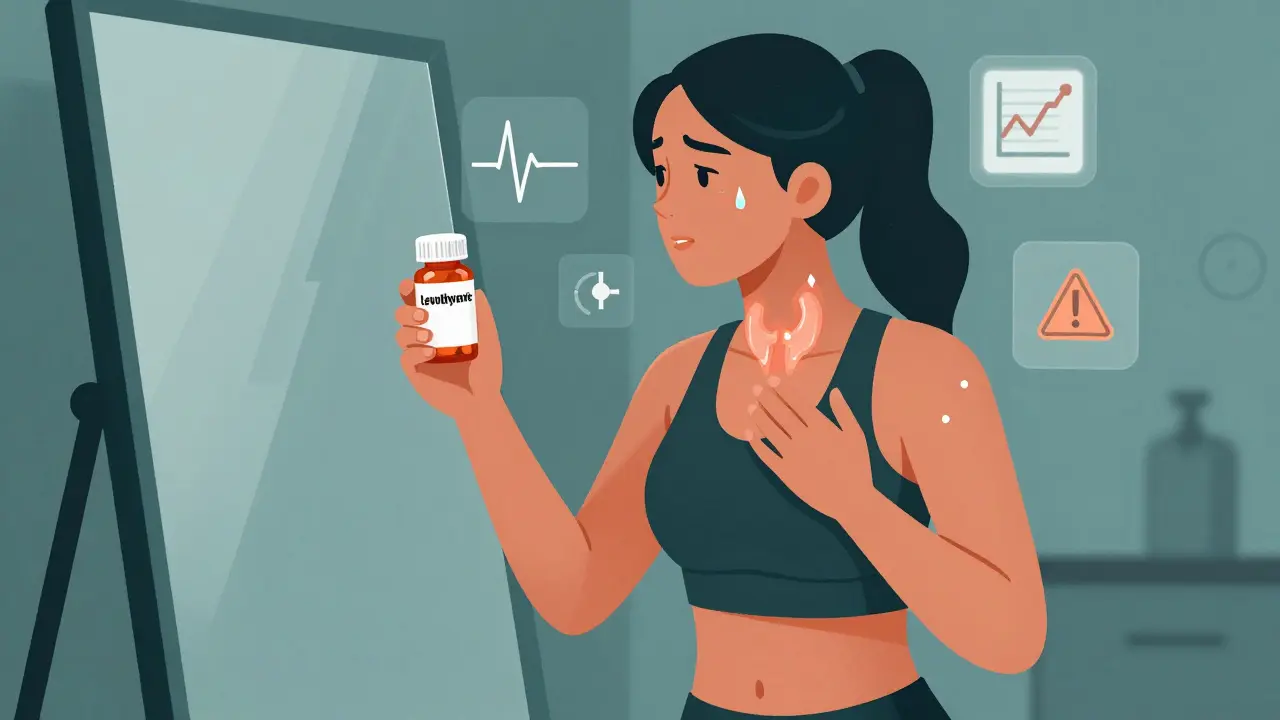
Most people think thyroid medication is safe because it’s prescribed by a doctor. But what if you’re taking it wrong? Or worse-taking it without a prescription? Every year, thousands of people end up in emergency rooms with racing hearts, chest pain, or sudden weight loss-not because of a thyroid disease, but because they misused their medication. This isn’t rare. It’s happening in gyms, online forums, and doctor’s offices across the country. And the consequences can be deadly.
What Happens When You Take Too Much Levothyroxine?
Levothyroxine is the most common thyroid medication in the world. It’s synthetic T4, the hormone your body naturally makes. When taken correctly, it fixes low thyroid function. But when you take more than prescribed, your body gets flooded with thyroid hormone. That’s not weight loss-it’s thyrotoxicosis.
People do this for several reasons. Athletes and fitness enthusiasts believe it boosts metabolism and burns fat faster. Some take it because they’re frustrated with slow weight loss. Others accidentally overdose by doubling up on missed doses. A 2021 study found that 12% of patients presenting with hyperthyroid symptoms were actually abusing levothyroxine. Most were women in their mid-30s.
The symptoms don’t wait. Within 30 days of misuse, 78% of users report:
- Weight loss (92%)
- Shaking hands or tremors (78%)
- Nausea or vomiting (65%)
- Diarrhea (58%)
- Heart palpitations (52%)
- Insomnia (22%)
One Reddit user, ‘FitLifeJunkie’, took 200 mcg daily for three months to lose weight. He ended up in the ER with a heart rate of 142 bpm. His doctors told him he was lucky to be alive. That’s not an exaggeration. High thyroid hormone levels stress your heart. They can cause atrial fibrillation, heart failure, or even a heart attack-even in young, healthy people.
How Do Doctors Know It’s Not Graves’ Disease?
Graves’ disease is the most common cause of hyperthyroidism. It’s an autoimmune condition where your immune system attacks your thyroid and makes it overproduce hormones. But there’s a key difference: in Graves’, your thyroid is working overtime. In medication-induced hyperthyroidism, it’s not working at all.
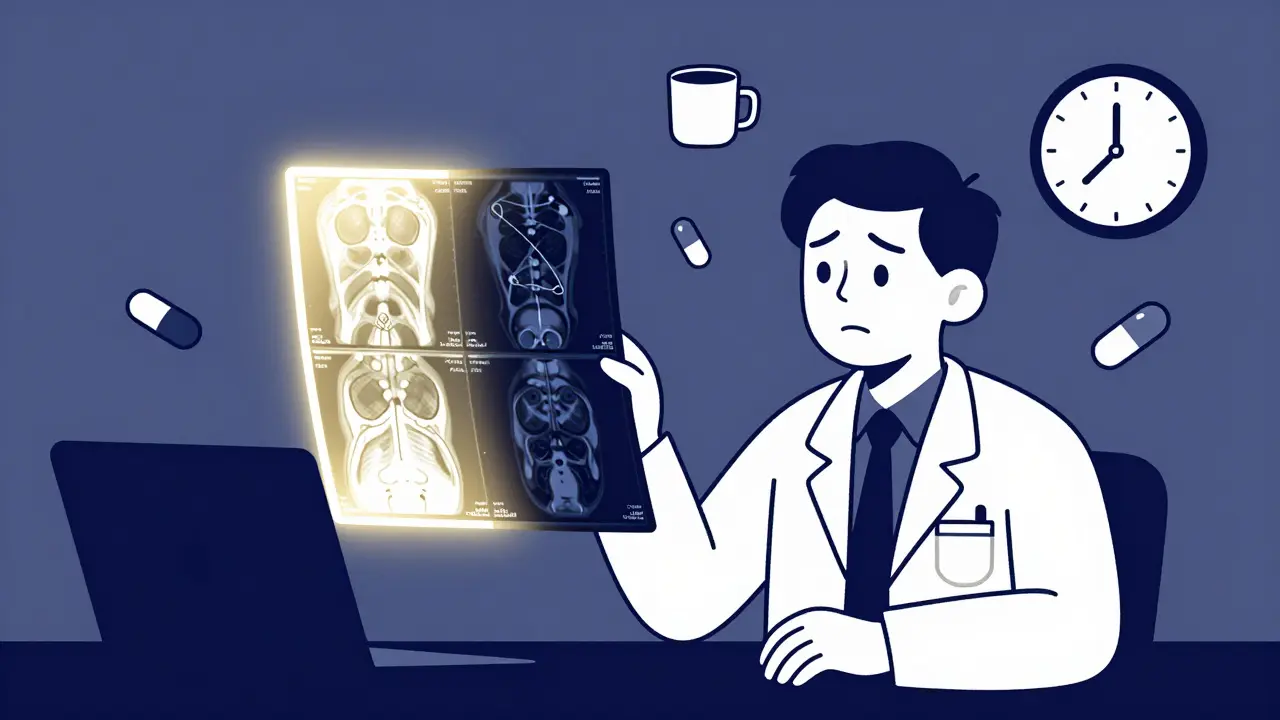
Doctors use a radioactive iodine uptake scan to tell the difference. If your thyroid is glowing bright on the scan, it’s likely Graves’. If it’s dark-no uptake-that means your thyroid is shut down because you’re flooding your body with synthetic hormone. That’s a red flag for abuse.
Another clue? Thyroglobulin levels. In autoimmune disease, thyroglobulin rises. In medication abuse, it stays low. And your TSH? It’s crushed. Your brain senses too much thyroid hormone and shuts off the signal to your thyroid. That’s why TSH is almost always below 0.01 in these cases.
What About Taking Too Little-or Skipping Doses?
It’s not just about taking too much. Skipping doses, stopping and starting, or taking it at the wrong time can cause hypothyroidism-even if you’re on thyroid medication.
Levothyroxine needs to be taken on an empty stomach, at least 30-60 minutes before food or coffee. Calcium supplements, iron pills, and even soy milk can block up to 50% of its absorption. Many patients don’t know this. One study found that 42% of people who didn’t respond to treatment were taking their pill with food or supplements.
Then there’s the ‘lag effect’. If you take your missed dose right before a blood test, your T4 might look normal-but your TSH won’t catch up for six weeks. That’s why 15-20% of noncompliant patients get misdiagnosed. Their doctor thinks they need more medication, when they’re actually taking too much.
And here’s the irony: people who skip doses often feel worse. Fatigue, cold intolerance, weight gain, depression-these aren’t just ‘normal’ symptoms. They’re signs your body is starving for thyroid hormone. A 2022 survey found that 43% of patients who skipped doses saw symptoms return within 72 hours.
Other Medications That Can Break Your Thyroid
Levothyroxine isn’t the only culprit. Some drugs you’d never suspect can wreck your thyroid function.
Amiodarone, a heart rhythm drug, is 37.3% iodine by weight. Too much iodine can trigger both hyperthyroidism and hypothyroidism. There are two types: Type 1 (60-70% of cases) means your thyroid goes into overdrive. Type 2 (30-40%) is inflammation that burns out your hormone production. Both need different treatments.
Immune checkpoint inhibitors, used in cancer treatment, can trigger thyroid dysfunction in up to 8% of patients. It often starts quietly-just a little fatigue, a bit of weight gain. But it can spike fast. Endocrinologists now recommend testing thyroid levels every 4-6 weeks during treatment.
Lithium, used for bipolar disorder, causes hypothyroidism in 15-20% of long-term users. The good news? It often reverses when you stop the drug. Unlike Hashimoto’s, which is permanent, this is usually temporary.
Even iodinated contrast dye-used in CT scans-can cause thyrotoxicosis weeks later. That’s called the Jod-Basedow effect. It’s rare, but it happens.
Real People, Real Consequences
Stories from online forums paint a grim picture.
On HealthUnlocked, ‘SarahM’ said her doctor kept increasing her levothyroxine dose because she kept losing weight. She didn’t tell him she was secretly taking extra pills. It took six months to stabilize after she confessed. Another user on Drugs.com wrote: ‘My doctor didn’t monitor levels properly.’ That comment came from 38% of negative reviews.
And it’s not just adults. A 2022 study by the Thyroid Research Institute found that 8.7% of gym-goers admitted to using thyroid medication for weight loss without a prescription. That’s nearly one in ten people working out to get fit.
One woman in Cape Town, a fitness instructor, started taking levothyroxine because she thought it would help her shed stubborn belly fat. Within two months, she developed atrial fibrillation. She didn’t have a history of heart problems. Her doctor told her the damage to her heart could be permanent.

How to Avoid Thyroid Medication Mistakes
Thyroid medication isn’t a quick fix. It’s a long-term treatment that requires precision.
- Take it on an empty stomach, 30-60 minutes before breakfast.
- Avoid calcium, iron, and soy for at least four hours after taking it.
- Never double up on missed doses. Skip it and take your next dose as scheduled.
- Get blood tests every 6-8 weeks when starting or changing doses.
- Ask your doctor for a TSH and free T4 test-not just TSH alone.
- If you’re on amiodarone, checkpoint inhibitors, or lithium, ask for thyroid testing every 4-6 weeks.
And if you’re thinking about taking thyroid pills to lose weight? Don’t. The risks far outweigh any temporary benefit. You’re not speeding up your metabolism-you’re burning out your heart.
New Tools to Help You Stay on Track
There’s good news. Technology is catching up.
In June 2023, the FDA approved the first digital levothyroxine pill with an ingestible sensor. It tells your doctor when you took your dose. Early results show a 52% drop in dosing errors.
Point-of-care TSH tests are now available in some clinics. You get results in minutes, not days. That means faster adjustments and fewer mistakes.
Telemedicine thyroid programs are also growing. Patients who use them are 28% less likely to misuse medication by 2026, according to the American Thyroid Association.
But none of this matters if you don’t talk to your doctor. If you’re taking thyroid medication, don’t hide anything. Not the extra pills. Not the skipped doses. Not the supplements you’re taking. Your doctor can’t help if they don’t know the truth.
What’s Next?
Thyroid medication misuse is rising. The global market for thyroid drugs is projected to hit $5.2 billion by 2027. But with that growth comes more danger. The FDA has documented 217 websites selling thyroid hormones without prescriptions in 2022-up 43% from 2020.
The good news? With proper education, monitoring, and testing, medication-induced thyroid disorders could drop by 35-40% in the next decade. But that only happens if patients and doctors work together.
Your thyroid isn’t a switch you can flip. It’s a delicate system. Mess with it, and your whole body pays the price.


Comments (13)